











High-Speed Crashes in Lakeland: How a Car Accident Lawyer Proves Liability
High-speed collisions don’t leave much room for “gray area.” When a crash happens at highway speeds—or even just well above the speed limit—the injuries are often severe, the vehicle damage is extensive, and insurance companies tend to fight harder about who caused what. If you’re looking for a high-speed car crash lawyer in Lakeland, you’re probably dealing with more than a dented bumper: you may be facing medical bills, missed work, and a complicated fault dispute.
This article explains how a lawyer builds proof in serious speeding cases, what evidence matters most in Polk County, and what you can do now if you need to prove liability after a car accident in Lakeland. (This content is for informational purposes and not legal advice.)
If you want immediate help, start here: car accident lawyer in Lakeland.
Why high-speed crashes in Lakeland are harder to prove (and harder to win)
In Lakeland, high-speed wrecks commonly happen on I-4, the Polk Parkway (SR 570), US-98, and other heavy-traffic corridors where lane changes, merges, and sudden braking are frequent. The higher the speed:
- The farther vehicles travel after impact (changing where they end up vs. where the crash started)
- The more likely there are secondary impacts (a spin into another lane, a second hit into a curb/median, or a chain-reaction crash)
- The more aggressively insurers argue comparative fault (“You were partly to blame”)
That’s why winning these cases isn’t about one piece of evidence. It’s about building a clear timeline that can’t be explained away.
What “liability” means in a Florida high-speed case
Liability is the legal responsibility for causing the crash. In a speeding or aggressive-driving collision, proving liability generally means showing:
- The other driver owed a duty of care (to drive reasonably and safely)
- They breached that duty (speeding, following too closely, unsafe lane change, distracted driving, etc.)
- Their breach caused the crash
- You suffered damages (injuries and financial losses)
Florida also applies a comparative fault framework. If you’re found partially responsible, that can reduce recovery. You can read the statutory framework here: Florida Statutes § 768.81 (comparative fault).
High speed car crash lawyer Lakeland: the evidence playbook for proving fault
A high-speed car crash lawyer in Lakeland typically approaches liability like a checklist: preserve evidence fast, lock in objective data, and back it up with experts when needed.
1) Preserve the scene and vehicles before the evidence disappears
High-speed cases are “time-sensitive” because evidence fades quickly:
- Skid marks and debris get cleared
- Video systems overwrite footage
- Vehicles get repaired, sold, or totaled out
A lawyer may send preservation letters (to the other driver, their insurer, tow yards, businesses with cameras, and even rideshare/telematics providers when relevant) to prevent spoliation—loss of key evidence.
What you can do immediately:
- Save every photo/video you have (back it up)
- Write down what you remember (lane positions, speed estimates, signals, traffic conditions)
- Keep the vehicle accessible for inspection if possible
2) Use official crash records the right way
Police reports are helpful—but they’re not the whole case. In high-speed disputes, insurers often say the report is “just an opinion,” especially if the officer didn’t witness the crash.
A lawyer will still obtain key documentation, including the Florida crash report, diagrams, witness lists, and any available supplemental notes. Florida’s official resource for crash reports is here: FLHSMV Traffic Crash Reports.
These records help establish:
- Time and location
- Parties and witnesses
- Initial roadway observations
- Whether speed, impairment, or reckless driving was suspected
3) Prove speed with data, not guesses
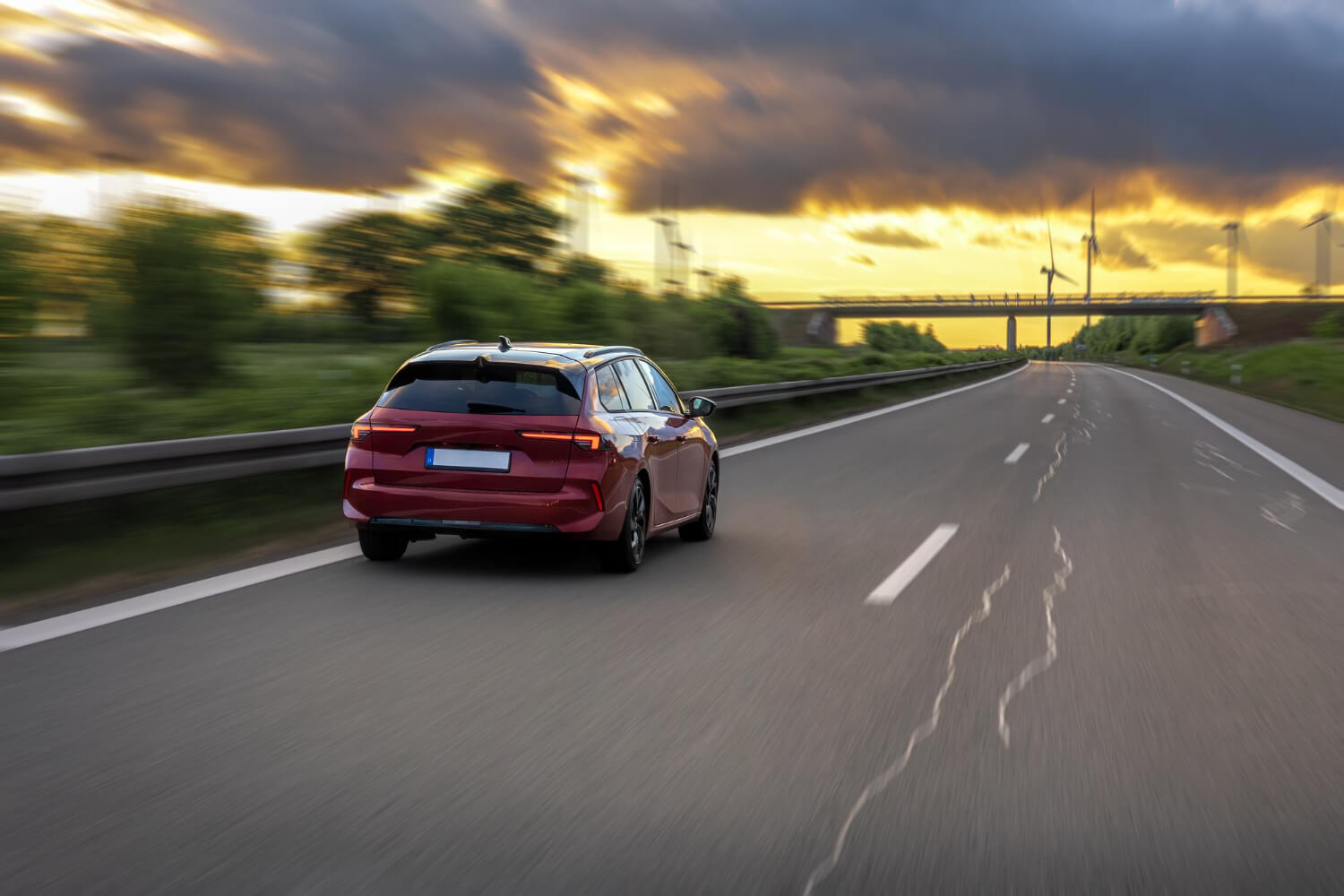
Insurance adjusters love to say, “You can’t prove speeding.” In reality, speed can often be supported by objective evidence such as:
- Skid/yaw marks (length and pattern)
- Point of impact and debris field
- Crush damage profiles (how and where vehicles absorbed energy)
- Video timing (seconds + distance)
- Event Data Recorder (EDR) downloads (“black box” data)
Many modern vehicles record pre-crash information like speed, braking, and throttle input. For an overview of this technology, see: NHTSA Event Data Recorder (EDR).
A strong case doesn’t just show “fast.” It shows the speed was unreasonable for the conditions and directly caused the collision.
4) Reconstruct the crash when the fault is disputed
When there’s conflicting testimony, multiple impacts, or severe injuries, accident reconstruction can be the turning point. Reconstruction can combine:
- Scene measurements (lane widths, distances, grades, friction)
- Damage analysis
- EDR data
- Time-distance calculations
- Engineering/physics-based conclusions about how the crash occurred
This is especially important when insurers claim:
- “You cut them off.”
- “They had no time to react.”
- “The impact happened in a different lane.”
- “Your version doesn’t match the damage.”
For a detailed explanation of how reconstruction is used in fault disputes, read: Accident Reconstruction to prove fault.
5) Connect liability to injuries and real-world losses
Even if liability is substantial, insurers often attack damages:
- “Your injuries aren’t that serious.”
- “Those symptoms are from a prior condition.”
- “You didn’t treat quickly, so it must not be related.”
Your lawyer will typically build medical proof by organizing:
- ER/urgent care records and imaging
- Follow-up care documentation (orthopedics, neuro, PT, pain management)
- Work restrictions and wage-loss evidence
- Pain, limitations, and daily-life impact notes
Florida also has PIP-related rules that can impact the timing of benefits. For the statutory framework commonly referenced as the “14-day rule,” see: Florida Statutes § 627.736 (PIP).
Common insurance defenses in high-speed claims (and how lawyers counter them)
“You were partly at fault.”
This is one of the most common tactics in serious crashes—especially when speeding is alleged on both sides. A lawyer counters with objective evidence (video, EDR, measurements) and a consistent timeline. The legal framework is grounded in Florida Statutes § 768.81 (comparative fault).
“Speed is speculation.”
Reconstruction, EDR data, and physical evidence can shift the argument from “he said/she said” to measurable proof, supported by sources such as the NHTSA Event Data Recorder (EDR).
“You waited too long to act.”
Delays can harm evidence and deadlines. Florida’s limitations rules are found in Florida Statutes § 95.11 (limitations). (Exact deadlines can depend on facts—talk to a lawyer promptly.)
What to do now to prove liability after a car accident in Lakeland
If you’re trying to prove liability after a car accident in Lakeland, these steps can protect both your health and your case:
- Get medical care and follow through on treatment
- Save photos/videos, dashcam footage, and witness info
- Avoid giving a detailed recorded statement to the other insurer without legal guidance
- Request the crash report through FLHSMV Traffic Crash Reports
- Speak with counsel early—high-speed evidence can vanish fast
Why hiring a Lakeland car accident law firm can change the outcome
High-speed crashes are rarely straightforward. A Lakeland car accident law firm can:
- Preserve evidence (video, EDR data, vehicle inspections)
- Coordinate accident reconstruction and other experts.
- Present a damage package that matches the seriousness of the collision
- Push back on comparative fault and lowball tactics
- Prepare the case for litigation if the insurer won’t be reasonable
The Law Offices of Wolf & Pravato’s message is simple: “Winning is no accident.” You also pay nothing unless we win. With 75+ years of combined experience and over $200 million recovered (results depend on the facts of each case), we aim to build claims that are ready for negotiation—or trial—without guessing.
Speak with a team member today: call 844-643-7200.
Talk to a high-speed car crash lawyer in Lakeland today
If your crash involved excessive speed, aggressive driving, or a major impact, don’t assume the insurer will “do the right thing.” Liability must be proven—clearly, quickly, and with evidence that holds up.
For help now, contact Wolf & Pravato to speak with a high-speed car crash lawyer in Lakeland. Start here: car accident lawyer in Lakeland or call 844-643-7200 for a free consultation. You pay nothing unless we win.
Frequently Ask Questions
- How can speed be proven after a serious crash?
Speed can be supported by physical evidence (skid/yaw marks, damage patterns), video timing, and sometimes vehicle data downloads. See: NHTSA Event Data Recorder (EDR). - Is the police report enough to win a high-speed claim?
Not always. Insurers may dispute it, especially if the officer didn’t witness the crash. Additional evidence and reconstruction often strengthen the case. - What if the insurance company says I’m partially at fault?
Florida uses comparative fault principles under Florida Statutes § 768.81 (comparative fault). Evidence and timeline clarity are key to limiting blame-shifting. - Do I need medical care quickly after a crash in Florida?
Prompt care protects your health and can affect PIP benefits. The PIP statute is: Florida Statutes § 627.736 (PIP). - How long do I have to file a lawsuit?
Deadlines can vary by claim type and facts, but Florida’s limitations statute is: Florida Statutes § 95.11 (limitations). - When do you use accident reconstruction?
When a fault is disputed, there are multiple impacts, or you need technical proof of speed, lane position, and collision sequence. Learn more: accident reconstruction to prove fault.
Recent Posts
- Fort Myers Personal Injury Intake Prep: What to Bring to Your First Call
- Fort Myers Property Damage: Total Loss Valuation, GAP Insurance, and Rental Reimbursement
- Multi-Vehicle Collisions in Fort Lauderdale: How Fault Gets Assigned in Florida (Practical Scenarios)
- Uninsured / Underinsured Driver Crashes in Fort Lauderdale: UM Coverage + Proof Strategy

- Crash Evidence That Holds Up: Dashcam, Vehicle Data, and Phone Records in Fort Lauderdale Claims
- Florida 14-Day Accident Law: What Fort Lauderdale Drivers Need to Know
FLORIDA’S PERSONAL INJURY ATTORNEYS FOR + 20 YEARS