

West Palm Beach Product Liability Lawyer
Something you bought failed, caught fire or came apart in your hands, and left an injury nobody warned you was possible. We can take it from here. Call 833-370-8692 for a free consultation. You pay us nothing unless we win. Our West Palm Beach personal injury lawyers have taken these cases across Palm Beach County since 1993.
Product Liability claims in West Palm Beach
The manufacturer will say the product was misused, and will want the item itself sent away for testing on its terms. Meanwhile you are covering the treatment, missing work, and living in a house that may hold more of the same product. Keeping that evidence and proving the fault is our job, and it starts the day you call.
Alongside the ordinary run of defective consumer goods and vehicle components, a growing share of the product claims we see involve lithium battery packs in electric bikes, scooters, tools and mobility devices, which fail by igniting rather than by breaking. Those cases are built from the fire investigation, the remains of the pack and charger and the product's certification history, and they frequently involve an imported cell in an assembly sold under a different name. The remains of the device are the single most important thing a family can preserve, and fire scenes are cleared quickly.
Lithium battery packs in electric bikes, scooters, tools and mobility devices have become their own category of Palm Beach County claim, because they fail by igniting rather than by breaking. These cases are built from the fire investigation, the remains of the pack and charger, and the product’s certification history. Fire scenes get cleared quickly.
What to do after a product liability in West Palm Beach
- Keep the product, exactly as it is. Do not repair it, clean it, return it or send it back for a refund. The item is the case. An engineer examining the actual product is what answers a manufacturer arguing misuse or wear, and no photograph substitutes for it. Where a fire or a crash left only part of it, keep the part. Where a shop or an insurer has it, tell them in writing not to dispose of it.
- Keep the box, the manual, the receipt and the charger. The packaging carries the model, the batch and frequently the importer, which is how a reachable defendant gets identified when the maker is overseas. The manual is what the warning claim is measured against. The receipt fixes the date of sale, which matters because a separate outer deadline runs from delivery rather than from injury. People throw all four away and keep the product, which is exactly backward.
- Photograph everything before anyone moves it. The product, the scene, the damage, the labels and any warning on the item itself, from several angles and before it is cleaned up. Where there was a fire, photograph what is left in place. Investigators and cleanup crews arrive quickly and are not preserving anything for you.
- Do not let it be inspected without you. A manufacturer or insurer will ask to take the item away and look at it. Testing can be destructive, and an examination conducted without your own expert present is one you cannot repeat. Inspections in these cases are arranged jointly, on agreed terms, with both sides watching. Saying no to an informal request costs nothing.
- Get treated, and for a medicine get the full pharmacy record. The medical record links the injury to the product and is what a claim is built on. Where a prescription is involved, the complete dispensing history from every pharmacy is the document that establishes what was taken, when and for how long. Nobody remembers it accurately and it we can get in a week.
Where these happen in West Palm Beach
The ordinary run of defective goods still fills most of this caseload, but the fastest growing part of it arrives as a fire rather than as a breakage.
-
Batteries in bikes, scooters and mobility devices
The packs in these machines hold a lot of energy in a small space, and when a cell fails the result is a fire that is very hard to put out.
- Charging indoors and overnight, which is when most of these fires start
- Chargers bought separately and not matched to the pack
- Imported cells inside an assembly sold under a different brand name
- Certification marks on the pack, and whether the certifying body recognizes them
-
Fires in condominium and apartment buildings
A battery fire in a multi-unit building injures people who never owned the product, and puts several parties in the same case.
- Injuries to neighbors and to people escaping a building rather than to the owner
- Storage and charging rules the association had, or did not have
- Alarm, sprinkler and egress performance, which is a premises claim alongside the product one
- Property insurers who pay first and then pursue the manufacturer
-
Tools, lawn equipment and generators
Cordless tools and yard equipment run on the same battery chemistry, and fuel-burning equipment brings its own set of injuries.
- Battery packs and chargers for cordless tools and mowers
- Carbon monoxide from generators and pressure washers used too close to a building
- Blade guards and safety switches that were absent, defeated or poorly designed
- Rental equipment, where the rental company maintained it and is a separate defendant
-
What is left after the fire
The remains of the device are the single most important thing a family can preserve, and they are usually removed by somebody with no interest in the claim.
- The pack, the charger, the cable and anything left of the packaging
- The fire department’s origin and cause investigation, and its photographs
- A written instruction to the fire investigator and the insurer not to dispose of anything
- Scene photographs taken before debris is cleared, which happens within days

What causes them
- Warnings and instructions that were missing, buried in small print or placed where nobody reads them
- Component parts that failed inside an assembly somebody else built and sold
- Lithium cells, packs and chargers that fail by igniting rather than by stopping
- Foreseeable misuse the design never accounted for, which manufacturers are expected to anticipate
- Recalled products still sitting on shelves, in rental fleets and in resale
The injuries we see, and what each one turns on
Poisoning and internal organ injury
Carbon monoxide from fuel-burning equipment used indoors, and organ damage from medicines and chemical exposure. Both are frequently attributed to something else first, which is why the connection is often made late and why the record of when it was made matters.
Head and brain injury
From falls where a ladder, a chair or a mobility device collapsed, and from equipment that struck somebody. A brain injury requires neither a loss of consciousness nor an abnormal scan, and what follows shows up in memory, concentration, sleep and temper.
Death
A death claim is brought by the personal representative of the estate, and Florida decides by statute which survivors may recover and for what. Preserving the product matters more here than anywhere, because the person who could describe what happened is gone.
What Florida law requires you to prove
Three ways a product can be defective, and everyone who sold it
A claim runs on a defect in design, a defect in manufacture, or a failure to warn, and they are proved differently. Florida applies strict liability along the distribution chain rather than only to the maker, so a manufacturer, a component supplier, an importer, a distributor and in defined circumstances a retailer can each be liable. That matters most where the maker is overseas and effectively out of reach, because the importer who brought the product into the country is here.
A design is judged by what was known when it was built
Under Fla. Stat. § 768.1257, a design defect case is measured against the state of scientific and technical knowledge at the time of manufacture rather than at the time of the injury. It cuts both ways. A manufacturer is not answerable for failing to use a safety feature that did not exist yet, and it is squarely answerable for not using one that did.
Prescription medicines are warned to the doctor, not to you
Florida applies the learned intermediary doctrine, so a drug manufacturer discharges its duty to warn by adequately warning the prescribing physician. The question in a pharmaceutical case is therefore not what you were told. It is what the company knew, when it knew it, and what it told the medical profession, which is why these claims are built from adverse event reporting, internal safety review and regulatory correspondence rather than from a patient’s own file.
Two deadlines run, and the second one surprises people
Most claims arising on or after March 24, 2023 carry a two-year deadline under Fla. Stat. § 95.11, and in a product case it generally runs from when the injury and its cause were or should have been discovered. Separately, Fla. Stat. § 95.031 bars most products claims where the harm came from use of a product more than 12 years after it was delivered to its first purchaser, whatever the injury date. That outer limit stretches to 20 years for aircraft, vessels over 100 gross tons, railroad equipment and improvements to real property, and to whatever period a manufacturer warranted where it warranted more than ten years of useful life. Fault is shared under Fla. Stat. § 768.81.
The full statutory detail, and the parts that differ by claim type, sit on our statewide product liability page rather than being restated in every market.
How we prove it in Palm Beach County
A battery fire case is proved from wreckage, which means everything depends on what somebody thought to keep in the first week.
- The remains of the pack, the device, the charger and the cable, kept exactly as recovered
- The fire department’s origin and cause report, and the photographs taken at the scene
- Written preservation notice to the fire investigator, the property insurer and the building
- Purchase records identifying the seller, the importer and the date of delivery
- Certification and testing marks, and confirmation from the certifying body that they are genuine
- The manufacturer’s complaint, warranty and return records for the same pack or model
- Recall notices and regulatory action on the product line or on the cells inside it
- Where a building was involved, the association’s rules, alarm records and maintenance file
The property claim and the injury claim run off the same preserved evidence, so the letter that stops the debris being cleared protects both at once.
Who would handle your case
Being hurt in West Palm Beach is hard enough without working out the legal side on your own. The trial lawyers below have handled product liability claims across Florida since 1993, and one of them will take yours from the first call to the last check. They will tell you what your case is worth and why, and they will be straight with you about the parts that are hard.
-
 Richard P. Pravato Founding & Managing Attorney Board Certified in Civil Trial Law by The Florida Bar since 2004, and by the National Board of Trial Advocacy. Injury cases exclusively since 1996. Full profile →
 -
 Brett J. Yonon Senior Trial Attorney Selected to Florida Super Lawyers in 2024 and 2025. Brett Yonon is who this firm puts on a catastrophic injury or a death in the family, and he has tried those cases to verdict. Full profile →
How insurance companies handle these claims
A product manufacturer is not defending one claim. It is defending every claim that could follow from the same finding, which is why these files are contested harder than their value alone would explain.
- The product met every applicable standard
- Compliance is evidence and it is not a defense on its own. Standards set a floor, they lag behind what is known, and meeting one says nothing about whether a safer design was available at the time of manufacture. What usually matters more is what the company’s own testing and complaint records showed about the same failure.
- Send us the product and we will look at it
- Only with an agreement in place and your own expert present. Testing can destroy what it examines, and an inspection you were not part of cannot be repeated. These examinations get arranged jointly, with a protocol, and a manufacturer that declines those terms has told you something.
- There was never a recall
- A recall is a regulatory decision, not a legal test. Claims succeed every year on products still being sold, and waiting for a recall that may never come is one of the more common ways a valid claim expires. Where a recall did happen, it is useful evidence rather than proof, and the more useful document is usually what the company knew before it.
What a claim can include
Pain, suffering and loss of the ability to enjoy life
The head of loss an early offer prices lowest, because it is the one with no invoice attached.
Scarring and disfigurement
A separate claim after a burn or an amputation. Photograph the healing as it happens, because a record of what it looked like at three weeks does not exist unless somebody made it.
Property damage from the same failure
A fire that injured somebody usually damaged a home or a vehicle as well. Your own insurer may pay first and then seek repayment from the manufacturer, and both run off the same preserved evidence.
Why Wolf & Pravato in West Palm Beach
A Palm Beach County product case is filed in the Fifteenth Judicial Circuit in West Palm Beach, and the firm’s office on Vista Parkway is in the county rather than across the state. A fire case moves fastest in the first ten days, when the scene still exists, and that is easier to do from inside the county than from a conference call.
Board Certification in Civil Trial law is the Bar’s own measure of trial experience, and 861 of Florida’s 109,000-plus lawyers hold it. Richard Pravato has held it since 2004. It is the credential that changes how an adjuster reads a file, because it says the case has somewhere to go if they will not pay it.
Asking costs nothing and there is no fee unless we win. If we look at what happened and think the claim is not worth pursuing, we will say so on the first call instead of signing you up.
West Palm Beach product liability questions
A battery caught fire and damaged my home as well as injuring me. Is that one claim?
The injury and the property damage come from the same defect and are generally pursued together, though your own property insurer may pay first and then seek repayment from the manufacturer. Preserving the device, the charger and anything left of the packaging is what makes both claims work, and it is worth telling the fire investigator and your insurer in writing not to dispose of anything.
I was hurt by a fire in my building that started in someone else’s unit.
Then you have a claim against the manufacturer of whatever failed, and possibly a separate one about the building itself: what the association’s storage and charging rules were, whether alarms and sprinklers worked, and whether escape routes were what they should have been. Those are different defendants on different terms, and both depend on evidence that is cleared away quickly.
The fire department already took what was left.
That is usually recoverable and it needs asking for immediately. Fire departments hold evidence for a limited period and then dispose of it, and a written request naming the incident and asking that nothing be released or destroyed is what buys the time. Their origin and cause report and their scene photographs matter too, and both we can get.
I threw the product away. Is my claim finished?
It is harder, not necessarily finished. A claim can still be supported by photographs, the model and lot number, purchase records, medical records describing the mechanism, and evidence of the same failure in other units. Tell us honestly what you still have.
Do I have to prove the manufacturer was negligent?
Not for a strict liability claim. The question is whether the product was defective and whether the defect caused your injury, not whether the company was careless in producing it. Negligence can also be pleaded alongside, but it is not the only route.
The questions that come up on every kind of claim, deadlines, fees, recorded statements and fault, are answered on our Florida injury claim FAQ.
More in West Palm Beach
West Palm Beach Personal Injury Lawyer
Everything we handle in Palm Beach County, and where our office is.
View →West Palm Beach Medical Malpractice Lawyer
Florida medical malpractice lawyers.
View →West Palm Beach Workers Compensation Lawyer
Florida workers compensation lawyers.
View →West Palm Beach Dog Bite Lawyer
Florida dog bite lawyers.
View →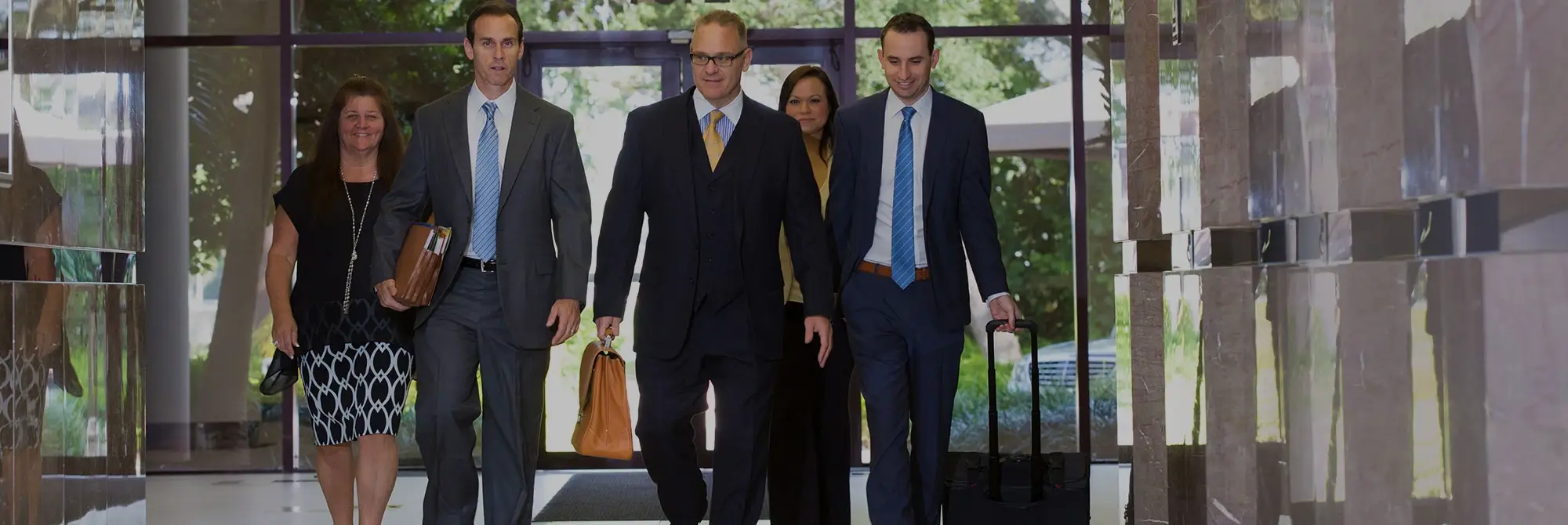
Tell us what happened
A lawyer will listen, tell you what Florida law does with those facts, and be straight with you about whether it is worth bringing. We are at 2101 Vista Parkway, Suite 4500, West Palm Beach, FL 33411.