
Florida Pedestrian Accident Lawyer
Pedestrian accident claims are decided on evidence a driver’s insurer would rather not produce. We go and get it. We can take it from here. Call 954-522-5800 for a free consultation. You pay us nothing unless we win. We have won these claims for Floridians from the Keys to the Panhandle, and we work them from five offices between Fort Lauderdale and Fort Myers.
A driver who leaves the scene has not taken your claim with them. Your own uninsured motorist coverage can pay when nobody is ever identified, and it is the largest policy in a great many of these cases. Send us the declarations page from your auto policy and we will read it at no charge, whether or not you were in a car.
Our team will not let you go through a pedestrian and bicycle claim alone
Being hit while you were walking or riding is hard enough without a driver's insurer saying you stepped out. Nothing undoes the moment that car hit you, and we will not pretend otherwise. What we can do is make the driver and their insurer answer for it, and we will take the case as far as it has to go.
Our trial attorneys have won pedestrian and bicycle cases across Florida since 1993, from the Keys to the Panhandle, and one of them will handle yours from the first call to the last check. Call 954-522-5800 for a free consult and a trial lawyer will tell you today whether you have a case. You pay us nothing unless we win, and we work from five offices between Fort Lauderdale and Fort Myers.
Meet the attorneys →What Florida law does with a pedestrian and bicycle claim
The usual account a driver gives after hitting someone on foot is that the pedestrian stepped out, and where the driver leaves the scene there may be no policy to claim against at all. Meanwhile you are working out how to cover the first surgery, how long you will be off work, and who pays if that driver is never found. Answering those three is our job, and it starts the day you call.
Somebody on foot who is hit by a car takes the full force of it, and the argument that follows is almost always the same one: that they should not have been where they were. Florida law is more balanced than that argument suggests. Below is what it actually requires of drivers and of people walking, and how a claim is built.
A Florida pedestrian accident claim generally has to be filed within two years. Florida law puts a duty on every driver to use due care to avoid hitting a pedestrian, whatever the pedestrian was doing, and the person's own auto policy usually pays the first medical bills even though they were on foot.
The deadline that ends a Florida pedestrian and bicycle claim
One date ends the claim. Two much shorter ones decide what can be proved about how it happened.
Two years from the day you were hit
Most claims from an accident on or after March 24, 2023 have to be filed within two years. An older accident keeps the four years that applied when it happened. The period sits in Fla. Stat. § 95.11. Where somebody died, the claim is a wrongful death action and the two years run from the date of death.
A government defendant, and a shorter route to it
Where a crossing was unmarked, unlit, badly timed or designed so that people cross where there is no crossing at all, the responsible party is a public body and Fla. Stat. § 768.28 applies: written notice to the agency and, in most cases, to the Department of Financial Services, a waiting period before suit, and caps of $200,000 per person and $300,000 per incident.
Road authority claims are harder than driver claims and they are frequently the ones worth the most, because a pedestrian struck at speed usually has losses far beyond a private driver's coverage.
Days, for what shows where you were
Signal and walk-phase timing data, camera footage from the businesses on the corner, transit vehicle recordings and the vehicle's own event data recorder. Every one of those is on a retention schedule measured in days or weeks, and every one of them answers the question the defense is about to build its case on.
The vehicle, before it is repaired
Where the impact landed on the car, and how high, establishes speed and whether the driver braked at all. Once it is repaired that is gone. A letter to the insurer holding it, early, is what keeps it available.
Who can be held answerable
The driver is the obvious defendant and rarely carries enough coverage for what a pedestrian injury costs. Finding the others is most of the work.
- The driver. Fla. Stat. § 316.130 puts a duty on every driver to use due care to avoid colliding with a pedestrian and to give warning where necessary. That duty applies whatever the pedestrian was doing, which is the single most useful sentence in this area of law.
- The owner of the vehicle. Florida treats a motor vehicle as a dangerous instrumentality, so the owner answers for how the person they lent it to drove it. A separate owner is frequently a separate policy.
- An employer, where the driver was working. A delivery driver, a service van, a company car on an errand. The employer's coverage is normally far larger than the driver's own, and establishing what they were doing at that moment takes asking.
- The public body responsible for the road. Crossings placed too far apart, faded markings, a signal that gives too few seconds to cross, missing lighting, a bus stop with no safe way to reach it. These are design and maintenance decisions with records behind them, including prior crash data for the same location.
- A property owner, where it happened off the road. A parking lot, a garage, an apartment complex driveway or a shopping plaza is private property, and that changes which rules are in play. The Chapter 316 road rules reach private roads and lots only where the city or county has a written agreement with the owner, or an association has voted them in under Fla. Stat. § 316.006. Without one, nobody can point at a traffic statute to settle fault, and the case is decided on ordinary negligence instead. The property itself is frequently answerable too, for sightlines, lighting, speed humps, or marked walkways that send people between parked cars.
- A business that served the alcohol, in two narrow cases. Fla. Stat. § 768.125 allows a claim only where drink was sold or furnished to somebody under 21, or knowingly served to a person habitually addicted to it. Both are provable from receipts and staff and both need somebody asking within days.
- A driver who left, through your own coverage. A meaningful share of pedestrian cases are hit and run. Where the driver is never identified the claim runs against the injured person's own uninsured motorist coverage, which is set out further down this page.
How a Florida pedestrian and bicycle case actually runs
The whole case is about where you were and what the driver could see. Everything below serves that one question.
- Establish exactly where the impact happened. Not roughly, exactly. Measured from a fixed point, with photographs, because a few feet decides whether somebody was in a crossing, and the police diagram is a sketch rather than a survey.
- Get the signal timing and the recordings. Walk-phase timing is data a traffic department holds and will produce on request. Camera footage from the corner is on a loop. Both go on the list in the first week, in writing, or neither exists later.
- Understand what the law asked of each of you. Fla. Stat. § 316.130 requires a driver at a signalized intersection to stop before entering the crosswalk, and requires a pedestrian crossing at any point other than a marked crosswalk to yield to vehicles. It also imposes on every driver, separately, the duty of due care described above. So a person crossing outside a crossing has not lost their claim, and the case becomes what each of them should have done.
- Reconstruct it where speed is in issue. Impact height and damage on the vehicle, throw distance, and the event data recorder together establish speed far better than any witness. On a serious injury this is worth doing properly and early.
- Treatment runs its course. Pedestrian injuries are severe: head, pelvis, legs, and frequently several at once. Valuing the case before the treating physicians can say what is permanent means valuing the cheap version of it.
- Every policy is identified. Fla. Stat. § 627.4137 requires disclosure of the limits of each known policy, including excess and umbrella coverage, in a sworn statement within 30 days of a written request. Where the driver's limits are small, that letter is what turns the case toward an employer, an owner or the road authority.
- Suit, discovery, mediation and a formal offer. Fla. Stat. § 47.011 puts the case where it happened or where the defendant is. Most Florida courts require mediation, and Fla. Stat. § 768.79 lets either side serve a formal offer with attorney fees running from a refused one the judgment beats by at least 25 percent.
What the claim is worth, and how that number is built
A person on foot has nothing between them and the vehicle, so these are among the most serious injuries we handle. The valuation reflects that and is then fought over on a percentage.
The medical care, and the years of it ahead
Everything billed, and separately what the treating physicians say is coming. Where an injury is permanent this is costed over a lifetime by a professional working from those physicians and brought to present value by an economist.
Income, and the working life that has gone
Wages missed are arithmetic. What somebody can no longer earn is the larger claim and it is proved with evidence rather than asserted.
Pain, suffering and independence
Many of the people we act for in these cases were walking because walking was how they got about. Losing that is a specific loss and it is worth describing rather than leaving to be assumed.
Where you crossed, and the line at 50 percent
Fault is divided under Fla. Stat. § 768.81, so an award drops by whatever share is placed on you, and since March 2023 anybody found more than 50 percent responsible for their own harm recovers nothing at all.
Crossing outside a marked crosswalk puts a share on the pedestrian and does not end the claim, because the driver's duty of due care under Fla. Stat. § 316.130 applies regardless. Meeting the argument is done with sightlines, lighting, speed and the distance the driver had to react, rather than with an account of intentions.
What comes back out of the recovery
Health insurance, Medicare and Medicaid are repaid from it, and Fla. Stat. § 768.76 keeps those payments from being deducted from the award because the repayment right already exists. Reducing those claims is real money and it never appears in the headline number.
What changes from one part of Florida to another
Florida is among the most dangerous states in the country for people on foot, and the reasons are built into the roads rather than spread evenly across them.
The roads that produce these crashes are a type, not a place
Wide multi-lane roads with high speeds, long gaps between crossings, bus stops on the far side and shops and homes on both sides. That pattern repeats across the state, and where it exists the crashes follow, whichever county it is in.
Who is walking differs by market
Older residents in retirement communities, workers reaching shifts before dawn on foot, visitors crossing between a hotel and a beach, students near a campus. Each produces a different kind of case, a different set of witnesses and a different jury reaction.
Where a road authority is involved, which one it is matters
A state road, a county road and a city street are maintained by different bodies with different records and different notice requirements, and a single stretch of road sometimes changes hands along its length. Establishing which body controlled the specific point is a first-week question.
A proven record, anywhere in Florida
Our five offices run from Fort Lauderdale to Fort Myers, and we act statewide on these claims.
The insurance behind a Florida pedestrian and bicycle claim
The most useful thing to know in the first week is that being on foot does not mean nothing pays. Your own car policy usually does.
Your own policy pays first, even though you were walking
Personal injury protection under Fla. Stat. § 627.736 follows the person rather than the car. Somebody hit while walking is covered by their own auto policy, and where they have none, by a policy in their household. It pays $10,000 in benefits, being 80 percent of reasonable medical expenses and 60 percent of lost wages, regardless of who was at fault.
The same two conditions apply. You have to be seen by a qualifying provider within 14 days of the crash or none of it is payable, and the full amount is available only where a provider finds an emergency medical condition. Below that finding it falls to $2,500.
The driver may have nothing that pays you
Florida requires an ordinary private driver to carry the benefits above and $10,000 in property damage liability under Fla. Stat. § 324.022. Coverage for injuring somebody else is not required at all, which is why a pedestrian with catastrophic injuries regularly finds the driver fully legal and effectively uninsured for the harm they caused.
Uninsured motorist coverage, and hit and run
Uninsured and underinsured motorist coverage on your own policy answers both the driver with nothing and the driver who never stopped. Under Fla. Stat. § 627.727 it has to be offered with every liability policy and can only be left off where the customer signed a written rejection, and whether limits across several vehicles stack is decided by a separate signed form.
In a hit and run there are conditions and reporting requirements to meet, and meeting them is time-sensitive. It is a reason to make the call early rather than after the police investigation finishes.
A household policy you did not know covered you
Coverage frequently exists on a policy belonging to a relative in the same home, including for somebody who owns no car at all. It is found by asking for every policy in the household, which is not something an adjuster suggests.
Fault is rarely as obvious as the police report suggests
The first account usually comes from the driver
The person on foot or on a bike is typically being loaded into an ambulance while the driver is giving their version to the officer. That version becomes the narrative in the report, and it is very often that the pedestrian stepped out or the cyclist swerved.
Reports are not verdicts. They can be supplemented and they can be contradicted by physical evidence. Signal timing data, roadway lighting records, the crosswalk’s markings and condition, and the point of impact on the vehicle frequently move fault back where it belongs.
Hit and run is common, and not the end of the claim
A driver who leaves cannot be sued, but the claim does not necessarily die with them. Uninsured motorist coverage on your own auto policy, or on a resident relative’s policy, commonly responds to a hit and run involving a pedestrian or cyclist. The requirements are technical and the notice deadlines are short.
Meanwhile the investigation continues. Nearby business cameras, doorbell cameras and traffic cameras have found more hit-and-run drivers than most people expect, but that footage has the same short lifespan as any other.
What we look for immediately
- Signal and pedestrian phase timing at the intersection, obtained from the municipality
- Street lighting outage records, where the collision happened after dark
- Crosswalk markings, condition and sight lines, photographed before anything is repainted
- Vehicle damage location and height, which indicates impact speed and body position
- Business and residential camera footage within sight of the scene
The policy almost nobody struck on foot thinks to check
If you own a car, your own auto policy may pay your first medical bills after being struck as a pedestrian or a cyclist, even though no car of yours was anywhere near it. Florida PIP follows the person rather than only the vehicle, and it does not stop at the curb.
That is the single cheapest thing to check in one of these cases and almost nobody checks it. Send us the declarations page and we will read it for you at no charge.
What we have recovered on these claims
Matters this firm handled in this area of law. Figures are gross recoveries, before attorney fees, costs and medical liens come out of them.
Settlement
SettlementEvery verdict and settlement we publish, with the press coverage for the ones that were reported. No result predicts another case: every claim turns on its own facts, its own evidence and the insurance actually available.
Who would handle your case
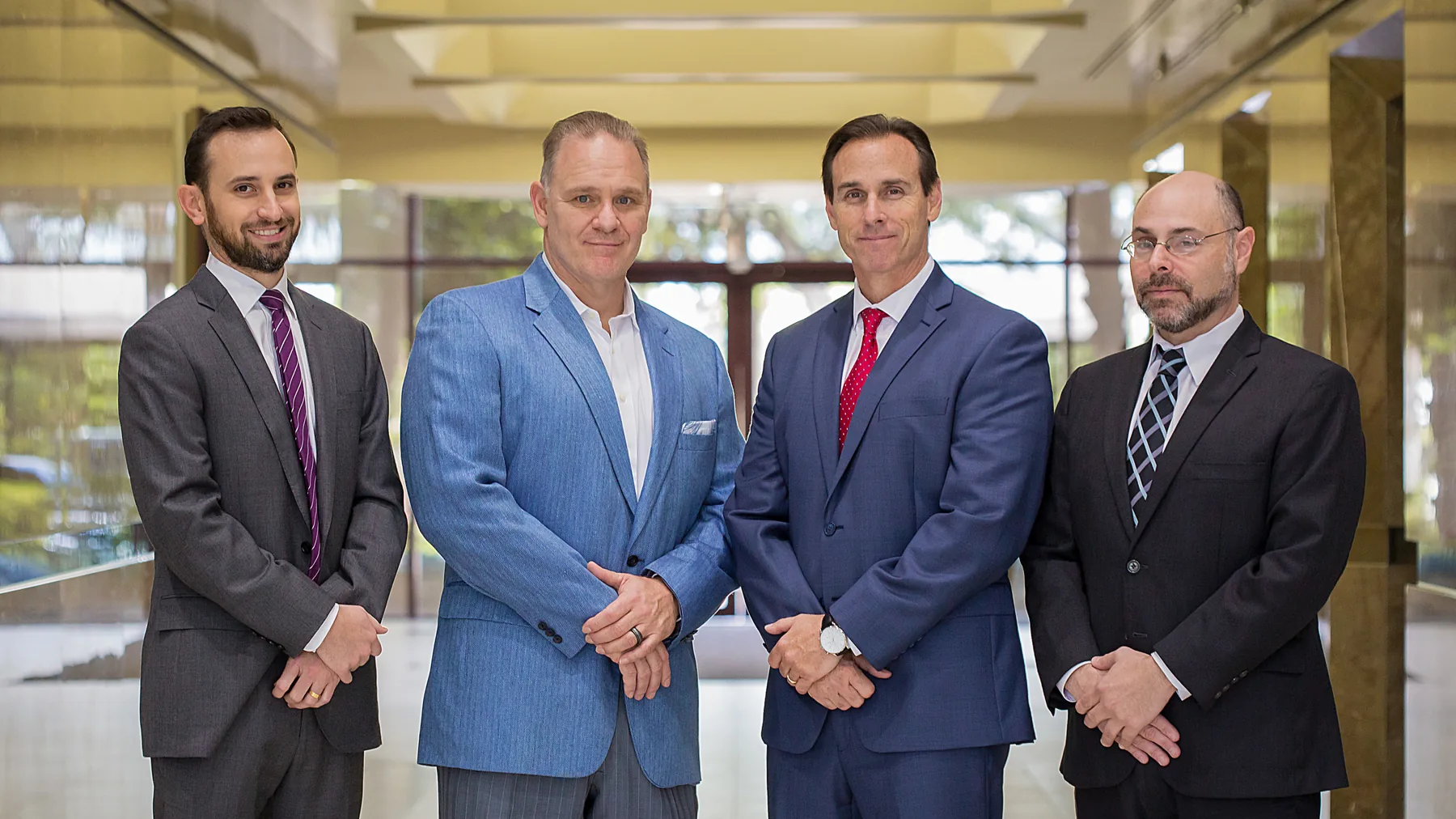
Your case is handled by one of the trial lawyers below, and you will know which of them has it from the first conversation. They do pedestrian and bicycle work week in and week out, they will tell you what your case is worth and why, and they will be straight with you about the parts that are hard.
-
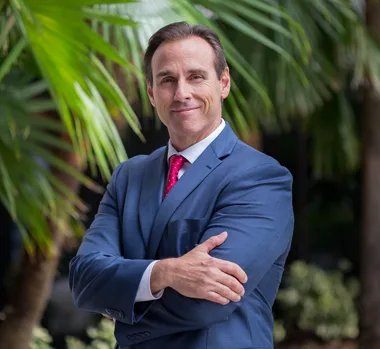 Richard P. Pravato Founding & Managing Attorney Board Certified in Civil Trial Law by The Florida Bar since 2004, and by the National Board of Trial Advocacy. Injury cases exclusively since 1996. Full profile →
 -
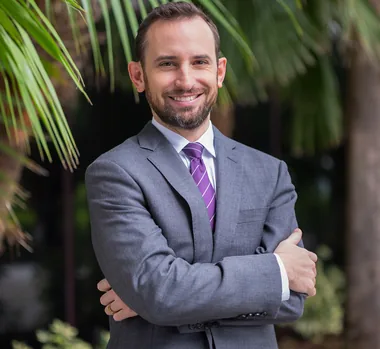 Brett J. Yonon Senior Trial Attorney Selected to Florida Super Lawyers in 2024 and 2025. Brett Yonon is who this firm puts on a catastrophic injury or a death in the family, and he has tried those cases to verdict. Full profile →
Pedestrian and Bicycle questions we are asked
Does my car insurance help if I was hit while walking?
Very often yes, and it surprises people. Florida PIP follows the person, not only the car, so your own policy can cover you as a pedestrian or cyclist even though your vehicle was parked at home. Your uninsured motorist coverage may also apply if the driver fled or had no insurance.
The driver drove off. Is there anything to be done?
Yes. Uninsured motorist coverage commonly responds to hit-and-run claims, including when the injured person was on foot or on a bicycle, and the notice requirements are strict enough that they are worth handling straight away. Separately, camera footage near the scene finds these drivers more often than people assume, but it does not survive long.
The police report blames me. Is my claim over?
No. A crash report reflects an officer’s conclusion, usually formed from the only account available at the scene, which is the driver’s. It is not binding and it is not evidence at trial in the way people imagine. Signal timing, lighting records and the physical damage regularly tell a different story.
Are bicycle claims handled the same way?
Broadly yes. Cyclists have the same rights and duties as drivers on Florida roads, and the same coverage routes apply, including your own PIP and uninsured motorist coverage. The practical difference is that the driver’s account is even more likely to go unchallenged unless someone gathers the physical evidence quickly.
Questions that apply to any Florida injury claim, fees, deadlines, recorded statements and shared fault, are answered on our injury claim FAQ. What we have recovered is on recent case results.
Five Florida offices
We take pedestrian and bicycle claims statewide. Each market below has its own page on this claim, with that office's address, its direct number and the court a case there is filed in.
Fort Lauderdale pedestrian and bicycle claims
2101 W Commercial Blvd, Fort Lauderdale. Serving Broward County.
View →Miami pedestrian and bicycle claims
1111 Brickell Avenue, Miami. Serving Miami-Dade County.
View →West Palm Beach pedestrian and bicycle claims
2101 Vista Parkway, West Palm Beach. Serving Palm Beach County.
View →Boynton Beach pedestrian and bicycle claims
1375 E Gateway Blvd, Boynton Beach. Serving Palm Beach County.
View →Fort Myers pedestrian and bicycle claims
1825 Colonial Blvd, Fort Myers. Serving Lee County.
View →Other claims we handle
Three of the closest to this one. The full list is on our Florida practice areas page.
Tell us what happened
A lawyer will listen, tell you what Florida law does with those facts, and be straight with you about whether it is worth bringing. If it is not, we will say so.
We take cases anywhere in Florida.