
Florida E-Bike Accident Lawyer
You were on a bicycle with a motor, and every insurer involved is about to argue you were on a motorcycle. We can take it from here. Call 954-522-5800 for a free consultation. You pay us nothing unless we win. We have won these claims for Floridians from the Keys to the Panhandle, and we work them from five offices between Fort Lauderdale and Fort Myers.
Every electric bicycle sold since January 1, 2021 carries a permanent label stating its class, top assisted speed and motor wattage, under Fla. Stat. § 316.20655. That label answers the question the other side will build its whole defense on. Photograph it, and the rest of the bike, before anything is repaired or thrown out.

Winning e-bike accident claims for Floridians for more than thirty years
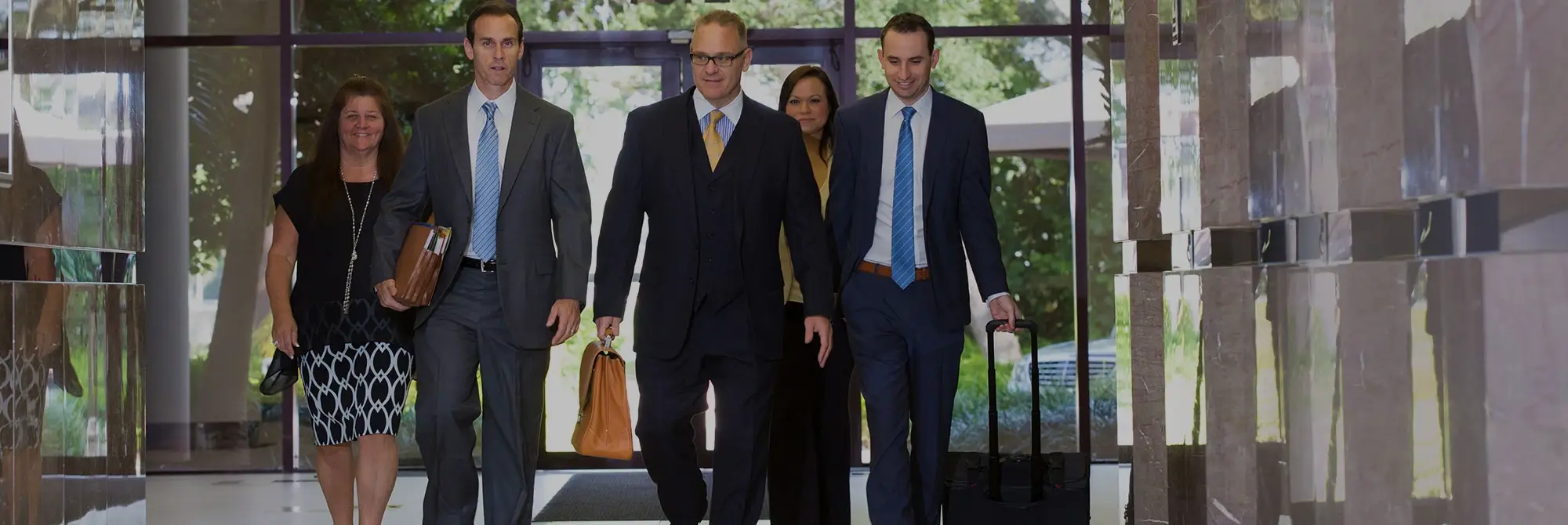
A e-bike accident claim arrives at a hard time, usually while the bills are still coming in and nobody has told you what happens next. You do not have to work it out on your own. The attorneys in this photograph have won these cases across Florida since 1993, from the Keys to the Panhandle, and one of them will handle yours from the first call to the last check.
Call 954-522-5800 for a free consult and a trial lawyer will tell you today whether you have a case. You pay us nothing unless we win, and we work from five offices between Fort Lauderdale and Fort Myers.
Meet the attorneys →What Florida law does with a e-bike accident claim
The insurer would prefer you were a motorcyclist, because it changes what you are owed. Meanwhile you are dealing with the injury, the missed work, and a bike that cost a great deal more than most people assume. Establishing what you were actually riding is what we do, from the first call.
An electric bicycle is a bicycle under Florida law, which is more favorable to a rider than most people expect and is the first thing an insurer will try to argue around. Below is what the statute actually says, what the three classes mean, and how these claims get proved.
Florida treats an electric bicycle as a bicycle, so an e-bike rider has the same rights and duties on the road as any other cyclist and no license or registration is required. Most claims must be filed within two years, and the class of the e-bike is frequently the first thing an insurer disputes.
The deadline that ends a Florida e-bike accident claim
The filing deadline is the ordinary two years. What runs shorter is everything that establishes what the machine was and where the rider was.
Two years to file
Most claims from an accident on or after March 24, 2023 have to be filed within two years. An older accident keeps the four years that applied when it happened. The period is in Fla. Stat. § 95.11, and a death claim runs two years from the date of death.
Where a road defect or a path was part of it, the responsible party is a public body and Fla. Stat. § 768.28 applies: written notice to the agency and, in most cases, to the Department of Financial Services, a waiting period before suit, and caps of $200,000 per person and $300,000 per incident.
Immediately, for the bike itself
Keep it as it is, and do not have it repaired or replaced. Beyond the ordinary damage evidence, the machine is what answers the argument about what class of e-bike it was, and that argument decides how the claim is treated.
Photograph the motor rating, the manufacturer's label and the controls before anything is touched. Many riders cannot say offhand which class their bike is, and the label answers it.
Days, for the footage and the road
Camera footage from the businesses along the road is overwritten within weeks, and where a surface defect or debris contributed, it is swept or patched within days. Both are gone before most people have finished a course of treatment.
The rental record, where the bike was hired
The rental agreement, what was said about the machine and any waiver signed. Beach and resort areas rent these in volume to visitors who are out of state within days, and the paperwork exists in one copy on a phone that gets replaced.
Who can be held answerable
The driver is the obvious defendant. On a serious injury the parties below regularly matter more, because a driver's coverage is rarely enough.
- The driver who hit you. Fla. Stat. § 316.2065 gives a person propelling a vehicle by human power the rights and duties of the driver of any other vehicle, and Fla. Stat. § 316.20655 places an electric bicycle rider in the same position. So a driver who turned across an e-bike has done the same thing they would have done to a car.
- The owner of the vehicle. Florida treats a motor vehicle as a dangerous instrumentality, so whoever owns it answers for how the person they lent it to drove it, frequently with a separate policy behind them.
- An employer, where the driver was working. A delivery van, a service truck, a company car on an errand. Employer coverage is substantially larger than personal coverage and establishing what the driver was doing takes asking.
- The public body responsible for the road or path. A drain grate that takes a wheel, a pavement edge at a lane joint, a bike lane that ends into traffic, a path crossing with no sightline. Design and maintenance decisions with records and prior complaints behind them.
- The manufacturer or the seller. Battery fires, brakes that could not stop the mass and speed involved, and frames or forks that failed. Electric bicycles are heavier and faster than pedal bicycles and the components are not always rated for it. Proved from the item itself, which means it must not be repaired or scrapped.
- A rental operator. Where the machine was hired, the condition it was supplied in, the instruction given and what the operator knew about the model are all documented and all discoverable.
How a Florida e-bike accident case actually runs
One question runs through the whole of an e-bike case and it does not arise on a pedal bicycle: what the machine legally was.
- Establish the class of the bicycle. Fla. Stat. § 316.003 defines the three classes of electric bicycle by how the motor assists and at what speed it stops assisting. Which class a machine falls into decides how it is treated on the road and on paths, and it is established from the manufacturer's label and specification rather than from anybody's description of it.
- Know what the statute gives the rider. Fla. Stat. § 316.20655 provides that an electric bicycle or its rider has the same rights and duties as a bicycle or bicycle rider, and that an electric bicycle may be ridden where bicycles are allowed. It also provides that no license, registration or insurance is required to operate one, which removes an argument insurers still try.
- Establish where the rider was on the road. Fla. Stat. § 316.2065 requires somebody riding slower than traffic to use the bicycle lane or keep as close as practicable to the right-hand curb, with exceptions for overtaking, turning left and avoiding hazards. An e-bike frequently moves at close to traffic speed, which changes how that rule applies and is worth establishing with the speed the machine was capable of.
- Measure the passing distance where that is the issue. Fla. Stat. § 316.083 requires a driver overtaking a bicycle or an electric bicycle to pass at a safe distance of not less than three feet. It is a specific measurable rule rather than a general argument about care.
- Preserve the footage, the machine and the vehicle. In writing, to the businesses along the road and to the insurer holding the car. Where the impact landed on the vehicle, and how high, establishes speed and whether the driver braked.
- Treatment runs its course. E-bike riders arrive at collisions faster than pedal cyclists and take correspondingly worse injuries: head, shoulder, clavicle and pelvis, frequently several at once. Valuing a claim before the physicians can say what is permanent means valuing it low.
- Demand, suit, discovery and mediation. Fla. Stat. § 627.4137 produces the policy limits in a sworn statement within 30 days of a written request. Fla. Stat. § 47.011 puts the case where it happened or where the defendant is, most Florida courts require mediation, and Fla. Stat. § 768.79 lets either side serve a formal offer with fees running from a refusal the judgment beats by at least 25 percent.
What the claim is worth, and how that number is built
These claims are valued like any serious injury case, with one argument specific to the machine and one the law has already answered.
The helmet argument, which the statute answers
Fla. Stat. § 316.2065 requires a helmet only for riders and passengers under 16, and then provides that failure to wear one may not be considered evidence of negligence or contributory negligence. It gets raised anyway in almost every one of these claims, and the answer is the statute, in writing, early.
The speed argument, which it does not
The other side will argue an e-bike was going too fast for where it was. What the machine was actually capable of, what the class permits and what the conditions allowed are established from the specification and the scene rather than conceded.
The medical care, past and future
Everything billed and what the treating physicians say is still ahead. Shoulder and pelvic injuries are managed conservatively for a year before the surgical decision arrives, and the second figure is regularly the larger one.
Income, and the capacity to earn it
Wages missed, and separately the work that is no longer possible, proved with an economist and the treating physicians rather than asserted.
The fault split, and the line at 50 percent
Fault is divided under Fla. Stat. § 768.81 and, since March 2023, a person found more than 50 percent responsible for their own harm recovers nothing at all. In an e-bike case the defense aims at that line with speed, lane position and the class of the machine, which is why the specification and the physical evidence matter more than the accounts.
What is repaid out of the recovery
Health insurance, Medicare and Medicaid are repaid, with Fla. Stat. § 768.76 keeping those payments from being deducted from the award because the repayment right already exists.
What changes from one part of Florida to another
Florida has adopted electric bicycles faster than almost anywhere, and what differs across the state is who is riding them and where they are allowed.
Local rules on paths and sidewalks
The statute sets the statewide position and local governments still regulate where these machines may be ridden on paths, sidewalks and beachfront areas. What was permitted at the specific place matters, and it is established from the ordinance rather than from a sign somebody half remembers.
Rental fleets in beach and resort markets
Visitors hire these in volume with no local knowledge, on machines they have never ridden, on roads they do not know. Those claims add a rental agreement, an out-of-state rider and a case that has to be built locally before they go home.
Delivery riders
A growing share of e-bike riders are working, which adds an employer or a platform and frequently a second claim alongside the injury one. What the rider was doing at that moment is worth establishing at the outset.
A proven record, anywhere in Florida
Our five offices run from Fort Lauderdale to Fort Myers, and we act statewide on these claims.
The insurance behind a Florida e-bike accident claim
No policy attaches to the bicycle, and the coverage that answers is almost always somebody's auto insurance, frequently the rider's own.
Your own auto policy pays first
Fla. Stat. § 627.736 follows the person rather than the vehicle. An e-bike rider struck by a car is covered by their own auto policy, and where they have none, by a policy in their household: $10,000 in benefits, being 80 percent of reasonable medical expenses and 60 percent of lost wages, regardless of fault.
A qualifying provider has to be seen within 14 days or none of it is payable, and the full amount is available only where a provider finds an emergency medical condition.
No insurance is required to ride one
Fla. Stat. § 316.20655 provides that no insurance is required to operate an electric bicycle, which is a benefit while nothing goes wrong and a problem afterward. It means there is no policy on the machine to answer for anything.
The driver may have nothing that pays you
Florida requires an ordinary private driver to carry the benefits above and $10,000 of property damage liability under Fla. Stat. § 324.022, and nothing at all for injuring somebody else.
Uninsured motorist coverage, which is the answer
Fla. Stat. § 627.727 requires an insurer to offer it with every liability policy and allows it to be left off only where the customer signed a written rejection. For a rider it is the single most valuable coverage there is, it covers a hit and run, and whether limits stack across vehicles is decided by a separate signed form.
Homeowners and umbrella coverage, occasionally
Some household policies reach an e-bike, and an umbrella above them frequently carries a million dollars or more. It is found by asking for every policy in the household rather than by being offered it.
What actually decides an e-bike case here
You had the right to be there, and the statute says so
Florida settled this in 2020. Under Fla. Stat. § 316.20655, an electric bicycle and its rider get all the rights and privileges of a bicycle and its rider, and an e-bike is a vehicle to the same extent a bicycle is. The same section says an e-bike may be ridden anywhere bicycles are allowed: streets, highways, roadways, shoulders, bicycle lanes and multiuse paths.
It also says, in terms, that you needed no driver license, no registration, no title and no financial responsibility to be on it. That matters because the first thing an adjuster reaches for is that you were operating an unregistered motor vehicle without insurance. You were not, and the statute is one sentence long on the point.
The speed argument, and the label that ends it
The defense in almost every one of these cases is that you were traveling far faster than a bicycle and appeared out of nowhere. Florida defines three classes in Fla. Stat. § 316.003(23), all under 750 watts: Class 1 assists only while you pedal and stops at 20 mph, Class 2 can drive the bike on its own and stops at 20 mph, Class 3 assists only while you pedal and stops at 28 mph.
A manufacturer’s label naming the class is therefore a cap on what the bike could do, and it is physical evidence sitting on the frame of a bike that is about to be scrapped. One honest caution: the statute also prohibits modifying an e-bike to change its speed capability without replacing that label. If the bike was derestricted, tell us at the first conversation. It is a problem we can work with and a disaster if the other side finds it first.
Where it happened can change the rules
The statute leaves real power with cities and counties. A local government may set a minimum age to ride, may require the rider to carry photographic identification, and may restrict or ban e-bikes on a particular path, trail network, beach or dune. Those ordinances differ from one municipality to the next along the same stretch of coast.
So the local rule where you were riding has to be read rather than assumed, and it has to be read early. It cuts both ways: an ordinance the driver breached is worth as much to your case as one the other side hopes you breached.
What we go after in the first weeks
- The bike itself, unrepaired, with the classification label photographed and the frame number recorded
- Any speedometer, app or GPS record showing your actual speed rather than the one being alleged
- Business, doorbell and dashcam footage along the route, most of which is overwritten within weeks
- The ordinance in force in that municipality on that date, for the path, lane or beach involved
- The driver’s account at the scene, given before anyone had thought about what an e-bike is
- The vehicle’s event data recorder, which records its speed and braking regardless of yours
The insurance question nobody warns riders about
This is the part that goes wrong quietly, which is why it is at the bottom of this page rather than the top. Florida PIP pays people struck by a motor vehicle while they are not an occupant of a self-propelled vehicle, under Fla. Stat. § 627.736. A pedal bicycle is plainly not self-propelled, so a cyclist who owns a car is usually covered by their own policy.
An e-bike with a throttle is where insurers argue the exclusion applies, and the answer can turn on which of the three classes you were riding. It is a live argument rather than a settled one, and it can decide whether anything at all pays your first hospital bill. Send us your declarations page and we will read it before you need the answer. Uninsured motorist coverage and health insurance are the other two routes, and which one goes first is worth getting right the first time.
What we have recovered on these claims
Matters this firm handled in this area of law. Figures are gross recoveries, before attorney fees, costs and medical liens come out of them.
Our client was riding his e-bike to work along North Federal Highway in Boca Raton when an SUV turned right into a parking lot across his path, knocking him off the bike and tearing his shoulder badly enough to need surgery.
Full policy limits settlementEvery verdict and settlement we publish, with the press coverage for the ones that were reported. No result predicts another case: every claim turns on its own facts, its own evidence and the insurance actually available.
Who would handle your case
Your case is handled by one of the trial lawyers below, and you will know which of them has it from the first conversation. They do e-bike accident work week in and week out, they will tell you what your case is worth and why, and they will be straight with you about the parts that are hard.
-
 Richard P. Pravato Founding & Managing Attorney Board Certified in Civil Trial Law by The Florida Bar since 2004, and by the National Board of Trial Advocacy. Injury cases exclusively since 1996. Full profile →
 -
 Brett J. Yonon Senior Trial Attorney Selected to Florida Super Lawyers in 2024 and 2025. Brett Yonon is who this firm puts on a catastrophic injury or a death in the family, and he has tried those cases to verdict. Full profile →
E-Bike Accident questions we are asked
Do I need a license or insurance to ride an e-bike in Florida?
No. Fla. Stat. § 316.20655 states that an electric bicycle and its operator are not subject to the laws on financial responsibility, driver or motor vehicle licenses, vehicle registration or title certificates. If an adjuster suggests you were operating an unregistered vehicle without insurance, that is wrong, and the statute says so in a single sentence.
The driver says I was going too fast for a bicycle. Does that hurt my claim?
It is the standard defense and the bike itself usually answers it. Florida caps assistance at 20 mph on a Class 1 or Class 2 e-bike and 28 mph on a Class 3, and every e-bike sold since January 1, 2021 carries a permanent label naming its class. Photograph that label before the bike is repaired or discarded.
Where am I allowed to ride an e-bike?
Anywhere bicycles are allowed, including streets, roadways, shoulders, bicycle lanes and multiuse paths. The exception is local: a city, county or state agency can restrict e-bikes on a specific path, trail network, beach or dune, and can set a minimum riding age. Those ordinances vary between neighboring municipalities, so the one that applied where you were riding has to be checked.
Will my own car insurance pay my medical bills after an e-bike crash?
Possibly, and it is worth checking immediately. Florida PIP covers people struck by a motor vehicle while not an occupant of a self-propelled vehicle, which plainly covers a pedal cyclist. Whether a throttle-driven e-bike falls inside that exclusion is genuinely arguable. Send us your declarations page and we will read it at no charge rather than guess.
Someone had derestricted the bike. Is the case over?
No, but tell us at the first conversation rather than later. Florida prohibits modifying an e-bike to change its speed capability without replacing the classification label, so it is a point the defense will make if it finds it. It goes to comparative fault, not to whether the driver who hit you was careless, and those are separate questions.
Questions that apply to any Florida injury claim, fees, deadlines, recorded statements and shared fault, are answered on our injury claim FAQ. What we have recovered is on recent case results.
Five Florida offices
We take e-bike accident claims statewide. Each market below has its own page on this claim, with that office's address, its direct number and the court a case there is filed in.
Fort Lauderdale
2101 W Commercial Blvd, Fort Lauderdale. Serving Broward County.
View →Miami
1111 Brickell Avenue, Miami. Serving Miami-Dade County.
View →West Palm Beach
2101 Vista Parkway, West Palm Beach. Serving Palm Beach County.
View →Boynton Beach
1375 E Gateway Blvd, Boynton Beach. Serving Palm Beach County.
View →Fort Myers
1825 Colonial Blvd, Fort Myers. Serving Lee County.
View →Other claims we handle
Three of the closest to this one. The full list is on our Florida practice areas page.
Tell us what happened
A lawyer will listen, tell you what Florida law does with those facts, and be straight with you about whether it is worth bringing. If it is not, we will say so.
We take cases anywhere in Florida.