
Florida Slip and Fall Lawyer
A slip and fall claim turns on what the property knew and when. We go after the records that show it. We can take it from here. Call 954-522-5800 for a free consultation. You pay us nothing unless we win. We have won these claims for Floridians from the Keys to the Panhandle, and we work them from five offices between Fort Lauderdale and Fort Myers.
Most retail surveillance systems overwrite themselves on a 14 to 30 day cycle. The footage showing how long that spill sat there is usually the whole case, and no one at the store has any obligation to preserve it until they are asked in writing. That letter needs to go out in days, not months.
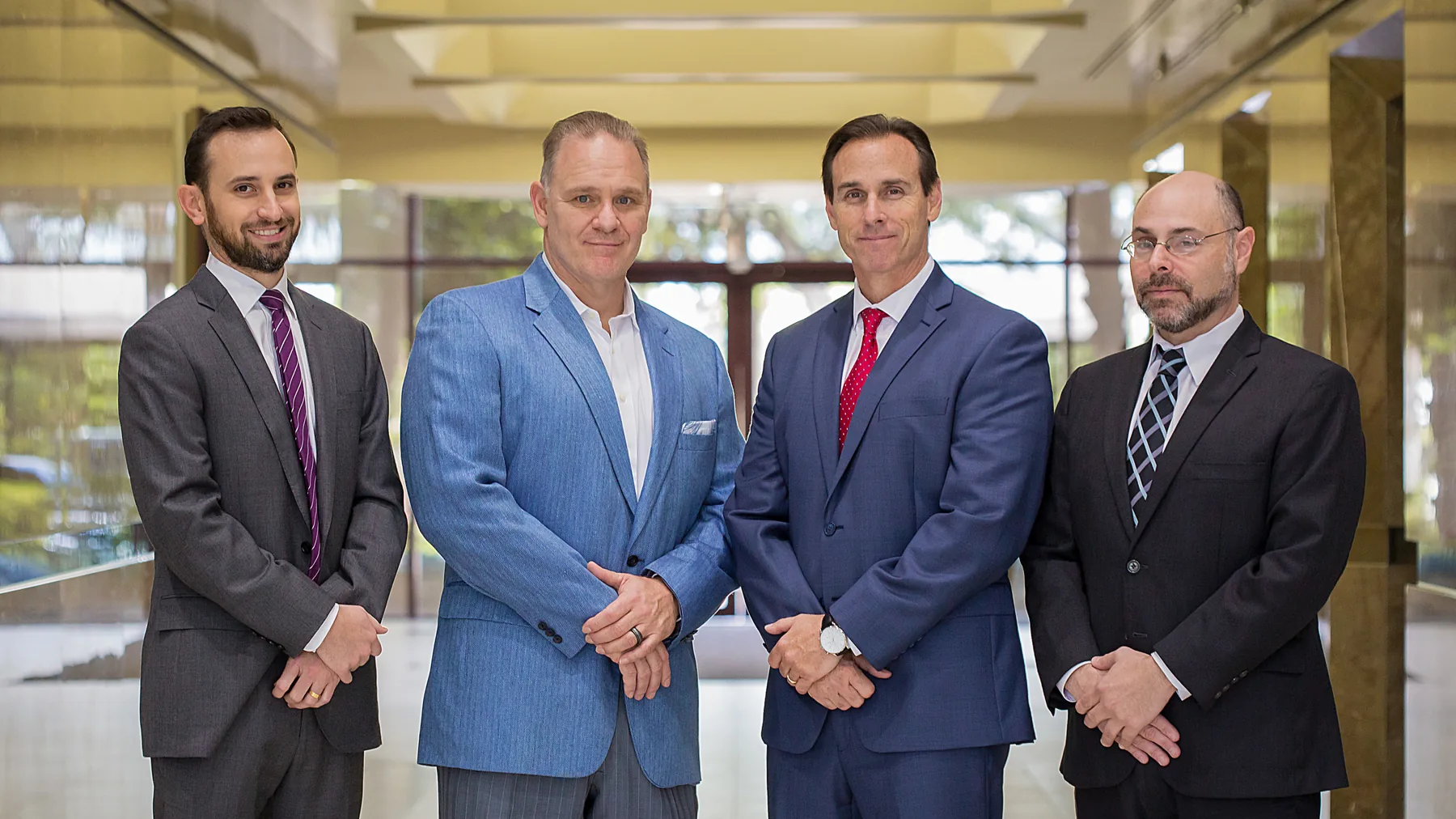
Our team will not let you go through a slip and fall claim alone
A bad fall is hard enough without the store deciding on the spot that it was your own fault. Nothing undoes the fall, and we will not pretend otherwise. What we can do is make the property owner answer for the hazard they left there, and we will take the case as far as it has to go.
Our trial attorneys have won slip and fall cases across Florida since 1993, from the Keys to the Panhandle, and one of them will handle yours from the first call to the last check. Call 954-522-5800 for a free consult and a trial lawyer will tell you today whether you have a case. You pay us nothing unless we win, and we work from five offices between Fort Lauderdale and Fort Myers.
Meet the attorneys →What Florida law does with a slip and fall claim
A business writes its own account of a fall on the day it happens, and its insurer asks the injured person for a recorded statement well before any specialist has examined them. Meanwhile you are working out how to pay for the first scan, how long you will be off your feet, and whether anybody even kept the video. Getting hold of that proof is our job, and we start the day you call.
A fall claim is decided on what the property knew and when it knew it, not on how badly somebody was hurt. Florida wrote that rule into a statute, and it is the reason these cases turn on paperwork most people never think to ask for. Below is the law behind that, who can be made to answer, and how a case is actually built.
A Florida slip and fall claim generally has to be filed within two years. Winning it means proving the business knew about the hazard or should have known, which is a higher bar than in most states, and the evidence that proves it is video and cleaning records the property deletes on its own schedule.
The deadline that ends a Florida slip and fall claim
The filing deadline is generous compared with the evidence, which is why these cases are lost early rather than late.
Two years to file
Most claims from an accident on or after March 24, 2023 have to be filed within two years. An older accident keeps the four years that applied when it happened. The period is set by Fla. Stat. § 95.11 and it runs from the fall. Where somebody died, the claim is a wrongful death action with two years running from the date of death.
Thirty to ninety days, for the video
Nearly every store, hotel, restaurant and parking garage in Florida records continuously and overwrites on a loop. A month is common and older systems regularly hold two weeks. Nobody preserves your fall unless somebody asks, and asking has to be in writing and has to name the cameras and the time window.
A property that received a written demand and then let the recording overwrite has a serious problem in front of a jury. A property that never heard from anyone has no problem at all, which is the difference a letter in week one makes.
The cleaning and inspection records, which age out too
Sweep logs, floor-care schedules, work orders, prior complaints about the same spot. These are how the knowledge question gets answered, and retention policies vary from a few months to a couple of years. They are requested by name, early, because a business that has already replaced the flooring will not go looking for them later.
Public property runs on a different timetable
A fall in a government building, a public school, a county park or a municipal garage falls under Fla. Stat. § 768.28: written notice to the agency and, in most cases, to the Department of Financial Services, a waiting period before suit can be filed, and caps of $200,000 per person and $300,000 per incident.
Who can be held answerable
One fall frequently involves three companies who each say it was one of the others. Sorting that out is done from the lease and the service contracts rather than by asking.
- The business running the place. The store, restaurant, hotel or gym that controlled the floor you fell on, which is where the duty to inspect and to warn usually sits. It is the obvious defendant and frequently not the only one.
- The owner of the building. A separate company from the tenant in most commercial property, with responsibility carved up by a lease that says who maintains what. A structural defect, a failing walkway or a lighting problem often lands on the owner rather than on the business inside.
- The management company. Shopping centers, office parks and apartment complexes are usually run by a manager under contract, with its own duties, its own staff and its own insurance. It is regularly the party that actually knew.
- The contractor that cleaned, maintained or built it. A janitorial company that stripped a floor and left it slick, a landscaper whose sprinkler ran across a walkway, a contractor whose ramp does not meet the slope it was built to. Each has a contract, a record and a policy.
- A condominium or homeowners association. Common areas of a community are the association’s responsibility, and Florida has an enormous number of them. Association records, board minutes and prior complaints are usually available and are usually decisive.
- A public body. Sidewalks, parks, schools, courthouses, transit stations and government offices, subject to the notice requirements and the caps in Fla. Stat. § 768.28.
How a Florida slip and fall case actually runs
Florida makes a fall claim harder to win than most states do, and the whole sequence below exists to answer the one question the statute asks.
- Understand the test you have to meet. Under Fla. Stat. § 768.0755 a person who falls on a transitory foreign substance in a business has to prove the business had actual or constructive knowledge of the dangerous condition and should have done something about it. Constructive knowledge is proved by circumstantial evidence: that the condition existed long enough that ordinary care would have found it, or that it happened regularly and was foreseeable. That is the whole case in one sentence.
- Preserve the video, in writing, immediately. Naming the date, the time window and the area, and asking for the footage from before the fall as well as after it. What matters most is frequently the twenty minutes before, because that is what shows how long the hazard sat there and who walked past it.
- Get the incident report. Most businesses complete one, most will not hand it over without a request, and it fixes the date, the location, the staff on duty and the version of events given before anybody had a lawyer.
- Ask for the records that answer the knowledge question. Sweep and inspection logs for that day and the weeks before, work orders on the same area, prior incidents at the same spot, and the maintenance history of whatever failed. The second and third of those are what turn a single spill into a foreseeable one.
- Treat the injury, and let it declare itself. Falls produce shoulder, hip, wrist and spinal injuries that are treated conservatively for months before anyone knows whether surgery is coming. A claim valued before that point is valued as the cheaper version of itself.
- The demand, with the knowledge evidence attached. A demand in a fall case is an argument about what the property knew, supported by its own documents. Sending one without them invites the answer these claims always get, which is that nobody knew anything.
- Suit, discovery and the corporate witness. Fla. Stat. § 47.011 puts the case where the fall happened or where the defendant is. Discovery reaches the store’s own policies and the person the company designates to explain whether it followed them, which is regularly more useful than any individual employee.
- Mediation, and a formal offer. Most Florida courts require mediation. Fla. Stat. § 768.79 lets either side serve a formal offer, with attorney fees running from the date of a refused offer where the judgment beats it by at least 25 percent.
What the claim is worth, and how that number is built
Fall cases are valued the same way as any injury claim, with one difference that dominates everything: the argument about what you should have seen.
The medical care, both halves
Everything billed and what the treating physicians say is still ahead. A shoulder or a hip treated without surgery for a year is inexpensive right up until the year it is not, and an early settlement is priced on the cheap version.
Income, and the ability to earn it
Wages missed are arithmetic. What somebody can no longer do for a living is a separate and larger claim, proved with an economist and the treating physicians. It matters most in exactly the cases where people undervalue it, which is older workers doing physical jobs.
Pain, suffering and what stopped
A hip fracture at seventy is not the same case as a hip fracture at forty, and the difference is not medical. It is the independence that does not come back.
Your share of the fault, and the hard line at 50 percent
This is where fall cases are won and lost. Fault is divided under Fla. Stat. § 768.81, so an award drops by whatever percentage is put on you, and since March 2023 anybody found more than 50 percent responsible for their own harm recovers nothing.
Every defense in these cases is aimed at that line: the hazard was open and obvious, you were on your phone, you were wearing the wrong shoes, a cone was out. Answering it is why the video of the twenty minutes before the fall is worth more than any photograph taken after it.
What comes back out of the recovery
Health insurance, Medicare and Medicaid pay and then get repaid. Fla. Stat. § 768.76 keeps those payments from being deducted from the award, since the right to be repaid already exists. Reducing those claims is a real part of what a client keeps.
What changes from one part of Florida to another
The statute is identical everywhere in Florida. Who is on the other side of the claim is not, and it changes how a case runs.
A national chain is a different opponent from a local owner
Large retailers and hotel groups pay the first substantial slice of every claim themselves before any insurer is involved, which means the decision-maker is an in-house risk department with its own numbers rather than an adjuster. They also keep good records, which cuts both ways: the sweep log that hurts them exists.
A single-location property with an ordinary liability policy behaves completely differently, and its records are frequently thinner or absent, which is its own kind of evidence.
Hotels, resorts and attractions
Florida has more of these than anywhere, and a fall at one usually involves a guest who lives somewhere else, medical treatment in another state, and a management structure with several companies in it. Those cases take longer for reasons that have nothing to do with the injury.
Communities and associations
An extraordinary share of Florida property sits under a condominium or homeowners association, so a great many falls happen in a common area controlled by a board with meeting minutes, budgets and a maintenance history. That paper trail is more accessible than a private company’s and it frequently shows the problem was raised before somebody fell.
A proven record, anywhere in Florida
Our five offices run from Fort Lauderdale to Fort Myers. A fall in a part of the state we hold no office in is still our case, and we have litigated in courts across Florida.
The insurance behind a Florida slip and fall claim
A fall claim has no equivalent of the coverage that pays a car accident victim’s first bills, and that surprises people badly in the first month.
Nothing pays automatically, and people delay care because of it
After a car crash your own policy pays the first medical bills whoever was at fault. There is no such thing after a fall. The property’s insurer pays when it accepts responsibility or is made to, which is months away at best.
So people wait, and the wait becomes the argument: if you were really hurt, why did you not go for three weeks? Go on health insurance, let the repayment be worked out at the end, and do not let a coverage question decide your treatment.
The policy on the other side is commercial liability
A business carries general liability coverage, and how much is a matter of what it bought. Fla. Stat. § 627.4137 requires disclosure of the limits of each known policy, including excess and umbrella layers, in a sworn statement within 30 days of a written request. On a serious injury that request goes out early, because the answer decides whether one defendant is enough.
Medical payments coverage, which sometimes exists
Some commercial policies carry a small medical payments benefit that pays regardless of fault, often a few thousand dollars. Nobody volunteers it. It is worth asking for, and accepting it does not settle the claim, though anything presented for signature alongside it should be read by a lawyer first.
When the property is a public body
A government defendant does not behave like an insurer at all. Fla. Stat. § 768.28 controls it: notice first, a waiting period, no punitive damages, and a hard cap of $200,000 per person and $300,000 per incident regardless of what the injury is worth. Anything above the cap requires the Legislature to pass a bill, which is rare and slow.
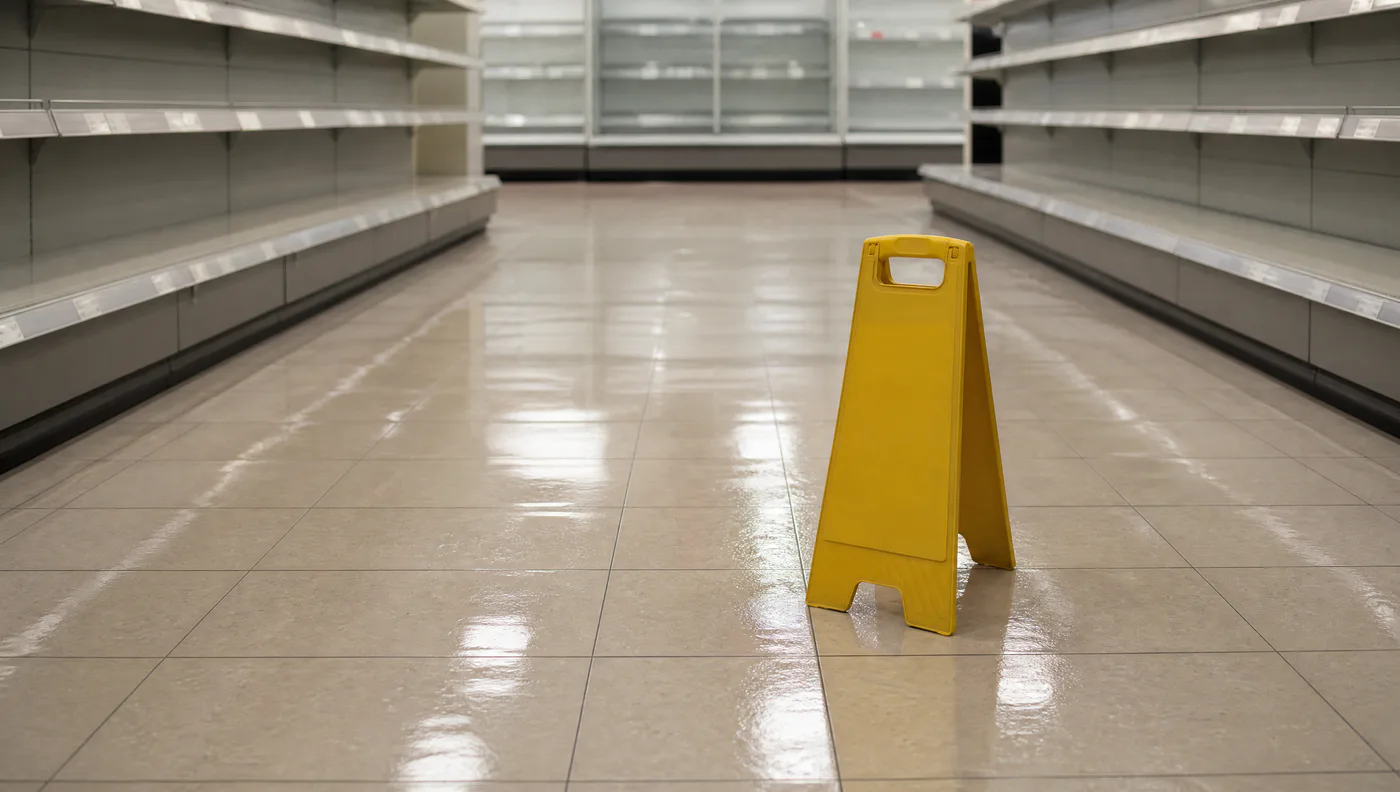
What Florida actually makes you prove
The knowledge requirement
Fla. Stat. § 768.0755 governs falls caused by a transitory foreign substance in a business establishment. It requires the injured person to prove the business had actual or constructive knowledge of the dangerous condition and should have taken action.
Constructive knowledge can be shown by circumstantial evidence: that the condition existed long enough that the business should have discovered it in the exercise of ordinary care, or that it occurred with regularity and was therefore foreseeable. That is a real burden, and it is why so many of these claims fail when they are brought late.
How you actually prove a store knew
- Surveillance footage with a timestamp showing how long the substance was on the floor
- Sweep logs and inspection sheets, which many chains keep and few produce voluntarily
- The incident report the manager filled out, including what they wrote about the cause
- Prior incidents at the same location, which establish the condition recurred
- Employee statements taken before the company’s risk department reaches them
- Photographs of the substance, the lighting and any missing warning cone
What to do in the first hour
Report it to a manager before you leave and ask for a copy of the incident report. Photograph the floor, the substance, the surrounding area and your shoes. Get names and phone numbers of anyone who saw it. Seek medical attention the same day, because a gap between the fall and the first treatment is the first thing the defense will point at.
If you have already left without doing any of this, the case is not over. It does mean the written preservation request becomes urgent.
Falls that happen while you are at work, on somebody else’s property
A delivery driver, a home health aide, a service technician, an inspector and a cleaner all spend the working day on property their employer does not own. A fall there is a workers compensation claim, and it is also an ordinary premises claim against whoever was responsible for the floor.
The distinction that matters is who controlled the hazard. Your employer is protected by the comp system. The store, the warehouse, the office building or the homeowner is not, and what they owed you is the same duty they owed any other visitor. Comp pays the bills while that is worked out and takes a share back at the end. How the two fit together is set out on our workers compensation page.

What we have recovered on these claims
Matters this firm handled in this area of law. Figures are gross recoveries, before attorney fees, costs and medical liens come out of them.
A restaurant that ignored its own posted safety procedures broke an elderly client’s arm, then argued at trial that she had taken too much medication, then not enough, and finally that she caused the spill herself from fifteen feet away.
Miami-Dade jury verdictOur client was leaving a restaurant through the lobby of the Westin Fort Lauderdale Beach Resort when she slipped on a freshly mopped floor and fractured her ankle.
Settlement after suit was filedEvery verdict and settlement we publish, with the press coverage for the ones that were reported. No result predicts another case: every claim turns on its own facts, its own evidence and the insurance actually available.
Who would handle your case
Your case is handled by one of the trial lawyers below, and you will know which of them has it from the first conversation. They do slip and fall work week in and week out, they will tell you what your case is worth and why, and they will be straight with you about the parts that are hard.
-
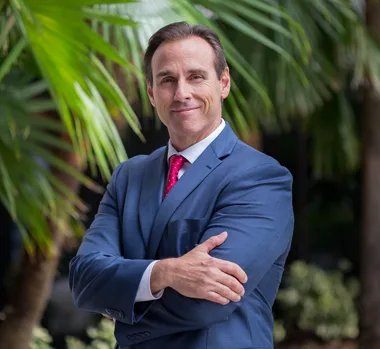 Richard P. Pravato Founding & Managing Attorney Board Certified in Civil Trial Law by The Florida Bar since 2004, and by the National Board of Trial Advocacy. Injury cases exclusively since 1996. Full profile →
 -
 Brian H. Malamud Senior Trial Attorney More than twenty years on the Wolf & Pravato trial team. Brian Malamud has handled your kind of case many times over, and he knows early which parts of it are going to decide it. Full profile →
 -
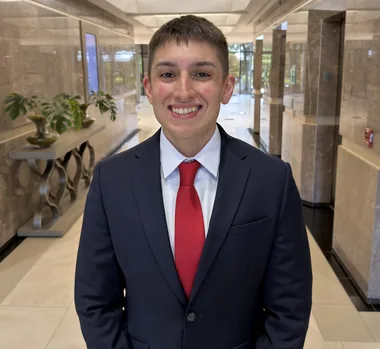 Alazay Ventura-Coffey Trial Attorney On his first day as a sworn attorney, Alazay Ventura-Coffey co-chaired a Broward County jury trial that returned $1,387,060.58. He has built every case that way since. Full profile →
Slip and Fall questions we are asked
Why are slip and fall cases harder in Florida?
Because of Fla. Stat. § 768.0755. In many states, proving a dangerous condition existed is close to enough. Florida additionally requires proof that the business knew about it or that it had been there long enough that they should have. That extra element is what the case is usually fought over.
The store made me fill out an incident report. Was that a mistake?
No, reporting it was the right thing to do. What matters is what you wrote. People routinely understate their injuries in the first hour because adrenaline masks them, and that report gets read back later. Ask for a copy of anything you signed, and do not give a recorded statement to their insurer afterward.
Can I still bring a claim if I was looking at my phone?
Possibly, but your share of fault matters more than it used to. Since March 2023 Florida bars recovery entirely for anyone found more than 50 percent responsible, and reduces it proportionally below that. It is worth an honest conversation about the facts early rather than discovering the problem later.
How quickly do I need to act?
Faster than the filing deadline suggests. Surveillance video is commonly overwritten within 14 to 30 days, and once it is gone, proving how long the hazard sat there becomes very difficult. A written preservation demand in the first days is often the single most valuable step in the whole case.
Questions that apply to any Florida injury claim, fees, deadlines, recorded statements and shared fault, are answered on our injury claim FAQ. What we have recovered is on recent case results.
Five Florida offices
We take slip and fall claims statewide. Each market below has its own page on this claim, with that office's address, its direct number and the court a case there is filed in.
Fort Lauderdale slip and fall claims
2101 W Commercial Blvd, Fort Lauderdale. Serving Broward County.
View →Miami slip and fall claims
1111 Brickell Avenue, Miami. Serving Miami-Dade County.
View →West Palm Beach slip and fall claims
2101 Vista Parkway, West Palm Beach. Serving Palm Beach County.
View →Boynton Beach slip and fall claims
1375 E Gateway Blvd, Boynton Beach. Serving Palm Beach County.
View →Fort Myers slip and fall claims
1825 Colonial Blvd, Fort Myers. Serving Lee County.
View →Other claims we handle
Three of the closest to this one. The full list is on our Florida practice areas page.
Tell us what happened
A lawyer will listen, tell you what Florida law does with those facts, and be straight with you about whether it is worth bringing. If it is not, we will say so.
We take cases anywhere in Florida.