
Florida Premises Liability Lawyer
Premises liability claims turn on what an owner knew before somebody got hurt. We go after the proof of it. We can take it from here. Call 954-522-5800 for a free consultation. You pay us nothing unless we win. We have won these claims for Floridians from the Keys to the Panhandle, and we work them from five offices between Fort Lauderdale and Fort Myers.
These cases turn on what the owner already knew. Police call histories for the same address, prior incident reports and tenant complaints are usually something we can get, and they are what converts "nobody could have predicted this" into a documented pattern the owner chose not to act on.
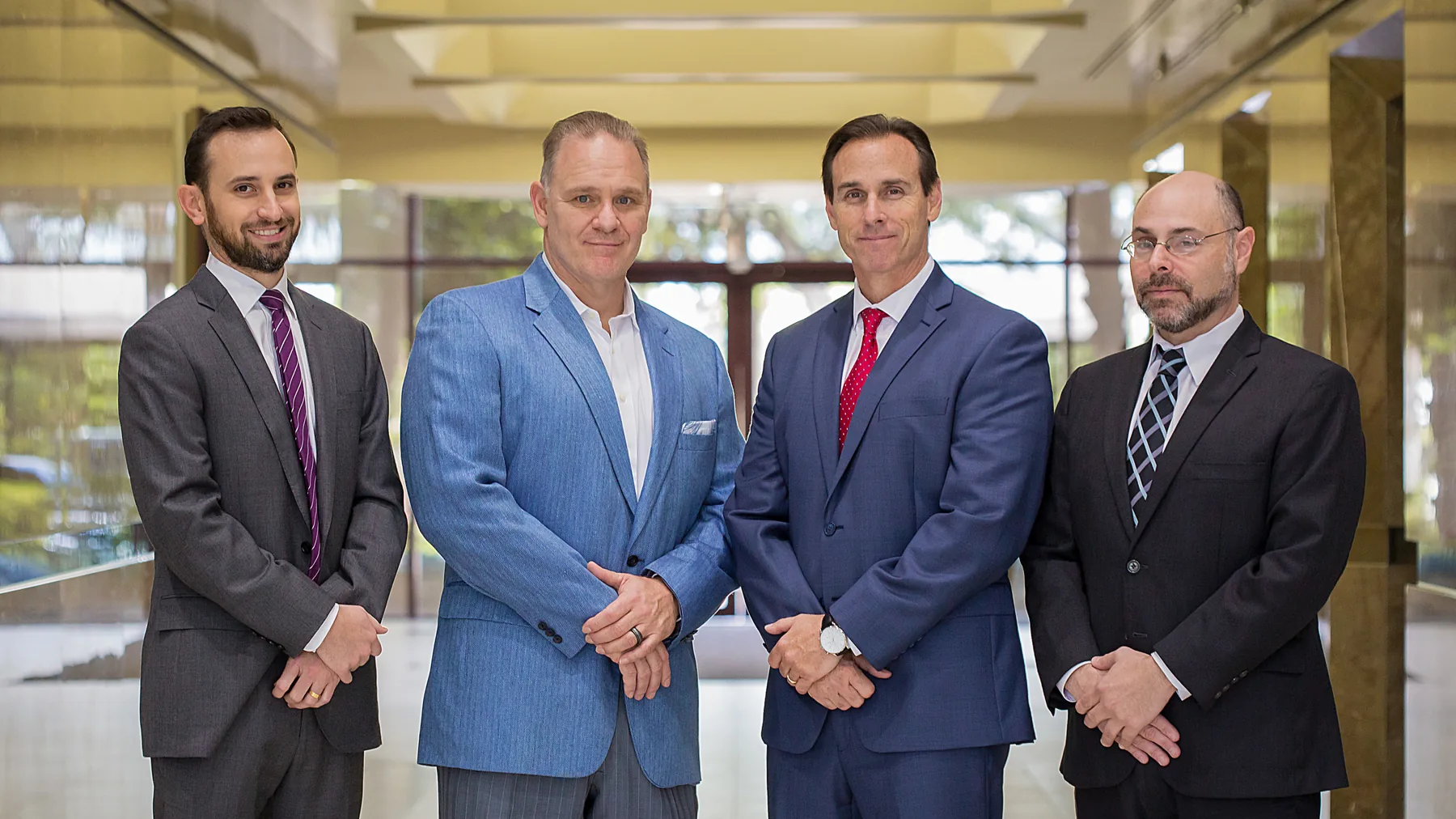
Our team will not let you go through a premises liability claim alone
Getting hurt somewhere you had every reason to feel safe is hard enough without the owner acting like it never happened. Nothing undoes the injury, and we will not pretend otherwise. What we can do is make the owner answer for a danger they already knew about, and we will take the case as far as it has to go.
Our trial attorneys have won premises liability cases across Florida since 1993, from the Keys to the Panhandle, and one of them will handle yours from the first call to the last check. Call 954-522-5800 for a free consult and a trial lawyer will tell you today whether you have a case. You pay us nothing unless we win, and we work from five offices between Fort Lauderdale and Fort Myers.
Meet the attorneys →What Florida law does with a premises liability claim
A property owner’s first answer to an injury claim is that nobody could have foreseen it, and the second is that the injured person should have been looking where they were going. Meanwhile you are dealing with the injury, the time off, and a management company that has stopped returning calls. Proving what they were told before it happened is our job, and we start the day you call.
Premises liability covers everything that happens to somebody because of the state of a property: a stair that gave way, an assault in an unlit parking lot, something falling from a shelf, a balcony rail that let go. Below is what the law asks in each of those, who can be made to answer, and how a case gets built out of records the property would rather not produce.
A Florida premises liability claim generally has to be filed within two years. What the property owed you depends on why you were there, and the case is decided on what the owner knew or should have known about the hazard. The evidence that answers that is video and maintenance records the property controls.
What a Florida premises liability claim has to prove
Two questions decide a premises case, and both of them come before anything that happened to you. Why were you on the property, and what did the owner know about the hazard. Everything else is argued after those.
Why you were there sets what you were owed
Florida sorts everybody on a property into three groups. An invitee is there for the owner's business or on land held open to the public: a customer, a tenant's guest, somebody in a parking garage. An invitee is owed the most, which is reasonable care to keep the place safe and a warning about hidden dangers. A licensee is there with permission but for their own reasons, a social guest being the usual example, and is owed less. A trespasser is owed least.
That sorting is not a formality. It decides the case before the facts are reached, which is why the defense tests it early and why being a customer, a resident or an invited visitor is documented rather than assumed.
Where somebody had no permission to be there
Fla. Stat. § 768.075 sets that out, and it turns on whether the owner knew the person was there. To an undiscovered trespasser, meaning one whose presence was not detected in the 24 hours before, an owner owes only a duty to avoid intentional misconduct and no duty to warn. To a discovered trespasser the owner must avoid gross negligence and intentional misconduct and warn of known dangers that are not readily observable.
There is separate immunity where the person was over the legal alcohol limit or impaired by a controlled substance, which does not apply where gross negligence or intentional misconduct caused the harm. The statute leaves the old rule for children in place, so a property that draws children is a different question again.
What the owner knew, and when
A property is not answerable because a hazard existed. Fla. Stat. § 768.0755 asks an injured person to prove the business had actual or constructive knowledge of it, and it gives two ways to show the second. Either the condition was there long enough that an owner using ordinary care should have found it, or it happened often enough to be foreseeable.
Picture a carton knocked over in a supermarket aisle. If you come around the corner a minute later, the store can fairly say nobody could have reached it in time. If it sat there through two hours and a shift change, the length of time is the proof. And if that aisle floods every time the cooler runs, the regularity is the proof, and no one has to show the store saw this particular spill at all.
That statute covers a spill or something dropped on a floor, and our Florida slip and fall page takes it apart in full. The rest of premises law is not limited by it, and treating every premises claim as though it were is a common and expensive mistake.
Which is why the records decide it, not the story
Both halves of that test are answered by documents the property controls: the inspection log that shows when the aisle was last walked, the work orders on a cooler that leaks, the complaints somebody filed before you. Nobody wins the knowledge question by describing what happened.
We cannot make the fall unhappen, and we will not pretend otherwise. What we can do is go after the records that answer the knowledge question while they still exist, and keep going after them when the property says there are none. The next section is the clock those records run on.
The deadline that ends a Florida premises liability claim
The filing deadline is the long one. Everything that proves the claim runs on a much shorter schedule that nobody tells you about.
Two years to file
Most claims from an accident on or after March 24, 2023 have to be filed within two years. An older accident keeps the four years that applied when it happened. The period is set by Fla. Stat. § 95.11 and it runs from the day it happened. Where somebody died, the claim is a wrongful death action with two years running from the date of death.
Weeks, for the recording
Almost every commercial property in Florida records continuously and overwrites on a loop, commonly at 30 days. Nobody sets your incident aside unless a written demand names the cameras, the date and the time window, and once the loop comes round the footage is gone rather than withheld.
A property that received that demand and then let it overwrite has a serious problem in front of a jury. A property nobody wrote to has none at all.
Months, for the records that show what was known
Inspection and maintenance logs, work orders, prior complaints about the same defect, security incident reports for the same address, and the vendor contracts that say who was responsible. Retention runs from a few months to a couple of years, and these are the documents that decide the case rather than describe it.
Public property runs on its own timetable
A courthouse, school, park, transit station or municipal garage falls under Fla. Stat. § 768.28: written notice to the agency and, in most cases, to the Department of Financial Services, a waiting period before suit, and caps of $200,000 per person and $300,000 per incident regardless of the injury.
Who can be held answerable
One property is regularly four companies, and each of them will point at another. Which one is answerable is worked out from the lease and the service contracts rather than from what anybody says on the phone.
- Whoever controlled the area. Control rather than ownership is what usually matters. The business operating the space is normally the party with the duty to inspect it, keep it safe and warn about what cannot be fixed straight away.
- The owner of the building. A separate company from the tenant in most commercial property, with the lease carving up who maintains what. Structure, roof, walkways, lighting and parking areas commonly stay with the owner even where the shop floor does not.
- The management company. Shopping centers, office parks and apartment complexes are usually run by a manager under contract, with its own staff, its own inspection schedule and its own policy. It is frequently the party that actually knew about the problem.
- A condominium or homeowners association. Common areas belong to the association, and Florida has an extraordinary number of them. We can usually get the board minutes, the budgets, the reserve studies and the maintenance records, and they regularly show the defect was raised before anybody was hurt.
- A contractor, including a security contractor. The company that built the ramp, serviced the elevator, maintained the pool or supplied the guards. Each has a contract that defines what it undertook, and a claim against it survives even where the property itself has little coverage.
- The person who caused the harm, in an assault case. A claim against an attacker exists and is usually worth nothing, which is exactly why the claim against the property matters. The question there is not who threw the punch but whether the property knew its premises were dangerous and did nothing.
How a Florida premises liability case actually runs
Once the duty question is answered, a premises case runs on evidence the property is holding rather than on anything you can produce yourself.
- The video is preserved, in writing, at once. Naming the cameras, the date and a window that starts well before the incident. What matters most is frequently the period before, because that is what shows how long the hazard existed and who walked past it.
- The records that answer the knowledge question are demanded. Inspection logs, work orders, prior complaints, incident reports for the same address and the vendor contracts. On a security claim that includes the police call history for the property, which is public and which nobody at the property gets to edit.
- Suit, discovery and the corporate witness. Fla. Stat. § 47.011 puts the case where it happened or where the defendant is. Discovery reaches the company's own policies and the person it designates to explain whether it followed them, which is more useful than any individual employee's recollection.
- Mediation, then a formal offer. Most Florida courts require mediation before trial. Fla. Stat. § 768.79 lets either side serve a formal offer, with attorney fees running from a refused offer that the judgment beats by at least 25 percent.
What the claim is worth, and how that number is built
These claims are valued like any injury case, and then adjusted by an argument the defense makes in every single one of them.
The medical care, past and future
Everything billed and what the treating physicians say is still ahead. Falls from height, crush injuries and assaults produce injuries that are treated conservatively for months before the surgical decision arrives.
Income, and the capacity to earn it
Wages missed, and separately the work that is no longer possible. The second is established with an economist and the treating physicians and it is usually the larger figure where physical work is involved.
Pain, suffering, and what an assault leaves behind
In a security case this frequently includes a psychological injury that outlasts the physical one, and it is proved with treatment records rather than asserted. People delay that treatment out of embarrassment, and the delay is used against them.
Open and obvious, and the line at 50 percent
The defense in almost every premises claim is that the danger was there to be seen. Fault is divided under Fla. Stat. § 768.81 so an award drops by whatever share is placed on you, and since March 2023 anybody found more than 50 percent responsible for their own harm recovers nothing.
That a hazard was visible does not end the claim: a property still has to maintain what it controls, and lighting, layout and what the person was doing all bear on what could reasonably have been seen. It does mean the argument gets made early and hard.
What is repaid out of the recovery
Health insurance, Medicare and Medicaid are repaid from what is recovered, with Fla. Stat. § 768.76 keeping those payments from being deducted from the award because the repayment right already exists.
Punitive damages, in the rare case
Fla. Stat. § 768.72 requires a court to see evidence before punitive damages may even be pleaded, and then intentional misconduct or gross negligence proved by clear and convincing evidence. A property that knew of repeated violent crime and cut its security anyway can reach that line. Most premises cases do not.
What changes from one part of Florida to another
Two changes matter more than geography on these claims: what kind of property it is, and a statute the Legislature passed in 2023 that most people have never heard of.
Apartment complexes now have a presumption they can earn
Fla. Stat. § 768.0706 gives the owner or principal operator of a multifamily residential property a presumption against liability for crimes committed on the premises by third parties, where the property substantially implements a specific list of security measures: cameras at entry and exit points with footage retrievable for 30 days, lit parking to a stated brightness from dusk to dawn, lighting in walkways and common areas, one-inch deadbolts on unit doors, locks on windows and sliding doors, locked pool gates, door viewers, a crime prevention assessment of the property, and safety training for staff.
So a security claim against an apartment complex now starts by establishing which of those the property actually had, item by item. Where the list was met the claim is much harder. Where it was not, the statute becomes a checklist of what the Legislature itself said the property should have done.
A national chain is a different opponent from a local owner
Large retailers, hotel groups and restaurant chains pay the first substantial slice of any claim themselves, so the decision-maker is an in-house risk department rather than an adjuster. They also keep good records, which cuts both ways. A single-location property with an ordinary policy behaves nothing like that, and its records are frequently thin or missing, which is its own kind of evidence.
Hotels, resorts, marinas and attractions
Florida has more of these than anywhere, and an injury at one usually involves somebody who lives elsewhere, treatment in another state, and several companies between the sign on the building and whoever actually owns it. Those cases take longer for reasons unrelated to the injury.
A proven record, anywhere in Florida
Our five offices run from Fort Lauderdale to Fort Myers. A property in a county we hold no office in is still our case, and we have litigated in courts across Florida.
The insurance behind a Florida premises liability claim
There is no equivalent here of the coverage that pays a car accident victim's first bills, and that fact does more damage in the first month than anything else on this page.
Nothing pays automatically, and the wait becomes the argument
After a car crash your own policy pays the first medical bills whoever was at fault. Nothing of the kind exists after an injury on a property. The other side's insurer pays when it accepts responsibility or is made to, which is months away at best.
So people wait to see a doctor, and the gap in the records becomes the defense: if it were serious, why was there no treatment for three weeks. Go on health insurance, let the repayment be sorted at the end, and do not let a coverage question decide medical treatment.
Commercial general liability, and how much of it there is
A business or landlord carries liability coverage in whatever amount it bought. Fla. Stat. § 627.4137 requires the limits of each known policy, including excess and umbrella layers, to be disclosed in a sworn statement within 30 days of a written request. On a serious injury that letter goes early, because the answer decides whether one defendant is enough.
Associations, and the policies behind them
A condominium or homeowners association carries its own coverage, and the management company and the maintenance contractors carry theirs. Several policies behind one walkway is normal, and each is found by asking for it rather than by being offered it.
A small medical benefit sometimes exists
Some commercial policies carry a modest medical payments benefit that pays without regard to fault. Nobody volunteers it. Accepting it does not settle a claim, though anything put in front of you for signature alongside it should be read by a lawyer first.
A public body, and the cap
Fla. Stat. § 768.28 limits a government defendant to $200,000 per person and $300,000 per incident regardless of the harm, with anything above requiring the Legislature to pass a bill. It is the most consequential fact in some of these cases and it is established at the start rather than discovered at the end.
Negligent security, and the rest of premises liability
What makes an attack foreseeable
A property owner is not an insurer against crime. The duty arises when the owner knew or should have known of a risk to people lawfully on the property and failed to take reasonable measures. The word doing the work there is "known", and it is a documentary question rather than a philosophical one.
What was already on their desk is established by police call histories for the address, prior incident reports, tenant and guest complaints, and the owner’s own security assessments. Apartment complexes, parking garages, hotels and bars are where we see this most.
The measures that were skipped
- Lighting below the level the property’s own plans or local code called for, which is measurable after the fact
- Broken gates, failed access control or propped exterior doors reported and left unrepaired
- Security cameras installed as a deterrent but not recording, or recording nothing
- Guard coverage cut back or removed after a documented incident
- Overgrown landscaping creating concealment near entries and stairwells
Beyond negligent security
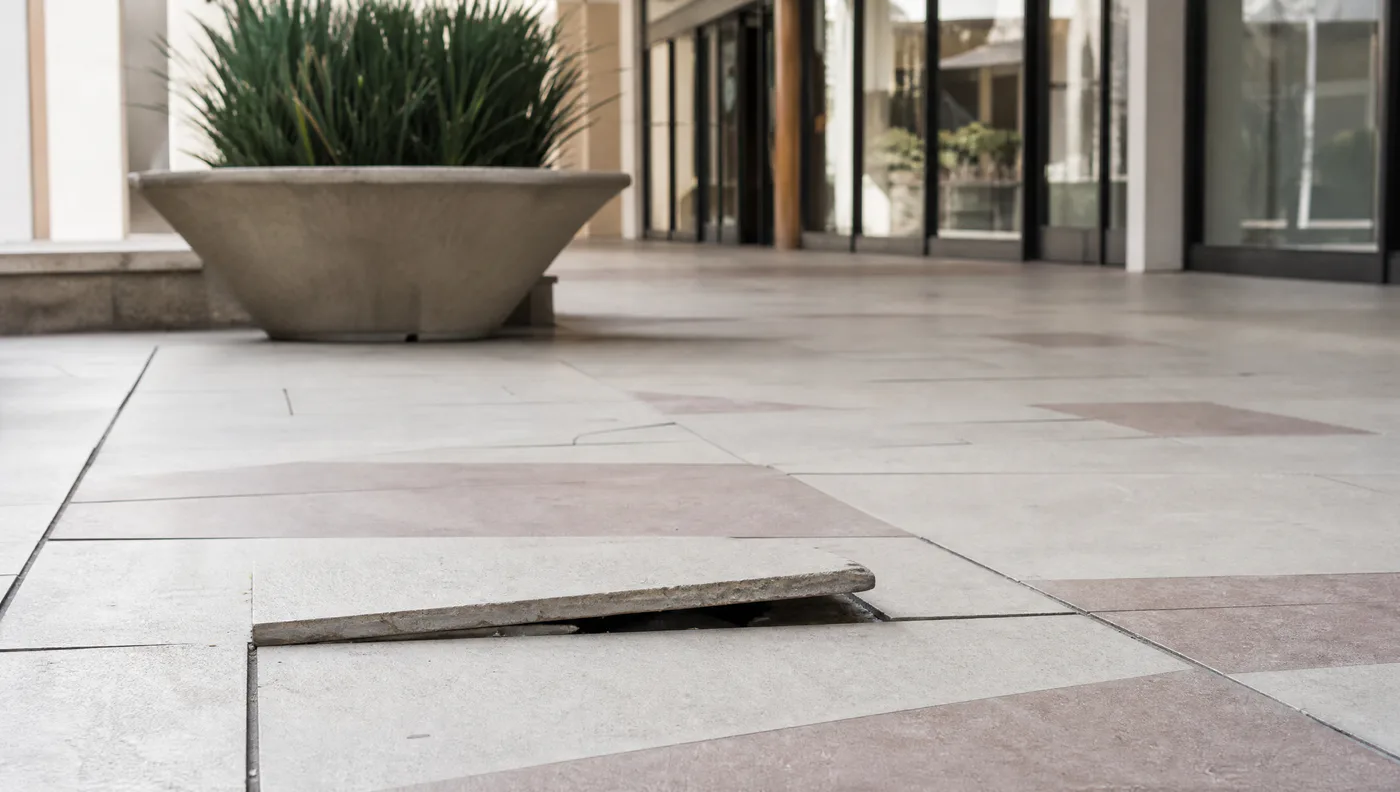
Premises liability also covers unsafe physical conditions: falling objects, defective stairs and railings, inadequate pool barriers, balcony and walkway failures, and dangerous conditions in common areas of buildings.
The property owner and the management company are frequently separate businesses with separate insurance, and both can carry a share. Identifying the right entities early matters, because each holds different records and each has a different incentive to keep them.
What we have recovered on these claims
Matters this firm handled in this area of law. Figures are gross recoveries, before attorney fees, costs and medical liens come out of them.
Our client was servicing propane tanks behind a Pompano Beach bakery when they exploded, burning his arms and face.
Broward County jury verdictA serious neck injury from a dive off the dock of a Fort Myers Airbnb on the Caloosahatchee River, on a failure to warn of shallow, murky water.
Confidential settlementEvery verdict and settlement we publish, with the press coverage for the ones that were reported. No result predicts another case: every claim turns on its own facts, its own evidence and the insurance actually available.
Who would handle your case
Your case is handled by one of the trial lawyers below, and you will know which of them has it from the first conversation. They do premises liability work week in and week out, they will tell you what your case is worth and why, and they will be straight with you about the parts that are hard.
-
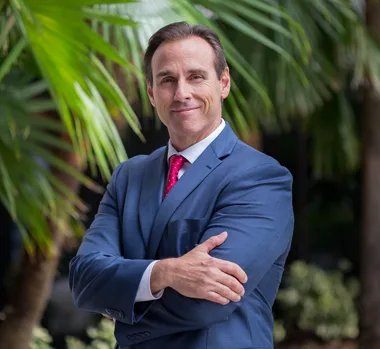 Richard P. Pravato Founding & Managing Attorney Board Certified in Civil Trial Law by The Florida Bar since 2004, and by the National Board of Trial Advocacy. Injury cases exclusively since 1996. Full profile →
 -
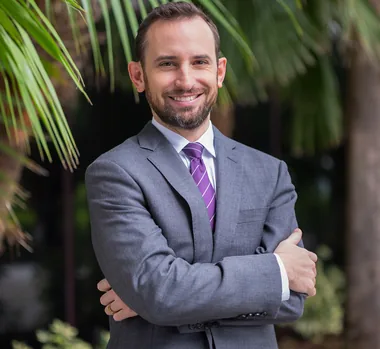 Brett J. Yonon Senior Trial Attorney Selected to Florida Super Lawyers in 2024 and 2025. Brett Yonon is who this firm puts on a catastrophic injury or a death in the family, and he has tried those cases to verdict. Full profile →
 -
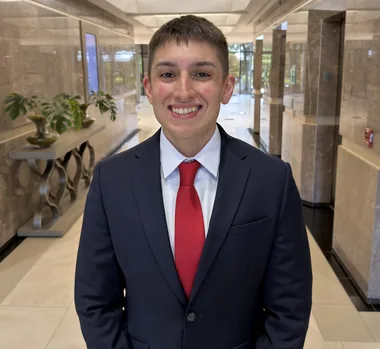 Alazay Ventura-Coffey Trial Attorney On his first day as a sworn attorney, Alazay Ventura-Coffey co-chaired a Broward County jury trial that returned $1,387,060.58. He has built every case that way since. Full profile →
Premises Liability questions we are asked
The person who attacked me was arrested. Why sue the property owner?
Because a criminal conviction rarely compensates a victim, and the attacker usually has nothing. The civil claim asks a different question: whether the property owner already knew this address had a problem and failed to take reasonable steps. That is a question about their records, not about the attacker.
How do you prove the owner knew it was dangerous?
Mostly with their own documents and public ones. We ask for police call histories for the address, prior incident and injury reports, complaints from tenants or guests, work orders for broken gates and lights, and any security assessment the owner commissioned. A pattern in those records is what foreseeability actually looks like.
Is the apartment manager responsible or the owner?
Frequently both, and they are usually separate companies with separate insurance policies. The management company may have controlled day-to-day security decisions while the owner controlled the budget. Naming the right entities early matters because each holds different records.
What if I was hurt by a physical condition rather than a crime?
That is ordinary premises liability, and the same principle applies: what did the owner know, and when. Defective stairs and railings, inadequate pool barriers, falling objects and failed walkways all turn on inspection records, work orders and prior complaints about the same defect.
Questions that apply to any Florida injury claim, fees, deadlines, recorded statements and shared fault, are answered on our injury claim FAQ. What we have recovered is on recent case results.
Five Florida offices
We take premises liability claims statewide. Each market below has its own page on this claim, with that office's address, its direct number and the court a case there is filed in.
Fort Lauderdale premises liability claims
2101 W Commercial Blvd, Fort Lauderdale. Serving Broward County.
View →Miami premises liability claims
1111 Brickell Avenue, Miami. Serving Miami-Dade County.
View →West Palm Beach premises liability claims
2101 Vista Parkway, West Palm Beach. Serving Palm Beach County.
View →Boynton Beach premises liability claims
1375 E Gateway Blvd, Boynton Beach. Serving Palm Beach County.
View →Fort Myers premises liability claims
1825 Colonial Blvd, Fort Myers. Serving Lee County.
View →Other claims we handle
Three of the closest to this one. The full list is on our Florida practice areas page.
Tell us what happened
A lawyer will listen, tell you what Florida law does with those facts, and be straight with you about whether it is worth bringing. If it is not, we will say so.
We take cases anywhere in Florida.