
West Palm Beach Premises Liability Lawyer
A premises liability claim starts with why somebody was on the property, because that sets what they were owed. We prove that first. We can take it from here. Call 833-370-8692 for a free consultation. You pay us nothing unless we win. Our West Palm Beach personal injury lawyers have taken these cases across Palm Beach County since 1993.
Premises Liability claims in West Palm Beach
A property owner’s first answer to an injury claim is that nobody could have foreseen it, and the second is that the injured person should have been looking where they were going. Meanwhile you are dealing with the injury, the time off, and a management company that has stopped returning calls. Proving what they were told before it happened is our job, and we start the day you call.
Palm Beach County has a high concentration of gated communities, resorts and managed properties, all of which generate incident reports, work orders and security assessments. Where an association controls common areas and a management company runs them day to day, both may be responsible, and each holds different records.
A Palm Beach County premises claim asks what the owner knew before you were hurt, and it is answered from records rather than argument. Falls in a business require proof of actual or constructive knowledge of the hazard. Claims against a city, the county or a public agency carry a separate and much shorter written notice requirement, which is why the identity of the defendant matters immediately.
What to do after a premises liability in West Palm Beach
- Report it to the property, and ask for the report number. Tell a manager, a leasing office or hotel front desk what happened and where, and ask for the incident report number before you leave. Properties write these reports for their own insurer rather than for you, and a report you never see is far harder to obtain three months later than a number you wrote down that day.
- Photograph the condition before somebody fixes it. The spill gets mopped, the broken step gets patched and the dead light gets a new bulb, often within hours. Photograph the thing itself, then stand back and photograph where it sits, so there is a record of what a person walking there could actually see. If lighting is part of it, go back and photograph at the same hour of night.
- Ask about the cameras this week. Most systems on apartment complexes, garages and retail properties overwrite themselves somewhere between 14 and 30 days. A written request that the footage be preserved, naming the date, the time and the camera location, costs nothing and can be sent long before anybody decides whether to bring a claim. After the overwrite there is nothing to ask for.
- Find out who owns it and who runs it. The owner and the management company are usually separate businesses with separate insurance, and on a residential property there may be an association and a security contractor as well. Photograph any posted management sign and keep the lease, the folio number or the receipt. Naming the wrong company in month one costs months.
- Get treated, and tell them where it happened. Say that you fell on a wet floor at a named store, or that you were attacked in a named garage. The medical record is the earliest independent account of what happened, and a chart that says only that you have a shoulder injury is worth much less later than one that says how you got it.
Where these happen in West Palm Beach
Palm Beach County runs from the beach to the sugar fields, and the properties in between are managed by everybody from a national retailer to a homeowners association to a county parks department. Who owns it changes not only the records but the deadline.
-
The Okeechobee and Palm Beach Lakes retail corridors
National retailers, grocery chains and the plazas around CityPlace and the mall, which is where most of the fall claims in this county start.
- Corporate sweep and inspection procedures, which set a standard the store then either met or did not
- Prior falls at the same store and the same aisle, which is what constructive knowledge looks like
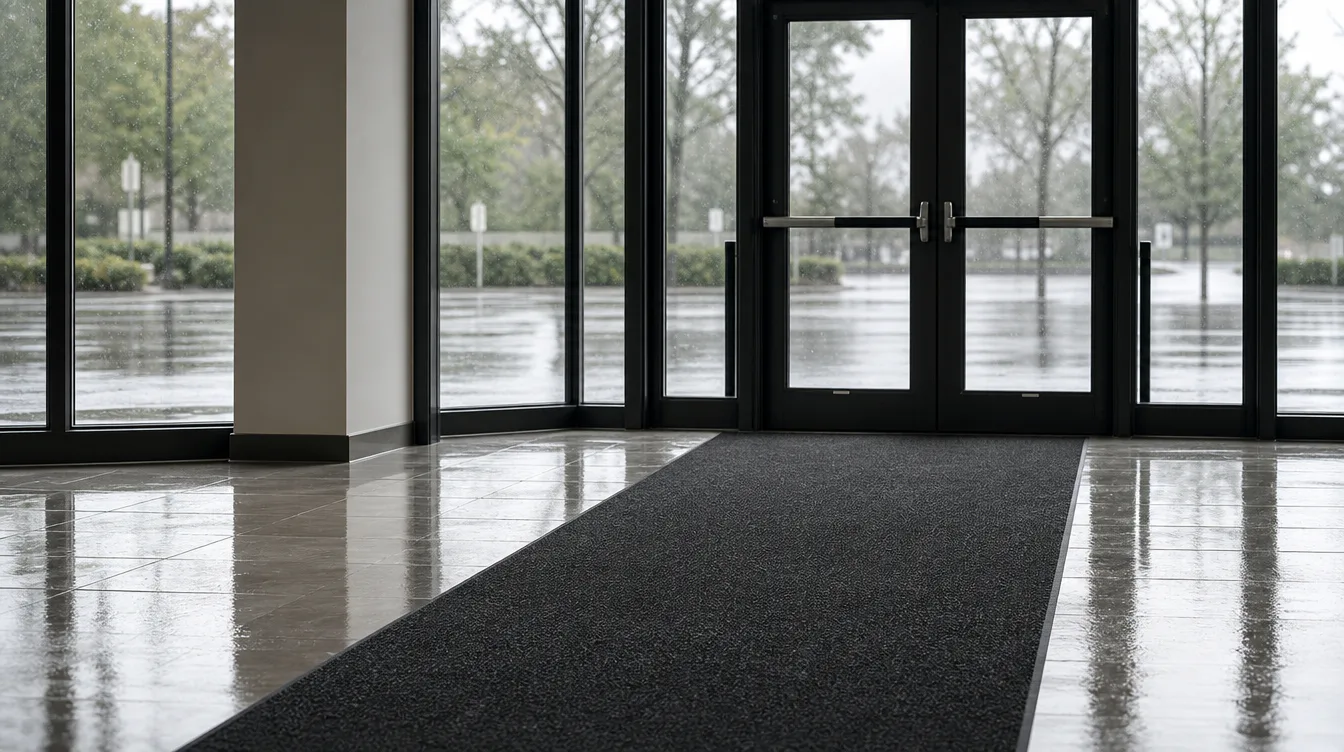
- Entrance mats and tracked-in rain, a foreseeable condition rather than an unlucky one
- Video routed to a corporate risk department out of state, which is where a preservation letter has to reach
-
City, county and agency property
Parks, transit stops, libraries, government buildings and the sidewalks and lots attached to them, where the rules are different in a way that catches people out.
- Written notice to the agency before suit, and a mandatory wait for its response, which is a condition of suing at all
- Statutory limits on what a public agency pays, regardless of what the injury is worth
- Maintenance and complaint records that are public and can be requested directly
- Contractors doing the actual work, who are private companies with their own insurance and no such protection
-
Hospital and medical campuses
St. Mary’s, Good Samaritan and JFK draw a steady stream of people who are already unsteady before they reach the door.
- Falls in lots, walkways and lobbies, which are premises claims rather than medical ones
- Wheelchair, transport and valet services that are frequently contracted out
- Surfaces and level changes at drop-off areas, where the design itself is sometimes the problem
- Incident reporting that is far more thorough than at an ordinary property, which helps once it is obtained
-
Gated communities and the western county
From the equestrian properties around Wellington out to the agricultural roads, where the property is large, private and lightly supervised.
- Association governing documents, which decide who was responsible for a common area
- Long distances to help, which is a Palm Beach reality and is worth documenting rather than arguing about
- Contractors, landscapers and event operators working on private land under separate agreements
- Almost no camera coverage, which puts the weight on physical evidence and on the maintenance file
What causes them
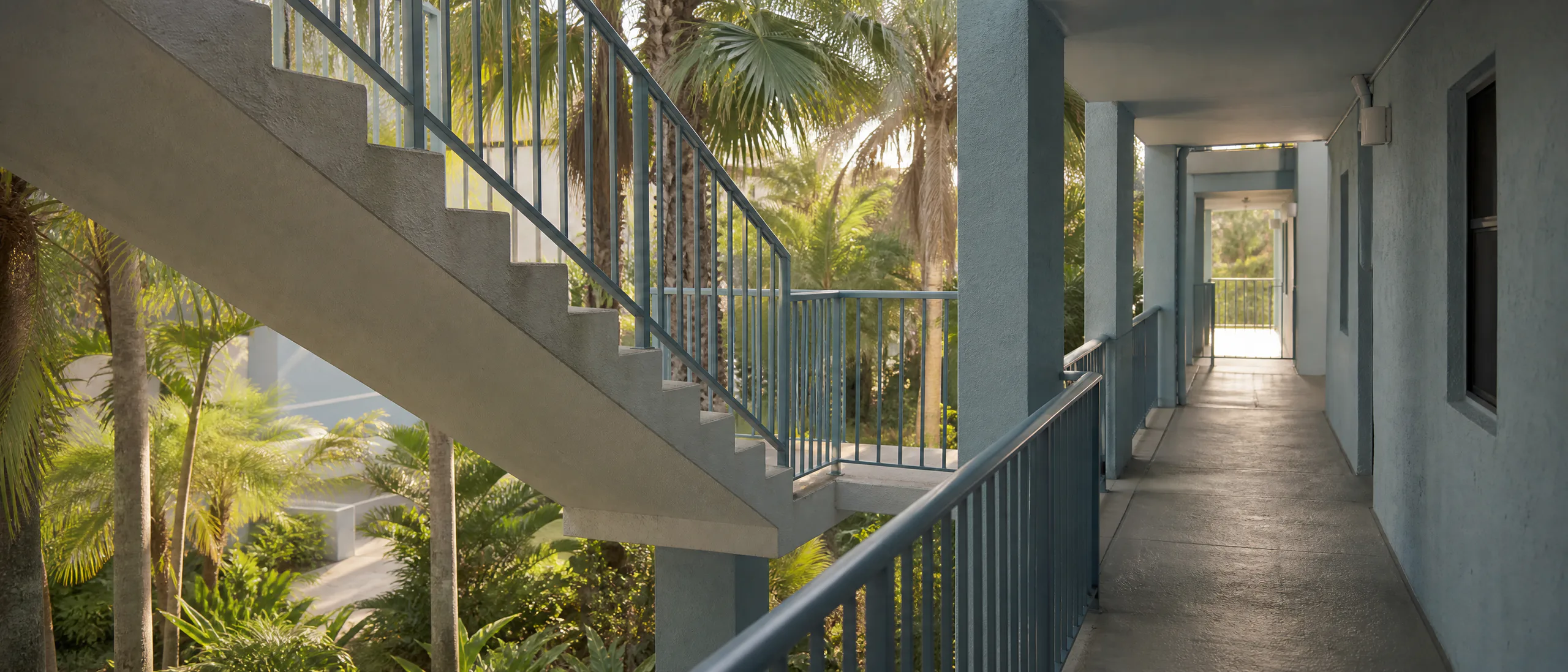
- Exterior gates and door locks reported broken and left that way for months
- Cameras installed as a deterrent that were never recording, or recording nothing usable
- Guard coverage reduced or removed after a documented incident on the property
- Spills and tracked-in water in stores, lobbies and food courts, left without a cone or a mop
- Stairs, railings and walkways that were failing before anybody fell on them
The injuries we see, and what each one turns on
Hip and orthopedic fractures
Hips, wrists, shoulders and ankles, several of which need hardware and then a second operation to remove or revise it. In an older adult a hip fracture is rarely just a fracture, and the year that follows it often includes a loss of independence that no bill records.
Gunshot and stab wounds
The injuries in a negligent security case are frequently catastrophic, and the medical picture is complicated by surgeries that continue for a year or more. The claim itself, though, is not about the attack. It is about what the property knew before it.
Crush injuries and amputations
Falling objects, machinery, gates and elevator failures, which produce injuries that turn a claim into a life care case: equipment, home modification and decades of work somebody will not do.
What Florida law requires you to prove
What the property owed you depends on why you were there
Florida sorts people on a property into categories, and the duty follows the category. A customer, a hotel guest, a tenant and a delivery driver are generally invitees, owed reasonable care to keep the place safe and a duty to inspect for dangers the owner should have found. A social guest is owed less, and a trespasser less again. The first fight in many of these cases is which category you were in, which is worth settling early because everything else follows from it.
A fall in a store has its own statute
Where somebody slips on a transitory foreign substance in a business establishment, Fla. Stat. § 768.0755 requires the injured person to prove the business had actual or constructive knowledge of the substance. Constructive knowledge is shown by how long it had been there or by the fact that it happened regularly enough to be foreseeable. That is a records question rather than an argument, and it is why the inspection sheets and the camera footage decide these cases.
Security claims, the 2023 change, and the deadlines
In 2023 Florida created a presumption against liability for multifamily residential properties that substantially comply with a defined set of security requirements, including lighting, locks, gates, cameras and a documented crime prevention assessment. Whether a property actually met them is a question of fact and is frequently the whole case. Separately, most Florida negligence claims arising on or after March 24, 2023 carry a two-year deadline under Fla. Stat. § 95.11, and fault is shared under Fla. Stat. § 768.81, where a person found more than 50 percent responsible recovers nothing.
The full statutory detail, and the parts that differ by claim type, sit on our statewide premises liability page rather than being restated in every market.
How we prove it in Palm Beach County
The first question in a Palm Beach County property case is who owns and controls the land, because a public defendant changes the timetable completely and a private one does not.
- The identity of the owner, the manager and any contractor who was working the area that day
- The incident report, and the corporate notification that a national retailer generates alongside it
- Sweep logs, inspection records and the cleaning contract, which show what the standard was supposed to be
- Video from the property and from any neighboring business covering the same approach
- Prior incidents and prior complaints at the same location, obtained by request or by public records where the owner is a government body
- Association minutes, work orders and the management agreement on a community property
- Light readings and the property’s lighting plan where an assault is involved
- The written notice to the agency and to the state, on any claim against a public body, filed inside the statutory period
The notice requirement is the item on that list with no second chance. Where a city, the county or a public agency may be responsible, the notice goes out early and in writing, before anybody is certain the claim will be pursued.
Who would handle your case
Being hurt in West Palm Beach is hard enough without working out the legal side on your own. The trial lawyers below have handled premises liability claims across Florida since 1993, and one of them will take yours from the first call to the last check. They will tell you what your case is worth and why, and they will be straight with you about the parts that are hard.
-
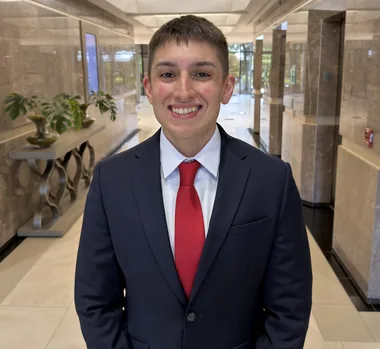 Alazay Ventura-Coffey Trial Attorney On his first day as a sworn attorney, Alazay Ventura-Coffey co-chaired a Broward County jury trial that returned $1,387,060.58. He has built every case that way since. Full profile →
 -
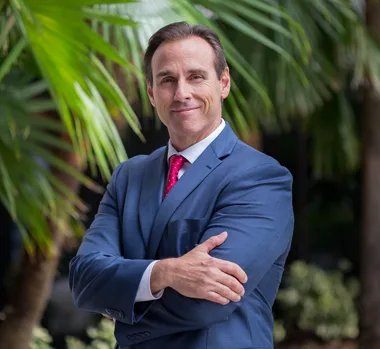 Richard P. Pravato Founding & Managing Attorney Board Certified in Civil Trial Law by The Florida Bar since 2004, and by the National Board of Trial Advocacy. Injury cases exclusively since 1996. Full profile →
How insurance companies handle these claims
A property claim is handled by a commercial carrier rather than an auto adjuster, and on a large property there is often a risk manager involved from the first day.
- The hazard is described as open and obvious
- The theory is that you should have seen it, and it is the most common defense in the practice. It is answered with the physical facts: what the lighting actually measured, where the sightlines went, what was in your hands, and whether the property had put anything there to warn people. Open and obvious is also not a complete defense in Florida where the owner should have anticipated the harm anyway.
- Fault is moved onto you by degrees
- You were on your phone, you were wearing the wrong shoes, you had had a drink. Every percentage point is money off the claim and past 50 percent it ends it. This is why the scene photographs and the camera footage matter more than a recollection, and why both depend on how early the work started.
- The attack is called unforeseeable
- It is the whole defense in a negligent security case and it is answered with documents rather than with argument. Police call histories for the address, prior incident reports, tenant complaints and work orders for gates and lights that were reported broken are what show a risk the owner already knew about. A pattern in those records is what foreseeability actually looks like.
What a claim can include
Pain, and what daily life has become
Sleep, mobility, and the things somebody used to do without thinking about them. It is proved with the account of the people around the injured person as much as with records.
Psychological injury after an attack
Treatment, and the practical cost of not being able to return to a place you lived or worked. Both are recoverable and both need to be documented while they are happening.
Life care costs after a catastrophic injury
Equipment, home modification, attendant care and the replacement schedule for all of it, set out by a professional so it is a number rather than an argument.
What we have recovered
Verified matters this firm has handled on premises liability claims. Figures are gross recoveries, before attorney fees, costs and medical liens come out of them.
Our client was servicing propane tanks behind a Pompano Beach bakery when they exploded, burning his arms and face.
Broward County jury verdictA serious neck injury from a dive off the dock of a Fort Myers Airbnb on the Caloosahatchee River, on a failure to warn of shallow, murky water.
Confidential settlementEvery verdict and settlement we publish, with the press coverage for the ones that were reported. No result predicts another case: every claim turns on its own facts, its own evidence and the insurance actually available.
Why Wolf & Pravato in West Palm Beach
A Palm Beach County premises case is filed in the Fifteenth Judicial Circuit at the main courthouse in West Palm Beach, and the firm’s office on Vista Parkway is in the county rather than across it. These cases run on records requests to local properties, associations and agencies, and proximity is what makes that routine rather than a project.
Board Certification in Civil Trial law is the Bar’s own measure of trial experience, and 861 of Florida’s 109,000-plus lawyers hold it. Richard Pravato has held it since 2004. It is the credential that changes how an adjuster reads a file, because it says the case has somewhere to go if they will not pay it.
Asking costs nothing and there is no fee unless we win. If we look at what happened and think the claim is not worth pursuing, we will say so on the first call instead of signing you up.
West Palm Beach premises liability questions
I fell on a county sidewalk. Is that the same as falling in a store?
Legally it is quite different, and the difference is a deadline. A claim against a city, the county or another public body in Florida requires written notice to the agency and to the state before suit can be filed, and that period is much shorter than the general filing deadline. There are also statutory limits on what a public agency pays. The practical answer is to get the notice out early, because missing it ends an otherwise good claim.
The store said I should have seen the spill.
That is the open and obvious defense and it is raised in nearly every fall case. It is answered with the physical facts rather than with recollection: what the floor and the substance actually looked like under that lighting, whether anything was placed there to warn people, and what was in your hands or your line of sight at the time. It is also not a complete answer in Florida where the store should have anticipated somebody being hurt anyway.
The homeowners association says the common area is not theirs.
It is usually the first response and it is frequently wrong. What decides it is the governing documents and who actually maintained and controlled the area, which the association minutes, the work orders and the management agreement answer far better than a statement at the gate. Where a landscaper or a contractor was working the area, they may carry a share as well.
Is the apartment manager responsible or the owner?
Frequently both, and they are usually separate companies with separate insurance policies. The management company may have controlled day-to-day security decisions while the owner controlled the budget. Naming the right entities early matters because each holds different records.
What if I was hurt by a physical condition rather than a crime?
That is ordinary premises liability, and the same principle applies: what did the owner know, and when. Defective stairs and railings, inadequate pool barriers, falling objects and failed walkways all turn on inspection records, work orders and prior complaints about the same defect.
The questions that come up on every kind of claim, deadlines, fees, recorded statements and fault, are answered on our Florida injury claim FAQ.
More in West Palm Beach
West Palm Beach Personal Injury Lawyer
Everything we handle in Palm Beach County, and where our office is.
View →West Palm Beach Bus Accident Lawyer
Florida bus accident lawyers.
View →West Palm Beach Construction Accident Lawyer
Florida construction accident lawyers.
View →West Palm Beach Birth Injury Lawyer
Florida birth injury lawyers.
View →
Tell us what happened
A lawyer will listen, tell you what Florida law does with those facts, and be straight with you about whether it is worth bringing. We are at 2101 Vista Parkway, Suite 4500, West Palm Beach, FL 33411.