

West Palm Beach Bus Accident Lawyer
You were on a bus, waiting for one or struck by one, and the operator turns out to be a government body with its own rules. We can take it from here. Call 833-370-8692 for a free consultation. You pay us nothing unless we win. Our West Palm Beach personal injury lawyers have taken these cases across Palm Beach County since 1993.
Bus Accident claims in West Palm Beach
A claim against a public operator has to go through a written notice and a waiting period before a suit can even be filed, and the notice has to reach the right office. Meanwhile you are dealing with the injury, the missed work, and an incident report nobody has shown you. Getting that sequence started properly is our job, and it begins the day you call.
Palm Tran operates the county bus network and the paratransit service, and both are government operations subject to section 768.28. That means the $200,000 and $300,000 caps, a written notice of claim before suit, and an investigation period before anything can be filed. Paratransit claims have their own character, because passengers are frequently elderly or disabled and the injury often happens during boarding, securing a wheelchair or alighting rather than in a collision at all. Those are still claims, and the securement records and the driver's log are what prove them.
Palm Tran and its paratransit service are county operations, so a claim is capped at $200,000 per person and cannot be filed until a written notice has been presented and answered. A large share of the injuries here happen during boarding or alighting rather than in a collision, and a carrier’s duty covers both.
What to do after a bus accident in West Palm Beach
- Photograph the vehicle, the fleet number and the route. The number on the side, the route number in the window, the livery and any operator name. Who ran the bus decides everything that follows, and it is not always obvious: a vehicle in transit colors may be run by a contractor, and a shuttle in hotel livery may belong to a charter company. A photograph settles in a second what takes weeks to establish afterward.
- Ask for the incident report number before you leave. Drivers on transit, school and charter vehicles are generally required to report, and a report exists whether or not anybody shows it to you. Getting the number on the day makes it findable later. So does noting the time, the direction of travel and the stop you were at or nearest to.
- Ask in writing that the onboard video be preserved, this week. Almost every transit and school bus carries several cameras, and that footage runs on a short retention cycle before it is overwritten. This is the real deadline in a bus case. A written request naming the date, the route, the vehicle number and the time is routine in week one and becomes an argument about destroyed evidence in month three.
- Get treated, because bus injuries are thrown-body injuries. Passengers on a transit bus are not belted and are frequently standing, so a sudden stop that does no damage to the vehicle throws people into poles, seat frames and each other. Head, shoulder and wrist injuries are common and are regularly walked off, and a gap between the incident and the first medical visit is the most common argument made about how badly somebody was hurt.
- If the operator is public, the notice has to come first. A claim against a transit authority, a city, a county or a school district cannot be filed until a written notice of claim has been presented and answered. That is a sequence rather than a formality, it takes months, and it is the step most commonly missed. It is worth establishing which kind of operator you are dealing with before anything else.
Where these happen in West Palm Beach
Palm Beach County carries an older ridership than most of the state, on a network that includes a substantial paratransit operation, and the injuries follow from that rather than from crashes.
-
Boarding, alighting and the lift
Where most of the serious injuries in this county actually happen, and where the evidence is equipment records rather than driver accounts.
- Lift and ramp failures, which leave a maintenance and service history
- Wheelchairs that were never properly secured before the vehicle moved
- Buses pulling away before a passenger is seated or clear of the step
- A carrier’s duty, which covers boarding and alighting rather than only driving
-
Older passengers
A fall on a bus or at a step is a fracture rather than a bruise in a large part of this ridership.
- Hip, pelvis and wrist fractures, which in an older adult frequently end independent living
- The argument that the injury was age rather than the fall, which is answerable
- Prior imaging and treatment history, which usually establish what somebody could do before
- Onboard cameras, which record the fall itself and cycle within days
-
Stops on the main roads
Okeechobee, Military Trail and the roads feeding I-95, where reaching the stop is part of the risk.
- Stop placement relative to the nearest crossing, which is a documented agency decision
- Passengers crossing in front of or behind a stopped bus, where sight lines close for everybody
- Surface, shelter and lighting at the stop itself, which the agency maintains
- A second, uncapped defendant where another driver was involved
-
School district and private shuttles
The district fleet, and the resort, club and community shuttles this county runs a great many of.
- The district as a public entity, with the notice sequence and the cap
- Private shuttles operated by resorts and communities, which are commercial defendants with no cap
- Contracts between a property and an operator, which decide who else is answerable
- Motorists passing a stopped school bus with the arm out, who are uncapped

What causes them
- Doors closing on passengers, and buses pulling away before somebody is seated or clear
- Boarding and alighting injuries, including at stops with a broken or uneven surface
- Wheelchair lift failures, and chairs that were never properly secured before the vehicle moved
- Pedestrians struck by a bus, including in the wide blind spots around the front and sides
- Children struck crossing to or from a school bus stop, which is a claim about where the stop was as much as about the driver
The injuries we see, and what each one turns on
Spine and shoulders
Herniations from being thrown, and rotator cuff injuries from grabbing a rail to stay upright. The standard defense is that a low-speed event could not cause them, and it is answered from the medical record and from the difference in what somebody could do before and cannot do now.
Fractures in older passengers
A large share of transit and paratransit passengers are older adults, and a fall on a bus or during boarding produces hip, pelvis and wrist fractures rather than bruises. In an older adult a hip fracture is rarely just a fracture, and the year that follows frequently includes a loss of independence that no invoice records.
Children
On and around school buses, where the injuries range from falls on board to a child struck at a stop. A child’s share of fault is assessed differently from an adult’s, and any settlement for a minor has its own approval requirements and cannot simply be signed by a parent.
What Florida law requires you to prove
Who operated the bus decides the whole claim
A transit authority, a city, a county and a school district are government entities, and a claim against one runs under Fla. Stat. § 768.28. A charter, tour or shuttle company is an ordinary commercial defendant with commercial insurance and no cap, and where it runs across state lines it is a federally regulated carrier with driver logs and maintenance records that a public agency does not generate. Establishing which one you are dealing with is the first task, and the livery does not always answer it.
The higher duty a carrier owes its passengers
A bus carrying paying or public passengers is a common carrier, and Florida holds a common carrier to a higher standard of care toward its passengers than an ordinary driver owes other road users. That is a genuine advantage in a passenger claim, because it lowers what has to be proved. It also extends beyond driving to boarding and alighting, which is where a great many of these injuries actually happen.
The sequence on a public claim, and the cap
Written notice of the claim has to be presented to the agency, and in most cases to the Department of Financial Services, and the notice and its denial are conditions precedent to suit. Nothing can be filed until the agency has answered or run out of time to, and it gets six months, ninety days for a wrongful death. Recovery is capped at $200,000 per person and $300,000 per incident, and anything above that requires the Legislature to pass a claims bill. Against a private operator none of this applies and the ordinary two-year deadline in Fla. Stat. § 95.11 governs.
The full statutory detail, and the parts that differ by claim type, sit on our statewide bus accident page rather than being restated in every market.
How we prove it in Palm Beach County
A boarding or lift injury is proved from equipment records rather than from what anybody remembers, which is an advantage as long as the request goes in before the footage cycles.
- Onboard camera footage, requested in writing by vehicle number, route, date and time within the first days
- Lift, ramp and securement maintenance and service records for that vehicle
- The driver’s incident report and its number
- Driver qualification, training and disciplinary history, and hours worked that day
- Route, schedule and dispatch records fixing the vehicle and the time
- Stop placement, shelter and maintenance records where the injury happened reaching or leaving a stop
- Prior medical records, which generally establish what an older passenger could do before
- The written notice of claim to each public entity, presented before any suit is filed
Where another vehicle was involved, that driver is answerable without any cap, and their coverage frequently matters more to the outcome than the agency’s does.
Who would handle your case
Being hurt in West Palm Beach is hard enough without working out the legal side on your own. The trial lawyers below have handled bus accident claims across Florida since 1993, and one of them will take yours from the first call to the last check. They will tell you what your case is worth and why, and they will be straight with you about the parts that are hard.
-
 Richard P. Pravato Founding & Managing Attorney Board Certified in Civil Trial Law by The Florida Bar since 2004, and by the National Board of Trial Advocacy. Injury cases exclusively since 1996. Full profile →
 -
 Brett J. Yonon Senior Trial Attorney Selected to Florida Super Lawyers in 2024 and 2025. Brett Yonon is who this firm puts on a catastrophic injury or a death in the family, and he has tried those cases to verdict. Full profile →
How insurance companies handle these claims
A public agency handles these claims itself or through a risk pool rather than through an ordinary insurer, and its file starts the day the driver reports. A private motorcoach carrier behaves more like a trucking company, with an investigator working early.
- The incident report exists and you will not be seeing it
- Reports on transit and school vehicles are written for the operator rather than for the passenger. Asking for the number on the day makes it findable, and on a public operator a good deal of the file is available as a public record. On a private carrier it comes through the claim rather than over the counter.
- The cap is presented as the ceiling on everything
- It is a ceiling on what the public body pays, and it is not the whole picture. Another driver who contributed is answerable without any cap. A private contractor operating the route may not be a public entity at all. Your own uninsured or underinsured motorist coverage may respond on top. Finding the uncapped defendant is the productive work, and it has to start early.
- The other driver caused it, so take it up with them
- Frequently both are responsible, and Florida divides the blame rather than choosing between them. The value of the two claims is different, because one is capped and one is not, which is exactly why an agency has an interest in pointing at the other vehicle. It is answered from the video, the physical evidence and an independent reconstruction.
What a claim can include
Pain, and what daily life has become
Sleep, mobility, independence, and for an older passenger the confidence to use public transport again. It is proved with the account of the people around the injured person as much as with records.
Life care costs after a catastrophic injury
Equipment, home modification, attendant care and the replacement schedule for all of it, set out by a professional so that it is a number rather than an argument.
What the cap does and does not reach
The statutory limit binds the public body only. Another driver, a private contractor and your own uninsured motorist coverage are all outside it, which is why the search for a second defendant is the most valuable work in a capped claim.

Why Wolf & Pravato in West Palm Beach
A Palm Beach County bus case is filed in the Fifteenth Judicial Circuit in West Palm Beach, and the firm’s office on Vista Parkway is in the county. Presenting notice correctly to a county agency, and obtaining its records, is local work rather than correspondence.
Board Certification in Civil Trial law is the Bar’s own measure of trial experience, and 861 of Florida’s 109,000-plus lawyers hold it. Richard Pravato has held it since 2004. It is the credential that changes how an adjuster reads a file, because it says the case has somewhere to go if they will not pay it.
Asking costs nothing and there is no fee unless we win. If we look at what happened and think the claim is not worth pursuing, we will say so on the first call instead of signing you up.
West Palm Beach bus accident questions
I was hurt getting on or off the bus, not in a crash. Is that a claim?
Yes. A carrier’s duty covers boarding and alighting, not just driving, and injuries from a lift failure, an improperly secured wheelchair or a bus pulling away too soon are ordinary claims. Where the operator is a public agency the caps and the pre-suit notice apply the same way. The vehicle’s maintenance and securement records are usually the evidence that decides it.
The agency says my mother’s fracture is down to her age.
They argue it constantly in this county and it is answerable. Florida does not reduce what a defendant owes because the injured person was more vulnerable than average. What separates an age-related decline from an injury is the record: what she could do the week before, what she could do afterward, and what her own doctors say about the difference.
Is $200,000 really the most I can recover?
From the public agency, yes, unless the Legislature passes a claims bill, which is slow and uncertain. It is not the whole picture. Another driver who contributed is answerable with no cap, a contracted operator may not be a public entity at all, and your own uninsured or underinsured motorist coverage may respond on top. Finding the uncapped defendant is the more productive work.
I was hurt on a private tour bus. Is that different?
Yes, and generally more straightforward. A private operator is an ordinary commercial defendant without the government notice requirements, and if it operates across state lines it is likely a federally regulated carrier with logging and maintenance records we can pursue.
Can I sue a public transit authority in Florida?
Yes, but not on the ordinary timetable. A written notice of claim has to be presented first, and no suit can be filed until the agency has answered it or run out of time to, which takes months on its own. Recovery is also capped by statute in a way it is not against a private defendant. Neither step can be skipped, so a late start can leave no room to complete them.
The questions that come up on every kind of claim, deadlines, fees, recorded statements and fault, are answered on our Florida injury claim FAQ.
More in West Palm Beach
West Palm Beach Personal Injury Lawyer
Everything we handle in Palm Beach County, and where our office is.
View →West Palm Beach Medical Malpractice Lawyer
Florida medical malpractice lawyers.
View →West Palm Beach Workers Compensation Lawyer
Florida workers compensation lawyers.
View →West Palm Beach Dog Bite Lawyer
Florida dog bite lawyers.
View →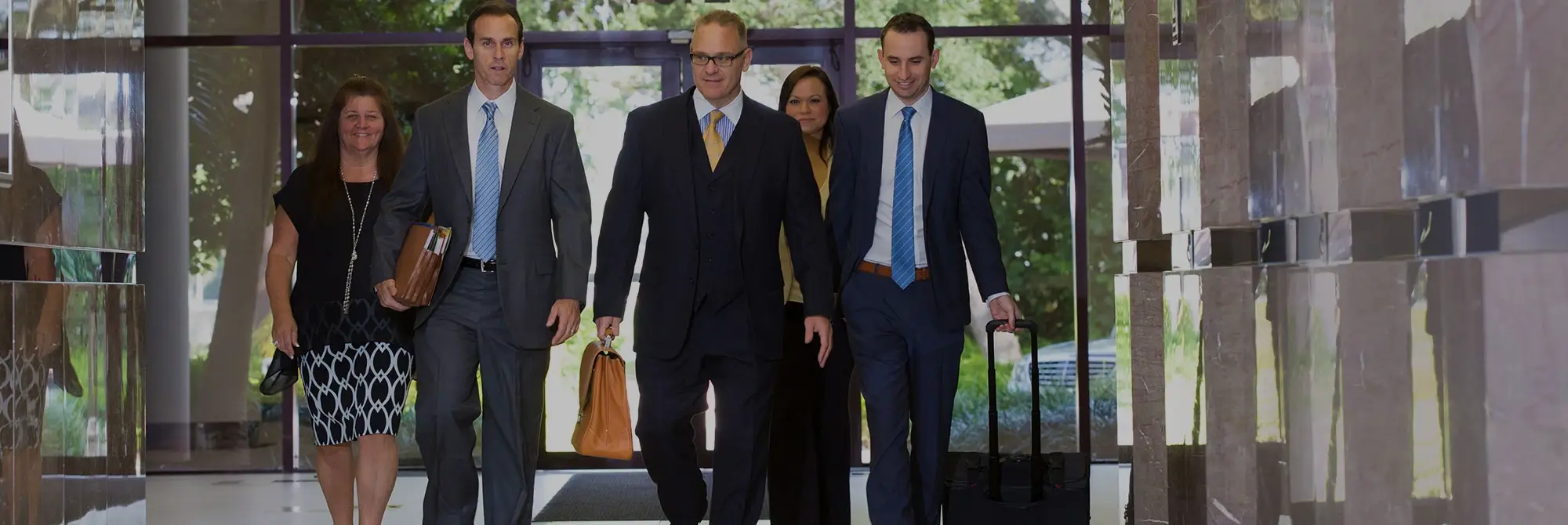
Tell us what happened
A lawyer will listen, tell you what Florida law does with those facts, and be straight with you about whether it is worth bringing. We are at 2101 Vista Parkway, Suite 4500, West Palm Beach, FL 33411.