
Florida injury claims, answered straight
The questions we are actually asked, answered without hedging. If yours is not here, call 954-522-5800 and ask an attorney directly. It costs nothing and commits you to nothing.
Florida shortened the deadline to file most injury lawsuits from four years to two years for accidents on or after March 24, 2023 (HB 837, amending Fla. Stat. § 95.11). Accidents before that date still carry the four-year deadline.
Money, fees and what a case is worth
The questions people ask first, and the ones firms are vaguest about. What does it cost to hire a personal injury lawyer?
Nothing up front. We work on a contingency fee, which means our fee is a percentage of what we recover and we are paid only if we recover something. The percentage is capped on a sliding scale set by The Florida Bar. Case costs, things like records, filing fees and expert witnesses, are advanced by us and repaid out of the recovery. If there is no recovery you owe us no fee.
How much is my case worth?
Nobody can tell you honestly at the first phone call, and a lawyer who names a figure then is guessing. Value is driven by how serious and how permanent the injury is, how clear fault is, and, more often than people expect, how much insurance the responsible party actually carries. Florida does not require drivers to carry bodily injury liability coverage at all, so available coverage frequently sets the ceiling.
Will I have to go to court?
Probably not. Most personal injury cases settle without a trial, which is usually the right outcome. But a firm that never tries cases has nothing behind its demands, and insurers keep track of which firms in a county do. We have tried cases to verdict, including a $3,500,000 funeral home negligence verdict, a $2,011,000 wrongful death verdict and a $1.38 million propane explosion verdict.
Deadlines
The two that end more valid claims than anything else. How long do I have to file an injury lawsuit in Florida?
Two years from the date of the accident for most negligence claims, if it happened on or after March 24, 2023. Accidents before that date carry the older four-year deadline. Claims against a government body have a separate and shorter written notice requirement, and medical malpractice runs on its own clock of two years from discovery with a four-year outer limit.
What is the 14-day rule?
Florida PIP pays your initial medical bills regardless of who caused the crash, but only if you are treated within 14 days of it. Miss that window and the benefit is gone entirely, whatever the injury turns out to be. It is the single most common way people lose money they were entitled to, and it runs from the crash rather than from when symptoms appeared.
I waited a while before calling anyone. Is it too late?
Often not, and it is worth asking rather than assuming. Deadlines differ by claim type, some run from discovery rather than from the incident, and claims involving children run differently again. What does get lost with time is evidence: camera footage is overwritten in days, and vehicles get repaired or scrapped.
Dealing with insurers
What the adjuster wants, and why the timing of their call is not accidental. Should I give the other driver’s insurer a recorded statement?
Not before you have spoken to a lawyer. You are required to cooperate with your own insurer. You are not required to give a recorded statement to the other side, and the request usually arrives early, while you are still on medication and before anyone knows how serious the injury is. Anything you say about how you feel that day gets quoted back later.
The insurer offered me money already. Should I take it?
A fast offer usually means the insurer has worked out that the claim is worth more than they are offering. Settling is final: there is no route back if you need surgery afterward. The point to evaluate an offer is when your treating physician can say what the injury is and whether it needs operating on, not before.
My own insurance company is refusing to pay. Can they do that?
They owe you duties of good faith they do not owe a stranger, and those are enforceable. Florida provides a specific route: a civil remedy notice is filed with the state setting out what the insurer did wrong, and the insurer then has sixty days to pay and end it. If it does not, the refusal itself becomes a claim, and a bad faith recovery is not limited by the policy limits.
Fault, and what happens if some of it is yours
Florida divide blame rather than using it to end claims. The accident was partly my fault. Do I still have a claim?
Yes, up to a point. Florida reduces your recovery by your share of the fault rather than eliminating it, so being partly responsible lowers the number rather than ending the claim. Since 2023 a person found more than 50% at fault generally recovers nothing, which makes how fault is divide the whole argument in a contested case.
The driver who hit me had no insurance. What now?
Your own uninsured motorist coverage is what pays, if you carry it, and it is worth checking every policy in the household because it can apply through a resident relative. Florida does not require drivers to carry bodily injury liability coverage, so this comes up constantly. Where the at-fault driver was working at the time, their employer’s policy may also be reachable.
I was hurt at work. Is that workers’ compensation or an injury claim?
Frequently both. Workers’ compensation covers you through your employer regardless of fault, and it is generally the only claim you have against that employer. Anyone else whose negligence caused the injury, another subcontractor, an equipment manufacturer, a driver, remains liable separately, and that claim covers pain and suffering, which compensation does not pay at all.
Working with us
What actually happens when you call. What happens when I call?
Tell us what happened and ask whatever you want to ask. An attorney will answer your questions rather than an intake script, and will tell you what Florida law does with your facts. If we do not think the claim is worth bringing, we will say so. The first conversation is free and you are not committed to anything by having it.
Do I have to come to your office?
No. Most first conversations happen by phone the same day, and we come to you when meeting matters, including at hospital or at home if you cannot travel. We have five Florida offices, from Fort Lauderdale to Fort Myers.
What should I bring or gather?
Whatever exists already: the crash report number, photographs of the scene and your injuries, the other driver’s details and insurance, your own declarations page, and the names of anyone who saw it. Do not worry if you have none of it. Most of what a case needs, we obtain ourselves.

Who answers these questions in person
Everything above is the short version. The long version is a conversation with one of our attorneys, which costs nothing and does not commit you to hiring anybody.
They have been answering these questions for Florida clients since 1993.
Meet the attorneys →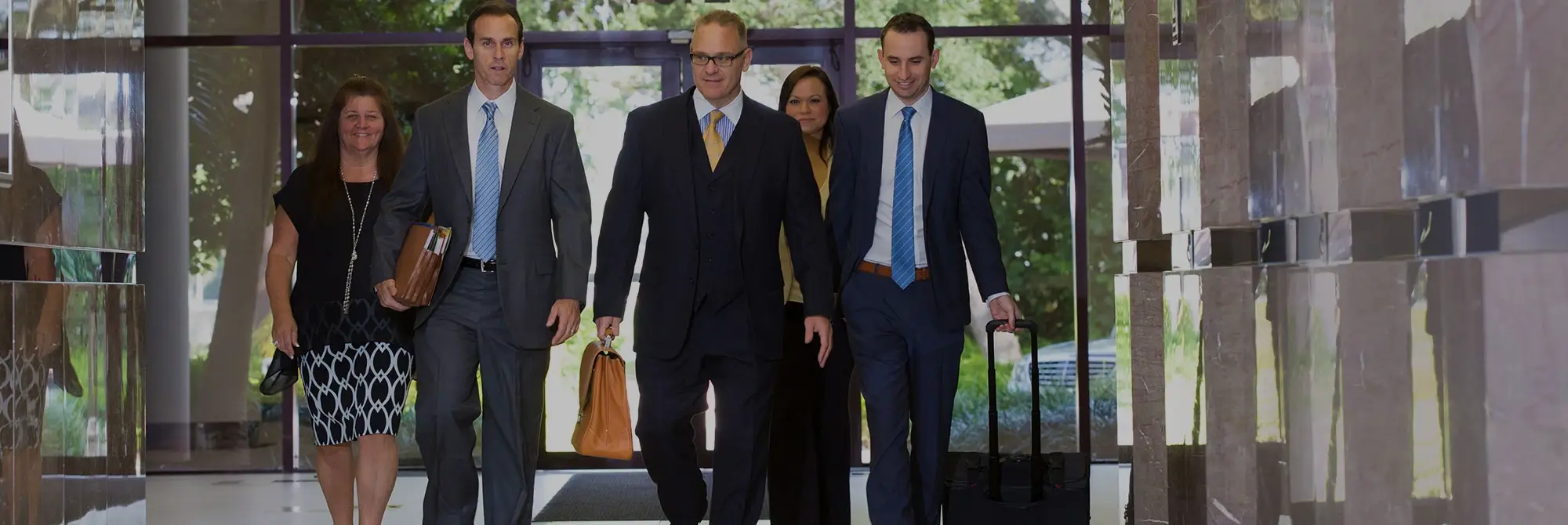
Still have a question?
Ask it. An attorney will answer, the conversation is free, and you are not committed to anything by having it.