
Fort Lauderdale Pedestrian and Bicycle Lawyer
You had the walk signal and a car came anyway, and now there are broken bones, weeks in a bed and bills arriving for both. We can take it from here. Call 954-522-5800 for a free consultation. You pay us nothing unless we win. Our Fort Lauderdale personal injury lawyers have taken these cases across Broward County since 1993.
Pedestrian and Bicycle claims in Fort Lauderdale
The driver told the officer you stepped out, and if they left the scene there may be nobody to bill at all. Meanwhile you are working out how to cover the first surgery, how long you will be off work, and who pays if that driver is never found. Answering those three is our job, and it starts the day you call.
Crossings along A1A, Federal Highway and Sunrise Boulevard account for much of what we see, and the pattern repeats: the person on foot is being loaded into an ambulance while the driver gives the only account the officer hears. Signal phase timing, streetlight outage records and the height of the damage on the vehicle regularly move fault back where it belongs.
A Broward pedestrian claim starts with the driver’s account already in the report, because the person on foot was in an ambulance. It is answered from the vehicle damage, the sight lines and the camera coverage along these roads, which is dense and short-lived. Being outside a crosswalk affects the share of fault rather than ending a claim. Most claims carry a two-year filing deadline.
What to do after a pedestrian and bicycle in Fort Lauderdale
- Take the ambulance. People struck while walking get up, apologize and go home more often than any other group we see, and it is the decision that costs them most. A vehicle strike puts force through the body in three separate impacts, and internal injuries and bleeding on the brain are frequently found hours later on imaging rather than at the roadside. A same-day record is also the clearest evidence that the injuries came from the collision.
- Get witness names, because yours is the account nobody hears. The person on foot is being loaded into an ambulance while the driver is giving the officer the only version of events in the file. If you cannot do it, ask whoever is with you to take names and numbers from anybody standing there. A single independent witness is frequently what turns a report that says you stepped out into a claim.
- Keep the clothes and everything you were carrying. Do not wash them and do not throw them out. What you were wearing answers the argument that you were invisible, and the damage to a bag, a phone or a stroller records the direction of force. It is evidence that costs nothing to keep and cannot be recreated once it is gone.
- Write down what you remember the same day. Where you were standing, which signal you had, which direction the vehicle came from, what the driver said. Do it while it is fresh, in your own words, on paper or on a phone. A concussion takes detail out of a memory over the following week and the account you give in month three will be less complete than the one you could have written on day one.
- Give no recorded statement to the driver’s insurer. The call is friendly and the questions are about whether you looked, what you were wearing and whether you were on your phone. You are under no obligation to be recorded by the other side, and answers given by somebody on pain medication get quoted back months later as though they were considered testimony.
Where these happen in Fort Lauderdale
Broward puts people on foot alongside six-lane roads that were laid out for cars, and where somebody was struck usually explains why. It also decides who else, besides the driver, may be answerable for it.
-
The beach blocks and the hotel strip
A1A and the streets feeding it, where people cross between a hotel and the sand at whatever point they are standing.
- Long distances between marked crossings, which makes crossing mid-block the ordinary choice rather than a reckless one
- Drivers slowing and turning into parking without checking the crosswalk they are turning across
- Valet, rideshare and delivery activity putting vehicles into and out of the traffic lane constantly
- Hotel, business and garage cameras, which cover these blocks better than public cameras and cycle within weeks
-
Transit stops and the walk to reach them
Bus stops along Broward’s main roads are frequently a long way from any signal, which puts the crossing where the stop is rather than where the crosswalk is.
- Stop placement and the distance to the nearest signalized crossing, which is a documented decision by an agency
- Riders crossing in front of or behind a stopped bus, where sight lines are blocked for everybody
- Transit vehicle cameras and scheduling records, which fix timing precisely and are held by the agency
- A claim against a public body cannot be filed until written notice has been given and answered
-
The six-lane main roads after dark
Commercial Boulevard, Oakland Park Boulevard, Sunrise Boulevard and Federal Highway, which is where the fatal collisions in this county happen.
- Streetlight outages, which the utility and the municipality both keep records of
- Crossing intervals too short for an older person or anybody using a cane or a walker
- Speeds at which the difference between an injury and a death is a few miles an hour
- Serious injuries routed to Broward Health Medical Center, which fixes a documented timeline
-
Parking lots, garages and driveways
A large share of what we see never happens on a road at all, which changes who is responsible.
- Backing collisions, which injure children and older adults out of all proportion
- Striping, signage and walkway design controlled by the property rather than by the city
- Lot cameras, which are the property’s and are the best footage in these cases
- A property owner who may carry a share alongside the driver, with separate insurance
What causes them
- Drivers turning left on a green light across a crosswalk they never looked into
- Right turns on red, where the driver is looking left for a gap and walks the car into somebody on the right
- Failure to yield at a marked crosswalk, which is the driver’s duty rather than a courtesy
- Signals whose crossing interval is too short for an older person or anybody using a cane or a walker
- Long distances between signals on wide roads, which makes crossing mid-block the only realistic option
The injuries we see, and what each one turns on
Why these injuries come in threes
A person struck by a vehicle is usually hit three times. The bumper takes the legs, the hood and windshield take the pelvis, torso and head, and then the ground takes whatever is left. It is why a pedestrian collision at a speed that would barely mark a car produces a hospital stay, and it is why the injury list below is longer than the collision looks.
Head and brain injury
A brain injury does not require losing consciousness and a normal CT scan does not rule one out. What follows shows up in memory, concentration, sleep and temper, and the people around somebody usually notice before they do. It is proved with neuropsychological testing and treating records rather than with the scan taken that day.
Legs, knees and pelvis
Tibia and femur fractures, destroyed knees and pelvic fractures, several of which need hardware and then a second operation to remove or revise it. A first settlement offer usually arrives before anybody has said out loud that a second operation is coming, and it is priced on the bills that already exist.
What Florida law requires you to prove
Who had to yield, and what happens outside a crosswalk
Florida sets out the rights and duties of people on foot in Fla. Stat. § 316.130. Drivers have to yield to a pedestrian lawfully in a crosswalk, and a person crossing outside one has to yield to vehicles. The part that gets left out of the conversation is in the same statute: every driver has a duty to exercise due care to avoid colliding with any pedestrian, whether or not that person was where they should have been.
Being outside a crosswalk is not the end of a claim
It affects how the blame is divided rather than whether a claim exists. Under Fla. Stat. § 768.81 a recovery is reduced by the injured person’s share of responsibility, and a person found more than 50 percent responsible recovers nothing. Driver speed, sight lines, lighting and how far the nearest signal actually was all bear on that split, and all of them are documentable. Most Florida negligence claims arising on or after March 24, 2023 carry a two-year deadline under Fla. Stat. § 95.11.
When the road itself is part of the problem
Some of these collisions happen because of where a crossing was put, how long the signal gave people to use it, or a light that had been out for a month. Where a city, a county or a transit agency is responsible for that, the claim runs on a different track: Florida requires written notice of the claim to be presented to the agency, and in most cases to the Department of Financial Services, before any suit can be filed at all, and the agency then has months to respond. Recovery is also capped. Neither the notice nor the wait can be skipped, so identifying a public defendant late can leave no time to complete a step that is a precondition of suing.
The full statutory detail, and the parts that differ by claim type, sit on our statewide pedestrian and bicycle page rather than being restated in every market.
How we prove it in Broward County
The pedestrian is the one person in the case who could not give an account at the scene, so the file gets built from the physical world and from other people’s recordings. Broward has a great deal of both, briefly.
- Camera footage from businesses, hotels, garages and doorbells within sight of the scene, most of it overwritten inside a month
- The damage on the vehicle, its location and its height, which indicates impact speed and body position
- Where the debris field and any skid marks sit relative to the crossing
- The clothing and everything that was being carried, kept unwashed, which answers the visibility argument
- Streetlight outage records held by the utility and the municipality
- Signal and pedestrian phase timing at the intersection, obtained from the municipality
- Transit stop placement, vehicle camera footage and scheduling records where a bus stop is part of the story
- The crash report, the officer’s underlying notes and any body camera footage from the responding units
The footage is the item with the shortest life on that list, and it is also the one that most often decides the case outright. A written preservation request naming the date, the time and the businesses involved is the highest-value thing that can happen in the first week.
Who would handle your case
Being hurt in Fort Lauderdale is hard enough without working out the legal side on your own. The trial lawyers below have handled pedestrian and bicycle claims across Florida since 1993, and one of them will take yours from the first call to the last check. They will tell you what your case is worth and why, and they will be straight with you about the parts that are hard.
-
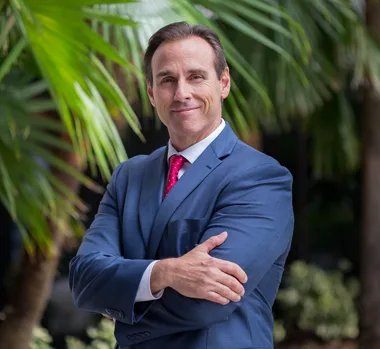 Richard P. Pravato Founding & Managing Attorney Board Certified in Civil Trial Law by The Florida Bar since 2004, and by the National Board of Trial Advocacy. Injury cases exclusively since 1996. Full profile →
 -
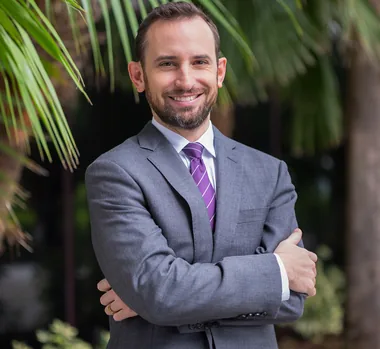 Brett J. Yonon Senior Trial Attorney Selected to Florida Super Lawyers in 2024 and 2025. Brett Yonon is who this firm puts on a catastrophic injury or a death in the family, and he has tried those cases to verdict. Full profile →
How insurance companies handle these claims
A pedestrian file starts with the driver’s account already in it, and the questions that follow are aimed at the share of fault rather than at whether you were hurt.
- You stepped out, or you came out of nowhere
- It is in the report because the driver was the only person able to speak at the scene. A report is not a verdict and it is not binding on a civil claim. What answers it is physical: where the damage sits on the vehicle and how high, where the debris and any skid marks are relative to the crossing, the sight lines from the driver’s approach, and any camera within view of it.
- You were wearing dark clothing
- Raised in nearly every collision after dark, and answered with the clothes themselves, which is the reason to keep them. It is also a question about the road as much as about you: what the lighting there actually measured that night, and whether the fixture above the crossing had been reported out. Both are on record with the utility or the municipality.
- You were not in the crosswalk
- It affects how the blame is divided, it does not end a claim, and it is rarely the whole story. How far the nearest signal was, whether there was a sidewalk at all, and whether a bus stop had been placed where crossing was the only way to reach it are all part of the picture. So is the driver’s independent duty to use due care regardless of where somebody was walking.
What a claim can include
Medical care, past and future
Everything already billed and what the treating physicians say is still ahead. Future care is the part an early offer never includes and it is what decides whether a settlement holds up in five years.
Lost income and lost earning capacity
Wages missed, and separately what somebody can no longer earn. A person who returns in a lighter role at less money has a loss that a pay stub does not show on its own.
Pain, and what daily life has become
Walking, sleeping, standing at work, and the confidence to cross a road again, which people underestimate until they try. It is proved with the account of the people around the injured person as much as with records.
What we have recovered
Verified matters this firm has handled on pedestrian and bicycle claims. Figures are gross recoveries, before attorney fees, costs and medical liens come out of them.
Settlement
SettlementEvery verdict and settlement we publish, with the press coverage for the ones that were reported. No result predicts another case: every claim turns on its own facts, its own evidence and the insurance actually available.
Why Wolf & Pravato in Fort Lauderdale
A Broward pedestrian case is filed in the Seventeenth Judicial Circuit at the Broward County Courthouse, which is the courthouse this office has worked in since 1993. The firm has recovered $3,850,000 for a pedestrian struck by a vehicle, and where a case would actually be tried is part of what a carrier is pricing when it makes an offer.
Richard Pravato has been Board Certified in Civil Trial law by The Florida Bar since 2004. The Bar lists 861 lawyers in the state holding it against a membership over 109,000. What it means in practice is that the other side knows the file can go in front of a jury, and files that can go to trial are priced differently from files that cannot.
The first conversation is free. We are paid out of the recovery or not at all, and if we do not think there is a claim worth bringing we will tell you that rather than take it.
Fort Lauderdale pedestrian and bicycle questions
The driver drove off. Is there anything to be done?
Yes, and two separate things at once. Uninsured motorist coverage on your own auto policy, or on a resident relative’s, commonly responds to a hit and run involving somebody on foot, and the notice requirements are strict enough to be worth handling immediately. Separately, the density of business and doorbell cameras along Broward’s main roads finds these drivers more often than people expect, though that footage does not survive long.
Does my car insurance help if I was hit while walking?
Very often, and it surprises almost everybody. Florida PIP follows the person rather than only the vehicle, so your own policy can pay the first medical bills after you were struck on foot even though your car was parked at home. Your uninsured motorist coverage may also apply where the driver fled or had none. Send us the declarations page and we will read it at no charge.
The report says I was not in a crosswalk.
That affects how fault is divided, not whether you have a claim, though being found more than 50 percent responsible would end it. How far the nearest signal actually was, whether the lighting was working, what the driver’s sight lines were and how fast they were traveling all bear on the split. So does the driver’s own duty to use due care regardless of where you were crossing.
Does my car insurance help if I was hit while walking?
Very often yes, and it surprises people. Florida PIP follows the person, not only the car, so your own policy can cover you as a pedestrian or cyclist even though your vehicle was parked at home. Your uninsured motorist coverage may also apply if the driver fled or had no insurance.
The driver drove off. Is there anything to be done?
Yes. Uninsured motorist coverage commonly responds to hit-and-run claims, including when the injured person was on foot or on a bicycle, and the notice requirements are strict enough that they are worth handling straight away. Separately, camera footage near the scene finds these drivers more often than people assume, but it does not survive long.
The questions that come up on every kind of claim, deadlines, fees, recorded statements and fault, are answered on our Florida injury claim FAQ.
More in Fort Lauderdale
Fort Lauderdale Personal Injury Lawyer
Everything we handle in Broward County, and where our office is.
View →Fort Lauderdale Motorcycle Accident Lawyer
Florida motorcycle accident lawyers.
View →Fort Lauderdale Slip and Fall Lawyer
Florida slip and fall lawyers.
View →Fort Lauderdale Premises Liability Lawyer
Florida premises liability and negligent security lawyers.
View →
Tell us what happened
A lawyer will listen, tell you what Florida law does with those facts, and be straight with you about whether it is worth bringing. We are at 2101 W Commercial Blvd, Suite 1500, Fort Lauderdale, FL 33309.