

Florida Funeral Home Negligence Lawyer
A funeral home cremated the wrong person, lost your loved one’s remains, or buried them in the wrong place. Florida lets a family recover for that grief even with no physical injury, but the conduct has to rise above ordinary carelessness. Call 954-522-5800 and speak to a lawyer about what happened. We have taken one of these cases to a jury and won $3,500,000.
Do not give a recorded statement to the funeral home or its insurer before you speak to a lawyer. Keep asking the funeral home questions, and get the answers in writing. At this stage you are gathering information, not making accusations, and what they put in writing now is what the case is later built on. If you are still waiting on a date, start with how long a funeral home can hold a body in Florida.
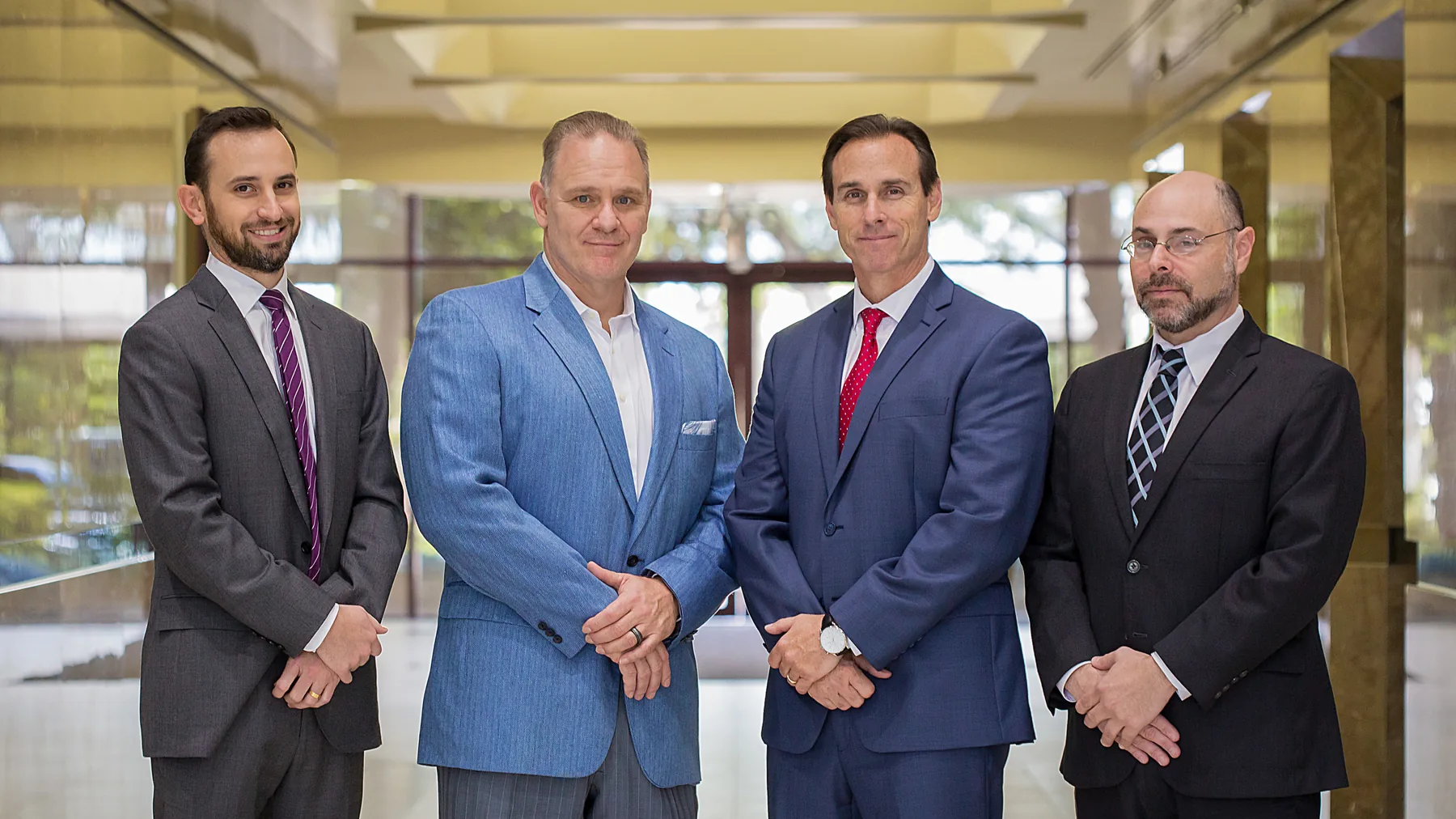
Our team will not let you go through this alone
A death in the family is hard enough without the funeral home getting it wrong. Nothing undoes what they did, and we will not pretend otherwise. What we can do is make them answer for it, and we will take the case as far as it has to go.
Our attorneys have been handling funeral home claims in Florida for years. They have brought cases over wrongful cremations, over remains that could not be found, and over burials in the wrong plot. They tried the one that ended in the $3.5 million verdict above. One of them takes your case and keeps it, so you speak with your attorney rather than an assistant.
Meet the attorneys →What Florida law does with a funeral home claim
Almost every funeral home case comes down to a document: who signed, whether the law let them sign, and what the funeral home did before it acted. Below is what Florida requires, who can be made to answer for it, and how a case is built out of paperwork the funeral home controls.
Florida decides by statute who may authorize a cremation or a burial, in a fixed order of priority, and a cremation may not happen at all without that person's written authorization. Most funeral home cases start with somebody who was not on that list signing a form, or with nobody signing one.
The mistakes that cannot be taken back
A funeral home is handed the one thing a family cannot replace, at the week they are least able to check the work. Most of the time it goes fine. When it does not, the damage is usually permanent by the time anyone finds out.
Over the years this firm has handled the wrongful cremation of people who were never meant to be cremated, cremated remains given to the wrong family, improper and failed embalming, and the desecration of cemetery plots. The single biggest factor in how serious a case is turns out to be simple: can the mistake still be fixed? Remains handed to the wrong family and recovered within the week may be recoverable. Remains that have already been scattered are gone, and no court can undo it.
What Florida actually requires you to prove
This is where these cases part company with an ordinary injury claim, and it is why families are often told by the first lawyer they call that they have nothing. Normally Florida does not let you recover for emotional harm without a physical impact. Funeral cases are one of the oldest exceptions to that rule. In Kirksey v. Jernigan, 45 So. 2d 188 (Fla. 1950), the Florida Supreme Court allowed a mother to recover for mental suffering after a funeral home withheld her child’s body and embalmed him without authority, and it allowed punitive damages on top.
The price of that exception is the standard. It is not enough that the funeral home was careless. The conduct has to imply malice, or show such indifference to the family that malice can be imputed to it. In practice we are proving that what the funeral home did was extreme and outrageous, which is a much higher bar than negligence, and it is the reason these cases need someone who has actually run one.
The regulator is a second, free avenue
Whether or not a lawsuit makes sense, every Florida family can complain to the state. Funeral homes, crematories and cemeteries are licensed under chapter 497 of the Florida Statutes, the Florida Funeral, Cemetery, and Consumer Services Act, and are regulated by the Division of Funeral, Cemetery, and Consumer Services at the Department of Financial Services. The Division investigates at no cost to you and can discipline a licensee or suspend the license outright. Filing there does not replace a civil claim and does not stop you bringing one.
Warning signs families tell us about afterward
Delay on its own means nothing; funeral homes run late for ordinary reasons. What matters is repetition and inconsistency. When the explanation changes each time you ask, the funeral home may be buying time.
- Viewings and services postponed more than once, with a different reason each time
- The urn "has not arrived yet", or the crematory is said to be running behind
- Staff who will not let you see your loved one, or who discourage you from asking
- Paperwork you are asked to sign after the fact, or forms you never saw before
- An authorization for cremation nobody in the family remembers giving
- A grave marker, plot number or burial location that does not match the contract
The deadline that ends a Florida funeral home negligence claim
The deadline here is genuinely uncertain in a way it is not in other practices, because it depends on how the claim has to be pleaded.
Two years, or four, depending on the pleading
Most claims from an accident on or after March 24, 2023 have to be filed within two years. An older accident keeps the four years that applied when it happened. That is the negligence period in Fla. Stat. § 95.11. But these claims frequently cannot be pleaded as simple negligence, because Florida's exception for mental anguish without physical injury demands conduct beyond carelessness.
The same section allows four years for an action for assault, battery, false arrest, malicious prosecution, malicious interference, false imprisonment or any other intentional tort, and four years again for any action not specifically provided for. So the way the case is framed can change the deadline, which is a reason to have somebody look at it early rather than to assume the shorter one has run.
Immediately, for the authorization paperwork
The contract, the authorization forms, the declaration of intent for the remains, the identification records and the crematory's own log. These are the documents the case is decided on and they are all held by the business you are complaining about.
Ask for copies in writing, keep asking, and keep the record of having asked. A funeral home that cannot produce the form authorizing what it did has a problem that no explanation fixes.
Days, where anything can still be put right
Remains handed to the wrong family and recovered within the week is a different case from remains that have been scattered. Where there is any chance of recovering or identifying what was lost, that work happens now, and it matters more to a family than the claim does.
The regulator, which does not replace the claim
A complaint to the state can be made at any point and costs nothing, and the investigation file it produces is useful evidence. It runs on its own timetable, and none of it pauses the deadline on a civil claim.
Who answers, and it is rarely only the funeral home
A body passes through several hands between a death and a burial, and the business whose name is on the contract is frequently not the one that made the mistake.
- The funeral establishment. The business the family contracted with, answerable for what it agreed to do and for the authorizations it obtained or failed to obtain. It is the obvious defendant and, on a mistake that happened elsewhere, not always the one at fault.
- The crematory, which is usually a separate business. Most funeral homes do not operate their own crematory. The cremation itself, the identification procedures around it and the log that records what went in and when belong to a separate licensed company with separate insurance. Fla. Stat. § 497.607 puts the authorization requirement in front of that process, and whose file the authorization sat in is a real question.
- The cemetery. Plot records, mapping, opening and closing the grave, and what happens when the wrong plot is used or an occupied one is disturbed. Cemetery records go back decades and are frequently the only account of who is where.
- The removal or transport service. Bodies are collected and moved by contractors, and misidentification at that stage carries all the way through. Their paperwork is dated and it is the first place a wrong identification shows up.
- The hospital, hospice or medical examiner's office. Where a body was released to the wrong establishment, or released without the authorization the law requires, the failure happened before the funeral home was involved at all.
- The corporate owner behind the name. A great many Florida funeral homes trade under a family name and are owned by a national group that sets the procedures, the staffing and the training. Which entity controlled the decision that mattered is established from the contracts rather than from the sign outside.
How a Florida funeral home negligence case actually runs
The whole case is one question asked in a particular order: who was allowed to authorize this, did they, and what did the business do before it acted.
- Establish who the legally authorized person was. Fla. Stat. § 497.005 defines a legally authorized person and sets the order: the decedent themselves where they left written directions, then the surviving spouse, then a son or daughter over 18, then a parent, then a sibling over 18, then a grandchild over 18, then a grandparent, then the next degree of kinship, with provision for guardians, personal representatives and health surrogates where no family is available. The section also bars somebody arrested for domestic violence against the deceased from exercising any of it.
- Then ask whether that person actually authorized it. Fla. Stat. § 497.607 provides that a cremation may not be performed until a legally authorized person gives written authorization, which may include the declaration of intent for the remains, and it requires the establishment to provide and retain that signed declaration. An estranged relative signing ahead of a spouse, or a form signed by nobody at all, is the commonest fact pattern in this practice.
- Get the disciplinary picture. Fla. Stat. § 497.152 lists what constitutes grounds for discipline, and reading it tells you what to ask for: taking possession of a body without permission from a legally authorized person, embalming without permission, failing to obtain written authorization before entombment, interment, disinterment or disinurnment, and making false or misleading statements including claims that decay can be prevented or substantially delayed.
- Request the state's file. Prior complaints, inspection findings and disciplinary history for that licensee and that location. It is public, it does not depend on the funeral home's cooperation, and a business that has been cited before for the same failing is a different defendant from one that has not.
- Preserve the physical record. Identification tags, the metal identification disc that survives cremation, the container, the log book and any surveillance. Send a written demand naming them before anything is cleaned up or reused.
- Consider whether disinterment is needed, carefully. Where the wrong person is in a plot, establishing it may require a court order and the agreement of other families. It is a serious step, it is distressing, and it is taken only where the answer cannot be reached from the records.
- Get the family treated, and documented. The harm in these cases is psychological and it is compensable only if somebody documented it. Families delay because grief and trauma feel like the same thing to them. They are not the same thing to a claim, and a treating clinician is what separates them.
- Suit, discovery and mediation. Fla. Stat. § 47.011 puts the case where it happened or where the defendant is. Discovery reaches the establishment's procedures, its training and its prior incidents. Most Florida courts require mediation, and Fla. Stat. § 768.79 lets either side serve a formal offer with fees running from a refusal the judgment beats by at least 25 percent.
What these claims are worth, and what moves the number
There is no table for these and any number quoted before the file has been read is a guess. What can be explained is what actually moves it.
Whether it can still be put right
The single biggest factor, and it has nothing to do with how careless anybody was. Remains recovered within the week is a different case from remains that were scattered and are gone. A grave that can be corrected is different from one that cannot.
The mental anguish, which is the claim
Almost no living person is physically hurt in these cases, so the harm being compensated is what it did to the family. It is proved from the treating records and from the specific detail of how a family found out and what happened afterward, rather than asserted.
The treatment the family needed
Counseling, psychiatric care and medication, past and ongoing. This is the documented half of a claim that is otherwise entirely about feeling, which makes it disproportionately important.
What was paid for and never delivered
The contract is a contract. Services charged for and not performed, a casket or urn not supplied, a plot not provided. Modest against the rest, and it establishes that the business failed at the specific job it took money for.
Punitive damages, which this practice reaches more often
Fla. Stat. § 768.72 requires a court to see evidence before punitive damages may be pleaded, and then intentional misconduct or gross negligence proved by clear and convincing evidence. Because the conduct standard for the underlying claim is already above ordinary carelessness, these cases arrive at that threshold far more often than most injury claims do.
Who in the family can claim
More than one person is usually harmed, and their positions are not identical. Who had the authority to direct the disposition, who was present, and who was told what all bear on it. Sorting that out early avoids the family being divided by the claim.
What changes from one part of Florida to another
The statutes are statewide. What differs is who runs the funeral homes and who the families are, and both change these cases.
National groups and family businesses
A large share of Florida funeral homes trade under a local family name while belonging to a national group with standard procedures, centralized training and its own insurance. An independent single-location business behaves nothing like that and frequently has far less coverage. Establishing which you are dealing with is a first-week question.
Families who live somewhere else
Florida buries and cremates an enormous number of people whose families are in other states, arranging everything by telephone and arriving afterward. That distance is exactly how a wrong authorization goes unnoticed until it cannot be undone, and it makes the paperwork the only account of what happened.
Requirements that cannot wait
For many families a funeral is scheduled around what a faith requires, and some require burial within a day or two of death. When a funeral home misses that window the harm is not the wait. It is that a rite could not be performed at all, and there is no version of later that fixes it.
A proven record, anywhere in Florida
Our five offices run from Fort Lauderdale to Fort Myers and we work seven further cities from them, and we act statewide on these claims.
The insurance and the licensing behind a Florida funeral home
Two systems sit behind a Florida funeral home, and only one of them pays a family anything.
The license, which is leverage rather than money
Funeral establishments, direct disposers, crematories and cemeteries are licensed under chapter 497, and Fla. Stat. § 497.152 sets out what puts that license at risk. A regulator that can suspend a business concentrates minds in a way a claim letter does not, and the investigation file it produces is evidence a family could not otherwise obtain.
The establishment's liability coverage
Funeral homes carry general and professional liability coverage, and how much varies enormously between a national group and an independent business. Fla. Stat. § 627.4137 requires the limits of each known policy, including excess and umbrella layers, to be disclosed in a sworn statement within 30 days of a written request.
Separate policies down the chain
The crematory, the cemetery and the transport contractor each carry their own coverage. Where the mistake happened somewhere other than the funeral home, that is where the money is, which is another reason to establish the chain rather than to write to the name on the contract.
Preneed arrangements, which are regulated separately
Money paid in advance for funeral goods and services is subject to its own requirements under chapter 497 about how it is held. Where a business failed or the arrangement was not honored, that is a separate question from a negligence claim and it is worth asking about at the same time.
What pays for the family's treatment now
Health insurance, repaid at the end out of any recovery. Nobody should be putting off counseling while a claim is worked out, and a gap in treatment is used to argue the harm was ordinary grief rather than something the funeral home caused.
Funeral home negligence questions we are asked
Answered by Brett J. Yonon, who handles the firm’s funeral home and wrongful death cases.
Can you sue a funeral home for emotional distress?
In Florida, yes, and usually that is the whole case. Most funeral home claims involve no physical injury to anyone living, so the harm being compensated is the mental anguish of the family. Florida has allowed exactly this since Kirksey v. Jernigan in 1950, where the Supreme Court let a mother recover for mental suffering after a funeral home withheld her child’s body and embalmed him without permission. The catch is the standard: the conduct has to imply malice or show great indifference to the family’s rights, not merely be careless.
How do you sue a funeral home in Florida?
Two separate tracks, and you can use both. You can file a complaint with the Division of Funeral, Cemetery, and Consumer Services at the Department of Financial Services, which investigates at no cost to you and can discipline or suspend the license. Separately, a civil suit seeks money for the family. A lawyer starts by preserving records, the contract, the authorization forms, the crematory paperwork and the internal logs, because those are what prove what actually happened.
What are the most common reasons families sue a funeral home?
Cremating someone who was never supposed to be cremated. Releasing cremated remains to the wrong family. Losing remains outright. Failed or improper embalming, which usually surfaces at the viewing. Burying a person in the wrong plot, or disturbing a grave that was already occupied. Selling services that were never performed. In our experience the cases that turn serious are the ones where the mistake cannot be undone.
What is funeral home malpractice?
It is not a formal legal term in Florida, but people use it to mean a funeral home failing at the job it was hired to do. Florida regulates funeral homes, crematories and cemeteries under chapter 497 of the Florida Statutes, so a single incident can breach the contract, violate the licensing rules, and give the family a civil claim, all at once.
What are funeral home negligence cases worth?
There is no table to look it up in, and any lawyer who quotes you a number before reading the file is guessing. What moves the value is whether the harm can be reversed. Remains handed to the wrong family and recovered the same week is a different case from remains that were scattered and are gone. Compensation can also cover mental health treatment the family needed afterward. Our firm has taken a funeral home negligence case to a jury and recovered $3,500,000.
What kind of lawyer handles funeral home cases?
There is no such thing as a funeral lawyer or a mortuary lawyer in Florida. It is not a separate specialty and no bar certification exists for it. These are personal injury and wrongful death claims, so a personal injury attorney brings them, and the question worth asking is whether that attorney has actually run one under chapter 497 of the Florida Statutes. Ask how many they have filed and whether any of them reached a jury. One more thing to check: funeral home lawyers are also hired by the funeral homes and their insurers, so find out which side of these cases the firm works before you call.
Do I need a funeral home negligence attorney near me?
Not in your own town, no. One set of Florida laws governs these claims everywhere in the state, and the suit is filed in the county where the funeral home did what it did, not in the county where you live. What the attorney has done with a chapter 497 case matters far more than the drive to their office. Most of the work is records, phone calls and email, and the days anyone needs you in person are few and scheduled well ahead. We take funeral home claims across Florida from our Fort Lauderdale and Fort Myers offices.
How long do I have to bring a funeral home claim in Florida?
It depends on how the claim is pleaded, and that is not a technicality here. Ordinary negligence claims for incidents on or after March 24, 2023 carry a two-year deadline under Fla. Stat. § 95.11. Claims pleaded as intentional conduct run on a different clock. Because these cases usually have to be pleaded as more than simple carelessness, do not assume which deadline is yours. Ask early, while the funeral home still holds the records.
What should I do right now if I think something went wrong?
Keep talking to the funeral home and get as much of it in writing as you can. Ask questions rather than making accusations, because you are gathering information at this stage. Do not give a recorded statement to the funeral home’s insurer before you speak to a lawyer. Then call us. The conversation costs nothing even if we tell you there is no case to bring.
Funeral home claims across Florida
We take these cases statewide from five offices, and cover seven further cities from them. Each office page carries that market’s address and direct number; a service area page names the office that works it and publishes no address, because we do not have one there.
Fort Lauderdale Funeral Home Negligence Lawyer
2101 W Commercial Blvd, Fort Lauderdale. Filed in the Seventeenth Judicial Circuit at the Broward County Courthouse.
View →Miami Funeral Home Negligence Lawyer
1111 Brickell Avenue, Miami. Filed in the Eleventh Judicial Circuit at the Miami-Dade County Courthouse.
View →West Palm Beach Funeral Home Negligence Lawyer
2101 Vista Parkway, West Palm Beach. Filed in the Fifteenth Judicial Circuit in downtown West Palm Beach.
View →Boynton Beach Funeral Home Negligence Lawyer
1375 E Gateway Blvd, Boynton Beach. Filed in the Fifteenth Judicial Circuit, South County Courthouse in Delray Beach.
View →Fort Myers Funeral Home Negligence Lawyer
1825 Colonial Blvd, Fort Myers. Filed in the Twentieth Judicial Circuit at the Lee County Justice Center.
View →Pompano Beach Funeral Home Negligence Lawyer
Worked from our Fort Lauderdale office. Filed in the Seventeenth Judicial Circuit at the Broward County Courthouse.
View →Hollywood Funeral Home Negligence Lawyer
Worked from our Fort Lauderdale office. Filed in the Seventeenth Judicial Circuit at the Broward County Courthouse.
View →Coral Springs Funeral Home Negligence Lawyer
Worked from our Fort Lauderdale office. Filed in the Seventeenth Judicial Circuit at the Broward County Courthouse.
View →Hialeah Funeral Home Negligence Lawyer
Worked from our Miami office. Filed in the Eleventh Judicial Circuit at the Miami-Dade County Courthouse.
View →Miami Beach Funeral Home Negligence Lawyer
Worked from our Miami office. Filed in the Eleventh Judicial Circuit at the Miami-Dade County Courthouse.
View →Cape Coral Funeral Home Negligence Lawyer
Worked from our Fort Myers office. Filed in the Twentieth Judicial Circuit at the Lee County Justice Center.
View →Naples Funeral Home Negligence Lawyer
Worked from our Fort Myers office. Filed in the Twentieth Judicial Circuit at the Collier County Courthouse.
View →
Something went wrong, and nobody will give you a straight answer
Call and tell a lawyer what happened. If there is no case here we will tell you that, and it still costs you nothing.