How Long Can a Funeral Home Hold a Body? What Florida Law Says
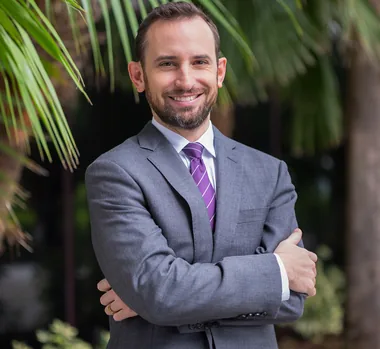 By Brett J. Yonon, Florida Super Lawyers, 2024 and 2025 Published September 2, 2026
It has been nine days, and the funeral home still has not given you a date. The person on the phone is kind, and vague, and every call ends with someone waiting on someone else. Relatives keep asking when the service is, and you have nothing to tell them. So you start to wonder how long this can go on, and whether something has gone wrong that nobody wants to mention.
I handle funeral home negligence cases in Florida, and long waits come up in almost every first call. Most turn out to be paperwork. Some do not. Either way, Florida has rules about how your loved one has to be cared for while you wait, and knowing them changes the questions you ask.
Florida does not set a maximum number of days a funeral home may hold a body. What it sets is a condition: after 24 hours, your loved one has to be refrigerated at 40 degrees Fahrenheit or below, embalmed, or preserved another approved way.
- There is no deadline in Florida law that forces a burial or a cremation by a certain day.
- Past 24 hours after death, the funeral home has to refrigerate, embalm, or otherwise preserve your loved one.
- Embalming is not required by law for every death, so refrigeration is a real choice you can make.
- A cremation adds two steps: a medical examiner has to sign off, and a family member with legal authority has to give written permission.
- Long waits are common and usually about paperwork. What is not normal is a funeral home that will not tell you which step it is waiting on.
By the end you will know what Florida actually requires, why the wait gets long, how the cremation timeline works, five questions that get you a straight answer, and what happens to ashes nobody picks up.
Key takeaways
- No Florida law forces a burial or cremation by a certain day, so a long wait is not against the rules by itself.
- Ask which specific step the funeral home is waiting on. "Paperwork" is not an answer.
- Ask for the general price list. Federal rules say it is yours to keep, and storage fees are on it.
- Ask how your loved one is being cared for right now, and where.
- Get the answers in writing. If the story changes from one week to the next, that matters later.
So what is the actual limit in Florida?
There is no day count. Florida sets rules for how your loved one is kept, not for how long. Section 497.386 of the Florida Statutes is the one to know. Past 24 hours after death, a body has to be kept cold at 40 degrees Fahrenheit or below, or embalmed, or preserved another way the state allows. That is the whole rule.
The same section says where they can be kept: a licensed funeral home, a health care facility, a medical examiner's facility, a morgue, or a cemetery holding facility. If you are told your loved one is somewhere else, ask which of those it is.
Notice what is not in there. No last day. A funeral home caring for your loved one the right way is not breaking a rule on day 12. Families wait on relatives flying in, and that is normal. The rule that protects you is about care, and it starts the day after death.
Why is it taking so long?
Usually one of four things, and any funeral home can tell you which one in a sentence.
First, the medical examiner. When a death is going to end in cremation, section 406.11 of the Florida Statutes sends it to the district medical examiner, who has to determine the cause of death. That office runs on its own schedule. A busy week there is a slow week for you.
Second, the death certificate and the permit to move or bury your loved one. Those come from doctors and the state, not from the funeral home. One unsigned line holds up everything behind it.
Third, your own family. If the person with the legal right to decide has not signed, nothing moves. That happens more often than people expect, and it is not the same problem as a slow office.
Fourth, a mistake nobody wants to mention. That one is rare. It is also why you should write down what you are told each time you call.
How long before a cremation can happen?
Two things have to happen first, and then a clock starts. The medical examiner signs off. Then one family member gives written permission. Florida calls that person the legally authorized person, and section 497.607 of the Florida Statutes says no cremation can happen without their signature. They also sign a note saying what should happen to the ashes.
Then the timing rule. The cremation has to happen within 48 hours after a set time the signer agreed to in writing. So a signature, a time, and a window all sit in a file somewhere. If you are being told the crematory is behind, ask when the permission was signed and what time was agreed. Those two answers usually explain the delay.
Everything else about how long the wait runs is up to the people involved.
Source: Florida Statutes 497.386 and 497.607
5 questions that get you a straight answer
Send these by email if you can, so the replies are in writing. You are asking for facts, not making an accusation, and a funeral home doing its job answers all five without much trouble.
- "Which step are we waiting on right now?" The medical examiner, the death certificate, a signature, or the crematory. Ask them to name it.
- "How is my mother being cared for in the meantime?" Refrigerated or embalmed, and where. You are owed a plain answer.
- "Can I have a copy of the general price list?" The Federal Trade Commission's Funeral Rule says they have to hand you a written list of every item and its price, and it is yours to keep. Daily storage charges are on it.
- "Who signed the authorization, and on what date?" If a cremation is planned, that signature exists or the cremation cannot happen.
- "What is the identification number on my mother's file?" Florida makes a crematory track each person from arrival to the day the ashes go home. There is a number, and they have it.
Save every reply. If the answers change from one week to the next, the changes are worth more than the answers.
Can they hold a body because the bill is not paid?
That is a different question from timing, and it is worth a fight rather than a fast payment. Florida families do run into holds over money. The answer turns on the contract, who signed it, and what is really owed. We covered both sides: when a funeral home refuses to release remains, and whether a funeral home can sue a family for non-payment.
Take this into that talk. Do not sign a new agreement, a waiver, or a refund with strings on it while you are still trying to get your loved one released. Sign after you know what happened, not before.
What happens to ashes nobody picks up
Here Florida does give a deadline. If nobody claims cremated remains for 120 days, the funeral home may dispose of them. That can mean scattering at sea, or a licensed scattering garden or pond, or another way the rules allow. First they have to make a reasonable effort to find out whether the person was a veteran who could be buried in a national cemetery.
So if a family argument is what is holding things up, that 120 days matters. It runs quietly, and nobody calls to remind you.
Questions families ask me
Do we have to embalm?
No. The Federal Trade Commission says no state law requires routine embalming for every death, and Florida lets a funeral home keep your loved one refrigerated instead. If you are told embalming is required, ask them to point to the rule that says so.
Can we move our loved one to a different funeral home?
Usually yes, and families do it. Expect to pay for work already done, and expect the move itself to cost something. Ask the new funeral home to handle the request. They do this often, and you should not have to.
Is a long wait by itself a sign something went wrong?
No. Most long waits are a slow office or a missing signature. What gets my attention is a different reason every time, an answer nobody will put in writing, or staff who push back when you ask. That pattern is worth a call, and what to do if you suspect funeral home negligence covers the rest.
How long do I have to act if something did go wrong?
Florida gives two years for a claim founded on negligence, under section 95.11 of the Florida Statutes. Funeral cases are often filed as more than plain carelessness, and that runs on a different clock. Do not assume which deadline is yours. Ask early, while the funeral home still has the records.
Who can I complain to besides the funeral home?
The state. Florida's Division of Funeral, Cemetery, and Consumer Services takes written complaints about funeral homes and crematories, and its consumer help page has the form. It costs nothing. Our walkthrough of how to file a complaint against a funeral home takes it step by step.
Still waiting, with no answer
Wolf & Pravato handles funeral home negligence cases across Florida, from our offices in Fort Lauderdale, Miami, West Palm Beach, Boynton Beach and Fort Myers. If the reason for the delay keeps changing, tell us what happened and we will tell you what the records should show. The call is free, and it stays free if we tell you there is no case here.
This article is general information about Florida law, not legal advice about your family's situation.
Related reading
 Funeral Home Negligence
When a Florida Funeral Home Refuses to Release a Loved One's Remains
 Richard P. Pravato
  Funeral Home Negligence
 Who Has Legal Standing to Sue a Funeral Home in Florida
Richard P. Pravato  Funeral Home Negligence
 Medical Examiner & Funeral Home Evidence Issues in Florida
Richard P. Pravato