
Hollywood Funeral Home Negligence Lawyer
Hollywood, Florida sits in south Broward between Fort Lauderdale and the Miami-Dade line, and funeral cases arising here are filed in the Broward County Courthouse. We take these claims for families across Broward County: wrongful cremation, remains lost or released to the wrong people, failed embalming, burial in the wrong plot. We serve Hollywood from our Fort Lauderdale office, and a suit like this is filed in the Seventeenth Judicial Circuit at the Broward County Courthouse. Call 954-522-5800 and speak to a lawyer about what happened.
Do not give a recorded statement to the funeral home or its insurer before you speak to a lawyer. If any part of this crossed the county line, note where each step actually happened: the hospital, the medical examiner, the funeral home, the cemetery. In south Broward those are often in two different counties.
Our team will not let you go through this alone
A death in the family is hard enough without the funeral home getting it wrong. Nothing undoes what they did, and we will not pretend otherwise. What we can do is make them answer for it, and we will take your case as far as it has to go.
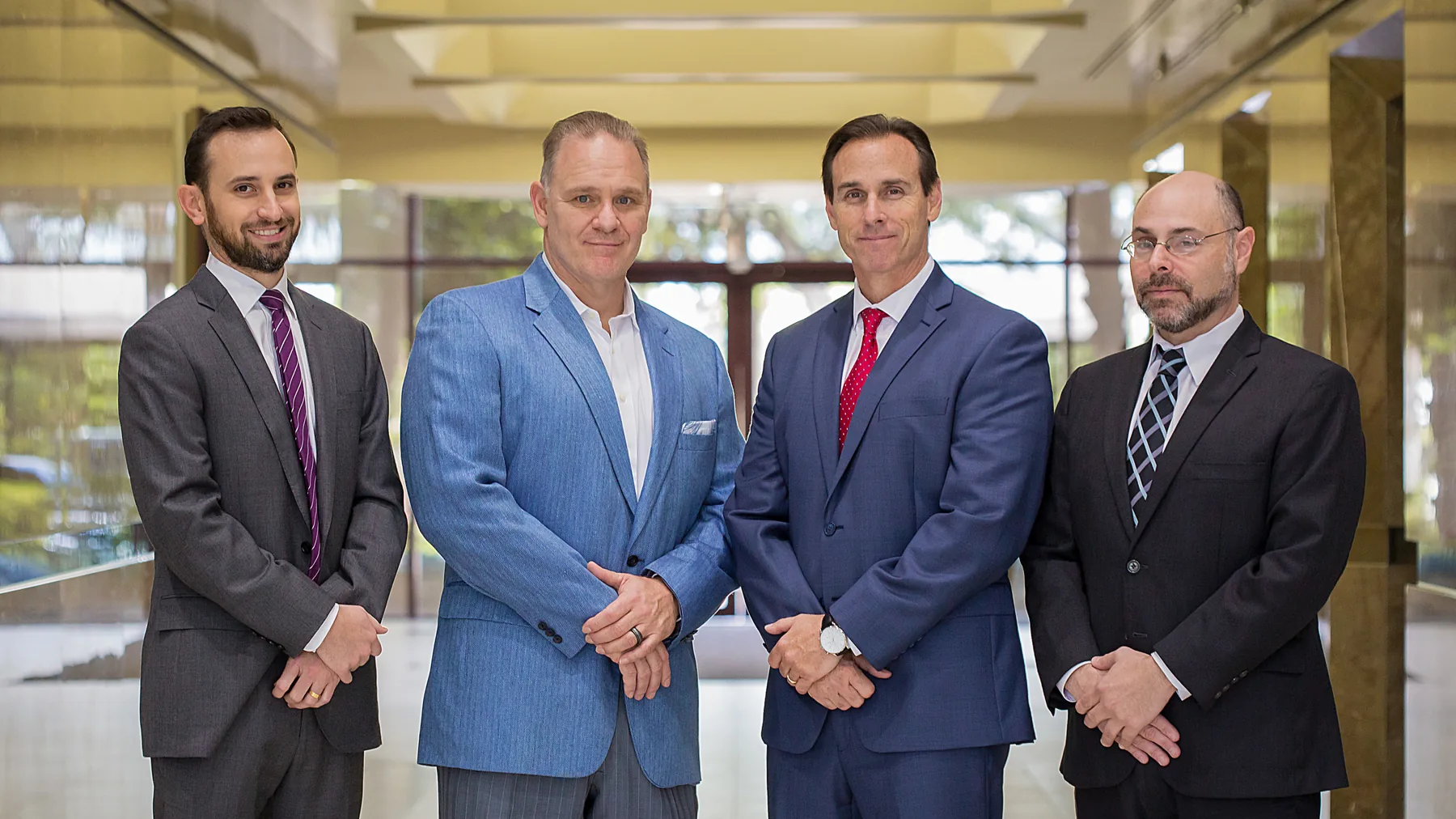
Our trial attorneys have been trying Broward County injury and wrongful death cases together since 1993. They have brought claims over remains that went missing, over the wrong body being cremated, and over a grave being disturbed. A funeral home claim is work this firm has taken to a jury and won. One of them takes your case and keeps it, so you speak with your attorney rather than an assistant. A suit out of Hollywood is filed in the Seventeenth Judicial Circuit at the Broward County Courthouse.
Meet the attorneys →A city on the county line, which complicates the paperwork
Below is what a Hollywood funeral home claim involves: what tends to go wrong here, what Florida requires you to prove, how that gets proved, and what it is worth. The statutes sit on the statewide page. This is the local part.
Hollywood funeral home claims are filed in the Seventeenth Judicial Circuit at the Broward County Courthouse. The city sits between the two largest funeral markets in South Florida, and a great deal of its work moves between businesses in different counties. Florida allows these claims with no physical injury.
What to do this week
None of this requires a lawyer and all of it is easier now than in six months. Where a case exists, these are also the steps that decide how strong it is.
- Ask for the remains to be left alone. Where anything can still be examined, say in writing that nothing further should be done: no further preparation, no cremation, no burial, no transfer, until it has been looked at. It is an uncomfortable thing to ask for and it is frequently the difference between proving a case and describing one. Say it to the funeral home and, where a regulator or a medical examiner is involved, say it to them as well.
- Tell the regulator, and keep the reference number. Florida licenses funeral establishments, cremation facilities and the people who work in them, and complaints are investigated. Making one does not replace a claim and it does not slow one down, and the investigation file that results is frequently the most useful document anybody produces. Keep whatever reference number you are given.
- Put every question in writing, starting today. Email or text rather than telephone, and ask the same questions you have already asked. Who authorized this. When. Where are the remains now. Who handled them. What paperwork exists. A funeral home that has made a mistake will answer a phone call vaguely and will answer an email carefully, and the careful answer is the one you can use later. If they will only talk, write down what they said afterward and send it back to them asking them to confirm it.
How these cases arise in Hollywood
Hollywood runs right up against the Miami-Dade border. Families here routinely use a funeral home in Broward and a cemetery in Miami-Dade, or the reverse, and a death at a Miami-Dade hospital can be released by a different medical examiner than the one covering the funeral home that receives the body.
That split is worth understanding early, because it decides which examiner released your loved one, which records exist, and where a suit is filed. A case arising in Hollywood goes to the Seventeenth Judicial Circuit in Fort Lauderdale even where part of what went wrong happened south of the county line.
Hollywood sits on the county line between the Broward and Miami-Dade funeral markets, and a lot of this work crosses it.
Bodies crossing the county line
An establishment in one county using a crematory or a cemetery in another is routine here.
- Custody passing between businesses licensed separately and insured separately
- Release paperwork at each handover, which is the only record of who held what when
- Two counties’ worth of licensing and complaint history to check rather than one
- Long transport legs where identification either was verified at each step or was not
A mixed population and mixed observance
The city’s funeral work spans burial, cremation and arrangements bound by religious requirements.
- Written instructions about timing, handling or cremation, given and not followed
- Arrangements agreed in a language other than English
- What the family was told, against what the form they signed said
- A cremation carried out where the family had said there must not be one
Older residents with families elsewhere
The familiar South Florida pattern, and the source of most authorization failures.
- Authorization taken from whoever answered the telephone
- A relative with higher priority under Florida law who was never asked
- A family that never saw the body or the establishment
- An objection made too late to reach anybody who could act on it
Cases the medical examiner touched
Where a death was reportable, District 17 held the body before the funeral home did.
- Release documentation fixing when custody transferred and to whom
- Identification carried out under county procedures
- A written record independent of anything the establishment produced
- Among the first documents requested in a Broward file
What we ask Hollywood families to look at
- A death in a Miami-Dade hospital handled by a Broward funeral home, or the reverse
- Two sets of paperwork with different dates for the same transfer
- A funeral home unable to say which medical examiner released the body
- Interment in a Miami-Dade cemetery arranged by a Broward establishment
What actually goes wrong
These are the failures that bring families to this firm. Where a death fell under the Broward County Medical Examiner, the release paperwork usually shows who held custody at the moment one of them happened, and it is among the first records we request.
- A burial in the wrong plot, in the wrong section, or in a grave already occupied
- A body buried without the service the family paid for and was told had happened
- Embalming that was contracted for and never performed, discovered at a viewing
- A body stored without refrigeration, or in a facility whose cooling had failed
- Visible deterioration at an open casket viewing the family was assured would be possible
- Organs, tissue or a prosthesis removed, retained or discarded without anybody asking
What a family is left with
Physical and psychological illness
Sleep that does not return, weight lost, work missed, existing conditions that worsen, and treatment that would not otherwise have been needed. Where somebody has seen a doctor or a counselor about it, those records matter and they are part of the claim rather than a private matter kept out of it.
A family divided by it
These cases regularly split families, because one relative signed something, or was told something, or made a decision the others did not know about. That division is real and it also affects how a claim is brought, since Florida decides by statute who had authority and who may recover.
The grief that had somewhere to go, and then did not
This is what these cases are actually about, and it is why Florida treats them differently from an ordinary claim. A funeral is the arrangement a family makes to hold a death in a shape they can carry. When it is mishandled, that arrangement is taken away and replaced with an image the family did not choose and cannot put down.
Families describe the same things afterward: not being able to stop picturing it, avoiding the cemetery, being unable to talk about the person without talking about what happened to the body instead. That is the injury, and it is recognized as one.
What Florida law requires you to prove
The claim exists without any physical injury
Florida is unusual here, and it is the single thing most families are told wrongly. The ordinary rule is that mental anguish is not recoverable without an accompanying physical injury. The mishandling of a dead body is a recognized exception to that rule, so a family with no physical injury at all still has a claim.
The statewide page sets out the authority for that, along with the standard of proof Florida applies, which is higher than most families are told and is worth understanding before anybody decides what to do.
Who was entitled to decide, and in what order
Florida decides by statute who may authorize a burial or a cremation, in a fixed order of priority, and a cremation cannot happen at all without that person’s written authorization. A very large share of these cases begins with somebody who was not on that list signing a form, or with nobody signing one. That order, and what it means for who may bring a claim, is set out in full on the statewide page.
The establishment, the licensee and the people who work there
Florida licenses funeral establishments, direct disposal establishments, cremation facilities, cemeteries and the individuals working in them, and a licensee is answerable for what happens under its license. The claim usually runs against more than one of them, and where a body passed between a funeral home, a crematory and a cemetery, the question of who held custody at the moment something went wrong is answered from the release paperwork rather than from anybody’s account.
The deadline
Most claims arising on or after March 24, 2023 have to be filed within two years, and an older one keeps the four years that applied when it happened. The practical deadline is much shorter, because the records that decide these cases sit with the establishment and the physical evidence is regularly destroyed as part of the very thing being complained about.
How we prove it in Broward County
A Hollywood case regularly involves businesses in two counties, and the paperwork between them is where the answer sits.
- The contract, the price list and every authorization form
- Release paperwork at each handover, including any that crossed the county line
- Medical examiner release documentation where District 17 held the body
- Identification and transfer logs at the facility that actually did the work
- Cemetery interment records where a burial is involved
- Written instructions about handling or observance, and when they were given
- Licensing and complaint history for every business, in both counties
- Treatment records for anybody in the family who sought help afterward
Ask which business actually did the work, and get the answer in writing. In a market where the establishment the family hired is frequently not the one that handled the body, that single question reshapes the whole file.
What the funeral home and its insurer will say
The response in these files follows a pattern, and it starts with sympathy and a refund. What follows is worth recognizing for what it is.
That was the crematory, not us
Regularly a real division of responsibility and never a complete answer. A body that moved between a funeral home, a crematory and a cemetery generated release paperwork at every handover, and that paperwork shows who held it when. Each of them carries its own license and its own insurance, and naming all of them at the outset is ordinary practice.
There is no claim without a physical injury
Wrong in Florida, and it is the single most damaging thing families are told. The mishandling of a dead body is a recognized exception to the physical injury rule, which is why these claims exist at all. Families abandon good cases on this advice, given confidently by somebody who has not looked it up.
You waited too long to complain
Most families do wait, because they spent the first months being told they were mistaken and the months after that grieving. The filing deadline is what matters and it is longer than the establishment implies. What genuinely does run out is the evidence, which is a reason to ask now rather than a reason it is too late.
What a claim can include
- Punitive damages where the conduct warrants it. Available in Florida on a heightened standard and on a court’s permission rather than as of right. Concealment, forged paperwork and a pattern of earlier complaints are what move a case into that territory.
- Mental anguish, which is the case. Not an add-on here. The emotional harm to the family is the injury Florida recognizes in these claims, and it is the largest part of what one is worth.
- What the funeral cost, and what putting it right costs. The original arrangements, and a second set where a service, a burial or a disinterment has to be done again.
Why this office for a Hollywood case
A Hollywood funeral home claim is filed in the Seventeenth Judicial Circuit at the Broward County Courthouse, and we serve Hollywood from the firm’s Fort Lauderdale office on West Commercial Boulevard. We do not claim an office in Hollywood and would rather say so. The case is filed in the same courthouse either way, and the lawyer working it is the one who tried the firm’s funeral home case to verdict.
Hollywood funeral home questions
Answered by Brett J. Yonon, who handles the firm's funeral home and wrongful death cases.
My relative died in Miami but the funeral home is in Hollywood. Where does the case go?
Usually to the Seventeenth Judicial Circuit in Broward, because that is where the funeral home operated and where the conduct we are complaining about happened. It is not always that simple when several businesses in two counties were involved, which is a question worth putting to a lawyer before anything is filed.
The funeral home says the crematory made the mistake, not them.
That is frequently a real division of responsibility and it is never a complete answer. A body that moved between businesses generated release paperwork at each handover, and that paperwork shows who held it when. Each business carries its own license and its own insurance. Naming all of them at the outset is ordinary practice and it stops a claim being lost to a deadline while they argue.
How long do we have to do something about this?
Most claims arising on or after March 24, 2023 have to be filed within two years, and an older one keeps the four years that applied at the time. The practical deadline is far shorter, because the records sit with the establishment and the physical evidence is frequently destroyed by the very thing being complained about. Asking now costs nothing and commits you to nothing.
Where would a Hollywood funeral home case actually be filed?
In the Seventeenth Judicial Circuit at the Broward County Courthouse. Which courthouse matters more than people expect, because local practice, the judges and the jury pool all differ by circuit. We try these cases in Broward County rather than referring them out.
Do you have an office in Hollywood?
No, and we would rather say so than imply otherwise. We serve Hollywood from our Fort Lauderdale office at 2101 W Commercial Blvd, Suite 1500, Fort Lauderdale, FL 33309, which is where your case would be handled and where the lawyer working it sits. Nothing about that changes the claim: it is filed in the Seventeenth Judicial Circuit at the Broward County Courthouse either way, and the first conversation costs you nothing wherever you are.
More in Hollywood
Fort Lauderdale Personal Injury Lawyer
The office that covers Hollywood, and everything else we handle from it.
View →Florida Funeral Home Negligence Lawyer
The Florida standard of proof, the regulator, and the warning signs.
View →Case Results
Verdicts and settlements, including a $3,500,000 funeral home jury verdict.
View →
Nobody at the funeral home will give you a straight answer
Tell a lawyer what happened. We serve Hollywood from our Fort Lauderdale office at 2101 W Commercial Blvd, Suite 1500, Fort Lauderdale, FL 33309, and the conversation costs nothing even if we tell you there is no case to bring.