
Naples Funeral Home Negligence Lawyer
Naples is served from our Fort Myers office. It shares the Twentieth Judicial Circuit with Lee County but has its own medical examiner district. We take these claims for families across Collier County: wrongful cremation, remains lost or released to the wrong people, failed embalming, burial in the wrong plot. We serve Naples from our Fort Myers office, and a suit like this is filed in the Twentieth Judicial Circuit at the Collier County Courthouse. Call 954-522-5800 and speak to a lawyer about what happened.
Do not give a recorded statement to the funeral home or its insurer before you speak to a lawyer. If a preneed contract is involved, ask for the complete original file, not a summary and not a reissued copy. The itemized goods and services on the document your family signed are what the funeral home has to answer for.
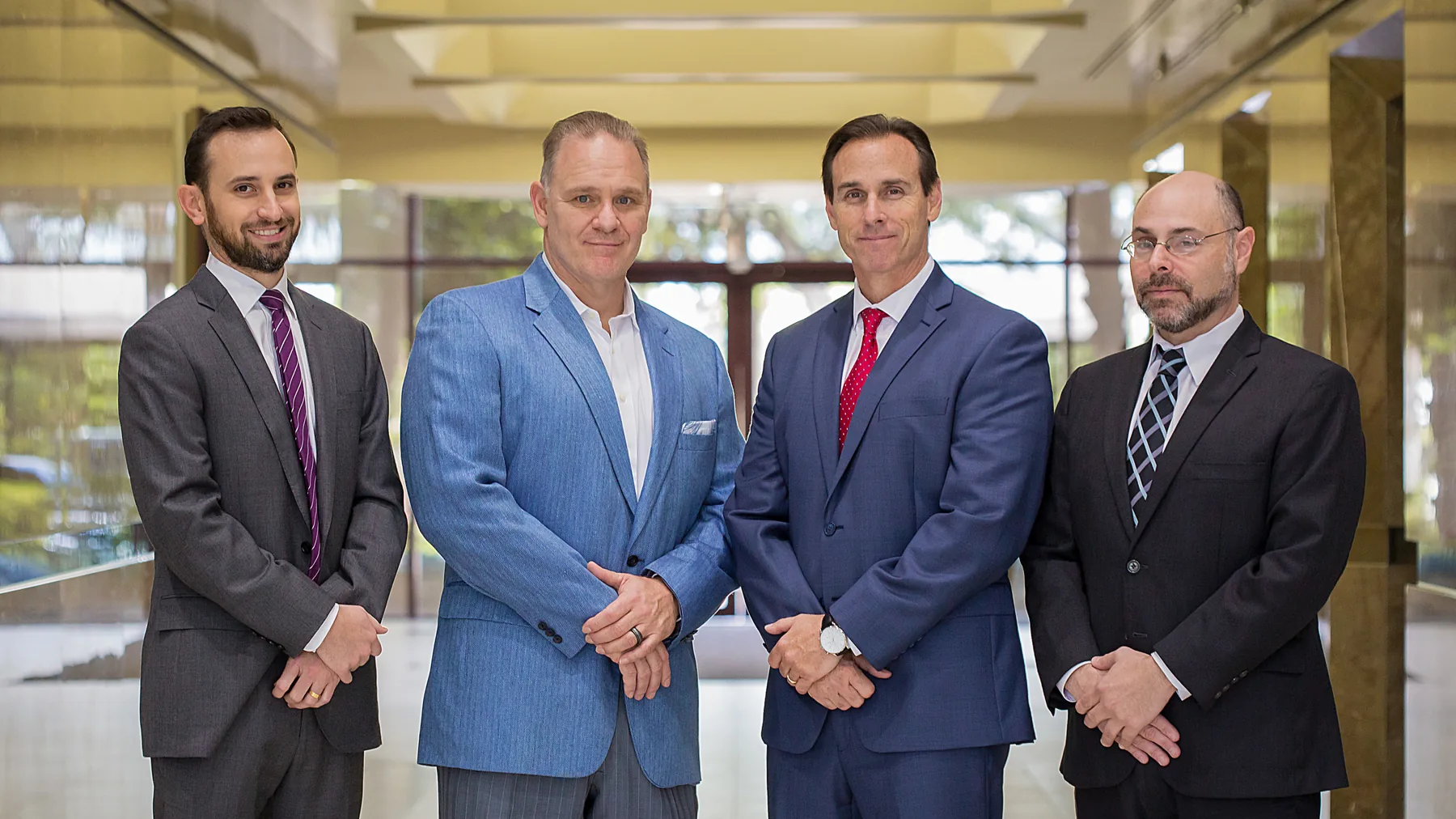
Our team will not let you go through this alone
A death in the family is hard enough without the funeral home getting it wrong. Nothing undoes what they did, and we will not pretend otherwise. What we can do is make them answer for it, and we will take your case as far as it has to go.
Our trial attorneys have been trying Collier County injury and wrongful death cases together since 1993. They have brought claims over remains that went missing, over the wrong body being cremated, and over a grave being disturbed. A funeral home claim is work this firm has taken to a jury and won. One of them takes your case and keeps it, so you speak with your attorney rather than an assistant. A suit out of Naples is filed in the Twentieth Judicial Circuit at the Collier County Courthouse.
Meet the attorneys →Collier is its own district, and that catches people out
Below is what a Collier County funeral home claim involves: what tends to go wrong here, what Florida requires you to prove, how that gets proved, and what it is worth. The statutes sit on the statewide page. This is the Collier part.
Naples funeral home claims are filed in the Twentieth Judicial Circuit at the Collier County Courthouse. Collier has an older population than almost any county in the country, a high rate of remains transported out of state for burial, and District 20 has its own medical examiner. Florida allows these claims with no physical injury.
What to do this week
None of this requires a lawyer and all of it is easier now than in six months. Where a case exists, these are also the steps that decide how strong it is.
- Ask for the remains to be left alone. Where anything can still be examined, say in writing that nothing further should be done: no further preparation, no cremation, no burial, no transfer, until it has been looked at. It is an uncomfortable thing to ask for and it is frequently the difference between proving a case and describing one. Say it to the funeral home and, where a regulator or a medical examiner is involved, say it to them as well.
- Tell the regulator, and keep the reference number. Florida licenses funeral establishments, cremation facilities and the people who work in them, and complaints are investigated. Making one does not replace a claim and it does not slow one down, and the investigation file that results is frequently the most useful document anybody produces. Keep whatever reference number you are given.
- Put every question in writing, starting today. Email or text rather than telephone, and ask the same questions you have already asked. Who authorized this. When. Where are the remains now. Who handled them. What paperwork exists. A funeral home that has made a mistake will answer a phone call vaguely and will answer an email carefully, and the careful answer is the one you can use later. If they will only talk, write down what they said afterward and send it back to them asking them to confirm it.
How these cases arise in Naples
Naples sits in the same judicial circuit as Fort Myers but a different medical examiner district. Collier County is District 20, with its own office in Naples, while Lee County is District 21. Families and even some lawyers assume one office covers both, and a records request sent to the wrong district simply comes back empty while the clock runs.
Collier also has one of the oldest median populations in the country, and with it an unusually heavy preneed market: arrangements bought years in advance, often by people who have since died, sold by businesses that may have changed hands since. The dispute is frequently about a contract nobody living watched being signed.
Collier County has one of the oldest populations in the country and a funeral market shaped around families who are mostly somewhere else.
Remains leaving the state for burial
A very large share of Collier deaths end with a burial in another state.
- Transport arranged between two establishments that have never dealt with each other
- Embalming and sealing requirements for interstate transport, contracted for and sometimes not done
- Custody changing hands more times than a local funeral involves
- A body arriving at the wrong destination, or in a condition the receiving home reports
Seasonal residents
A death in Naples of somebody whose legal home, family and physicians are elsewhere.
- Records and next of kin in a different state entirely
- Arrangements agreed by telephone under time pressure
- Preneed contracts held somewhere other than where the death occurred
- A family relying wholly on what the establishment told them
District 20, which covers Collier alone
Collier has its own medical examiner district rather than sharing one, and that produces a clean local record.
- Release documentation fixing exactly when custody transferred
- Identification carried out under district procedures before the establishment was involved
- A written record independent of the funeral home’s own account
- Among the first things requested in a Collier file
A small number of establishments, serving a lot of families
A concentrated market where the same businesses handle most of the county’s work.
- Volume handled at shared facilities rather than at the establishment sold to the family
- Complaint and licensing history that is worth pulling for every business in the chain
- The same names appearing across separate families’ complaints
- A pattern rather than a lapse, which changes what a case is worth
What we ask Naples families to look at
- A preneed contract sold by a business that has since changed ownership
- Goods substituted for cheaper ones than the contract itemized
- Records requested from District 21 in Lee County when Collier is District 20
- Trust-funded services billed against a contract but never performed
What actually goes wrong
These are the failures that bring families to this firm. Where a death fell under the District 20 Medical Examiner in Naples, which covers Collier County, the release paperwork usually shows who held custody at the moment one of them happened, and it is among the first records we request.
- A body shipped to the wrong destination, or held for weeks while paperwork nobody explained was chased
- Jewelry, clothing and personal effects that went in and did not come back
- A preneed contract sold years earlier and then not honored, with the family told the terms were different
- A death certificate completed wrongly, delaying everything that depends on it
- A cremation carried out without the written authorization Florida requires, or on the word of somebody who had no authority to give it
- The wrong body cremated, so nothing can be recovered and nothing can be undone

What a family is left with
Physical and psychological illness
Sleep that does not return, weight lost, work missed, existing conditions that worsen, and treatment that would not otherwise have been needed. Where somebody has seen a doctor or a counselor about it, those records matter and they are part of the claim rather than a private matter kept out of it.
A family divided by it
These cases regularly split families, because one relative signed something, or was told something, or made a decision the others did not know about. That division is real and it also affects how a claim is brought, since Florida decides by statute who had authority and who may recover.
The grief that had somewhere to go, and then did not
This is what these cases are actually about, and it is why Florida treats them differently from an ordinary claim. A funeral is the arrangement a family makes to hold a death in a shape they can carry. When it is mishandled, that arrangement is taken away and replaced with an image the family did not choose and cannot put down.
Families describe the same things afterward: not being able to stop picturing it, avoiding the cemetery, being unable to talk about the person without talking about what happened to the body instead. That is the injury, and it is recognized as one.
What Florida law requires you to prove
The claim exists without any physical injury
Florida is unusual here, and it is the single thing most families are told wrongly. The ordinary rule is that mental anguish is not recoverable without an accompanying physical injury. The mishandling of a dead body is a recognized exception to that rule, so a family with no physical injury at all still has a claim.
The statewide page sets out the authority for that, along with the standard of proof Florida applies, which is higher than most families are told and is worth understanding before anybody decides what to do.
Who was entitled to decide, and in what order
Florida decides by statute who may authorize a burial or a cremation, in a fixed order of priority, and a cremation cannot happen at all without that person’s written authorization. A very large share of these cases begins with somebody who was not on that list signing a form, or with nobody signing one. That order, and what it means for who may bring a claim, is set out in full on the statewide page.
The establishment, the licensee and the people who work there
Florida licenses funeral establishments, direct disposal establishments, cremation facilities, cemeteries and the individuals working in them, and a licensee is answerable for what happens under its license. The claim usually runs against more than one of them, and where a body passed between a funeral home, a crematory and a cemetery, the question of who held custody at the moment something went wrong is answered from the release paperwork rather than from anybody’s account.
The deadline
Most claims arising on or after March 24, 2023 have to be filed within two years, and an older one keeps the four years that applied when it happened. The practical deadline is much shorter, because the records that decide these cases sit with the establishment and the physical evidence is regularly destroyed as part of the very thing being complained about.
How we prove it in Collier County
A Collier case usually has a record in another state as well as here, and the two together are what establish the timeline.
- Medical examiner release documentation from District 20
- The contract, the price list and every authorization form
- Interstate transport documentation, including the receiving establishment’s own records
- Embalming and preparation records where transport required them
- Release paperwork at each handover between establishment, crematory and cemetery
- Preneed contract paperwork where one existed, including how it was funded
- Licensing and complaint history for every business involved
- Treatment records for anybody in the family who sought help afterward
Ask the receiving funeral home in the other state what they were sent and what condition it arrived in, and ask them in writing. They have no stake in the Florida establishment’s account and their records are frequently the most straightforward evidence in the whole file.
What the funeral home and its insurer will say
The response in these files follows a pattern, and it starts with sympathy and a refund. What follows is worth recognizing for what it is.
The person who signed authorized exactly this
Then produce the authorization, and let it be compared against who Florida says was entitled to give it and what it actually says. These forms are frequently signed by the wrong relative, signed after the fact, signed in blank, or not signed at all. It is one of the most productive things to examine in the whole file.
That was the crematory, not us
Regularly a real division of responsibility and never a complete answer. A body that moved between a funeral home, a crematory and a cemetery generated release paperwork at every handover, and that paperwork shows who held it when. Each of them carries its own license and its own insurance, and naming all of them at the outset is ordinary practice.
There is no claim without a physical injury
Wrong in Florida, and it is the single most damaging thing families are told. The mishandling of a dead body is a recognized exception to the physical injury rule, which is why these claims exist at all. Families abandon good cases on this advice, given confidently by somebody who has not looked it up.
What a claim can include
- Mental anguish, which is the case. Not an add-on here. The emotional harm to the family is the injury Florida recognizes in these claims, and it is the largest part of what one is worth.
- What the funeral cost, and what putting it right costs. The original arrangements, and a second set where a service, a burial or a disinterment has to be done again.
- Treatment for what it did. Counseling, therapy and medical care for the family members affected, past and ongoing, where somebody has sought it.
Why this office for a Naples case
A Collier County funeral home claim is filed in the Twentieth Judicial Circuit at the Collier County Courthouse, and we serve Naples from the firm’s Fort Myers office on Colonial Boulevard. We do not claim an office in Naples and would rather say so than imply otherwise. The case is filed in Collier either way, and the lawyer working it is the one who tried the firm’s funeral home case to verdict.
Naples funeral home questions
Answered by Brett J. Yonon, who handles the firm's funeral home and wrongful death cases.
My parent prepaid a Naples funeral home years ago and the company has since been sold. Is the contract still good?
Generally the obligations follow the business, and preneed money in Florida is regulated under chapter 497 and is normally required to be held in trust rather than spent. A change of ownership is not a reason a family should be told the arrangements no longer stand. Get the original contract and every receipt, and we will look at what was actually promised.
The funeral home in the other state told us something was wrong when the body arrived.
That is important and it needs to be in writing from them today. A receiving establishment has no reason to protect the Florida one, and their record of what arrived, in what condition and with what paperwork is close to the most reliable evidence in this kind of case. Ask them for it before anybody starts negotiating with anybody.
Everything was arranged before we ever got to Florida.
That is the usual position in Collier and it does not weaken a claim. What it means is that the record of what was agreed is the correspondence rather than a conversation across a desk, and correspondence is better evidence. Save every email, text and voicemail, including the ones from before the death where a preneed arrangement was involved.
Where would a Naples funeral home case actually be filed?
In the Twentieth Judicial Circuit at the Collier County Courthouse. Which courthouse matters more than people expect, because local practice, the judges and the jury pool all differ by circuit. We try these cases in Collier County rather than referring them out.
Do you have an office in Naples?
No, and we would rather say so than imply otherwise. We serve Naples from our Fort Myers office at 1825 Colonial Blvd, Fort Myers, FL 33907, which is where your case would be handled and where the lawyer working it sits. Nothing about that changes the claim: it is filed in the Twentieth Judicial Circuit at the Collier County Courthouse either way, and the first conversation costs you nothing wherever you are.
More in Naples
Fort Myers Personal Injury Lawyer
The office that covers Naples, and everything else we handle from it.
View →Florida Funeral Home Negligence Lawyer
The Florida standard of proof, the regulator, and the warning signs.
View →Case Results
Verdicts and settlements, including a $3,500,000 funeral home jury verdict.
View →
Nobody at the funeral home will give you a straight answer
Tell a lawyer what happened. We serve Naples from our Fort Myers office at 1825 Colonial Blvd, Fort Myers, FL 33907, and the conversation costs nothing even if we tell you there is no case to bring.