
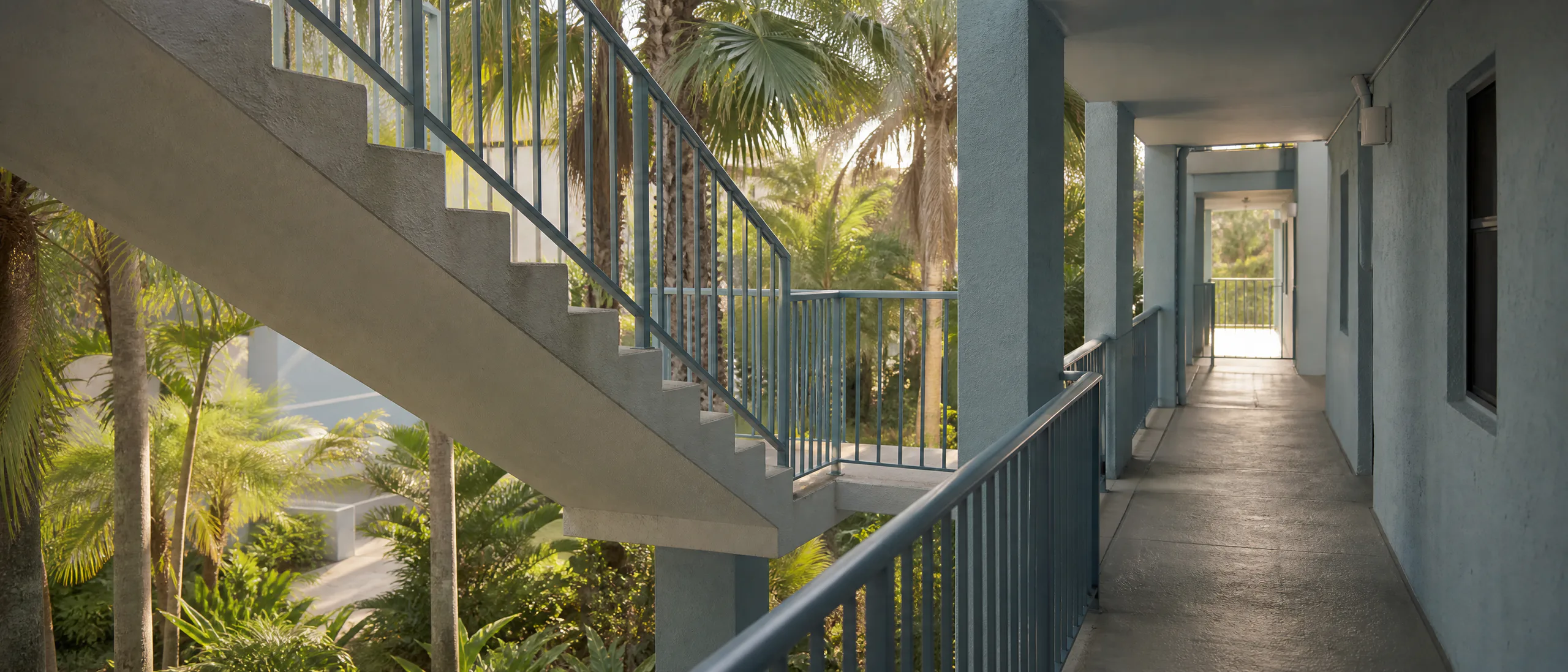
Fort Myers Premises Liability Lawyer
A premises liability claim starts with why somebody was on the property, because that sets what they were owed. We prove that first. We can take it from here. Call 833-370-8692 for a free consultation. You pay us nothing unless we win. Our Fort Myers personal injury lawyers have taken these cases across Lee County since 1993.
Premises Liability claims in Fort Myers
A property owner’s first answer to an injury claim is that nobody could have foreseen it, and the second is that the injured person should have been looking where they were going. Meanwhile you are dealing with the injury, the time off, and a management company that has stopped returning calls. Proving what they were told before it happened is our job, and we start the day you call.
Resort and short-term rental properties, apartment complexes and plazas across Lee County produce these claims, and they generate the documents that decide them: incident reports, maintenance work orders, security assessments and complaint histories. Where a management company operates a property for an out-of-state owner, both may carry responsibility and separate insurance.
A Lee County premises claim turns on what the property knew before you were hurt, proved from its own records. For a fall in a business, Florida requires actual or constructive knowledge of the hazard. Two features are local: witnesses here are frequently seasonal and gone by summer, and a great deal of property has been repaired since the storms, which the permit file documents.
What to do after a premises liability in Fort Myers
- Report it to the property, and ask for the report number. Tell a manager, a leasing office or hotel front desk what happened and where, and ask for the incident report number before you leave. Properties write these reports for their own insurer rather than for you, and a report you never see is far harder to obtain three months later than a number you wrote down that day.
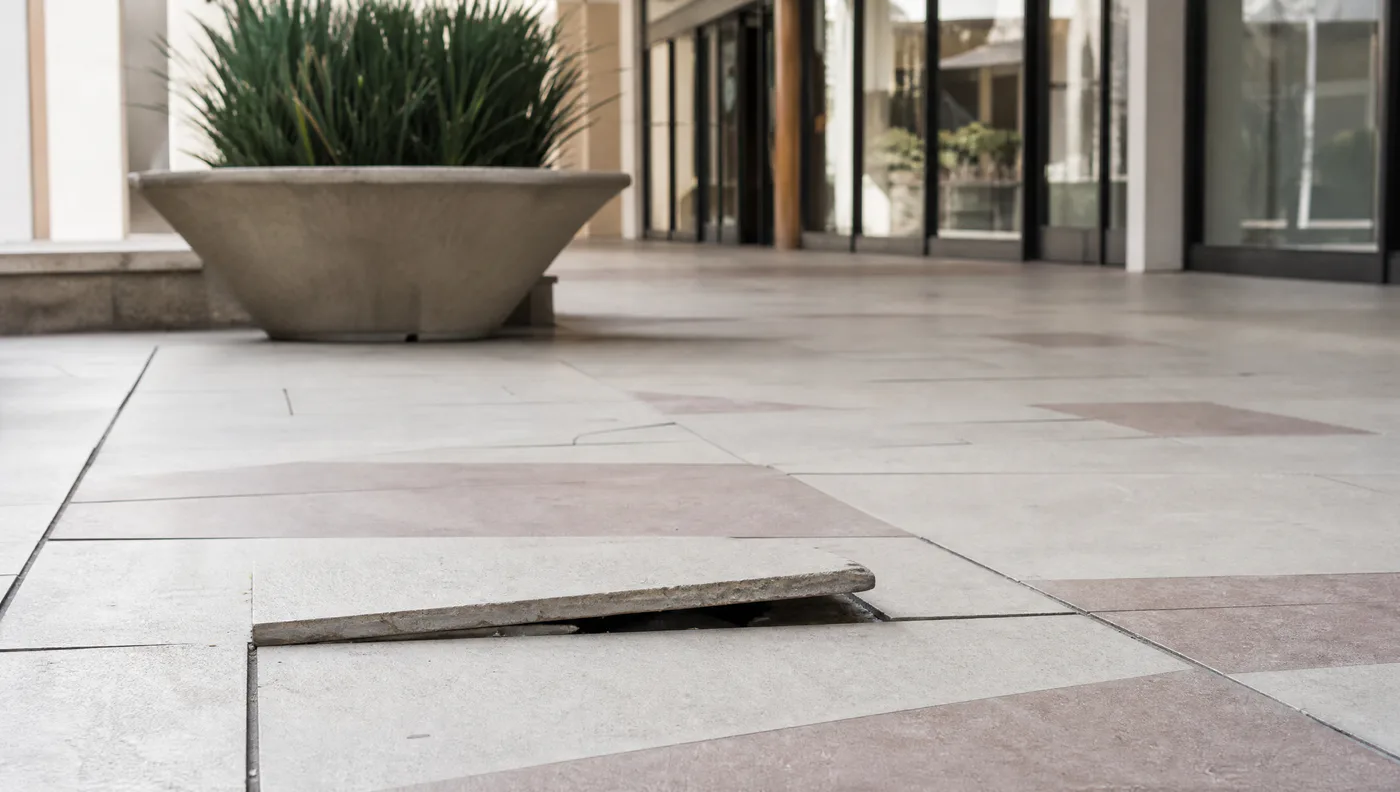
- Photograph the condition before somebody fixes it. The spill gets mopped, the broken step gets patched and the dead light gets a new bulb, often within hours. Photograph the thing itself, then stand back and photograph where it sits, so there is a record of what a person walking there could actually see. If lighting is part of it, go back and photograph at the same hour of night.
- Ask about the cameras this week. Most systems on apartment complexes, garages and retail properties overwrite themselves somewhere between 14 and 30 days. A written request that the footage be preserved, naming the date, the time and the camera location, costs nothing and can be sent long before anybody decides whether to bring a claim. After the overwrite there is nothing to ask for.
- Find out who owns it and who runs it. The owner and the management company are usually separate businesses with separate insurance, and on a residential property there may be an association and a security contractor as well. Photograph any posted management sign and keep the lease, the folio number or the receipt. Naming the wrong company in month one costs months.
- Get treated, and tell them where it happened. Say that you fell on a wet floor at a named store, or that you were attacked in a named garage. The medical record is the earliest independent account of what happened, and a chart that says only that you have a shoulder injury is worth much less later than one that says how you got it.
Where these happen in Fort Myers
Lee County’s population changes size with the season and much of its building stock has been repaired or rebuilt in recent years. Both facts show up in these cases, in who can be found and in what condition a property was actually left in.
-
Resorts, hotels and short-term rentals
The properties along the beaches, the islands and the Gulf side, where the person hurt lives somewhere else and so does the owner.
- Guest incident reports and prior complaints, which are written for the property’s insurer and not shared
- Pool decks, stairs and walkways between buildings, which are the recurring settings
- A management company that holds every record for an owner who has never seen the property
- Witnesses who fly home within the week, which makes getting names on the day genuinely urgent
-
Property repaired after the storms
A large share of Lee County has been rebuilt, and the work was done fast, in volume and not always with a permit.
- Permit and inspection history, which shows whether work was inspected or done quietly
- Railings, stairs, decks and walkways rebuilt to a different standard than what they replaced
- Temporary conditions left in place for months, including plating, ramps and missing covers
- Contractors who worked the property and have since dissolved, which is a reason to identify them early
-
Mobile home and RV communities
Lee County has a large number of these and they are managed properties, with an operator responsible for the roads, the lighting and the common areas.
- Lighting and road surfaces in areas the operator maintains rather than the resident
- Clubhouse, pool and laundry facilities, which are common areas under the operator’s control
- Complaint histories, which residents in these communities tend to have made in writing
- An out-of-state ownership company with a local manager, both of which may be responsible
-
Marinas, docks and waterfront property
Docks, ramps, seawalls and boat yards, where the surfaces are wet by design and the standards are different from those on land.
- Dock and ramp surfaces, cleats and missing boards, which are maintenance items with a paper trail
- Lighting on structures people use before dawn and after dark
- Boat yards and lifts, where an equipment failure brings in a separate defendant
- Marine insurance that responds differently from ordinary premises coverage, which is worth establishing early
What causes them
- Guard coverage reduced or removed after a documented incident on the property
- Spills and tracked-in water in stores, lobbies and food courts, left without a cone or a mop
- Stairs, railings and walkways that were failing before anybody fell on them
- Balcony and railing collapses in older buildings where the corrosion was already documented
- Pool barriers, gates and latches that did not work, and drownings that followed
The injuries we see, and what each one turns on
Crush injuries and amputations
Falling objects, machinery, gates and elevator failures, which produce injuries that turn a claim into a life care case: equipment, home modification and decades of work somebody will not do.
The part nobody photographs
People attacked on a property they lived on or worked at frequently cannot go back to it, and that is a real loss even where the physical injuries heal. It is compensable, and it is proved with treating records and with the account of the people who see somebody every day.
Head injuries
A fall onto a hard floor and an assault both produce the same category of injury, and both are frequently underplayed at the emergency room because a normal CT scan gets read as a clean result. What follows shows up in memory, concentration, sleep and temper, and the people around somebody usually notice before they do. These are proved with neuropsychological testing and treating records rather than the scan taken that day.
What Florida law requires you to prove
What the property owed you depends on why you were there
Florida sorts people on a property into categories, and the duty follows the category. A customer, a hotel guest, a tenant and a delivery driver are generally invitees, owed reasonable care to keep the place safe and a duty to inspect for dangers the owner should have found. A social guest is owed less, and a trespasser less again. The first fight in many of these cases is which category you were in, which is worth settling early because everything else follows from it.
A fall in a store has its own statute
Where somebody slips on a transitory foreign substance in a business establishment, Fla. Stat. § 768.0755 requires the injured person to prove the business had actual or constructive knowledge of the substance. Constructive knowledge is shown by how long it had been there or by the fact that it happened regularly enough to be foreseeable. That is a records question rather than an argument, and it is why the inspection sheets and the camera footage decide these cases.
Security claims, the 2023 change, and the deadlines
In 2023 Florida created a presumption against liability for multifamily residential properties that substantially comply with a defined set of security requirements, including lighting, locks, gates, cameras and a documented crime prevention assessment. Whether a property actually met them is a question of fact and is frequently the whole case. Separately, most Florida negligence claims arising on or after March 24, 2023 carry a two-year deadline under Fla. Stat. § 95.11, and fault is shared under Fla. Stat. § 768.81, where a person found more than 50 percent responsible recovers nothing.
The full statutory detail, and the parts that differ by claim type, sit on our statewide premises liability page rather than being restated in every market.
How we prove it in Lee County
Two things in a Lee County case run on a shorter clock than anywhere else on this list: the footage, and the people. Both are worth chasing in the first week rather than the first month.
- Witness names and contact details taken the same day, because a seasonal witness in March is unreachable by June
- The incident report and its number, and any internal notification to a corporate or out-of-state owner
- Camera footage from the property and its neighbors, most of it overwritten inside a month
- Permit and inspection history for any structure, railing, stair or deck that failed, particularly where it was rebuilt recently
- Maintenance records, work orders and vendor invoices for the specific component involved
- The management agreement and the ownership records, which on this coast frequently point out of state
- Prior complaints and prior incidents at the property, which is what makes a condition foreseeable rather than unlucky
- Sweep logs and inspection sheets where the fall happened in a store or a restaurant
Where a contractor did the work that failed, identifying the company quickly matters more here than elsewhere. A great many outfits worked this county during the rebuilding and a number of them no longer exist, which affects who is left to answer for the work.
Who would handle your case
Being hurt in Fort Myers is hard enough without working out the legal side on your own. The trial lawyers below have handled premises liability claims across Florida since 1993, and one of them will take yours from the first call to the last check. They will tell you what your case is worth and why, and they will be straight with you about the parts that are hard.
-
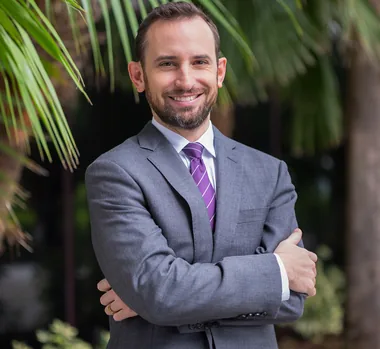 Brett J. Yonon Senior Trial Attorney Selected to Florida Super Lawyers in 2024 and 2025. Brett Yonon is who this firm puts on a catastrophic injury or a death in the family, and he has tried those cases to verdict. Full profile →
 -
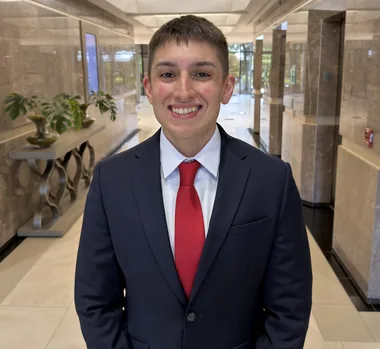 Alazay Ventura-Coffey Trial Attorney On his first day as a sworn attorney, Alazay Ventura-Coffey co-chaired a Broward County jury trial that returned $1,387,060.58. He has built every case that way since. Full profile →
How insurance companies handle these claims
A property claim is handled by a commercial carrier rather than an auto adjuster, and on a large property there is often a risk manager involved from the first day.
- The incident report is written, and you never see it
- It is prepared for the property’s insurer and it will be described as privileged. Asking for the number on the day you report is what makes it findable later. What goes in it matters, because a report written by a manager who has decided you were not looking where you were going becomes the first version of events on file.
- The attack is called unforeseeable
- It is the whole defense in a negligent security case and it is answered with documents rather than with argument. Police call histories for the address, prior incident reports, tenant complaints and work orders for gates and lights that were reported broken are what show a risk the owner already knew about. A pattern in those records is what foreseeability actually looks like.
- You are pointed at the wrong company
- The owner says the management company ran security. The management company says the owner controlled the budget. The association says the common area is not its responsibility. All three can be answered from the governing documents, the management agreement and the work orders, and the practical consequence of getting it wrong is a claim filed against a company with no policy.
What a claim can include
Life care costs after a catastrophic injury
Equipment, home modification, attendant care and the replacement schedule for all of it, set out by a professional so it is a number rather than an argument.
What a family may recover after a death
Funeral and medical expenses, lost support and services, and the losses the statute assigns to particular survivors. Who may claim is decided by statute rather than by agreement within a family.
Medical care, past and future
Everything already billed, and what the treating physicians say is still ahead. Future care is what an early offer never includes and it is what decides whether a settlement holds up in five years.
What we have recovered
Verified matters this firm has handled on premises liability claims. Figures are gross recoveries, before attorney fees, costs and medical liens come out of them.
A serious neck injury from a dive off the dock of a Fort Myers Airbnb on the Caloosahatchee River, on a failure to warn of shallow, murky water.
Confidential settlementOur client was servicing propane tanks behind a Pompano Beach bakery when they exploded, burning his arms and face.
Broward County jury verdictEvery verdict and settlement we publish, with the press coverage for the ones that were reported. No result predicts another case: every claim turns on its own facts, its own evidence and the insurance actually available.
Why Wolf & Pravato in Fort Myers
A Lee County premises case is filed in the Twentieth Judicial Circuit at the Lee County Justice Center, and the firm has an office on Colonial Boulevard in Fort Myers rather than a referral arrangement with somebody here. These cases are records work done locally, and the firm tries them on this coast rather than sending them across the state.
Richard Pravato is one of 861 lawyers Board Certified by The Florida Bar in Civil Trial law, out of a membership over 109,000. The certification is about trial experience rather than advertising spend, and it is the part of a firm’s record that an insurance company checks.
Nothing is charged for the first conversation and nothing is charged at all unless there is a recovery. If we do not think you have a claim, we would rather tell you now than a year from now.
Fort Myers premises liability questions
The witnesses were tourists and they have gone home. Is the case over?
Not if their details were taken, and that is the whole reason to ask on the day. A statement from somebody in Ohio is perfectly usable and they can be deposed remotely. What is difficult is finding somebody months later with no name and no number, which is the usual position and is why the first week matters more in this county than the filing deadline suggests.
The railing that gave way was rebuilt after the storm. Does that help or hurt?
It frequently helps, because rebuilt work leaves a paper trail. The permit file shows whether the work was permitted and inspected at all, and where it was not, that is a documented decision rather than an accident. Where the contractor has since gone out of business the property owner generally remains responsible for the condition of its own premises.
The property is owned by a company in another state.
It changes very little. A property in Lee County is governed by Florida law and the claim is filed in the Twentieth Judicial Circuit whatever the ownership. In practice the local management company holds the incident reports, the work orders and the footage anyway, and those are the records that establish what was known and when.
The person who attacked me was arrested. Why sue the property owner?
Because a criminal conviction rarely compensates a victim, and the attacker usually has nothing. The civil claim asks a different question: whether the property owner already knew this address had a problem and failed to take reasonable steps. That is a question about their records, not about the attacker.
How do you prove the owner knew it was dangerous?
Mostly with their own documents and public ones. We ask for police call histories for the address, prior incident and injury reports, complaints from tenants or guests, work orders for broken gates and lights, and any security assessment the owner commissioned. A pattern in those records is what foreseeability actually looks like.
The questions that come up on every kind of claim, deadlines, fees, recorded statements and fault, are answered on our Florida injury claim FAQ.
More in Fort Myers
Fort Myers Personal Injury Lawyer
Everything we handle in Lee County, and where our office is.
View →Fort Myers Boat Accident Lawyer
Florida boat, jet ski, parasailing and watercraft accident lawyers.
View →Fort Myers Scooter Accident Lawyer
Florida scooter and e-scooter accident lawyers.
View →Fort Myers Train Accident Lawyer
Florida train and railroad crossing accident lawyers.
View →
Tell us what happened
A lawyer will listen, tell you what Florida law does with those facts, and be straight with you about whether it is worth bringing. We are at 1825 Colonial Blvd, Fort Myers, FL 33907.