
Florida Traumatic Brain Injury Lawyer
You look fine, the scan says fine, and you know perfectly well that you are not. We can take it from here. Call 954-522-5800 for a free consultation. You pay us nothing unless we win. We have won these claims for Floridians from the Keys to the Panhandle, and we work them from five offices between Fort Lauderdale and Fort Myers.
Keep a written at the time record from today: headaches, memory lapses, word-finding trouble, light and noise sensitivity, sleep changes, irritability. Ask family and colleagues to note what they observe. A dated record made as it happens is worth far more than a recollection given a year later, and it is the evidence insurers find hardest to dismiss.
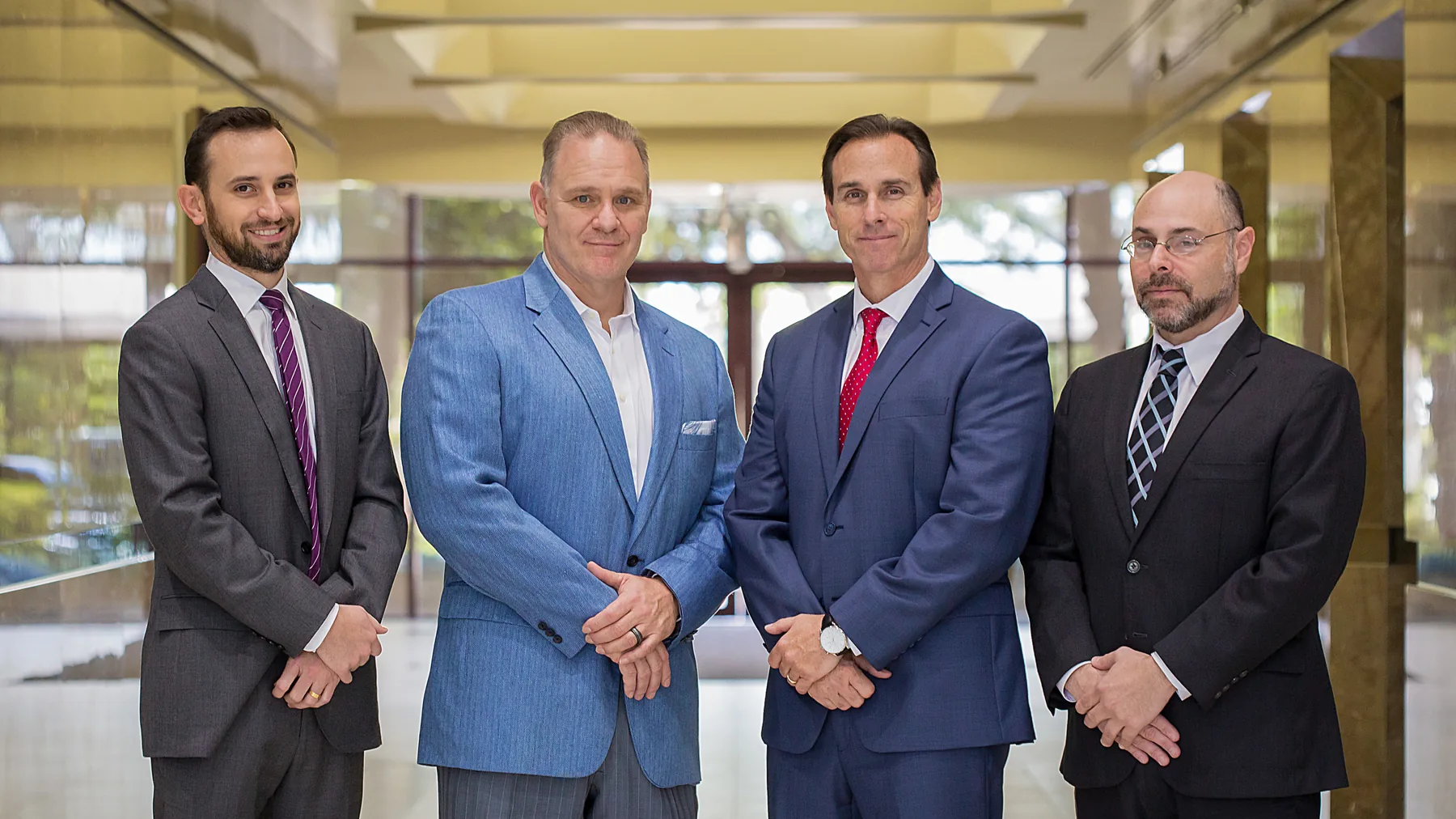
Our team will not let you go through a traumatic brain injury claim alone
Living with a brain injury is hard enough without people telling you that you look fine. Nothing undoes the injury, and we will not pretend otherwise. What we can do is prove it is real and make whoever caused it answer for it, and we will take the case as far as it has to go.
Our trial attorneys have won traumatic brain injury cases across Florida since 1993, from the Keys to the Panhandle, and one of them will handle yours from the first call to the last check. Call 954-522-5800 for a free consult and a trial lawyer will tell you today whether you have a case. You pay us nothing unless we win, and we work from five offices between Fort Lauderdale and Fort Myers.
Meet the attorneys →What Florida law does with a traumatic brain injury claim
The insurer will point at a clean scan and treat the rest as exaggeration. Meanwhile you are managing headaches, missed shifts, and a family who can see the difference even when a test cannot. Proving an injury that does not show up on film is our job, and we start the day you call.
The hardest thing about a brain injury claim is that the injury is invisible and the word used to describe it is misleading. A mild traumatic brain injury is a grading of how somebody presented in the first hour, not a description of how their life goes afterward. Below is how these claims are proved and what the law does with them.
A brain injury claim in Florida generally has to be filed within two years. Most of these injuries do not show on a standard scan and do not require a loss of consciousness, which is why they are proved with neuropsychological testing and with people who knew the person before, rather than with imaging.
The deadline that ends a Florida traumatic brain injury claim
The deadline runs from the event, not from the day anybody understood what the event had done. That mismatch is the central practical problem in this area.
Two years from the injury
Most claims from an accident on or after March 24, 2023 have to be filed within two years. An older accident keeps the four years that applied when it happened. The period is in Fla. Stat. § 95.11 and it runs from the accident rather than from a diagnosis. Where somebody died, the claim is a wrongful death action with two years running from the date of death.
Where a public body is answerable, Fla. Stat. § 768.28 adds written notice to the agency and, in most cases, to the Department of Financial Services, a waiting period before suit, and caps of $200,000 per person and $300,000 per incident.
The gap between the injury and the understanding of it
People are discharged the same day, told they had a concussion, and go home. Months later they cannot hold a shift, follow a conversation or drive with confidence, and by then nobody has connected the two. The limitations period has been running the whole time.
Where a head injury is any part of what happened, it is worth a conversation early even if everything seems fine, because the deadline does not wait for the symptoms to be recognized.
The baseline that only exists if somebody makes it
Neuropsychological testing done within months of the injury measures what was actually affected. Done two years later it measures the same things with no way to separate the injury from everything that has happened since. It is the single most valuable piece of evidence in these cases and it is time-sensitive in a way nobody warns about.
The ordinary evidence clocks still run
Whatever caused it, the usual schedules apply: camera footage in days, vehicles before repair, incident reports and maintenance records in months. A brain injury case is still built on proving how the event happened.
Who can be held answerable
A brain injury is a consequence rather than an event, so who answers depends entirely on what caused it. Each route has its own law and its own page.
- A driver, an owner and an employer. Crashes cause the largest share of these injuries. The claim runs against the driver, the owner of the vehicle under Florida's dangerous instrumentality rule, and their employer where they were working, with the detail on our Florida car accident page.
- A property owner or occupier. Falls are the other large category, particularly for older people and on construction sites. Those claims run on premises law, covered on our Florida premises liability page.
- Another company on a work site, alongside a compensation claim. Somebody injured at work has a compensation claim against their employer and frequently a far more valuable claim against somebody else on the site. Both are covered on our Florida workers compensation page.
- A property owner in an assault case. Where an assault caused the injury, the claim against the attacker is usually worth nothing and the claim against a property that knew its premises were dangerous is worth a great deal. Security records and police call history for the address answer it.
- A manufacturer. A helmet that failed, a restraint that did not hold, a machine with no guard. Proved from the item itself, which means it must not be repaired, returned or scrapped.
- A medical provider. Where a bleed was missed, a scan was not read, or a deterioration was not acted on, that is a separate medical negligence claim with its own presuit process, on our Florida medical malpractice page.
How a brain injury is actually proved
The liability side of these cases runs like any other. The injury side does not, and this is where the case is won or lost.
- Understand what the word mild means. It grades how somebody presented in the first hour: whether they lost consciousness, for how long, and how they scored on a scale in the emergency room. It says nothing about the outcome. A meaningful proportion of people graded mild have symptoms that change their working life permanently, and the insurer will read the word as though it settled the question.
- Expect the scan to be normal. A standard CT looks for bleeding and swelling that need surgery, and in most of these injuries it finds nothing. That is the expected result rather than evidence of no injury, and it is the single most common argument made against these claims.
- Get neuropsychological testing. A battery of tests measuring memory, attention, processing speed, executive function and mood against normative data, with validity measures built in to answer the accusation that somebody exaggerated. It is what turns a description of symptoms into a measurement, and it is the backbone of the claim.
- Build the before and after from people, not documents. A spouse, a supervisor, a colleague, a coach, a friend. What this person was like before, what they are like now, and the specific things they can no longer do. Juries understand a manager saying somebody who used to run a shift now needs written instructions, in a way no test result conveys on its own.
- Get the records nobody thinks to ask for. Performance reviews, attendance records, school reports for a child, phone and calendar patterns, and the ordinary paperwork of a life that shows function before and after. This is frequently the most persuasive material in the file and it exists only until somebody deletes it.
- Cost what is ahead. Where the injury is permanent, a life care planner working from the treating physicians sets out therapy, medication, supervision and support over a lifetime, and a vocational assessment establishes what work is still possible. An economist brings both to present value.
- Then the ordinary route. Fla. Stat. § 627.4137 produces the policy limits in a sworn statement within 30 days of a written request. Fla. Stat. § 47.011 puts the case where it happened or where the defendant is, most Florida courts require mediation, and Fla. Stat. § 768.79 lets either side serve a formal offer with fees running from a refusal the judgment beats by at least 25 percent.
What the claim is worth, and how that number is built
These cases are valued on what a person can no longer do rather than on what the medical records cost, which makes them very different from an orthopedic claim of the same severity.
Lost earning capacity, which usually dominates
Somebody who cannot sustain attention through a working day, cannot manage several tasks at once or cannot tolerate noise has lost access to whole categories of work while looking entirely well. That is established with vocational and economic evidence rather than asserted, and on a young person it is regularly the largest number in the case.
The care and support ahead
Therapy, medication, cognitive rehabilitation, and in serious cases supervision or assistance with the ordinary business of living. Costed over a lifetime and brought to present value.
Pain, suffering and what a personality change costs a family
Irritability, loss of initiative, changed judgment. These are the effects families describe first and medical records capture last, and they are compensable. Documenting them means somebody actually asking the questions rather than waiting for a physician to note them.
The medical care already spent
The smallest part of most of these claims, which is exactly why an early offer built around the bills is so far below what the case is worth.
The fault split, and the line at 50 percent
Fault is divided under Fla. Stat. § 768.81, so an award drops by whatever share is placed on you, and since March 2023 anybody found more than 50 percent responsible for their own harm recovers nothing.
What is repaid out of the recovery
Health insurance, Medicare and Medicaid are repaid, with Fla. Stat. § 768.76 keeping those payments from being deducted from the award because the repayment right already exists.
What changes from one part of Florida to another
The law is identical statewide. Access to the medicine that proves these cases is not, and that has real consequences for a claim.
Trauma centers and what they record
A person taken to a designated trauma center gets imaging, scoring and a record made in the first hours that is frequently the strongest evidence in the file. Somebody treated at a smaller emergency department and discharged has a much thinner record of the same injury, and the case has to be built differently.
Where the testing and rehabilitation actually are
Neuropsychologists and cognitive rehabilitation programs cluster in the larger metropolitan areas. A family in a smaller market frequently faces a long wait or a long drive, and the delay becomes an argument about whether the symptoms were real. It is worth arranging early rather than accepting the first available appointment months out.
Juries and invisible injuries
A claim with a normal scan and a person who looks well is harder in some parts of Florida than in others, and every defense carrier prices that difference. An honest assessment of a case has to as well.
A proven record, anywhere in Florida
Our five offices run from Fort Lauderdale to Fort Myers, and we act statewide on brain injury claims.
The insurance behind a Florida traumatic brain injury claim
What pays depends on how the injury happened, and on a serious brain injury the first policy found is rarely enough.
Where it was a crash, your own policy pays first
Fla. Stat. § 627.736 pays $10,000 in benefits, being 80 percent of reasonable medical expenses and 60 percent of lost wages, regardless of fault, provided a qualifying provider is seen within 14 days and, for the full amount, finds an emergency medical condition.
Against a serious brain injury that is a rounding error, and it matters mainly because the 14-day rule forfeits it entirely. Somebody who felt shaken but not injured, and did not go, has already lost it.
Uninsured motorist coverage
Florida does not require a driver to carry any coverage for injuring somebody else, only the benefits above and $10,000 of property damage liability under Fla. Stat. § 324.022. Uninsured and underinsured motorist coverage on your own policy under Fla. Stat. § 627.727 is frequently the largest source of recovery available, and whether limits stack across vehicles is decided by a separate signed form.
Where it happened somewhere else
A property's general liability policy, a manufacturer's product coverage, a contractor's policy, or a compensation carrier alongside a third-party claim. Each is found by asking rather than by being told.
Finding every layer, which matters more here
Fla. Stat. § 627.4137 requires the limits of each known policy, including excess and umbrella layers, to be disclosed in a sworn statement within 30 days of a written request. A permanent brain injury exceeds ordinary policy limits routinely, so the search for the second and third layer is a real part of the case.
Health insurance in the meantime
It covers the treatment and is repaid at the end out of any recovery. Nobody should be putting off cognitive rehabilitation while a claim is argued about, and a delay in treatment is used as evidence that nothing much was wrong.
Proving an injury that does not appear on a scan
Why the defense starts with the imaging
Standard CT imaging in an emergency room is designed to find bleeds and fractures, the things that need immediate surgery. It is not designed to detect diffuse axonal injury or the subtler damage that produces persistent symptoms. An insurer will nonetheless lead with the clean scan, because it sounds conclusive.
What answers it is neuropsychological testing, specialist assessment, and the observations of people who knew the person before. Together those establish a change in function, which is the thing being compensated.
The losses are mostly future ones
A serious brain injury is valued on what it takes away over a lifetime: earning capacity, the ability to do a particular job, the need for care or supervision, and the cost of ongoing treatment. Establishing that requires life care planning and economic evidence rather than a stack of past medical bills.
It is also why an early settlement offer in a brain injury case is so often far below what the claim is actually worth. The full picture is not visible in the first months.
Who would handle your case
Your case is handled by one of the trial lawyers below, and you will know which of them has it from the first conversation. They do traumatic brain injury work week in and week out, they will tell you what your case is worth and why, and they will be straight with you about the parts that are hard.
-
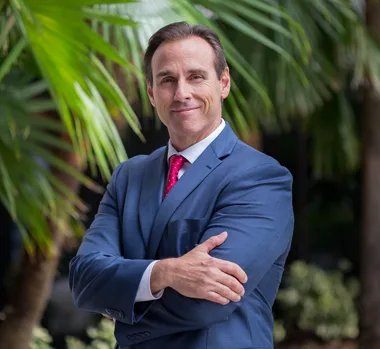 Richard P. Pravato Founding & Managing Attorney Board Certified in Civil Trial Law by The Florida Bar since 2004, and by the National Board of Trial Advocacy. Injury cases exclusively since 1996. Full profile →
 -
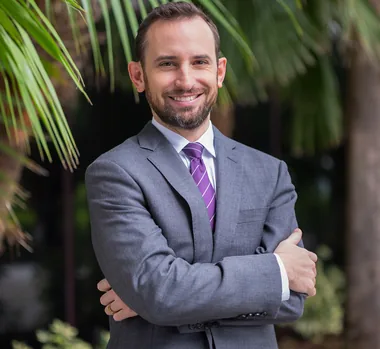 Brett J. Yonon Senior Trial Attorney Selected to Florida Super Lawyers in 2024 and 2025. Brett Yonon is who this firm puts on a catastrophic injury or a death in the family, and he has tried those cases to verdict. Full profile →
Traumatic Brain Injury questions we are asked
My CT scan was normal. Do I still have a brain injury claim?
Possibly. A normal CT rules out the bleeding and fractures it is designed to detect; it does not rule out a traumatic brain injury. Persistent headaches, memory and concentration problems, sensitivity to light or noise, and personality changes are documented through neuropsychological testing and specialist assessment rather than through emergency imaging.
I never lost consciousness. Does that matter?
Not in the way people assume. A traumatic brain injury can occur without any loss of consciousness at all. What matters is the how the injury happened and the documented change in function afterward.
Should I accept the offer while I am still recovering?
Almost never, and in a brain injury case especially not. Settling ends the claim permanently, and the long-term consequences of a brain injury are frequently not apparent for months. An offer made early is priced on what is not yet known, which is precisely why it arrives early.
Questions that apply to any Florida injury claim, fees, deadlines, recorded statements and shared fault, are answered on our injury claim FAQ. What we have recovered is on recent case results.
Five Florida offices
We take traumatic brain injury claims statewide. Each market below has its own page on this claim, with that office's address, its direct number and the court a case there is filed in.
Fort Lauderdale traumatic brain injury claims
2101 W Commercial Blvd, Fort Lauderdale. Serving Broward County.
View →Miami traumatic brain injury claims
1111 Brickell Avenue, Miami. Serving Miami-Dade County.
View →West Palm Beach traumatic brain injury claims
2101 Vista Parkway, West Palm Beach. Serving Palm Beach County.
View →Boynton Beach
1375 E Gateway Blvd, Boynton Beach. Serving Palm Beach County.
View →Fort Myers traumatic brain injury claims
1825 Colonial Blvd, Fort Myers. Serving Lee County.
View →Other claims we handle
Three of the closest to this one. The full list is on our Florida practice areas page.
Tell us what happened
A lawyer will listen, tell you what Florida law does with those facts, and be straight with you about whether it is worth bringing. If it is not, we will say so.
We take cases anywhere in Florida.