
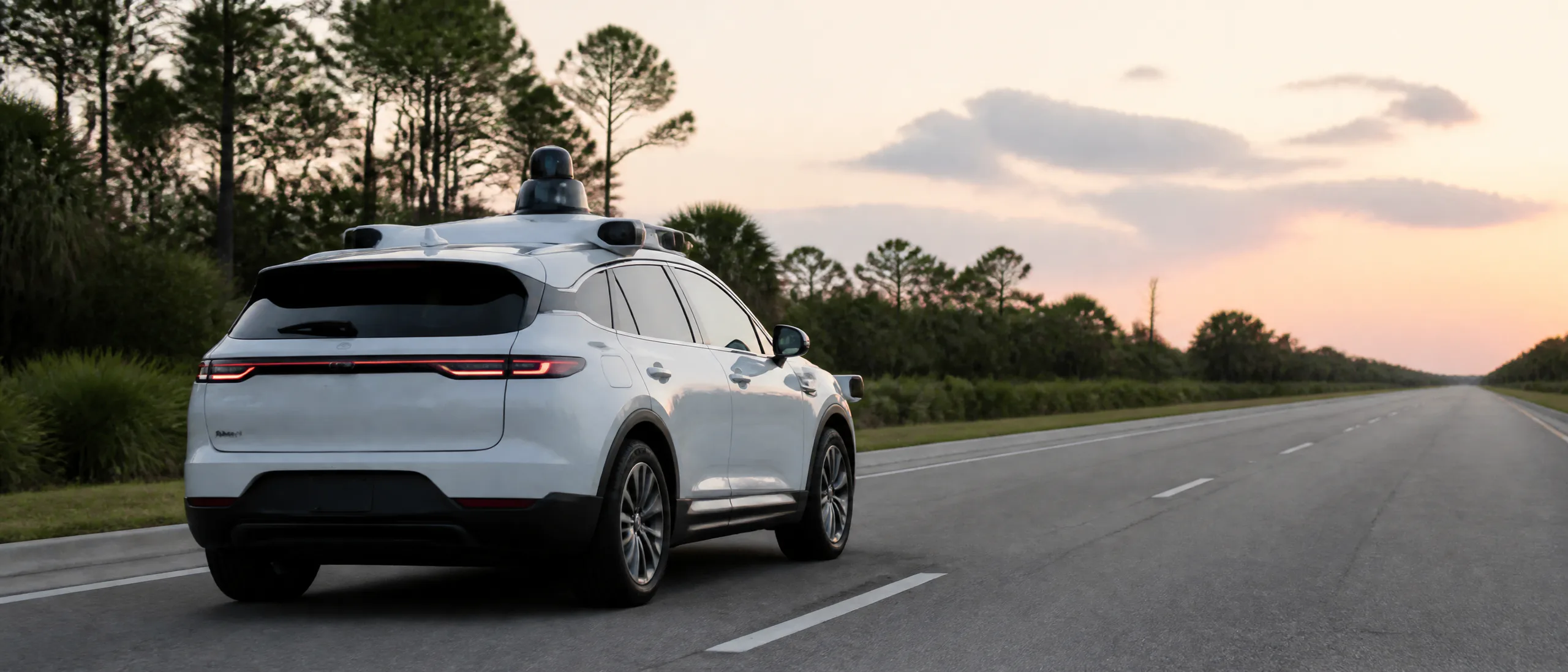
Florida Self-Driving Car Accident Lawyer
Nobody was driving, and everybody involved would like that to be somebody else’s problem. We can take it from here. Call 954-522-5800 for a free consultation. You pay us nothing unless we win. We have won these claims for Floridians from the Keys to the Panhandle, and we work them from five offices between Fort Lauderdale and Fort Myers.
Whatever else happens, do not let the vehicle be repaired, sold or released to an insurer before its data has been preserved. Autonomous and driver-assist systems record what the sensors detected, what the software decided and whether the human was prompted to take over. Once the vehicle is gone, so is the case.
Winning self-driving car accident claims for Floridians for more than thirty years
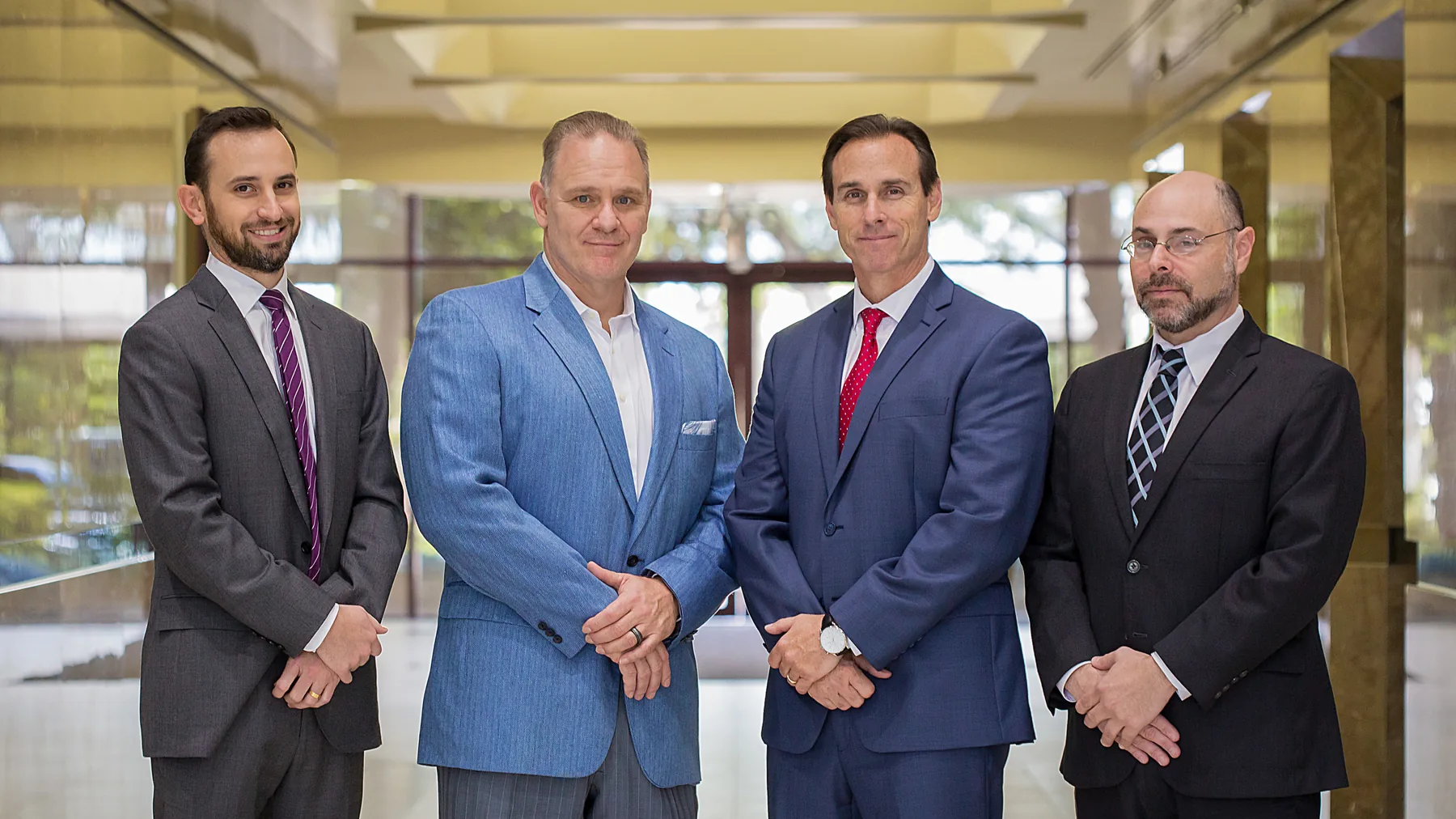
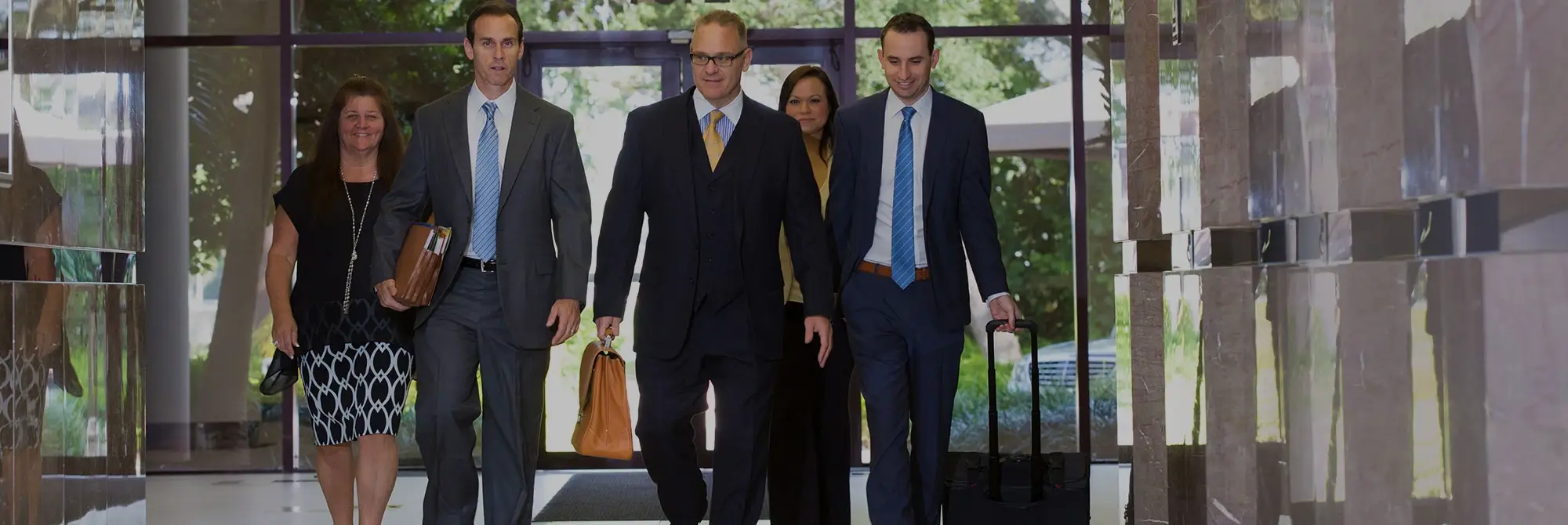
A self-driving car accident claim arrives at a hard time, usually while the bills are still coming in and nobody has told you what happens next. You do not have to work it out on your own. The attorneys in this photograph have won these cases across Florida since 1993, from the Keys to the Panhandle, and one of them will handle yours from the first call to the last check.
Call 954-522-5800 for a free consult and a trial lawyer will tell you today whether you have a case. You pay us nothing unless we win, and we work from five offices between Fort Lauderdale and Fort Myers.
Meet the attorneys →What Florida law does with a self-driving car accident claim
The vehicle recorded what it saw and what it did, and the company that built it holds that data. Meanwhile you are covering the treatment, missing work, and being handled by people who deal in engineering reports rather than claims. Getting that data preserved before it is overwritten is our job, and we start the day you call.
Florida is one of the most permissive states in the country for autonomous vehicles: no human operator is required to be present, and the statute decides who counts as the driver when nobody is. Below is what those rules say, who can be made to answer when one of these vehicles causes harm, and where the evidence lives.
Florida law says that when an automated driving system is engaged, the system itself is deemed the operator of the vehicle, whether or not anybody is inside it. A fully autonomous vehicle used on an on-demand network must carry $1 million in primary liability coverage. Most claims must be filed within two years.
The deadline that ends a Florida self-driving car accident claim
The filing deadline is ordinary. What is not ordinary is that essentially all of the evidence is data held by the company that built the vehicle.
Two years to file
Most claims from an accident on or after March 24, 2023 have to be filed within two years. An older accident keeps the four years that applied when it happened. The period is in Fla. Stat. § 95.11, and a death claim runs two years from the date of death.
Where a public road authority or a publicly operated vehicle is involved, Fla. Stat. § 768.28 applies: written notice to the agency and, in most cases, to the Department of Financial Services, a waiting period before suit, and caps of $200,000 per person and $300,000 per incident.
Immediately, for the vehicle's own record
These vehicles record continuously: sensor data, camera feeds, the state of the automated driving system, what it detected and what it decided. That record answers every question in the case and none of it belongs to you.
A preservation demand naming the vehicle, the date and the time has to reach the operator and the manufacturer at once, because retention is a matter of company policy rather than of law.
Days, for the ordinary evidence
The scene, the other vehicles before repair, and camera footage from the businesses on the corner. An autonomous vehicle case is still a crash case and the usual schedules still run.
The software version, which changes
These systems are updated over the air, sometimes weekly. Establishing which version was running at the moment of the crash, and what changed before and after it, is a question worth asking early because the answer is a moving target.
Who can be held answerable
The most useful thing about Florida's statute is that it removes an argument about who was driving. What it does not do is tell you which company answers.
- The owner of the vehicle. Fla. Stat. § 316.85 provides that when the automated driving system is engaged it is deemed to be the operator of the vehicle, regardless of whether a person is physically present, and that a licensed human operator is not required for a fully autonomous vehicle. Florida's dangerous instrumentality rule still makes the owner answerable for the vehicle, which is frequently the practical route to a recovery.
- The company operating the fleet. Where the vehicle was part of an on-demand network, the operator answers for how it deployed, maintained and supervised the fleet, and for what it did when the system behaved unexpectedly. It also carries the insurance the statute requires.
- The manufacturer of the vehicle. A design defect claim, aimed at the automated driving system itself: what it was capable of detecting, how it was tested, what its known limitations were and what the company did about them. That is a product case and it is proved from the company's own engineering and testing records.
- The maker of a component or the software. Sensors, cameras, radar, the computing hardware and the software stack are frequently supplied by different companies. Each is a separate defendant with separate coverage.
- A human who was supposed to be supervising. Where a vehicle was operating with a safety driver or a remote supervisor, what that person was doing and what they were trained to do becomes part of the case, along with the employer behind them.
- The public body responsible for the road. Markings, signage and signals are what these systems read. Where a road was in a condition the system could not interpret, and that condition was itself a failure of maintenance, Fla. Stat. § 768.28 claims apply with their notice requirements and caps.
How a Florida self-driving car accident case actually runs
These cases are engineering cases with a crash attached, and they are decided by data rather than by testimony.
- Establish whether the system was engaged. Fla. Stat. § 316.85 makes the automated driving system the operator when it is engaged, so whether it was engaged at the moment of the crash is the threshold question. It is answered from the vehicle's own log rather than from the account of anybody who was inside it.
- Preserve the data before anything else. In writing, to the owner, the fleet operator and the manufacturer, naming the vehicle, the date, the time and the specific categories: sensor data, camera feeds, system state, disengagement events and the software build.
- Establish what the vehicle was doing there. Testing, a prearranged ride, a delivery, or private use. Which of these applies decides which insurance requirement attaches and which companies are involved.
- Get the reporting history. Autonomous operations are reported to regulators, and disengagement and incident records exist. Prior events of the same kind change a case from an argument about one crash into an argument about a known limitation.
- Bring in an engineer early. Reading this data requires expertise the ordinary crash reconstruction market does not have, and the analysis takes months. It is also expensive, which is a real factor in deciding whether a smaller claim is worth bringing.
- Plead the alternatives. Negligent operation, negligent maintenance and a defect in the system are separate theories with separate proof, and the evidence frequently supports more than one. Which of them survives is worked out after the data has been read rather than before.
- Suit, discovery and mediation. Fla. Stat. § 47.011 puts the case where it happened or where the defendant is, and a manufacturer based elsewhere raises questions about jurisdiction that are settled before filing. Fla. Stat. § 627.4137 produces the policy limits in a sworn statement within 30 days of a written request. Most Florida courts require mediation, and Fla. Stat. § 768.79 lets either side serve a formal offer with fees running from a refusal the judgment beats by at least 25 percent.
What the claim is worth, and how that number is built
The heads of loss are ordinary. What is not ordinary is that the defendant has a reputational interest in the outcome that has nothing to do with the money.
The medical care, past and future
Everything billed and what the treating physicians say is still ahead, costed by a professional working from those physicians where the injury is permanent.
Income, and the capacity to earn it
Wages missed, and separately the earning capacity that has gone, proved with an economist and the treating physicians.
Pain, suffering and what changed
The head of loss with no invoice attached, proved from the ordinary detail of a life rather than argued in the abstract.
The fault split, and the line at 50 percent
Fault is divided under Fla. Stat. § 768.81 and, since March 2023, a person found more than 50 percent responsible for their own harm recovers nothing. Where the system is deemed the operator, the argument about what a human did shifts onto whoever else was on the road, which frequently means you.
Punitive damages, where a company knew
Fla. Stat. § 768.72 requires a court to see evidence before punitive damages may be pleaded, and then intentional misconduct or gross negligence proved by clear and convincing evidence. A company that had its own testing showing a limitation and deployed anyway is the situation this exists for, and the proof comes out of its own files.
What is repaid out of the recovery
Health insurance, Medicare and Medicaid are repaid, with Fla. Stat. § 768.76 keeping those payments from being deducted from the award because the repayment right already exists.
What changes from one part of Florida to another
Florida has more of this activity than almost anywhere, and it is concentrated rather than spread evenly.
Where these fleets actually operate
Testing and commercial deployment cluster in specific metropolitan areas and specific planned communities, on roads chosen because they are predictable. A crash inside one of those areas has a very different evidence picture from one involving a privately owned vehicle with driver assistance engaged.
Driver assistance is not an autonomous vehicle
A privately owned car with lane keeping and adaptive cruise control is not a fully autonomous vehicle, and the statute treats them differently. A great many claims described as self-driving cases are ordinary crash claims with a software argument attached, and telling them apart is the first piece of work.
Delivery and freight applications
Autonomous delivery vehicles and freight operations are growing separately from passenger services, with different companies, different vehicles and different insurance behind them.
A proven record, anywhere in Florida
Our five offices run from Fort Lauderdale to Fort Myers, and we act statewide.
The insurance behind a Florida self-driving car accident claim
Florida wrote an insurance requirement specifically for these vehicles, and it is far above what an ordinary driver carries.
A million dollars on an on-demand network
Fla. Stat. § 627.749 requires primary liability coverage of at least $1 million for death, bodily injury and property damage for a fully autonomous vehicle operating with the automated driving system engaged while logged onto an on-demand network or engaged in a prearranged ride, along with personal injury protection and uninsured and underinsured motorist coverage.
The same section allows that to be satisfied by the owner's policy, the network's policy or a combination, which is why identifying which vehicle was doing what matters before any demand goes out.
A privately owned vehicle, on ordinary terms
Where the vehicle was privately owned and not on a network, the ordinary Florida position applies: Fla. Stat. § 627.733 requires personal injury protection, Fla. Stat. § 324.022 requires $10,000 of property damage liability, and no coverage at all is required for injuring somebody else.
The manufacturer's product coverage
A claim aimed at the system itself reaches product liability coverage carried in layers, which on a company of this size is substantial. Fla. Stat. § 627.4137 requires the limits of each known policy including excess and umbrella coverage to be disclosed in a sworn statement within 30 days of a written request.
Your own coverage, which still pays first
Fla. Stat. § 627.736 pays $10,000 in benefits, being 80 percent of reasonable medical expenses and 60 percent of lost wages regardless of fault, provided a qualifying provider is seen within 14 days and, for the full amount, finds an emergency medical condition. Uninsured motorist coverage under Fla. Stat. § 627.727 sits behind it.
A different question from an ordinary crash
Driver, system, or both
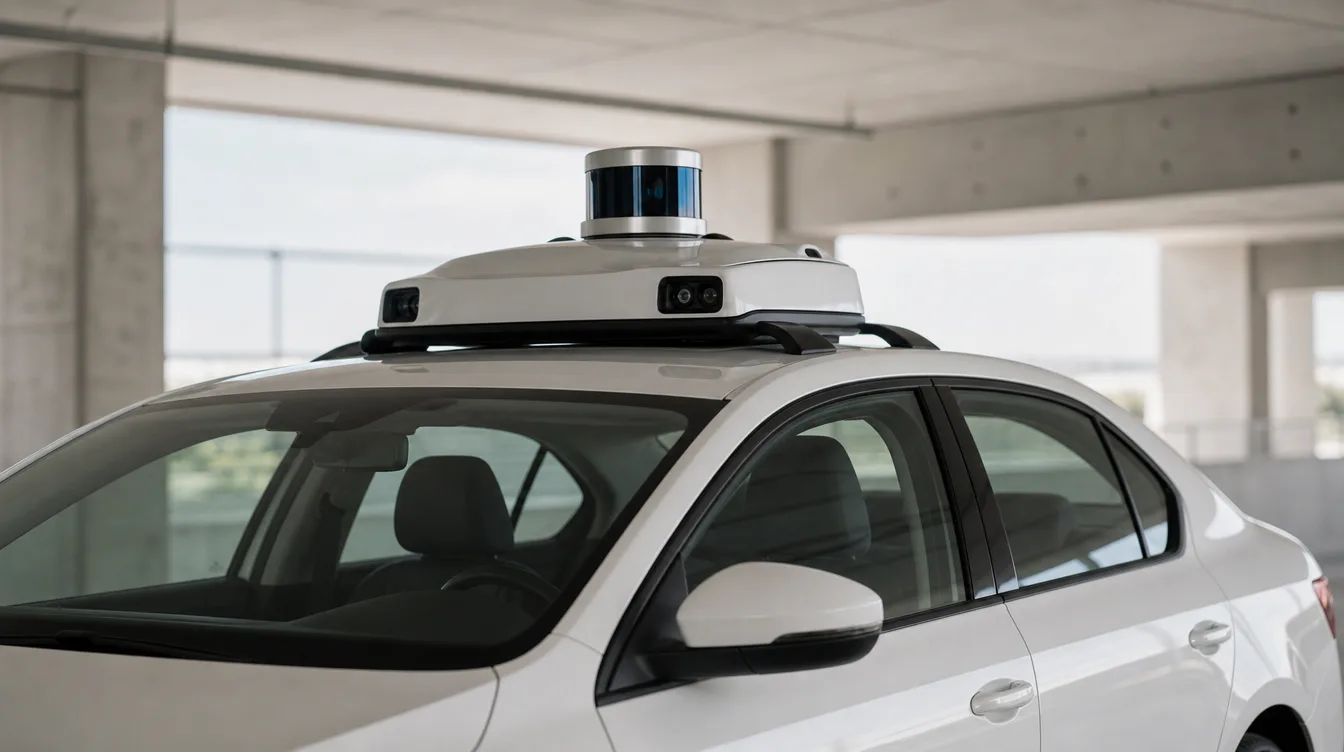
Most vehicles on Florida roads today are not fully autonomous; they carry driver-assist systems that expect a human to remain responsible. So the questions become layered: what the system was designed to do, whether it did it, whether it warned the driver to take over, and whether the driver responded.
The answers determine whether this is an ordinary negligence claim against a driver, a product liability claim against a manufacturer, or both together. That is not obvious from the scene.
What has to be preserved
- Event data recorder and any autonomous system logs held on the vehicle
- Sensor and camera data, including what the system detected before impact
- Software version history and any over-the-air update near the date of the crash
- Driver monitoring records showing alerts issued and responses given
- Manufacturer service bulletins and recalls affecting the system

Who would handle your case
Your case is handled by one of the trial lawyers below, and you will know which of them has it from the first conversation. They do self-driving car accident work week in and week out, they will tell you what your case is worth and why, and they will be straight with you about the parts that are hard.
-
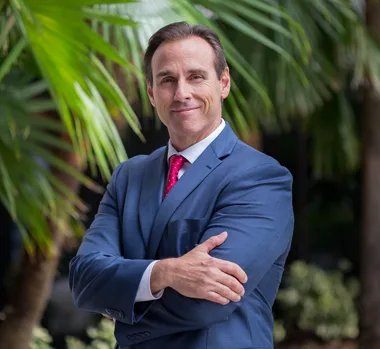 Richard P. Pravato Founding & Managing Attorney Board Certified in Civil Trial Law by The Florida Bar since 2004, and by the National Board of Trial Advocacy. Injury cases exclusively since 1996. Full profile →
 -
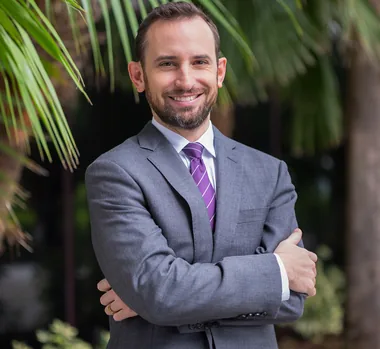 Brett J. Yonon Senior Trial Attorney Selected to Florida Super Lawyers in 2024 and 2025. Brett Yonon is who this firm puts on a catastrophic injury or a death in the family, and he has tried those cases to verdict. Full profile →
Self-Driving Car Accident questions we are asked
Who is responsible when a car was driving itself?
It depends on what the system was designed to do and what it actually did. Most systems in use today are driver-assist rather than fully autonomous and still expect a human to supervise. Responsibility may sit with the driver, with the manufacturer as a product defect, or be shared. The vehicle data is what answers it.
Can the vehicle data be obtained?
Yes, through the litigation process, provided the vehicle and its data still exist. Manufacturers do not hand it over on request, and an insurer that takes possession of a total loss can dispose of the vehicle. That is why preservation in the first days matters so much here.
Is this a product liability case or a car accident case?
Potentially both, and they are pleaded differently and against different defendants. Establishing which applies is part of the early investigation rather than something to be assumed, and it is one reason these cases should not be approached as ordinary rear-end claims.
Questions that apply to any Florida injury claim, fees, deadlines, recorded statements and shared fault, are answered on our injury claim FAQ. What we have recovered is on recent case results.
Five Florida offices
We take self-driving car accident claims statewide. Each market below has its own page on this claim, with that office's address, its direct number and the court a case there is filed in.
Fort Lauderdale self-driving car accident claims
2101 W Commercial Blvd, Fort Lauderdale. Serving Broward County.
View →Miami self-driving car accident claims
1111 Brickell Avenue, Miami. Serving Miami-Dade County.
View →West Palm Beach
2101 Vista Parkway, West Palm Beach. Serving Palm Beach County.
View →Boynton Beach
1375 E Gateway Blvd, Boynton Beach. Serving Palm Beach County.
View →Fort Myers
1825 Colonial Blvd, Fort Myers. Serving Lee County.
View →Other claims we handle
Three of the closest to this one. The full list is on our Florida practice areas page.
Tell us what happened
A lawyer will listen, tell you what Florida law does with those facts, and be straight with you about whether it is worth bringing. If it is not, we will say so.
We take cases anywhere in Florida.