













Lakeland Rear-End vs. Side-Impact: Different Injury Patterns and Evidence Needs (Polk County)
Not all car crashes are the same — and in personal injury claims, the type of crash matters as much as the fact that it happened. A rear-end collision and a side-impact crash send force through your body in completely different directions, produce different injury patterns, and require different categories of evidence to establish fault and damages.
If you were hurt in either type of crash in Lakeland or anywhere in Polk County, understanding these differences can help you preserve the right evidence from the start and avoid common documentation gaps that weaken claims later.
A Lakeland car accident lawyer can assess the specific dynamics of your crash, identify the evidence most relevant to your case, and build a claim that reflects the actual impact of your injuries. Here’s what you need to know about how these two crash types compare.
Two Very Different Crashes — Two Very Different Claims
The physics of a rear-end collision and a side-impact crash are fundamentally different. In a rear-end crash, force is applied from behind, driving your body forward while your head snaps back — a dynamic that concentrates stress on the neck and spine. In a side-impact or T-bone crash, force comes in laterally, often with little structural buffer between the striking vehicle and the occupant’s body.
Those mechanical differences translate into distinct injury profiles, diagnostic pathways, and evidentiary demands. A claim built on rear-end collision injuries looks different from one built on lateral-impact trauma, and building the wrong evidentiary foundation for either can leave significant damages undocumented.
Rear-End Collisions: Common Injury Patterns
Rear-end crashes are among the most frequent crash types in Florida, and they produce a recognizable cluster of injury patterns even at relatively low speeds.
Whiplash and Cervical Spine Injuries
The signature injury of a rear-end crash is whiplash — a rapid back-and-forth motion of the neck caused by the sudden forward acceleration of the body while the head momentarily lags behind. This mechanism can strain or tear soft tissue in the cervical spine, damage intervertebral discs, or compress nerves. Symptoms range from neck stiffness and headaches to radiating arm pain and numbness.
Cervical injuries from rear-end crashes are frequently underestimated at first presentation. Many victims leave the scene feeling sore but functional, only to experience significant symptom progression over the following 24–72 hours.
Lower Back and Lumbar Injuries
The same forward-loading mechanism that injures the neck can compress or destabilize lumbar structures. Herniated discs in the lower back are common in moderate-to-severe rear-end impacts, particularly when the occupant was seated upright and the vehicle seat transmitted force upward through the spine.
Delayed Symptom Onset
One of the most clinically important features of rear-end crash injuries is delayed onset. Soft tissue injuries, disc herniations, and concussions may not produce their full symptom picture until days after the crash. Seeking medical evaluation immediately — even when you feel okay — creates the medical record that connects your injuries to the crash. Gaps in medical care are among the most common grounds insurers use to dispute injury claims.
Side-Impact Crashes: Why They Often Cause More Severe Injuries
According to NHTSA crash injury research, side-impact collisions are among the most dangerous crash configurations for vehicle occupants. The reason is structural: the side of a vehicle — door panels, window glass, and a narrow B-pillar — offers significantly less energy absorption than the crumple zones engineered into the front and rear.
When a vehicle is struck from the side, the striking vehicle’s front end can intrude directly into the occupant space with very little buffer.
Head, Brain, and Shoulder Injuries
The most serious side-impact injuries often involve the head and brain. When a lateral force strikes the vehicle, the occupant’s head may impact the side window, door frame, or deployed side curtain airbag — and even airbag deployment doesn’t eliminate impact force. Traumatic brain injuries (TBI), concussions, and skull fractures are all documented outcomes of severe T-bone crashes.
Shoulder injuries are also common on the struck side, as the arm and shoulder may be driven into the door or armrest. Rotator cuff tears, labral injuries, and clavicle fractures are frequently seen in side-impact cases.
Rib, Chest, and Internal Injuries
Lateral compression can fracture ribs and, in severe crashes, damage internal organs, including the spleen, liver, and kidneys. These injuries may not be immediately apparent without imaging — another reason prompt emergency evaluation matters after any significant side-impact crash.
Injuries Vary by Seating Position
Where you were seated in the vehicle significantly affects your injury pattern in a side-impact crash. An occupant on the struck side absorbs far more direct force than one on the opposite side. The presence or absence of side curtain airbags, the occupant’s height, and whether they were turned or reaching at the moment of impact all affect outcomes. Your attorney and treating physicians need to understand the seating configuration to accurately connect injuries to the crash mechanics.
Evidence Checklist: What Each Crash Type Needs
Featured snippet block — Evidence by Crash Type
| Evidence Type | Rear-End Crash | Side-Impact Crash |
| Police/crash report | ✅ Essential | ✅ Essential |
| Rear vehicle damage photos | ✅ Primary | ➡ Supporting |
| Side door/panel damage photos | ➡ Supporting | ✅ Primary |
| Dashcam footage | ✅ High value | ✅ High value |
| Intersection camera footage | ➡ Sometimes relevant | ✅ Critical |
| Witness statements | ✅ Helpful | ✅ Often decisive |
| Following the distance evidence | ✅ Central to fault | ➡ Less relevant |
| Right-of-way/signal evidence | ➡ Sometimes relevant | ✅ Central to fault |
| Medical imaging (MRI/CT) | ✅ Cervical/lumbar focus | ✅ Head/chest/shoulder focus |
| Crash reconstruction expert | Moderate-to-complex cases | Most moderate-to-severe cases |
The evidence that matters most is shaped by what you need to prove — both the mechanism of injury and the basis of fault.
Proving Fault in a Rear-End Collision
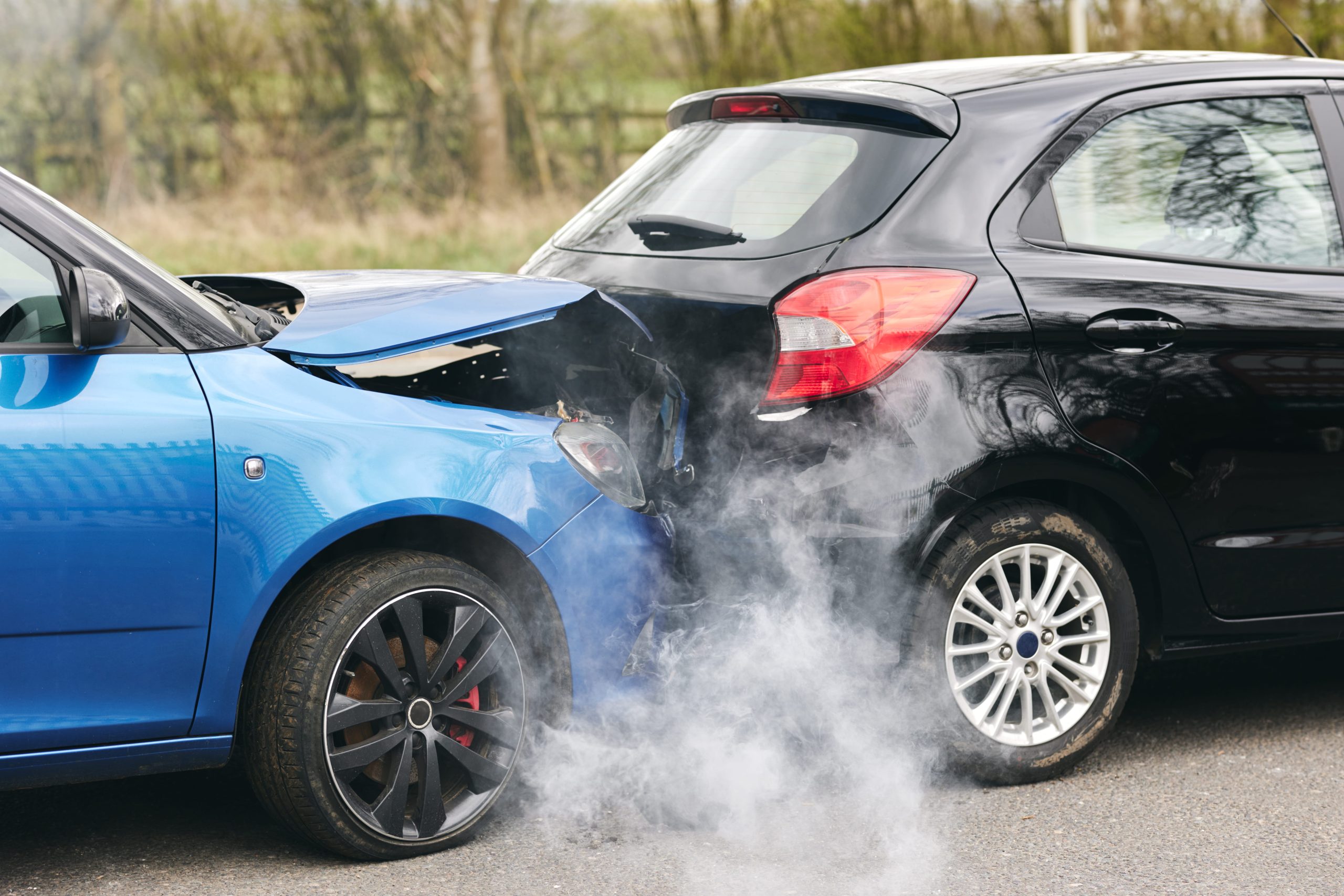
Rear-end crash fault analysis typically begins with the following distance. Under Florida’s following distance statute, drivers must not follow another vehicle more closely than is reasonable and prudent given the speed, traffic, and road conditions. A driver who rear-ends another vehicle has, in many cases, failed to maintain an adequate following distance — and this failure often forms the core of a negligence argument.
Supporting evidence in rear-end cases typically includes dashcam footage showing the following behavior before impact, skid-mark evidence (or the absence of it, suggesting no braking attempt), photographs of vehicle damage, and the police report. The at-fault driver’s speed relative to traffic and road conditions is also relevant, which is why working with a Lakeland Rear-End Collisions Lawyer can be critical when building a strong injury claim.
Proving Fault in a Side-Impact Crash
Side-impact crash fault often involves a right-of-way issue. Whether a driver ran a red light, failed to yield at a stop sign, or turned across oncoming traffic without clearance — these are the common liability scenarios in T-bone crashes. Under Florida’s right-of-way statutes, vehicles entering intersections must yield appropriately, and a violation of that duty can establish negligence.
Because these crashes often occur at intersections, traffic signal camera footage can be decisive. Intersection cameras operated by local municipalities may capture the signal state and vehicle positions in the moments before impact. Witnesses who observed the approach are also particularly valuable in side-impact cases, since the question often centers on who had the green light or right-of-way — something a camera or observer may be able to resolve directly.
Why Evidence Needs Differ — And Why It Matters for Your Claim
The evidence gap between what happened and what can be proven is where injury claims are won or lost. Insurers don’t pay based on what you know — they respond to what you can document.
A Lakeland personal injury lawyer familiar with both rear-end and side-impact crash dynamics can identify which categories of evidence apply to your crash, move quickly to preserve time-sensitive records like camera footage, and engage the right medical and technical experts to connect injury findings to the specific crash mechanics.
The Role of Crash Reconstruction in Polk County Cases
In moderate-to-severe crashes — particularly side-impacts where the direction of force and vehicle positioning are disputed — a crash reconstruction expert may be retained to independently analyze the physical evidence.
Reconstruction specialists examine skid marks, point-of-impact indicators, vehicle crush patterns, airbag deployment data, and final rest positions to develop a model of what happened in the seconds before and during the collision. Their findings can establish vehicle speeds, determine which vehicle had the right-of-way based on approach trajectories, and determine whether evasive action was taken.
This type of analysis is most valuable when the at-fault party disputes fault or when liability is shared across multiple vehicles.
Why Acting Quickly Protects Both Injury and Liability Evidence
Two categories of evidence degrade fastest after a crash — and both matter to your claim.
Medical evidence weakens when care is delayed. Insurers use the gap between the crash date and the first treatment to argue that injuries were not caused by the crash or were not serious enough to require prompt care. Seeing a doctor immediately and following all recommended treatment create an unbroken medical record.
Liability evidence disappears on its own timeline. Intersection camera footage is typically overwritten within 24–72 hours. Dashcam footage overwrites on loop. Witnesses become harder to locate and their memories less precise over time. Skid marks and debris are cleared from roadways. An attorney can send preservation letters and begin evidence collection within days of being retained.
Call 844-643-7200 or request a free consultation to Lakeland car accident Attorney — no fee unless we win.
Why Lakeland Crash Victims Choose Wolf & Pravato
The Law Offices of Wolf & Pravato has served injured clients across Florida — including Polk County — with 75+ years of combined experience and over $200 million recovered on their clients’ behalf. (Past results do not guarantee future outcomes.)
The firm handles crash cases on a “Pay nothing unless we win” basis. Whether your crash was a rear-end collision on US-98 or a side-impact at a Lakeland intersection, the team focuses on building a claim that reflects the full medical and financial impact of your injuries.
Frequently Asked Questions:
- Are rear-end crashes always the following driver’s fault in Florida?
Rear-end crashes frequently involve following-distance violations by the trailing driver, which can establish negligence. However, fault is determined based on the specific facts of each case — circumstances like sudden lane changes, brake failure, or multi-vehicle pileups can affect how fault is allocated. An attorney can evaluate the specific dynamics of your crash. - Why are side-impact crashes often more severe than rear-end collisions?
The side of a vehicle offers significantly less structural protection than the front or rear. When a striking vehicle’s front end contacts the door area, there is minimal crumple zone to absorb energy before it reaches the occupant. This is why head, brain, chest, and internal injuries appear more frequently in side-impact crash cases. - What if I didn’t feel hurt right after my crash?
Delayed symptom onset is common in both rear-end and side-impact crashes. Soft tissue injuries, disc problems, and concussions may not fully present for 24–72 hours or longer. Seeking medical evaluation immediately after any crash — even if you feel okay — protects both your health and your ability to connect injuries to the crash event. - How does intersection camera footage help a side-impact crash case?
Intersection cameras may capture vehicle positions and signal states in the moments before a crash. If a driver ran a red light or failed to yield, footage can directly corroborate your account and establish right-of-way. This evidence is often overwritten quickly — typically within 24–72 hours — which is why contacting an attorney promptly is important. - Do I need a crash reconstruction expert for my case?
Not every case requires one. Reconstruction experts are most valuable in moderate-to-severe crashes where fault is disputed, where multiple vehicles were involved, or where the physical evidence — speed, impact angle, vehicle positioning — needs independent analysis to establish a clear liability picture. - What medical evaluations are most important after a side-impact crash?
Given the injury patterns associated with lateral impacts, MRI or CT imaging of the head, cervical spine, chest, and shoulder is often warranted after a significant side-impact crash. Emergency evaluation immediately after the crash, followed by specialist referrals if imaging reveals abnormalities, creates the medical documentation needed to support your claim. - How do I get started if I was hurt in a Lakeland crash?
Contact a Lakeland car accident attorney as soon as possible. Early involvement allows your lawyer to preserve time-sensitive evidence, coordinate with your medical providers, and begin building the liability and damages foundation of your claim. You can request a free case evaluation with no obligation or upfront cost.
Recent Posts
- Wrong Burial Plot and Grave-Site Errors in Fort Lauderdale

- Rainwater Falls at Fort Lauderdale Store Entrances

- Parking-Lot Backing Crashes in Fort Lauderdale: Who Has the Right of Way?
- Elevator and Escalator Injuries at Fort Lauderdale Shopping Centers
- Delivery Driver Car Accidents in Lakeland: Who Pays?

- Injured as a Passenger in Fort Lauderdale: Whose Insurance Pays?





FLORIDA’S PERSONAL INJURY ATTORNEYS FOR + 20 YEARS

https://shorturl.fm/DHESf