














Miami-Dade Vehicle Theft + Stolen Car Recovery: When Homeowners Insurance Pays vs. When PIP/Auto Pays
Why “does homeowners cover vehicle theft” is the wrong question
Miami-Dade residents searching whether homeowners insurance covers vehicle theft are usually asking the wrong version of the right question. Homeowners insurance generally does not cover the vehicle itself — that’s what auto insurance is for. But homeowners may cover personal items stolen from the vehicle, depending on policy terms and limits. The actually useful framework: which policy pays for which part of the loss. Auto comprehensive pays for the vehicle. Homeowners contents coverage may pay for items stolen from inside it. PIP doesn’t pay for theft itself but interacts with related injury claims, if any. A Miami car accident lawyer familiar with these coverage interactions can help Miami families navigate the multiple policies that may apply to a single theft event.
This article walks through which Florida insurance policies pay what after a Miami-Dade vehicle theft, what the procedural steps are, and how the coverages interact.
Featured snippet — which policy pays for what
- Auto comprehensive coverage pays for the stolen vehicle itself, subject to a deductible.
- Homeowners contents coverage may pay for personal items inside the vehicle, subject to limits and exclusions.
- PIP/auto does NOT pay for theft itself but covers related injuries if any.
- Rental car coverage may apply if the stolen vehicle was a rental.
- Umbrella policies rarely cover theft directly, but may apply to related liability claims.
What homeowners actually cover vs. doesn’t
Florida homeowners policies typically don’t cover motor vehicles themselves under any standard form approved by the Florida Office of Insurance Regulation. Vehicles are specifically excluded from homeowners coverage in most policy forms because they’re covered by separate auto policies. What homeowners may cover is personal property contents that happened to be inside the vehicle when it was stolen — laptops, electronics, clothing, sports equipment, work tools, jewelry. Whether these contents are covered depends on:
- The specific policy language — some policies extend personal property coverage off-premises, others limit it.
- Off-premises coverage limits — typically a percentage of the in-home contents limit (often 10%).
- Per-item sub-limits — jewelry, electronics, and business property may have specific lower limits.
- Documentation — receipts, photos, or other proof of ownership and value.
See our resource on will homeowners insurance cover a stolen car for more details on the homeowners side specifically.
What auto comprehensive coverage does
Comprehensive auto coverage — sometimes called “other than collision” coverage — is the part of an auto policy that pays for vehicle theft. Comprehensive is optional in Florida (not required by law), but most auto loans require it. When a vehicle is stolen, comprehensive coverage typically pays:
- The actual cash value (ACV) of the vehicle at the time of theft, minus the deductible.
- Reasonable rental car expenses during the recovery period (if rental coverage is included).
- Costs of any vehicle modifications or aftermarket equipment, depending on policy terms.
Comprehensive does not pay if the vehicle is recovered without damage, though it can pay for repair costs if recovered with damage. The ACV calculation often becomes contested. Insurance carriers tend to use lower-end valuations; vehicle owners often have evidence of higher valuations through dealer comparables or recent appraisals. Disputes over ACV are common after Miami-Dade vehicle thefts.
What PIP does (and doesn’t do) for theft
Florida’s Personal Injury Protection (PIP) coverage is medical and lost-wage coverage that follows the insured person, not the vehicle. PIP does not pay for vehicle theft itself. But PIP can become relevant when:
- The vehicle owner was injured during the theft (carjacking, attempted intervention).
- The vehicle owner was struck or injured by the fleeing thief.
- A pedestrian or other person was injured by the stolen vehicle being driven recklessly.
In these injury scenarios, PIP covers medical expenses and lost wages up to PIP limits. The theft of the vehicle itself remains a comprehensive auto coverage matter, separate from any PIP injury claim. The two coverages can both apply to a single event, but to different aspects of the loss.
What to do immediately after a Miami-Dade vehicle theft
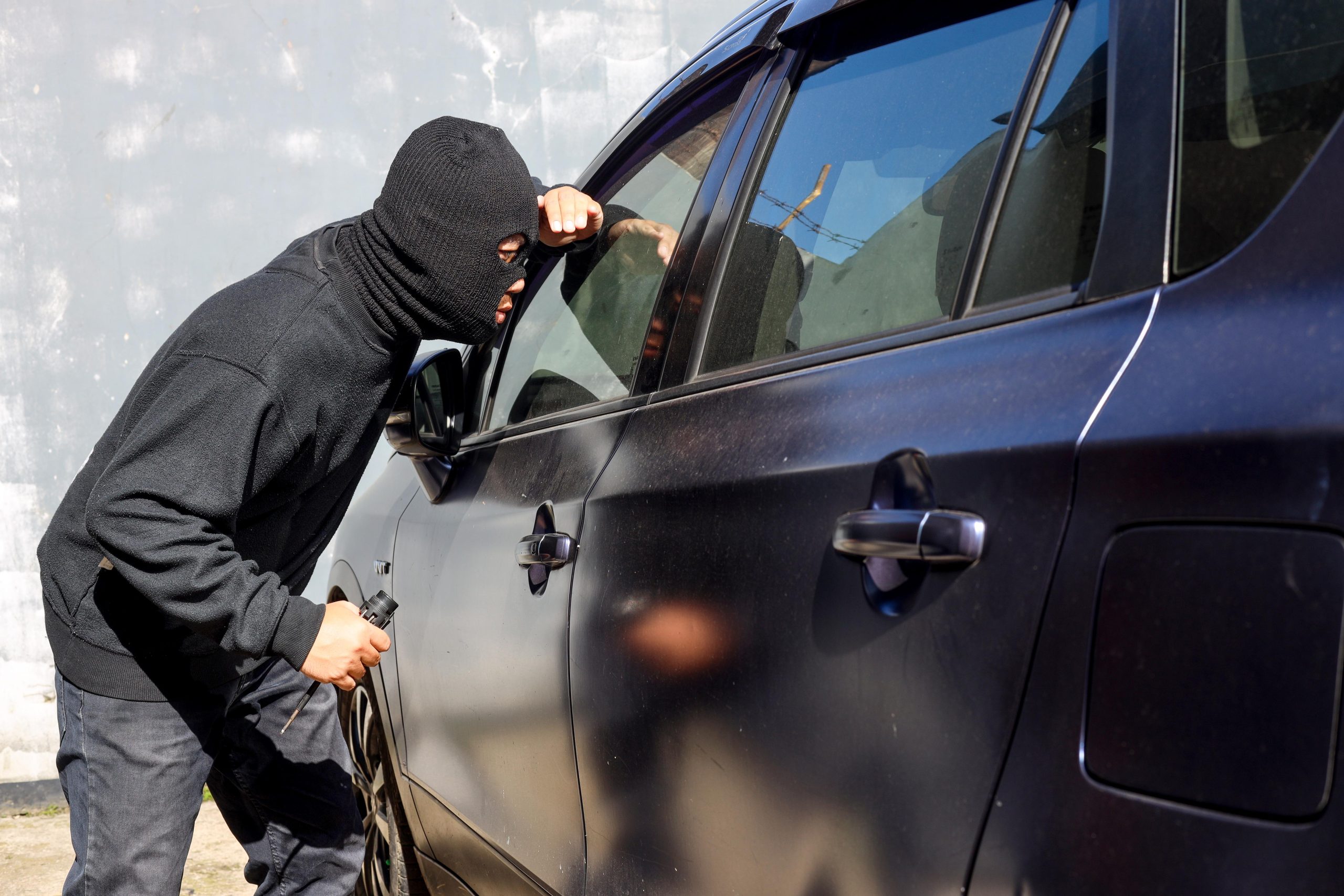
Immediate steps after a Miami-Dade vehicle theft:
- Report to law enforcement immediately — Miami-Dade Police, Miami Police (depending on jurisdiction), or the responding agency. FLHSMV vehicle theft reporting provides Florida-specific guidance on theft reporting and recovery.
- Notify your auto insurance carrier and start a comprehensive coverage claim.
- Notify your homeowners carrier if personal items were inside the vehicle.
- Document everything that was inside the vehicle — make a contemporaneous list while memory is fresh.
- Preserve receipts, photos, or other evidence of items’ ownership and value.
- Get the police report number — both insurance carriers will need it.
- Don’t accept the first ACV offer without comparing market valuations.
Time matters. Police reports filed promptly are taken more seriously by insurance carriers. Item lists made days later, after memory has faded, lose detail. Insurance carriers use delays and gaps in documentation to reduce settlement value.
When theft connects to a broader case
Some Miami-Dade vehicle thefts connect to broader injury or liability cases — carjackings with injury, stolen vehicles striking pedestrians or cyclists, theft from premises with inadequate security. See our Miami personal injury lawyer resource for the broader injury framework. Premises-with-inadequate-security claims (parking garages, shopping centers, residential complexes) sometimes accompany theft cases when the property’s lack of reasonable security contributed to the theft. These claims have their own elements (reasonable foreseeability of crime, reasonableness of security measures) that go beyond the insurance coverage question.
What happens when the stolen vehicle is a rental
Rental car theft adds a layer because Florida’s rental vehicle coverage statute (§ 627.7263) addresses how Florida treats coverage for rented vehicles. The statute generally requires that the renter’s personal auto coverage be primary for rental vehicles unless specifically modified. For theft of a rental:
- The renter’s personal auto comprehensive coverage typically applies first.
- The rental company’s loss damage waiver (LDW) — if purchased — may apply.
- Credit card rental coverage may apply secondarily.
- The rental company’s own coverage applies in some circumstances.
Coverage stacking and primary-secondary disputes are common in rental theft cases. A counsel familiar with Florida rental coverage law can help untangle which policies apply in what order.
How Florida regulates auto and homeowners coverage
Florida’s Office of Insurance Regulation (OIR) approves insurance policy forms used in the state. That regulatory oversight matters because:
- Standard policy language tends to be similar across carriers due to OIR-approved forms.
- Carrier deviations from standard forms must be approved.
- Coverage interpretations have been litigated and developed under Florida-specific case law.
- Disputes about coverage interpretation can sometimes be resolved by OIR consumer assistance.
That regulatory layer often helps Miami-Dade policyholders. When a carrier denies or limits a claim contrary to standard policy interpretation, OIR consumer protection mechanisms — and Florida courts — provide recourse.
How long can Miami-Dade insurance disputes be filed?
Insurance contract disputes (including disputes about coverage for vehicle theft) run against Florida’s contract limitations statute (§ 95.11), which provides a five-year statute of limitations for actions on written contracts. The five-year clock typically starts when the carrier denies the claim or breaches the contract terms. This is different from negligence claims (two years under the same statute as amended by HB 837, effective March 24, 2023). For pure insurance coverage disputes — was the loss covered, was the ACV correct, were items properly compensated — the five-year contract deadline applies. Where the case involves negligence components (premises with inadequate security), the two-year negligence deadline applies to those components.
When to retain counsel
Most simple comprehensive auto theft claims resolve through the insurance process without needing counsel. But complications often arise: ACV disputes, denial of coverage, denial of contents claims under homeowners, rental coverage stacking, or theft connected to a broader injury case. Counsel familiar with Florida insurance disputes can resolve coverage questions, push back against undervaluation, and coordinate multi-policy claims.
Wolf & Pravato has recovered over $200 million for injury clients across Florida, with more than 75 years of combined experience. We work on a contingency basis — you pay nothing unless we win. To discuss a Miami-Dade vehicle theft involving disputed coverage or related injuries, call 844-643-7200 or request a free case evaluation.
Frequently Asked Questions:
- Does homeowners’ insurance cover vehicle theft in Miami?
Generally, no for the vehicle itself — that’s an auto comprehensive matter. Homeowners may cover personal items stolen from the vehicle through off-premises personal property coverage, subject to limits, exclusions, and per-item sub-limits. - What insurance pays for a stolen car in Florida?
Auto comprehensive coverage. Comprehensive is optional under Florida law but typically required by auto loans. It pays the actual cash value of the vehicle at the time of theft, minus the deductible. - Does PIP pay for vehicle theft?
No. PIP is medical and lost-wage coverage following the insured person. It doesn’t pay for vehicle loss. PIP can apply to injuries during a theft (carjacking) or injuries caused by the stolen vehicle being driven recklessly. - What if my stolen car had personal items inside?
Homeowners contents coverage may apply to the personal items, subject to off-premises limits (often a percentage of in-home limits) and per-item sub-limits. Documenting what was inside, with receipts or photos when possible, supports the claim. - What if my Miami rental car was stolen?
Florida’s § 627.7263 generally makes the renter’s personal auto comprehensive primary unless modified. The rental company’s LDW (if purchased), credit card rental coverage, and the rental company’s own coverage may apply secondarily. Coverage stacking issues are common. - How long do I have to dispute an insurance carrier’s vehicle theft decision?
Insurance contract disputes have a five-year statute of limitations under Florida § 95.11. The clock typically starts at denial or breach. Negligence components (premises with inadequate security) have a two-year deadline. - Should I accept the insurance carrier’s first ACV offer?
Not without comparison. Carriers tend toward lower-end valuations. Comparable vehicle listings, recent appraisals, and aftermarket modifications often support higher valuations. Disputes over ACV are common and sometimes worth pursuing.
Recent Posts
- Wrong Burial Plot and Grave-Site Errors in Fort Lauderdale

- Rainwater Falls at Fort Lauderdale Store Entrances

- Parking-Lot Backing Crashes in Fort Lauderdale: Who Has the Right of Way?
- Elevator and Escalator Injuries at Fort Lauderdale Shopping Centers
- Delivery Driver Car Accidents in Lakeland: Who Pays?

- Injured as a Passenger in Fort Lauderdale: Whose Insurance Pays?





FLORIDA’S PERSONAL INJURY ATTORNEYS FOR + 20 YEARS