
Fort Lauderdale Wrongful Death Lawyer
A family loses somebody and is then handed a funeral to arrange, an income that has stopped, and a company that already has lawyers on it. We can take it from here. Call 954-522-5800 for a free consultation. You pay us nothing unless we win. Our Fort Lauderdale personal injury lawyers have taken these cases across Broward County since 1993.
Wrongful Death claims in Fort Lauderdale
The other side had counsel within days, and you are being asked for paperwork while you are still arranging a service. Meanwhile the mortgage is due, the income has stopped, and nobody has given you a straight account of what actually happened. Getting that account, and providing for the people left behind, is what we do from the first call.
A Broward wrongful death claim is filed in the Seventeenth Judicial Circuit, and it is brought by the personal representative of the estate rather than by relatives individually. Where there is no will, the court appoints under the statutory order of preference. Families routinely lose weeks discovering that this step comes first, while evidence in the underlying case ages.
A Broward wrongful death claim is brought by the personal representative of the estate, not by the family directly, and Florida decides by statute which survivors may recover and for what. The deadline is generally two years from the death. Opening the estate is a probate step that takes time, so it is worth starting early even before anything else is decided.
What to do after a wrongful death in Fort Lauderdale
- Nothing has to be decided this week. The deadline is measured in years and almost nothing is lost by taking two weeks. What is worth doing early is keeping paper: the hospital records, the police report number, the bills as they arrive, and a note of who has called and what they said. Families frequently call us because somebody asked them to sign something and it did not feel right, and that instinct is usually correct.
- Do not sign a release, and be careful about a recorded statement. An insurer may make an early offer, sometimes a considerate one, and it will come with a release. A release cannot be reopened. Nobody should sign one before there is a clear picture of what happened and who is responsible, and a family is not required to be recorded by the other side while they are arranging a funeral.
- Ask what became of the vehicle, the equipment or the scene. Whatever was involved may be repaired, released or scrapped within weeks, and once it is gone it cannot be examined. A short written request that it be preserved is often all that is needed, and it can be sent long before anybody decides whether to bring a claim.
- An estate has to be opened before anything can be filed. Florida requires the claim to be brought by a personal representative of the estate rather than by the family directly, under Fla. Stat. § 768.20. It is a probate step, it takes time, and it is the one thing worth starting early even where the family has not decided anything else.
- Ask before you agree to an autopsy decision either way. In some deaths the medical examiner decides and the family has no say. In others there is a choice, and it is made in the first day or two while nobody is thinking about evidence. Where the cause of death may be disputed later, that decision is difficult to revisit.
Where these happen in Fort Lauderdale
The deaths we are called about in Broward come from a short list of places, and where it happened usually decides who has the records and how quickly they disappear.
-
The interstates and the port approaches
I-95, the I-595 interchange and the roads carrying Port Everglades traffic produce the commercial vehicle deaths in this county.
- Federal records behind a commercial carrier, several of which have a six-month retention floor
- Trauma care that runs to Broward Health Medical Center, which fixes a documented timeline
- Vehicles released and repaired within days unless somebody asks for them to be held
-
Construction sites
Broward has been building continuously for years, and a site is not one employer but a chain of them.
- A developer, a general contractor and several subcontractors who will each point at the next
- Workers compensation covering the employer, and a separate claim frequently existing against everybody else on the site
- Site conditions that change within hours of an incident
-
Apartment complexes and parking structures
Deaths from violence at properties where the owner already knew, which turn on what was reported before rather than on what happened that night.
- Prior police calls to the same address, which we can get and are the heart of the claim
- Camera systems that were broken, unmonitored or overwritten within weeks
- Security that was promised in a lease and not actually provided
-
The waterways
Broward has a great deal of boat traffic and a boating death produces almost none of the paperwork a road death does.
- No crash report in the form a road collision generates
- Witnesses who leave for five different marinas the same evening
- Vessels moved, cleaned or hauled out before anybody inspects them

What causes them
- Crashes involving commercial vehicles, where a schedule and a set of federal records usually sit behind the driver
- Ordinary road collisions at speed, which remain the most common cause of a claim of this kind
- Motorcycle and pedestrian collisions, where there is nothing between a person and a vehicle
- Falls from height on construction sites, and objects falling onto people below
- Drownings, in pools where the gate, the alarm or the supervision was not what it was supposed to be
The injuries we see, and what each one turns on
What the statute allows a family to recover
Florida sets this out by statute rather than leaving it to a court, in Fla. Stat. § 768.21, and what each survivor may claim depends on their relationship to the person who died. That is why the first conversation is usually about who is in the family rather than about what happened.
A surviving spouse
Loss of the companionship and protection of the person who died, and the mental pain and suffering from the date of the injury. A spouse is also generally the person who receives lost support and services.
Children
Minor children may recover for lost parental companionship, instruction and guidance, and for their own mental pain and suffering. Adult children may recover those same losses where there is no surviving spouse, which is one of the places the statute is narrower than families expect.
What Florida law requires you to prove
Who brings the claim
The personal representative of the estate brings it, on behalf of the survivors and the estate together, under Fla. Stat. § 768.20. A family cannot file individually. If there is a will it usually names who that should be; if there is not, the court appoints somebody, and the probate step runs alongside the injury claim rather than after it.
The deadline
A wrongful death action in Florida generally has to be filed within two years of the death under Fla. Stat. § 95.11. Claims against a government body carry a separate and much shorter notice requirement, which is why the identity of the defendant is worth settling early rather than late.
How fault is shared
Under Fla. Stat. § 768.81 a recovery is reduced by the share of fault attributed to the person who died, and a finding of more than 50 percent bars it altogether. Families are frequently told at an early stage that their relative caused it. That is an opening position rather than a conclusion, and it is answered with evidence.
The full statutory detail, and the parts that differ by claim type, sit on our statewide wrongful death page rather than being restated in every market.
How we prove it in Broward County
The person who could explain what happened is the person who died, so these cases are built from records and from the physical world rather than from an account. Most of it we can get and some of it is on a clock.
- The crash or incident report, and the officer’s underlying notes and photographs, which are usually more detailed than the report
- The medical examiner’s report and the autopsy findings, which take months and are worth waiting for
- Hospital and ambulance records from the injury to the death
- Any vehicle, machine or product involved, examined before it is repaired, released or scrapped
- Electronic data: engine modules on vehicles, access control and alarm logs on properties, equipment telemetry on sites
- Camera footage from businesses, buildings and municipal systems along the route, most of it overwritten inside a month
- Prior complaints, prior incidents and prior police calls at the same address, which is what makes a property claim provable
- Employment, tax and pension records, which are what a lost accumulations figure is calculated from
The estate paperwork runs alongside all of that rather than after it. A personal representative has to be appointed before a claim can be filed, and starting it early keeps the probate step from becoming the thing that holds up the case.

Who would handle your case
Being hurt in Fort Lauderdale is hard enough without working out the legal side on your own. The trial lawyers below have handled wrongful death claims across Florida since 1993, and one of them will take yours from the first call to the last check. They will tell you what your case is worth and why, and they will be straight with you about the parts that are hard.
-
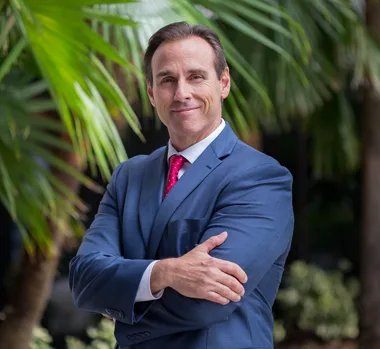 Richard P. Pravato Founding & Managing Attorney Board Certified in Civil Trial Law by The Florida Bar since 2004, and by the National Board of Trial Advocacy. Injury cases exclusively since 1996. Full profile →
 -
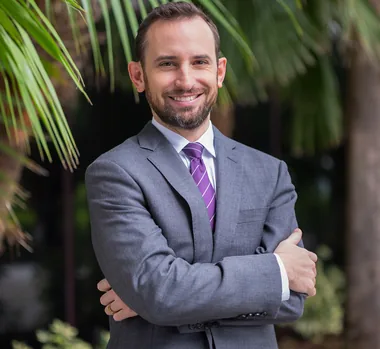 Brett J. Yonon Senior Trial Attorney Selected to Florida Super Lawyers in 2024 and 2025. Brett Yonon is who this firm puts on a catastrophic injury or a death in the family, and he has tried those cases to verdict. Full profile →
How insurance companies handle these claims
The other side is usually organized before the funeral. That is not cruelty, it is procedure, and it is worth knowing in advance rather than discovering it.
- A sympathetic call, and an early offer
- It often arrives before anybody knows the full picture, and it will be framed as helping with immediate costs. Accepting it means signing a release, and a release cannot be reopened when the rest of the facts come out. There is no harm in saying that the family is not making decisions yet.
- A request for a recorded statement from a grieving family
- You are not required to give one to the other side. What gets said in the first two weeks, by somebody who has not slept and does not yet know what happened, is quoted back months later as though it were considered testimony.
- Fault is moved onto the person who died
- They were speeding, they were not paying attention, they should have known. Every percentage point moves money off the claim and past 50 percent it ends it. The person it is being said about cannot answer, which is exactly why the physical evidence, the data and an independent reconstruction matter more here than in almost any other kind of case.
What a claim can include
Funeral and burial expenses
Recoverable by whoever paid them, whether that was the estate or a survivor personally. Keep the invoices.
Medical expenses from the final injury or illness
The care between the injury and the death, which in some cases runs for weeks and is substantial.
Lost support and services
The money the person brought in and the work they did that now has to be paid for or gone without, projected over the years they would reasonably have been expected to live.
What we have recovered
Verified matters this firm has handled on wrongful death claims. Figures are gross recoveries, before attorney fees, costs and medical liens come out of them.
A father and grandfather died in a fall down a makeshift stairwell built when an owner split a townhouse into two units without permits.
Broward County jury verdictEvery verdict and settlement we publish, with the press coverage for the ones that were reported. No result predicts another case: every claim turns on its own facts, its own evidence and the insurance actually available.

Why Wolf & Pravato in Fort Lauderdale
A Broward wrongful death claim is filed in the Seventeenth Judicial Circuit at the Broward County Courthouse, with the estate opened in the probate division of the same court, and that is the courthouse this office works in. The venue shapes what an insurer offers, because carriers keep records of which firms in a county actually try cases.
Richard Pravato has been Board Certified in Civil Trial law by The Florida Bar since 2004. The Bar lists 861 lawyers in the state holding it against a membership over 109,000. What it means in practice is that the other side knows the file can go in front of a jury, and files that can go to trial are priced differently from files that cannot.
The first conversation is free. We are paid out of the recovery or not at all, and if we do not think there is a claim worth bringing we will tell you that rather than take it.
Fort Lauderdale wrongful death questions
Do we have to open an estate before we can do anything?
Before a claim can be filed, yes. Florida requires it to be brought by a personal representative of the estate rather than by the family. It does not have to be finished before anybody investigates: preservation letters, records requests and the medical examiner file all proceed while the probate step runs. What we usually suggest is starting both at once, because probate has its own pace and it is the part most likely to hold things up.
The police said our father was partly at fault. Is that the end of it?
It is not, and it is worth knowing that a police conclusion is not binding on a civil claim. Blame gets redivided regularly once the physical evidence, the vehicle data and an independent reconstruction are in. Under Florida law a recovery is reduced by the share of fault attributed to the person who died and barred above 50 percent, so it is a live question rather than a closed one.
How long does something like this take?
Longer than a straightforward injury case. The medical examiner’s report alone commonly takes several months, and a claim is rarely resolved sensibly before it exists. Two years is the general filing deadline, and most of these are resolved somewhere between one and three years depending on whether the responsible party disputes what happened.
Who is allowed to bring a wrongful death claim in Florida?
The personal representative of the deceased person’s estate, acting on behalf of the surviving family members and the estate. Individual relatives do not each file their own suit. Fla. Stat. § 768.21 then decides which survivors may recover and what each of them may recover for.
What can a family actually recover?
Depending on the survivor, it can include lost support and services, loss of companionship and protection, mental pain and suffering, and medical and funeral expenses they paid. The estate may separately recover certain losses. The categories are set by statute rather than negotiated, which is why an early read of where a family sits is worth having.
The questions that come up on every kind of claim, deadlines, fees, recorded statements and fault, are answered on our Florida injury claim FAQ.
More in Fort Lauderdale
Fort Lauderdale Personal Injury Lawyer
Everything we handle in Broward County, and where our office is.
View →Fort Lauderdale Negligent Security Lawyer
Attacked at a Florida apartment, hotel, store or parking lot.
View →Fort Lauderdale Boat Accident Lawyer
Florida boat, jet ski, parasailing and watercraft accident lawyers.
View →Fort Lauderdale Product Liability Lawyer
Florida product liability lawyers.
View →
Tell us what happened
A lawyer will listen, tell you what Florida law does with those facts, and be straight with you about whether it is worth bringing. We are at 2101 W Commercial Blvd, Suite 1500, Fort Lauderdale, FL 33309.