

Miami Bicycle Accident Lawyer
A bicycle accident claim runs on Florida laws that give riders the road and give drivers duties around them. We use both. We can take it from here. Call 844-643-7200 for a free consultation. You pay us nothing unless we win. Our Miami personal injury lawyers have taken these cases across Miami-Dade County since 1993.
Bicycle Accident claims in Miami
Drivers who hit cyclists tend to say the bike came out of nowhere, and their insurers tend to start from the idea that a bicycle did not belong on that road. Meanwhile you are paying for the emergency room, missing work, and finding out your own auto policy may be what covers you. Sorting out which policy pays is our job, and it starts the day you call.
Miami-Dade has genuine road cycling routes, the Rickenbacker Causeway and Old Cutler Road among them, and they carry fast group riding alongside ordinary vehicle traffic. Collisions there tend to be high-speed and catastrophic rather than minor. Elsewhere in the county the pattern is different: riders being turned into at intersections and hit by opening doors on Brickell and along Biscayne. Both start from the same legal position, which is that a cyclist is a lawful road user under section 316.2065 rather than a pedestrian who happens to have a bicycle.
A Miami-Dade bicycle claim turns on road position and on what a passing driver owed the rider. Florida gives a rider the rights and duties of a driver of a vehicle. What answers the standard defense, that the rider appeared from nowhere, is the damage geometry, the sight lines from the driver’s actual position, and the camera footage this county produces in unusual quantity.
What to do after a bicycle accident in Miami
- Keep the bicycle and the helmet exactly as they are. Do not have the bike repaired, do not replace the wheel, and do not throw the helmet away because it looks fine. The frame, the fork, the wheel and the components record the direction and the force of the impact, and a cracked helmet is physical proof of a head strike that an emergency department may not have documented. Photograph everything before it is touched.
- Get witness names, and ask which riders had cameras. The driver gives the officer the only account while the rider is being treated. A single independent witness changes that. On a group ride somebody almost always has a camera running, and those files are overwritten or deleted within days, so the question is worth asking at the roadside rather than the following week.
- Photograph where you were entitled to be. The lane markings, where the bike lane starts and where it ends, the parked cars, the debris, the drain grate, the surface. Road position is the whole argument in most of these cases, and a photograph taken that day settles what a description written a month later cannot. Photograph the intersection from the driver’s approach as well as your own.
- See a doctor even if you got up and rode home. The signature bicycle injuries arrive when somebody goes over the handlebars, and a fractured scaphoid, a cracked collarbone or a shoulder separation is regularly walked off on the day. A brain injury does not need loss of consciousness and a normal scan does not rule one out. A gap between the crash and the first visit is the most common argument made about how badly somebody was hurt.
- Do not take a quick payment for the bicycle. An early check to cover the bike is one of the cheapest things an insurer can do, and it sometimes arrives attached to a release. A release cannot be reopened. Have the property claim handled alongside the injury claim rather than in front of it, and do not sign anything on the strength of a number that only covers a frame.
Where these happen in Miami
Miami-Dade has genuine road cycling routes, a dense urban core and a large population riding for work, and the three produce entirely different collisions on entirely different evidence.
-
The causeway routes at speed
Recreational riding here happens fast and in groups, alongside ordinary traffic, and the collisions are catastrophic rather than minor.
- Closing speeds that make a rear-end collision on a shoulder a fatal event
- Several riders who witnessed the same thing from different positions
- Action cameras running on multiple bicycles, with files that are overwritten within days
- Toll gantry and causeway records, which timestamp vehicles precisely
-
The canopy roads
Old Cutler and the shaded residential routes, where the trees that make the riding good are also what breaks the surface.
- Root heave and pavement lifting along the right-hand edge, which is the strip riders are told to use
- Dappled light under a canopy, which hides a defect until a wheel is on it
- Maintenance and complaint records held by the municipality or the county for that stretch
- A claim against a public body, which cannot be filed until notice has been given and answered
-
Doors, valet and the urban core
Brickell, downtown and the beach, where the vehicle that injures a rider is frequently stationary.
- Doors opened into the lane from parked cars, valet stands and pickup zones
- Rideshare and delivery vehicles stopping in the bike lane, which forces riders out of it
- Building, garage and valet cameras, which cover these streets better than any public camera
- The passenger, the driver and the company behind a commercial vehicle, which can be three defendants
-
Riders working on two wheels
A large number of people in this county ride for a living, delivering food and packages, and their claim is frequently larger than they realize.
- A possible workers’ compensation claim alongside the negligence claim, depending on the employment arrangement
- App and trip data establishing exactly where somebody was and what they were doing
- Classification as an employee or a contractor, which decides whether the first claim exists at all
- The bicycle or electric bicycle as the tool of a trade, which changes what its loss is worth

What the state recorded in Miami-Dade County
| Crashes | 972 | about 3 a day, 12% of the Florida total |
|---|---|---|
| People killed | 19 | 2.0% of those crashes |
| People hurt | 902 | 93 for every 100 crashes |
A bicycle crash in Miami-Dade County killed someone 4 times as often as the average crash there.
What causes them
- A driver turning left across an oncoming rider, having judged a bicycle to be slower than it was
- Doors opened into a rider’s path from parked cars, valet zones and pickup areas
- Passing too close, where Florida requires a minimum clearance that is widely ignored
- Drivers pulling out of driveways, plazas and side streets having looked only for other vehicles
- Rear-end collisions on shoulders and in bike lanes, particularly at dawn and after dark
The injuries we see, and what each one turns on
Head and brain injury
A helmet reduces injury and does not prevent it, and a brain injury requires neither losing consciousness nor an abnormal scan. What follows shows up in memory, concentration, sleep and temper, and the people around somebody usually notice first. A cracked or compressed helmet is the clearest physical evidence that the head took a load, which is why it should not be thrown away.
Collarbone, wrist and shoulder
The fractures that end a season and sometimes a career at a trade. Several of them need hardware and then a second operation to remove or revise it, and a wrist that does not heal cleanly affects everything somebody does with that hand for the rest of their life.
Road rash and scarring
Sliding on asphalt takes skin off in layers and the serious version needs debridement and grafting. Two things get undervalued in an early offer: the infection risk that extends a hospital stay well past what the injury suggests, and permanent scarring, which is its own recoverable loss and has to be photographed as it heals rather than described afterward.
What Florida law requires you to prove
A bicycle is a vehicle, and a rider is a driver
Under Fla. Stat. § 316.2065 a person riding a bicycle on a roadway has the rights and the duties of the driver of a vehicle. That is the sentence the whole practice runs on. It means a rider is entitled to be on the road rather than tolerated there, and it also means the rules apply in both directions, which is the part an insurer will press on.
Where a rider has to be, and when they may leave it
The same statute directs a rider traveling slower than other traffic to keep to the right, and to use a bike lane where one is provided. It also recognizes that a rider may move out of it: to overtake, to turn, to avoid a parked vehicle, debris, a surface hazard or a lane too narrow to share safely. An insurer arguing that leaving a bike lane makes a rider responsible is stating a preference rather than the law. What the hazard was, and whether moving was reasonable, is the actual question.
What a passing driver owes, helmets, and the deadlines
Florida requires a driver overtaking a bicycle to pass at a safe distance, with a statutory minimum set out in Fla. Stat. § 316.083. Helmets are required for riders under 16 and are not required for adults, and riding without one does not bar an adult from recovering. Fault is shared under Fla. Stat. § 768.81, where a rider more than 50 percent responsible recovers nothing, and most claims arising on or after March 24, 2023 carry a two-year deadline under Fla. Stat. § 95.11.
The full statutory detail, and the parts that differ by claim type, sit on our statewide bicycle accident page rather than being restated in every market.
How we prove it in Miami-Dade County
Miami-Dade produces more recorded evidence than anywhere else on this list, and almost none of it survives being asked for late. These lines run in parallel rather than in sequence.
- The bicycle itself, unrepaired, since the frame, fork and wheel record the direction and force of the impact
- The helmet, kept even where it looks undamaged
- Camera files from other riders in the group, which are deleted or overwritten within days
- Building, garage, valet and business footage within sight of the scene
- App and trip data where a rideshare, delivery or commercial vehicle was involved
- Where the damage sits on the vehicle and at what height, and where the bicycle came to rest
- Municipal maintenance and complaint records where the surface or a grate was part of it
- The employment or contracting arrangement where the rider was working at the time
On a group ride the camera question has to be asked at the roadside. Riders wipe cards, and the file that shows exactly what a driver did is routinely gone before anybody thinks to ask for it.
Who would handle your case
Being hurt in Miami is hard enough without working out the legal side on your own. The trial lawyers below have handled bicycle accident claims across Florida since 1993, and one of them will take yours from the first call to the last check. They will tell you what your case is worth and why, and they will be straight with you about the parts that are hard.
-
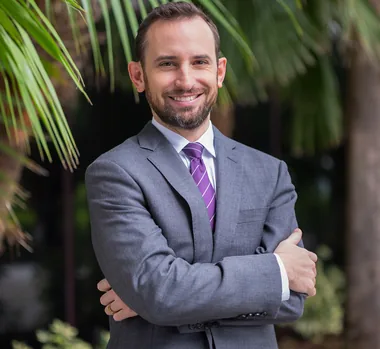 Brett J. Yonon Senior Trial Attorney Selected to Florida Super Lawyers in 2024 and 2025. Brett Yonon is who this firm puts on a catastrophic injury or a death in the family, and he has tried those cases to verdict. Full profile →
 -
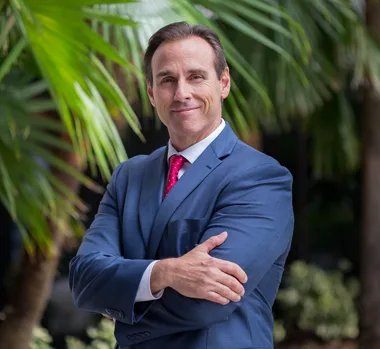 Richard P. Pravato Founding & Managing Attorney Board Certified in Civil Trial Law by The Florida Bar since 2004, and by the National Board of Trial Advocacy. Injury cases exclusively since 1996. Full profile →
How insurance companies handle these claims
Every one of these files opens from the same position: that the rider was somewhere they should not have been. It is worth knowing that in advance, because almost everything an adjuster asks in the first weeks is aimed at it.
- You were not in the bike lane
- Florida law expressly allows a rider to leave a bike lane to overtake, to turn, or to avoid a parked vehicle, debris, a surface hazard or a lane too narrow to share. The question is what was in the lane and whether moving was reasonable, which is why a photograph of the debris, the grate or the parked car taken on the day is worth more than any argument made later.
- You were not wearing a helmet
- Adults are not required to wear one in Florida and riding without one does not bar a claim. What an insurer may properly argue is that it affected the severity of a head injury specifically, which is an argument about dividing the damages rather than about who caused the collision. It is raised early because it makes riders feel they have already lost.
- You ran the stop sign, you had no lights, you were on the wrong side
- Because a rider carries the duties of a driver, rider conduct is genuinely in play, and where something like that happened it reduces a claim rather than automatically ending it. Two things are worth knowing. It only ends the claim above 50 percent responsibility, and it is asserted far more often than it is established. Camera footage and the physical evidence answer it either way.
What a claim can include
Lost income and lost earning capacity
Wages missed, and separately what somebody can no longer earn. A wrist or a shoulder that does not recover cleanly ends some trades entirely, which is a loss a pay stub does not show.
Pain, and what daily life has become
Sleep, mobility, work, and riding, which for a lot of people is not a hobby but how they get around and how they stay well. It is proved with the account of the people around the injured person as much as with records.
Scarring and disfigurement
A separate head of loss after road rash or grafting, and one that is routinely left out. Photograph the healing as it happens, because a record of what it looked like at three weeks does not exist unless somebody made it.
What we have recovered
Verified matters this firm has handled on bicycle accident claims. Figures are gross recoveries, before attorney fees, costs and medical liens come out of them.
A twenty-year-old was riding his bike through a Plantation crosswalk on an illuminated walk signal when a Broward County Transit bus turned right on red into him and killed him.
Broward County wrongful death settlementOur client, an experienced cyclist, was riding legally in the bike lane approaching the traffic circle at East Camino Real and Royal Palm Way in Boca Raton when an SUV owned by the Royal Palm Improvement Association struck him.
Settlement after suit was filedEvery verdict and settlement we publish, with the press coverage for the ones that were reported. No result predicts another case: every claim turns on its own facts, its own evidence and the insurance actually available.

Why Wolf & Pravato in Miami
A Miami-Dade bicycle case is filed in the Eleventh Judicial Circuit, and the firm has an office on Brickell Avenue rather than a mailing address here. These claims run on footage held by buildings and businesses in this county, which has to be requested locally and quickly. We work with clients in Spanish and English.
The firm is led by a Board Certified Civil Trial lawyer, a certification held by 861 attorneys in Florida against a membership over 109,000. Insurance companies keep their own records of which firms in a county actually try cases, and that record moves an offer further than anything a firm can say about itself.
There is no charge to ask. Our fee comes out of what we recover and nowhere else, and if the answer is that you do not have a case, that is the answer you will get.
Miami bicycle accident questions
The driver says I came out of nowhere. How is that answered?
With physical evidence rather than with a counter-account. Where the impact landed on the vehicle, where the bicycle came to rest, sight line photographs from the driver’s actual position and any footage from the corner all establish what was visible and for how long. Group rides frequently have riders with cameras, which is worth asking about immediately, because those files get overwritten.
I was delivering when I was hit. Does that change anything?
It may add a claim rather than complicate one. Depending on the employment arrangement there could be a workers’ compensation claim alongside the negligence claim against the driver, and the two run separately. What decides it is the actual working relationship rather than what the paperwork calls it. The app data also establishes precisely where you were and what you were doing, which is useful evidence in its own right.
A passenger opened a door into me.
That is a claim, and often against more than one party. The person who opened the door is responsible for doing it without looking, and where the vehicle was a rideshare, a taxi or a commercial vehicle, the driver and the company behind it may carry a share as well. Trip data and the vehicle’s own records establish who was in it and why it was stopped there.
Does my car insurance cover me on a bike?
Very often yes, and it surprises people. Florida PIP follows the person rather than only the vehicle, so your own policy can pay your first medical bills after a bicycle crash. Uninsured motorist coverage may also apply, particularly in a hit and run.
The driver opened a door into me. Whose fault is that?
Generally the person who opened it. A motorist has a duty not to open a door into the path of traffic when it is unsafe to do so, and a cyclist lawfully proceeding alongside is traffic. The damage pattern in a dooring is quite distinctive and usually supports the account.
The questions that come up on every kind of claim, deadlines, fees, recorded statements and fault, are answered on our Florida injury claim FAQ.
More in Miami
Miami Personal Injury Lawyer
Everything we handle in Miami-Dade County, and where our office is.
View →Miami Birth Injury Lawyer
Florida birth injury lawyers.
View →Miami Uber and Lyft Accident Lawyer
Florida Uber and Lyft accident lawyers.
View →Miami Traumatic Brain Injury Lawyer
Florida traumatic brain injury lawyers.
View →
Tell us what happened
A lawyer will listen, tell you what Florida law does with those facts, and be straight with you about whether it is worth bringing. We are at 1111 Brickell Avenue, 11th Floor, Miami, FL 33131.