

Miami Birth Injury Lawyer
You were told the delivery went normally, and months later your child is missing milestones and nobody will explain why. We can take it from here. Call 844-643-7200 for a free consultation. You pay us nothing unless we win. Our Miami personal injury lawyers have taken these cases across Miami-Dade County since 1993.
Birth Injury claims in Miami
The explanation you were given does not match what you remember, and the delivery records are held by the people who wrote them. Meanwhile you are booking specialists, taking time off you do not have, and trying to work out what a lifetime of care costs. Reading those records properly is what we do, from the first call.
A birth injury case is built from the fetal monitoring strips, the nursing notes, the anesthesia record and the timing of the decision to proceed to caesarean section. In a high-volume Miami-Dade labor and delivery unit those records come from several sources and are rarely complete on the first request. Where the delivering hospital is part of a public system the sovereign immunity caps apply on top of everything else, and where NICA applies it may bar the suit outright. Those three questions, the records, the entity, and NICA, are settled before anyone talks about what a case is worth.
A Miami-Dade birth injury case is built from the fetal monitoring tracings, the nursing notes and the timing of the decision to deliver. The first question is whether the injury falls inside Florida’s NICA plan, because where it applies there is no lawsuit. In a high-volume unit the records come from several sources and are rarely complete on a first request.
What to do after a birth injury in Miami
- Ask for the complete delivery record, and name the strips. A request for records produces a discharge summary and a narrative, which is not the evidence. Ask in writing for the fetal monitoring tracings themselves, the nursing notes, the physician orders, the anesthesia record, the medication administration record and the neonatal resuscitation record. Those documents were made minute by minute during the labor, and they are what a reconstruction is built from.
- Keep every pediatric record as it accumulates. The developmental picture is built from what comes afterward: pediatric visits, referrals, early intervention assessments, therapy notes and eventually school evaluations. Keep them as they arrive rather than gathering them later. They establish both the extent of the injury and, where it matters, when a family could first reasonably have known something was wrong.
- Write down what you remember of the labor. Times, who was in the room, when the monitor was watched and when it was not, what you were told and what you asked for. Do it now rather than later. A parent’s account does not decide these cases and it frequently points at the half hour in the record where the answer is, which is worth a great deal when a chart runs to several hundred pages.
- Do not sign anything broad. Requests for records are routine. Broad authorizations, arbitration agreements and anything resembling a release are not, and they are sometimes handed over with ordinary paperwork. Bring the document to somebody before signing it. Reading it costs nothing, and an arbitration agreement signed at a bedside can decide a case before it starts.
- Ask early, because a child’s deadline is narrower than parents expect. The most common reason a valid birth injury claim is lost is a family waiting to see how a child develops. That instinct is entirely understandable and it is the wrong one, because the outer limit runs from the delivery rather than from the diagnosis. Having the records reviewed commits you to nothing and it preserves the option.
Where these happen in Miami
Miami-Dade delivers more babies than any county in the state, across public and private systems, and one baby’s record is frequently held by three institutions that do not talk to each other.
-
One baby, several record custodians
Prenatal care, the delivery, the neonatal admission and the pediatric follow-up may each sit with a different organization.
- Prenatal records held by an obstetric practice rather than by the hospital
- The delivery record, which is the labor and delivery unit’s own file
- The neonatal intensive care record, frequently at a different institution
- A picture that only forms when all of them are assembled into one timeline
-
High-volume labor and delivery
Units running at capacity, where the question is usually who was watching the monitor rather than who was in the room.
- Staffing and assignment records for the shift, which are documented
- Central monitoring arrangements, and whether anybody was actually watching
- Escalation protocols, and how long it took to reach somebody able to act
- The interval between a concerning tracing and the response, measured to the minute
-
What was said, and in which language
A great many patients here are more comfortable in Spanish or Creole, and labor is not the moment for a document nobody can read.
- Whether an interpreter was used, and whether the record says so
- The NICA notice, which is a document a patient has to actually receive and understand
- Consent for a procedure, which is a conversation rather than a signature
- Forms signed on admission, when nobody is in a position to read them
-
Public systems and private groups
Where a public institution was involved, a claim outside the plan carries limits that a private one does not.
- Sovereign immunity and a statutory cap where a public system delivered the care
- A written notice of claim to the agency, which is a precondition of suing
- Physicians employed by contracted groups rather than by the institution
- That distinction, which frequently decides whether the claim is capped

What causes them
- Delay between the decision to proceed to caesarean section and the delivery itself
- Forceps or vacuum used improperly, for too long, or when they should not have been used at all
- Shoulder dystocia managed badly, which is where most brachial plexus injuries come from
- Labor-inducing medication given at doses that overstimulated the uterus and cut off oxygen
- Maternal infection, preeclampsia or gestational diabetes not recognized or not treated
The injuries we see, and what each one turns on
Brachial plexus injury
Damage to the nerves controlling the arm and hand, usually arising where a shoulder became stuck during delivery. Some recover with therapy and some do not, and the ones that do not need surgery and a lifetime of adaptation. The record of how the dystocia was managed, and which maneuvers were used in what order, is what the case turns on.
Skull fracture and bleeding inside the head
Associated with instrument deliveries, and with prolonged or difficult ones. The imaging exists and the question is usually not whether the injury happened but whether the instrument should have been used, for how long, and what should have happened when it was not working.
Kernicterus from untreated jaundice
Newborn jaundice is common, measurable and treatable, and untreated it can cause permanent brain injury. It is one of the more preventable injuries in this practice, and it frequently follows an early discharge without the bilirubin having been checked or a follow-up arranged. The readmission record is usually where the picture becomes clear.
What Florida law requires you to prove
The NICA question has to be answered before anything else
Florida runs a statutory plan, NICA, which compensates a defined category of birth-related neurological injury without regard to fault under Fla. Stat. § 766.303. Where it applies it is the exclusive remedy against those involved in labor, delivery and immediate resuscitation, so there is no lawsuit. It reaches only injuries to the brain or spinal cord caused by oxygen deprivation or mechanical injury, occurring in the course of labor, delivery or immediate postdelivery resuscitation in a hospital, resulting in permanent and substantial impairment, and the plan carries further defined limits that have to be checked against the actual record rather than assumed.
The notice requirement, which is the part nobody mentions
A participating provider has to give an obstetrical patient notice that it participates in the plan, under Fla. Stat. § 766.316. Where that notice was not properly given, the plan’s exclusivity can fail and an ordinary civil claim survives. Whether it was given is a documentary question rather than a matter of recollection, and it is one of the first things worth checking. Separately, the statute preserves a civil action where there is clear and convincing evidence of bad faith, malicious purpose or willful and wanton disregard.
The deadlines, which are not what parents assume
A claim outside the plan is medical negligence and runs on those rules under Fla. Stat. § 95.11: generally two years from when the injury was discovered or should have been discovered, and an outer limit of four years from the incident, with a separate and narrow provision for young children. The Chapter 766 presuit requirements apply as well, which means records, a corroborating written opinion from a physician in the relevant specialty and 90 days notice before anything can be filed. All of that has to happen inside the deadline, which is why waiting to see how a child develops is the most expensive decision available.
The full statutory detail, and the parts that differ by claim type, sit on our statewide birth injury page rather than being restated in every market.
How we prove it in Miami-Dade County
The volume of paper is an advantage once it is assembled, and assembling it is most of the early work, because no single custodian holds the whole labor.
- The fetal monitoring tracings themselves, rather than a summary or a narrative of them
- Prenatal records from the obstetric practice, which the hospital does not hold
- Nursing notes, physician orders, the anesthesia record and the medication administration record
- Staffing, assignment and central monitoring records for that shift
- Cord blood gases, Apgar scores and the neonatal resuscitation record
- The neonatal intensive care record, frequently at a second institution
- The NICA notice documentation, and whether the delivering physician was a participant
- Interpreter and consent documentation where the conversation was not in the patient’s first language
Once the timeline is assembled it goes to a physician in the relevant specialty for a written review before anything is filed, at the firm’s expense. Where the review does not support a claim, we say so rather than carrying it along.
Who would handle your case
Being hurt in Miami is hard enough without working out the legal side on your own. The trial lawyers below have handled birth injury claims across Florida since 1993, and one of them will take yours from the first call to the last check. They will tell you what your case is worth and why, and they will be straight with you about the parts that are hard.
-
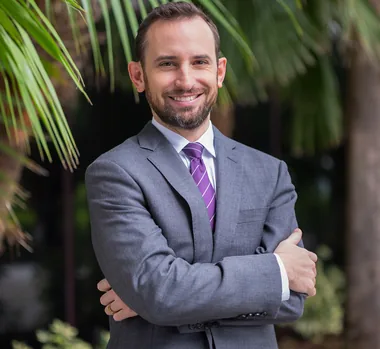 Brett J. Yonon Senior Trial Attorney Selected to Florida Super Lawyers in 2024 and 2025. Brett Yonon is who this firm puts on a catastrophic injury or a death in the family, and he has tried those cases to verdict. Full profile →
 -
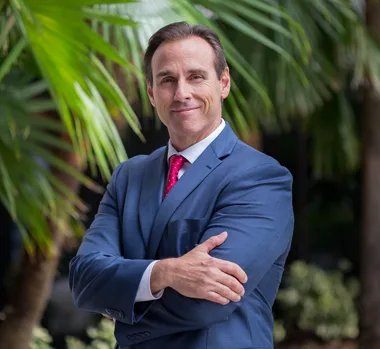 Richard P. Pravato Founding & Managing Attorney Board Certified in Civil Trial Law by The Florida Bar since 2004, and by the National Board of Trial Advocacy. Injury cases exclusively since 1996. Full profile →
How insurance companies handle these claims
These files are handled by a hospital risk department and defense counsel from the day an incident is reported internally, frequently before a family has any idea anything went wrong. The obstetric defense is well resourced and well practiced.
- Cerebral palsy has many causes
- True, and it is stated as though it ended the discussion. Most cerebral palsy is not caused by anything anybody did. The question is narrower: whether this child’s injury was caused by a departure from the standard of care, which is answered from the monitoring strip, the timings and the cord blood gases rather than from the diagnosis. An honest review sometimes concludes it was not, and we say so.
- The records arrive without the tracings
- What comes back is frequently a summary, a narrative and a discharge document, none of which show the half hour that matters. The fetal monitoring tracings, the nursing notes, the order history and the electronic record audit trail all have to be requested specifically. The audit trail also shows whether anything was added to the chart after the fact.
- The delay was clinically reasonable
- The whole case, in one sentence. What is looked at is the interval between a concerning tracing and the response to it, measured to the minute, and what the unit’s own protocols required. A reasonable interval and an unreasonable one look identical in a narrative and different on a strip, which is exactly why the strip is requested rather than the summary.
What a claim can include
Medical care, past and future
Everything already billed, and the surgeries and admissions the treating physicians say are still ahead. In these cases the future dwarfs the past by an order of magnitude.
Home and vehicle modification
Ramps, lifts, bathrooms, doorways and an adapted vehicle, each of which is replaced on a schedule rather than bought once.
The child’s lost earning capacity
An entire working life that will not happen, calculated by an economist rather than estimated. It is one of the largest single figures in the claim and it is routinely left out of an early offer.

Why Wolf & Pravato in Miami
A Miami-Dade claim outside the plan is filed in the Eleventh Judicial Circuit, and the firm has an office on Brickell Avenue rather than a mailing address here. We work with clients in Spanish and English, which in a practice where a notice document and a consent conversation are both evidence is part of the case rather than a courtesy.
The firm is led by a Board Certified Civil Trial lawyer, a certification held by 861 attorneys in Florida against a membership over 109,000. Insurance companies keep their own records of which firms in a county actually try cases, and that record moves an offer further than anything a firm can say about itself.
There is no charge to ask. Our fee comes out of what we recover and nowhere else, and if the answer is that you do not have a case, that is the answer you will get.
Miami birth injury questions
How do I know whether something went wrong during my delivery?
Usually from the fetal monitoring record rather than from anything anyone said at the time. It shows whether the baby was in distress, for how long, and how long it took anyone to act on it. Obtaining the complete record, including the tracings rather than the summary, and having it reviewed by a physician in the relevant specialty is the only reliable way to answer the question. Florida requires that review before a claim can be filed in any event.
The paperwork was all in English and I did not follow much of it.
That is worth examining rather than accepting. Consent is a discussion rather than a signature, and the NICA notice is a document a patient has to actually receive. Whether an interpreter was used is something the record should show, and a gap between what was said, what was understood and what a form states is a real issue. Bring us anything you signed.
Our records came from three different places and none of them match.
That is normal here and it is not evidence of anything by itself. Prenatal care, delivery and neonatal care are frequently held by three organizations, and no single file shows the sequence. Assembling them into one timeline is most of the early work in these cases, and it is usually where the answer becomes visible rather than in any one document.
If NICA applies, can we still sue?
Usually not against those directly involved in labor, delivery and immediate resuscitation, because the plan is an exclusive remedy where it applies. The statute preserves a civil action where there is clear and convincing evidence of bad faith, malicious purpose, or willful and wanton disregard, and that suit must be brought before and instead of accepting a NICA award.
Is cerebral palsy always a birth injury?
No, and it is important to say so plainly. Cerebral palsy has many causes, a number of which have nothing to do with the care delivered. Establishing that a particular injury was caused by a departure from the standard of care requires the records and a qualified expert, not an assumption.
The questions that come up on every kind of claim, deadlines, fees, recorded statements and fault, are answered on our Florida injury claim FAQ.
More in Miami
Miami Personal Injury Lawyer
Everything we handle in Miami-Dade County, and where our office is.
View →Miami Swimming Pool Accident Lawyer
Florida swimming pool drowning and injury lawyers.
View →Miami Drowning Accident Lawyer
Florida drowning and near-drowning lawyers.
View →Miami Airbnb Injury Lawyer
Hurt at a Florida Airbnb or VRBO.
View →
Tell us what happened
A lawyer will listen, tell you what Florida law does with those facts, and be straight with you about whether it is worth bringing. We are at 1111 Brickell Avenue, 11th Floor, Miami, FL 33131.