
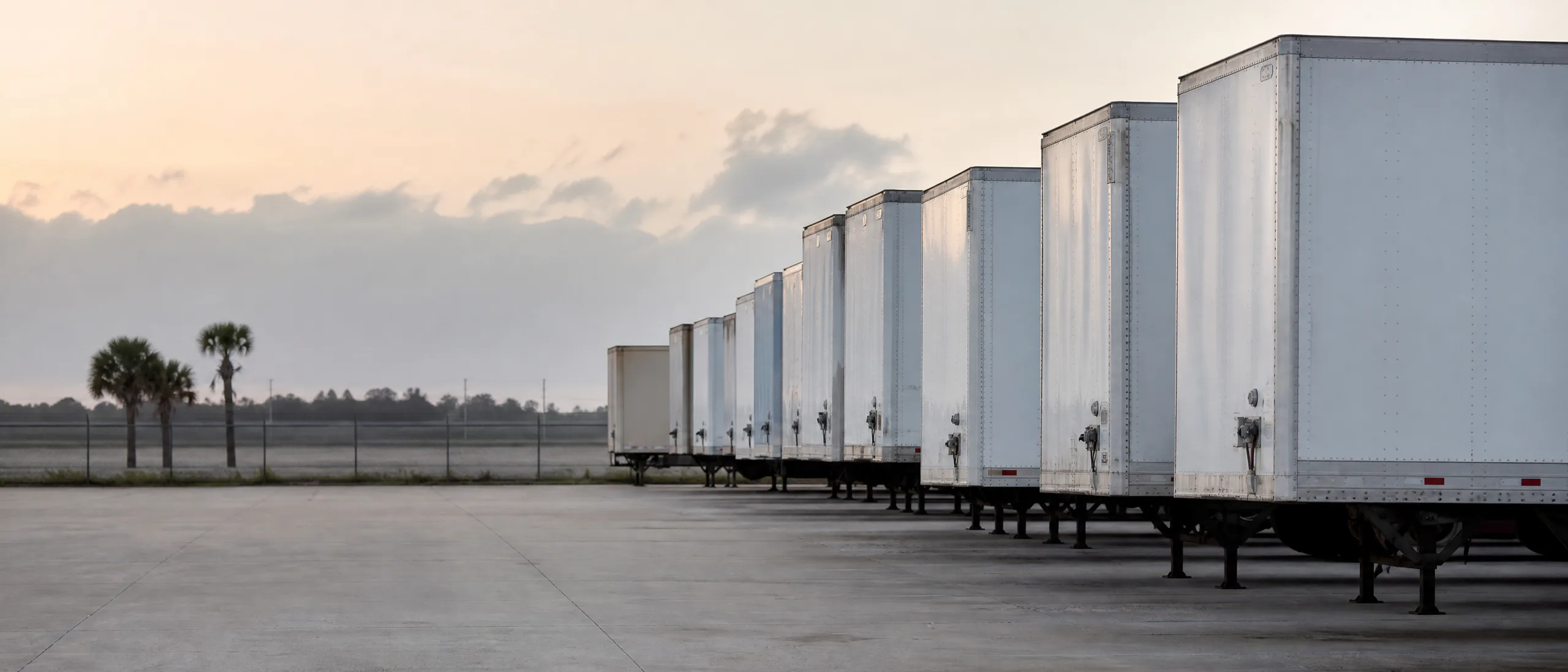
Miami Truck Accident Lawyer
A loaded truck causes injuries a car cannot, and the records proving why are overwritten fast. We move on them first. We can take it from here. Call 844-643-7200 for a free consultation. You pay us nothing unless we win. Our Miami personal injury lawyers have taken these cases across Miami-Dade County since 1993.
Truck Accident claims in Miami
A trucking company sends its own adjuster and investigator to a serious crash, often the same day, and the electronic records showing what the truck was doing start being overwritten within days. In the meantime you are looking at surgery you did not plan for, a paycheck that stopped, and a vehicle you cannot replace. Getting to those records before they are gone is our job, and it starts the day you call.
Container and air-freight traffic feeds onto the Palmetto and I-95 alongside ordinary commuter volume, and the carriers running it are frequently national operations with their own investigators on scene the same day. By the time an injured person is discharged, one side has a complete file. Federal records, including electronic logs and maintenance history, can be lawfully destroyed on a schedule as short as six months.
A Miami truck claim is brought against the carrier as well as the driver, and often against a trailer owner, a loader or a freight broker too. The records that decide it are federal: duty status logs kept six months, engine data, and the driver qualification file. Most claims arising on or after March 24, 2023 carry a two-year deadline.
What to do after a truck accident in Miami
- Get the carrier name and the DOT number, not just the driver. The door of the tractor carries a company name and a US DOT number, and the trailer often belongs to somebody else again. Photograph both. The driver is rarely the party that pays, and the difference between naming the right carrier in week one and finding it in month four is usually the difference between an intact file and a rebuilt one.
- Ask the officer for the crash report number before you leave. A commercial vehicle crash draws a longer investigation than a car crash, and sometimes a separate commercial vehicle enforcement unit. The report will list the carrier, the trailer, the insurer and any citation, and it fixes a date that several federal retention clocks then run from.
- Photograph the trailer, the placards and the load. The trailer number, any hazardous material placard, the way the load sat and whether it had shifted. A tractor is usually back in service within days and a trailer can be interstate the same night. What you photograph at the scene is frequently the only record of how that truck was actually loaded.
- See a doctor even if you walked away. A loaded tractor-trailer transfers force a car does not, and the injuries that matter often present two or three days later as numbness, headaches or a shoulder that will not lift. A gap between the crash and the first visit is the single most common argument a carrier makes about how badly somebody was hurt.
- Say nothing recorded to the carrier or its adjuster. A trucking company often has an adjuster and an investigator working the same day, sometimes at the scene. They will be courteous and they will ask for a recorded statement early, while nobody yet knows the extent of the injury. You have no obligation to give one, and we take that call from the day you hire us.
Where these happen in Miami
Miami-Dade is a port and airport county, so a large share of its truck traffic is container drayage and air cargo rather than long-haul interstate freight. That changes which records exist, because a short-haul local driver may be exempt from some logging requirements and the timeline has to be built from gate and terminal records instead.
-
PortMiami and the tunnel approaches
Container traffic moving between the port, the tunnel and the westbound expressways, on a schedule set by vessel calls rather than by traffic.
- Drayage runs where the same tractor makes several trips a day
- Terminal gate systems that timestamp every entry and exit, which becomes the duty timeline when logs are thin
- Chassis and trailer equipment owned by a third party, which adds a separate maintenance record and a separate defendant
-
The Palmetto and the Dolphin
SR 826 and SR 836 carry freight and commuter traffic through the same weaving sections, and the merges are short.
- Rear-end collisions at the back of stopped traffic, where an eighty-thousand-pound vehicle needs the length of a football field to stop
- Blind-spot collisions during lane changes across a weave
- Rollovers on the connector ramps between the two expressways
-
The airport cargo ring and Hialeah
Air freight and warehouse traffic on NW 12th Avenue, Okeechobee Road and the industrial grid north of the airport, where trucks share main roads with everything else.
- Okeechobee Road, which mixes heavy freight with local traffic and has a long crash history
- Loading in yards rather than at terminals, with no independent record of how a trailer was secured
- Delivery vehicles over 10,000 pounds, which carry commercial coverage people do not expect
-
Krome Avenue and the agricultural south
Produce and aggregate hauling on two-lane roads with no median, where a head-on has nothing to absorb it.
- Two-lane roads carrying vehicles built for divided highways
- Harvest-season schedules that push drivers to the edge of their hours
- Long distances to a trauma center, which is why the medical record starts later than the crash

What the state recorded in Miami-Dade County
| Crashes | 8,817 | about 24 a day, 19% of the Florida total |
|---|---|---|
| People killed | 15 | 0.2% of those crashes |
| People hurt | 1,295 | 15 for every 100 crashes |
The state counts injuries to everyone in a commercial vehicle crash, not just the other driver, and each of them claims against the same policy.
What causes them
- A load that was too heavy, badly distributed or not properly secured before the truck left the yard
- Brakes out of adjustment, which is the most common violation found in roadside inspections nationally
- Tires run past their service life on long Florida heat cycles
- A driver who should never have been hired, with a record the carrier could have pulled in an afternoon
- Speed that was legal for a car and wrong for eighty thousand pounds on wet pavement
The injuries we see, and what each one turns on
Brain injury
A brain injury does not require losing consciousness and a normal CT does not rule one out. What follows shows up in memory, concentration, sleep and temper, and it is usually the people around somebody who notice before they do. These claims are proved with neuropsychological testing and treating records rather than with the scan taken on the day.
Crush and orthopedic injuries
Pelvis, femur, tibia and complex joint fractures that need hardware, then a second operation to remove or revise it. The first settlement offer usually arrives before anybody has said out loud that a second operation is coming, and it is priced on the bills that exist rather than the ones that will.
Internal injuries
Organ damage and internal bleeding, which is why a commercial vehicle crash goes to a trauma center rather than an emergency room. Some of it is not apparent at the roadside and is found only on imaging hours later.
What Florida law requires you to prove
The federal rules that decide most of these cases
Interstate carriers run under the Federal Motor Carrier Safety Regulations, and that is the practical difference between a truck case and a car case. A driver may not drive more than 11 hours after 10 consecutive hours off duty, and may not drive at all beyond the 14th hour of a shift, under 49 CFR § 395.3. Carriers must keep records of duty status and the supporting documents behind them for six months under 49 CFR § 395.8(k), which is the clock that decides whether a case is provable.
Who can be held responsible besides the driver
The carrier answers for its driver, and it can also answer for its own decisions: hiring somebody it should not have, keeping them after it knew, training that did not happen, maintenance that was deferred. The trailer owner, the company that loaded it and the broker that arranged the freight can each be separate defendants, which matters because a single policy is often not enough for a catastrophic injury.
The deadlines and the coverage floor
Most Florida negligence claims arising on or after March 24, 2023 carry a two-year limitation period under Fla. Stat. § 95.11. Fault is shared under Fla. Stat. § 768.81, and a person found more than 50 percent at fault recovers nothing. Interstate freight carriers must hold at least $750,000 in liability coverage under 49 CFR § 387.9, and considerably more for some hazardous loads.
The full statutory detail, and the parts that differ by claim type, sit on our statewide truck accident page rather than being restated in every market.
How we prove it in Miami-Dade County
A Miami-Dade truck case is won out of documents rather than out of the police report, and the documents live with the carrier, the terminal and the broker.
- The crash report naming the carrier, the trailer and the insurer, which fixes the date the federal clocks run from
- Records of duty status and supporting documents, retained six months under the federal rules
- Terminal and port gate records, which timestamp a drayage driver even where a short-haul exemption applies
- Engine control module data for speed, braking and throttle in the seconds before impact
- The driver qualification file, the pre-employment check and the training records
- Maintenance and inspection history for both tractor and trailer, and the carrier roadside inspection record
- Bills of lading and weight tickets, which show the load and who put it there
- Camera footage from terminals, warehouses and businesses along the route, generally overwritten within weeks
Several of those records belong to companies that are not the carrier, which is why the preservation letters go out to more than one address in the first week. A broker or a trailer owner has no reason to keep anything about a crash it was not told about.
Who would handle your case
Being hurt in Miami is hard enough without working out the legal side on your own. The trial lawyers below have handled truck accident claims across Florida since 1993, and one of them will take yours from the first call to the last check. They will tell you what your case is worth and why, and they will be straight with you about the parts that are hard.
-
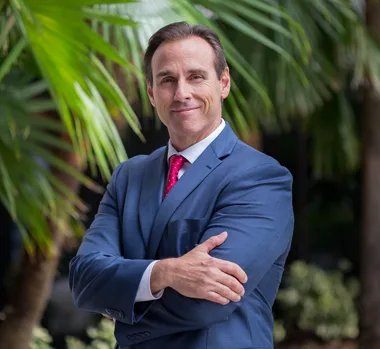 Richard P. Pravato Founding & Managing Attorney Board Certified in Civil Trial Law by The Florida Bar since 2004, and by the National Board of Trial Advocacy. Injury cases exclusively since 1996. Full profile →
 -
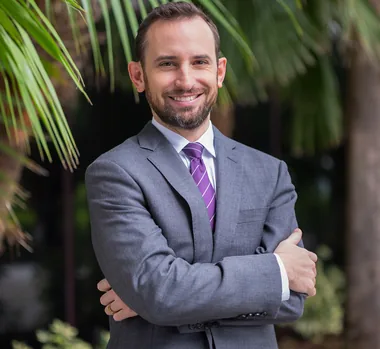 Brett J. Yonon Senior Trial Attorney Selected to Florida Super Lawyers in 2024 and 2025. Brett Yonon is who this firm puts on a catastrophic injury or a death in the family, and he has tried those cases to verdict. Full profile →
How insurance companies handle these claims
A trucking insurer is not the carrier that handles fender benders. It is a commercial file, often with counsel assigned early, and the people running it do this work every day.
- The logs and the electronic data quietly age out
- Duty status records have a six-month retention floor and engine data can be overwritten as the vehicle keeps running. A preservation letter goes out naming the specific records, the tractor and the trailer, and it goes out before anybody repairs the truck. Sent early it is routine. Sent late it becomes an argument about what was destroyed and when.
- The offer arrives before anybody knows what the injury is
- An early number is priced on the bills that exist in month one, and it is often made while somebody is still deciding whether they need surgery. Nothing is signed until the treating doctors have said where this settles, because a release cannot be reopened when the second operation is scheduled.
- Fault is moved onto you by degrees
- You were in the blind spot, you braked hard, you changed lanes. Under Florida comparative fault every percentage point they move is money off the claim, and past 50 percent it is the whole claim. Scene photographs, the engine data and an independent reconstruction are what answer it, and all three depend on how early the work started.
What a claim can include
Lost income and lost earning capacity
Wages missed, and separately what somebody can no longer earn. A person who returns to work in a lighter role at less money has a loss that a wage statement does not show on its own.
Pain, and what daily life has become
Sleep, mobility, the things somebody used to do without thinking about them. It is proved with the account of the people around the injured person as much as with records.
Life care costs after a catastrophic injury
Equipment, home modification, attendant care and the replacement schedule for any of it. A life care plan prepared by a professional is what turns that from an argument into a number.
What we have recovered
Verified matters this firm has handled on truck accident claims. Figures are gross recoveries, before attorney fees, costs and medical liens come out of them.
Our client was a passenger in a work truck on a private dirt road owned by the company.
Settlement on the eve of trialEvery verdict and settlement we publish, with the press coverage for the ones that were reported. No result predicts another case: every claim turns on its own facts, its own evidence and the insurance actually available.

Why Wolf & Pravato in Miami
A Miami-Dade truck case is filed in the Eleventh Judicial Circuit at the Miami-Dade County Courthouse, and that is the courthouse this office works in. What a commercial carrier offers to settle depends in part on the venue, because insurers keep records of which firms in a county actually try cases.
The firm is led by a Board Certified Civil Trial lawyer, a certification held by 861 attorneys in Florida against a membership over 109,000. Insurance companies keep their own records of which firms in a county actually try cases, and that record moves an offer further than anything a firm can say about itself.
There is no charge to ask. Our fee comes out of what we recover and nowhere else, and if the answer is that you do not have a case, that is the answer you will get.
Miami truck accident questions
The truck had a port container on it. Does that change who I claim against?
Usually it adds parties rather than changing them. The tractor may belong to one company, the chassis to a leasing company, the container to an ocean carrier, and the freight may have been arranged by a broker. Each can have its own policy and its own records. For a catastrophic injury that matters, because a single trucking policy is often not enough on its own.
The driver only runs local routes. I was told there are no logbooks.
There may not be duty status records in the usual form, because a short-haul driver working inside a limited radius can be exempt from some of the logging requirements. That is not the end of the timeline. Terminal gate records, dispatch records, tolls, fuel purchases and delivery timestamps rebuild a day fairly precisely, and those come from several sources at once.
How soon does someone need to look at the truck itself?
As soon as possible, and it is the one thing that cannot be recovered later. The brakes, the tires and the way a load was secured are physical facts that stop existing when a vehicle is repaired or a trailer is reloaded. Everything else in a truck case is paper and can be pursued in discovery; the vehicle cannot.
Who can be held responsible in a Florida truck accident?
Often more than the driver. The motor carrier, the company that loaded the trailer, a maintenance contractor, a freight broker and the vehicle or parts manufacturer can each carry a share. Finding every responsible party matters because commercial policies are layered and the driver’s own policy is rarely the largest one available.
The trucking company offered to settle quickly. Should I take it?
Be careful. An early offer usually arrives before anyone knows the full extent of your injuries, and accepting it ends the claim permanently. It also arrives before the carrier has produced a single log or maintenance record. An offer made that early is priced on what you do not yet know.
The questions that come up on every kind of claim, deadlines, fees, recorded statements and fault, are answered on our Florida injury claim FAQ.
More in Miami
Miami Personal Injury Lawyer
Everything we handle in Miami-Dade County, and where our office is.
View →Miami Boat Accident Lawyer
Florida boat, jet ski, parasailing and watercraft accident lawyers.
View →Miami Nursing Home Abuse Lawyer
Florida nursing home abuse and neglect lawyers.
View →Miami Catastrophic Injury Lawyer
Florida catastrophic injury lawyers.
View →
Tell us what happened
A lawyer will listen, tell you what Florida law does with those facts, and be straight with you about whether it is worth bringing. We are at 1111 Brickell Avenue, 11th Floor, Miami, FL 33131.