

Miami Catastrophic Injury Lawyer
An injury this serious does not end when the hospital discharges you. It sets the terms for the rest of your life. We can take it from here. Call 844-643-7200 for a free consultation. You pay us nothing unless we win. Our Miami personal injury lawyers have taken these cases across Miami-Dade County since 1993.
Catastrophic Injury claims in Miami
The insurer will make an early offer that looks large next to the bills you have seen so far. Meanwhile nobody has costed the surgeries still ahead, the equipment, the changes the house needs, or the work you will never do again. Putting a real number on decades rather than months is our job, and we start the day you call.
Miami-Dade produces the highest volume of severe trauma in the state, from the expressway network, from high-rise construction and from heavy industry inside a metropolitan county. Serious injuries go to Ryder Trauma Center at Jackson Memorial, whose first-hours record documents severity precisely and sits on a retention schedule that rewards asking early. Jackson is operated by a public trust, which matters: a claim about the care itself is capped and carries notice requirements, while a claim about whoever caused the injury is not. Several of the county’s largest employers and its transit system are public bodies too, so the notice and cap question is asked at the outset rather than discovered later.
Miami-Dade catastrophic injury claims are filed in the Eleventh Judicial Circuit. Serious trauma runs to Ryder Trauma Center at Jackson Memorial, which is operated by a public trust, so a claim about the care itself is capped and carries notice requirements the injury claim does not.
What to do after a catastrophic injury in Miami
- Do not let anybody settle anything yet. Offers arrive early in these cases and they arrive while nobody knows the outcome. A spinal cord injury has not declared itself at three weeks, an amputation has not been through revision surgery, and a burn has not been through grafting. A release signed now cannot be reopened when the picture becomes clear, and in this practice the gap between the early number and the real one is the widest on this site.
- Keep every receipt, from the first day. Parking at the hospital, the hotel near it, the flights for family, the wheelchair hired, the ramp built, the door widened, the childcare paid for. These add up to a great deal and almost nobody keeps them, because in the first weeks nobody is thinking about a claim. Start a folder or a photo album on a phone and put everything in it.
- Photograph the home before it is adapted. Steps, doorway widths, the bathroom, the height of everything. Once a house is adapted there is no record of what it was, and the cost of adapting it is part of the claim. The same applies to a vehicle: photograph it before it is replaced.
- Write down what a normal day used to be. What they did for work, what they did on a Saturday, who they cared for, what they had planned. It sounds sentimental and it is evidence: the loss in these cases is measured against a life, and the detail of that life is only available from the people who lived it. Write it down early, because it gets harder to remember accurately as the new normal takes over.
- Get the treating team talking to one another. A catastrophic injury is usually managed by several specialists who do not speak to each other, and the claim needs one coherent picture rather than five partial ones. Somebody has to gather it. That is work a firm does, and starting it early is what makes a life care plan credible later.
Where catastrophic injuries happen in Miami
Miami-Dade produces the highest volume of severe trauma in the state, and it comes from the roads, the ports and the construction.
-
The expressway network
Where speed and density combine to produce the worst outcomes.
- The Palmetto, the Dolphin and I-95, where closing speeds are unforgiving
- Heavy vehicles serving the port and the airport
- Motorcycle and scooter riders in dense traffic
- Pedestrians struck at speed on roads built for cars
-
High-rise construction
A county building vertically, where a fall is a fall from height.
- Falls through unguarded openings and from formwork
- Crane, hoist and material handling failures
- Crush injuries from loads that were not secured
- A developer, a general contractor and subcontractors, each separately insured
-
Trauma care, and who operates it
Ryder Trauma Center at Jackson Memorial takes the serious injuries, and its status matters.
- A first-hours record that documents severity precisely
- Jackson is run by a public trust, so a claim about the care is capped
- Notice requirements that apply to the care claim and not to the injury claim
- Records on a retention schedule, which is a reason to request early
-
The port, the airport and industrial work
Heavy industry inside a metropolitan county.
- Machinery, lifting and load failures
- Electrocution and arc flash
- Fires and explosions, including from fuel and gas equipment
- Employers, contractors and equipment manufacturers as separate defendants

What causes them
- Motorcycle and scooter riders struck by a vehicle that did not see them
- Pedestrians and cyclists struck at speed on a road with no separation
- Falls from height on a construction site, including through an unguarded opening
- Machinery and equipment failures at work and on industrial premises
- Electrocution and arc flash injuries
- Fires, explosions and scalding, including from propane and gas equipment
The injuries this practice exists for
Amputation and limb loss
Prosthetics are replaced every few years, cost more with each generation of technology, and are not the whole of it. Phantom pain, skin breakdown at the socket, the load transferred to the remaining limb and the revision surgeries that follow are all part of what is being valued.
Severe burns
Among the most painful injuries there are and among the longest to treat. Grafting, contracture release and reconstruction continue for years, and scarring is a separate head of loss under Florida law rather than being folded into pain and suffering.
Multiple trauma
Several serious injuries at once, where no single one would define the case but the combination ends independence. These are the hardest to value because each specialist reports on their own part, and somebody has to assemble the whole picture before anybody can say what it is worth.
What Florida law requires you to prove
The deadline and the share of the blame
Most claims from an incident on or after March 24, 2023 carry two years under Fla. Stat. § 95.11. Fault is divided under Fla. Stat. § 768.81, and since 2023 somebody found more than half responsible recovers nothing at all. In a case worth this much, a few percentage points of blame is worth a great deal of money, which is why liability is fought as hard as damages.
Finding enough coverage to matter
The defining problem in this practice is not proving the case, it is finding policies large enough to pay it. That means every possible defendant, every layer of excess coverage, and the underinsured motorist coverage on the injured person’s own side. The detail sits on our Florida catastrophic injury page.
The full statutory detail, and the parts that differ by claim type, sit on our statewide catastrophic injury page rather than being restated in every market.
How we prove it in Miami-Dade County
The proving is rarely the hard part in Miami-Dade. Finding coverage large enough to pay the claim is.
- The trauma record from the first hours, requested early given retention schedules
- Every possible defendant identified, including employers, owners, contractors and manufacturers
- A written coverage disclosure from each, including excess layers
- Underinsured motorist coverage on your own side
- Whether a public body is involved, which changes the notice position entirely
- Photographs of the home and vehicle before either is adapted
- Every receipt from day one, including travel, equipment and paid help
- The treating specialists gathered into a single coherent picture
Establish early whether any defendant is a public body. In this county the trauma center, the transit system and several of the largest employers are, and the notice and cap position changes the entire shape of a case.
Who would handle your case
Being hurt in Miami is hard enough without working out the legal side on your own. The trial lawyers below have handled catastrophic injury claims across Florida since 1993, and one of them will take yours from the first call to the last check. They will tell you what your case is worth and why, and they will be straight with you about the parts that are hard.
-
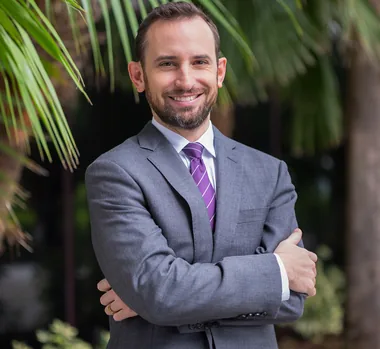 Brett J. Yonon Senior Trial Attorney Selected to Florida Super Lawyers in 2024 and 2025. Brett Yonon is who this firm puts on a catastrophic injury or a death in the family, and he has tried those cases to verdict. Full profile →
 -
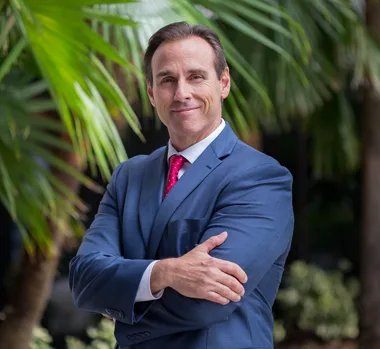 Richard P. Pravato Founding & Managing Attorney Board Certified in Civil Trial Law by The Florida Bar since 2004, and by the National Board of Trial Advocacy. Injury cases exclusively since 1996. Full profile →
What the insurer does in a catastrophic case
A catastrophic claim is handled differently from the first day, because the carrier knows what it is worth before you do.
- The policy limits are all there is
- Sometimes true and frequently the beginning rather than the end. There may be an excess layer above the primary policy, an employer vicariously liable, a contractor, a vehicle owner, a product manufacturer, or underinsured motorist coverage on your own side that nobody mentioned. A written coverage disclosure is requested rather than a figure quoted on a call.
- These future costs are speculative
- They are projections, which is not the same thing. A life care plan is built by a professional from what the treating doctors say is needed, priced at what those items cost, and brought to a present figure by an economist. It is evidence, and it is met with evidence rather than with the word speculative.
- Surveillance, and what it is for
- In a case this size there is usually surveillance, and it is looking for one good afternoon to play to a jury. It is not a reason to live smaller than the doctors allow. It is a reason to be exact with every doctor about what you can and cannot do, so the record and the footage tell the same story.
What a claim can include
Lost earning capacity
The difference between the working life somebody had and the one now available to them, established with vocational and economic evidence rather than asserted.
Home and vehicle adaptation
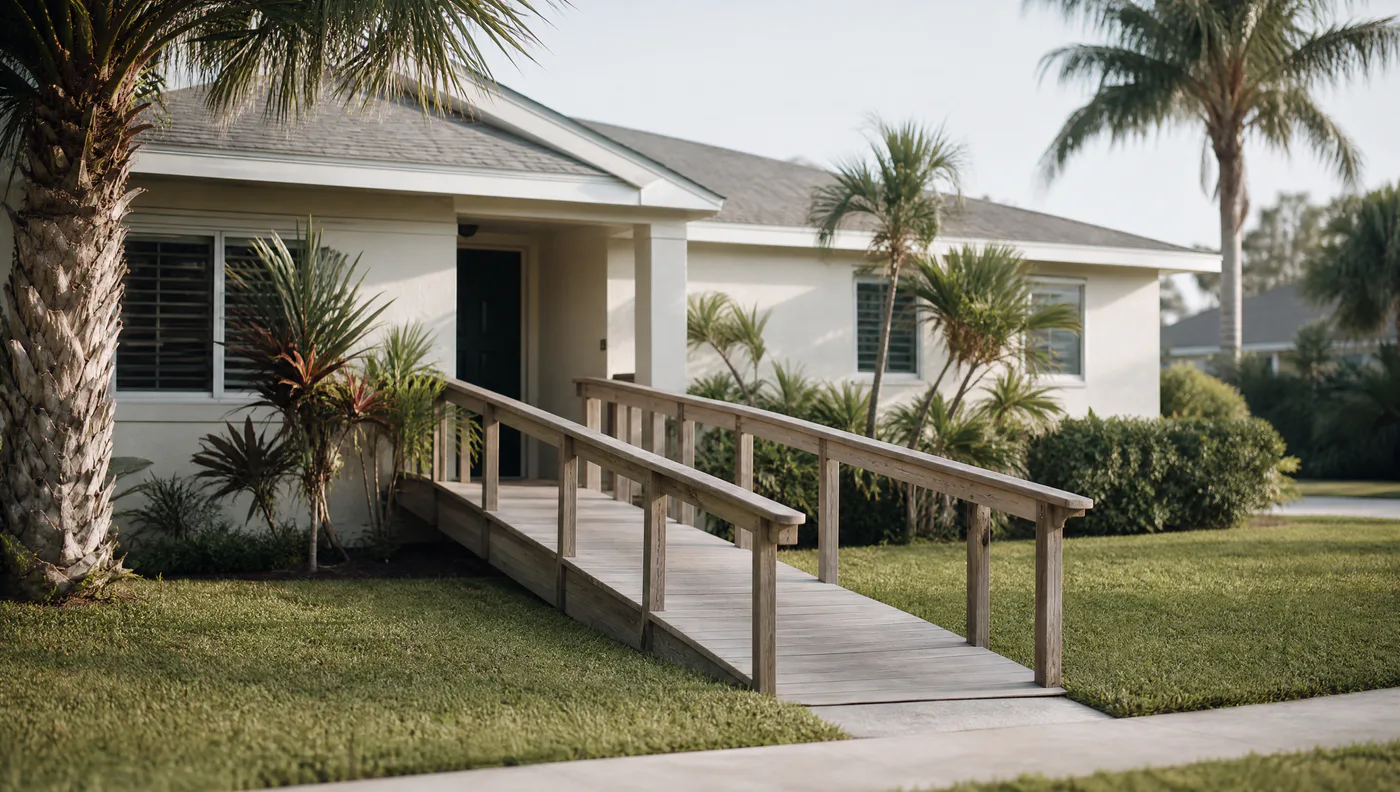
Ramps, widened doorways, bathrooms, lifts and an adapted vehicle, including the replacement cycle rather than the first purchase alone.
Attendant care, including care given by family
Care a relative provides has a value, and it is claimable. Families routinely leave it out because it does not feel like a cost, and over a lifetime it is one of the biggest.
Why Wolf & Pravato in Miami
A Miami-Dade catastrophic injury claim is filed in the Eleventh Judicial Circuit at the Miami-Dade County Courthouse, and the firm has an office on Brickell Avenue rather than a mailing address here. Where the case turns on assembling a life care plan and finding every available policy, that work is local and it starts immediately.
The firm is led by a Board Certified Civil Trial lawyer, a certification held by 861 attorneys in Florida against a membership over 109,000. Insurance companies keep their own records of which firms in a county actually try cases, and that record moves an offer further than anything a firm can say about itself.
There is no charge to ask. Our fee comes out of what we recover and nowhere else, and if the answer is that you do not have a case, that is the answer you will get.
Miami catastrophic injury questions
Does it matter that he was treated at Jackson?
It matters if any part of the claim is about the care rather than about the injury. Jackson is operated by a public trust, which means a claim against it carries written notice requirements and a statutory cap on what a public body pays. A claim against whoever caused the injury is unaffected by that. Establishing which of the two you have comes first.
How long does a case like this take?
Longer than most, and the reason is medical rather than legal. The value depends on what the outcome actually is, and that is not clear for a year or more after a spinal cord injury, an amputation or a severe burn. Building a life care plan before the picture stabilizes produces a number nobody can defend. The claim is filed within the deadline regardless.
The insurance policy is too small to cover this. Is that the end?
It is the beginning of the search rather than the end. Umbrella and excess layers, uninsured and underinsured motorist coverage across household vehicles, commercial policies, and additional responsible parties can all add coverage. In some circumstances an insurer that mishandles a claim exposes itself beyond the policy limit.
How long do these cases take?
Longer than smaller cases, and for a reason worth accepting. The claim cannot be properly valued until the medical picture stabilizes enough for a life care plan to be credible. Settling before that point is the single most expensive mistake available in a catastrophic case.
The questions that come up on every kind of claim, deadlines, fees, recorded statements and fault, are answered on our Florida injury claim FAQ.
More in Miami
Miami Personal Injury Lawyer
Everything we handle in Miami-Dade County, and where our office is.
View →Miami Uber and Lyft Accident Lawyer
Florida Uber and Lyft accident lawyers.
View →Miami Traumatic Brain Injury Lawyer
Florida traumatic brain injury lawyers.
View →Miami Swimming Pool Accident Lawyer
Florida swimming pool drowning and injury lawyers.
View →
Tell us what happened
A lawyer will listen, tell you what Florida law does with those facts, and be straight with you about whether it is worth bringing. We are at 1111 Brickell Avenue, 11th Floor, Miami, FL 33131.