
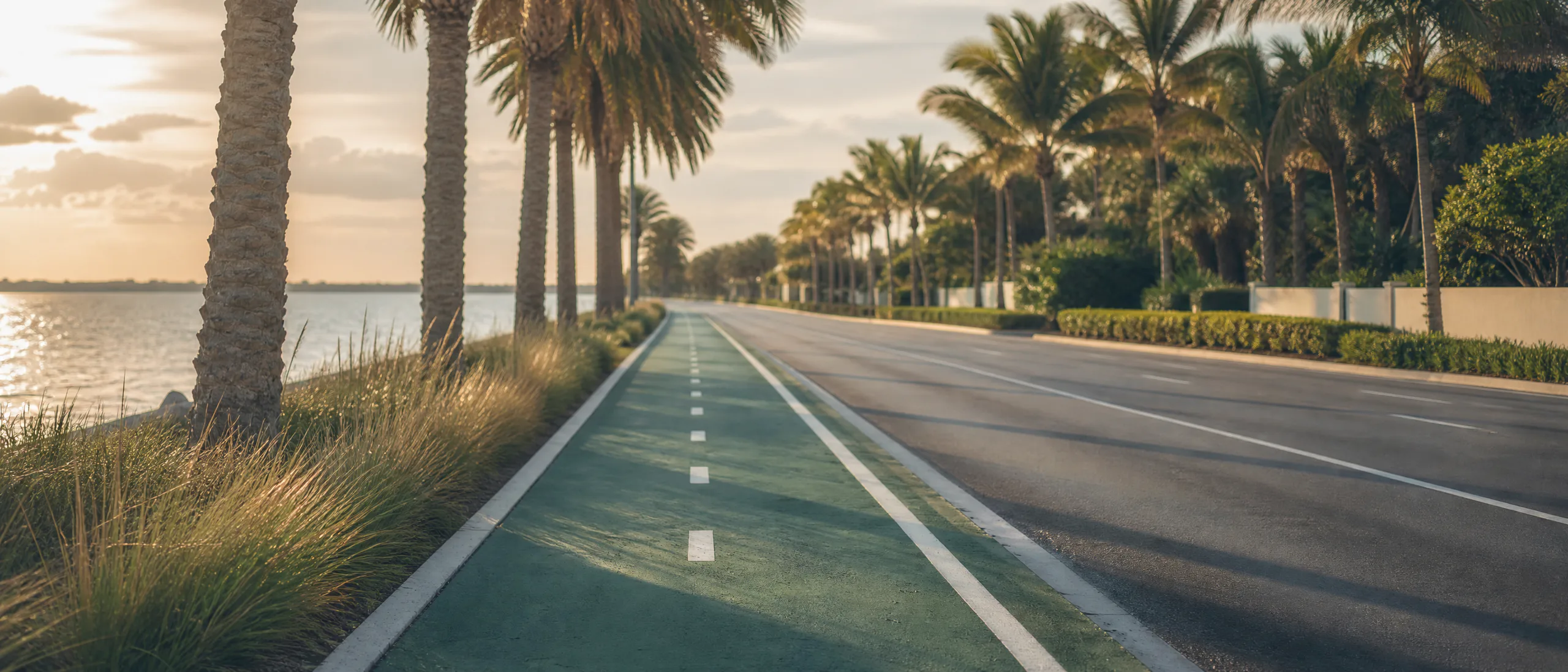
Fort Lauderdale Bicycle Accident Lawyer
A driver passed too close or opened a door into the lane, and now you have broken bones, a written-off bike and time off you cannot afford. We can take it from here. Call 954-522-5800 for a free consultation. You pay us nothing unless we win. Our Fort Lauderdale personal injury lawyers have taken these cases across Broward County since 1993.
Bicycle Accident claims in Fort Lauderdale
The driver will say you came out of nowhere, and their insurer will start from the idea that a bicycle did not belong on that road. Meanwhile you are paying for the emergency room, missing work, and finding out your own auto policy may be what covers you. Sorting out which policy pays is our job, and it starts the day you call.
A cyclist on the road in Florida has the rights and the duties of a driver under section 316.2065, and a motorist passing one has to leave at least three feet. Neither is well observed on A1A, on Federal Highway or on the bridges over the Intracoastal, which is where the collisions we take mostly happen. The insurer's first move is almost always to argue the rider was somewhere they should not have been. What answers it is road position evidence, the damage pattern and any camera footage from the businesses along those routes, which is usually gone within two weeks.
A Broward bicycle claim is decided by road position: where the rider was entitled to be and what the passing driver owed them. Florida gives a rider the rights and duties of a driver, and allows leaving a bike lane to avoid a hazard. The evidence that settles it is the bicycle, the damage geometry and the camera footage along these roads, which is gone within about two weeks.
What to do after a bicycle accident in Fort Lauderdale
- Keep the bicycle and the helmet exactly as they are. Do not have the bike repaired, do not replace the wheel, and do not throw the helmet away because it looks fine. The frame, the fork, the wheel and the components record the direction and the force of the impact, and a cracked helmet is physical proof of a head strike that an emergency department may not have documented. Photograph everything before it is touched.
- Get witness names, and ask which riders had cameras. The driver gives the officer the only account while the rider is being treated. A single independent witness changes that. On a group ride somebody almost always has a camera running, and those files are overwritten or deleted within days, so the question is worth asking at the roadside rather than the following week.
- Photograph where you were entitled to be. The lane markings, where the bike lane starts and where it ends, the parked cars, the debris, the drain grate, the surface. Road position is the whole argument in most of these cases, and a photograph taken that day settles what a description written a month later cannot. Photograph the intersection from the driver’s approach as well as your own.
- See a doctor even if you got up and rode home. The signature bicycle injuries arrive when somebody goes over the handlebars, and a fractured scaphoid, a cracked collarbone or a shoulder separation is regularly walked off on the day. A brain injury does not need loss of consciousness and a normal scan does not rule one out. A gap between the crash and the first visit is the most common argument made about how badly somebody was hurt.
- Do not take a quick payment for the bicycle. An early check to cover the bike is one of the cheapest things an insurer can do, and it sometimes arrives attached to a release. A release cannot be reopened. Have the property claim handled alongside the injury claim rather than in front of it, and do not sign anything on the strength of a number that only covers a frame.
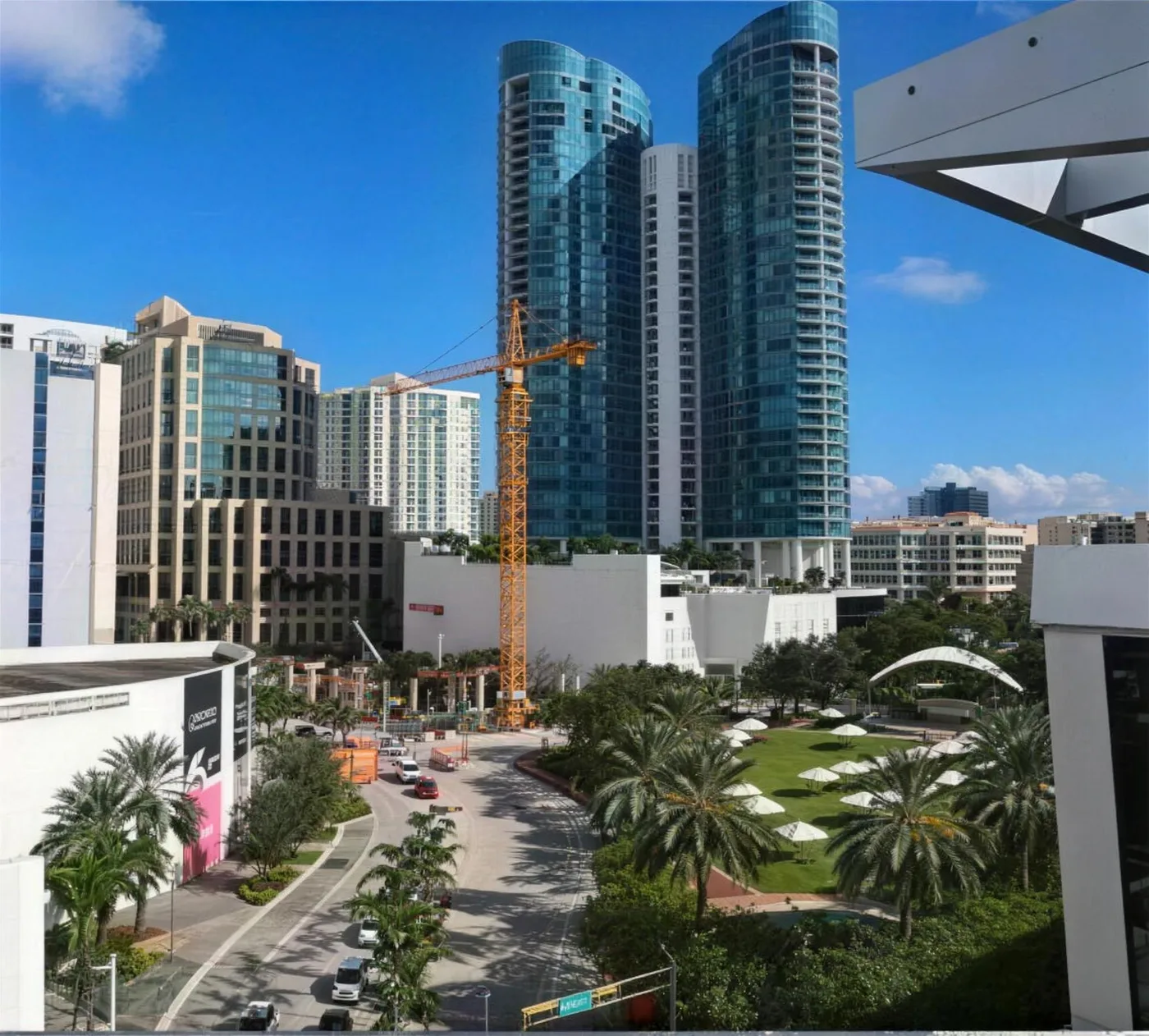
Where these happen in Fort Lauderdale
Broward has one of the worst records in the country for cyclist deaths, and the reason is visible on the roads themselves. Provision for riders here starts and stops, and where it stops is usually where the collision is.
-
Bike lanes that begin and end
A great many Broward main roads carry a marked lane for part of their length and nothing for the rest, which puts a rider into live traffic at a point neither they nor the driver chose.
- Where the striping actually ends, which is on the record with the municipality and is photographable
- Lanes that run out at exactly the junctions where they matter most
- Signage and pavement markings, or the absence of either, at the transition
- Drivers who read the end of a lane as the end of a rider’s right to be there
-
The surface itself
A defect a car crosses without noticing will put a bicycle down, and several of the recurring ones in this county are in the strip riders are told to use.
- Drainage grates with bars running the wrong way, which take a front wheel outright
- Pavement seams, edge drop-offs and utility cuts along the right-hand edge
- Debris and glass that collects in the bike lane and is swept from the traffic lanes
- Road authority maintenance and complaint records, which show what was reported and when
-
Commuting west of I-95
A large part of the riding in this county is transport rather than recreation, done early and late by people getting to work.
- Collisions at dawn and after dark, where lighting on the road is the first question
- Streetlight outage records held by the utility and the municipality
- Wide main roads with driveways every hundred yards and drivers looking only for cars
- Riders whose bicycle is how they earn, which changes what the loss actually is
-
Group riding on the coast
The A1A and beach routes carry organized riding, and a collision in a group produces evidence a solo crash does not.
- Several riders who saw the same event from different positions, which is unusually strong
- Action and helmet cameras, which several riders in any group are running
- Files that are overwritten or deleted within days unless somebody asks that week
- Fault questions between riders as well as with the driver, which need separating early
What causes them
- A driver overtaking a rider and immediately turning right across them, which is the most common serious collision in this practice
- A driver turning left across an oncoming rider, having judged a bicycle to be slower than it was
- Doors opened into a rider’s path from parked cars, valet zones and pickup areas
- Passing too close, where Florida requires a minimum clearance that is widely ignored
- Drivers pulling out of driveways, plazas and side streets having looked only for other vehicles
The injuries we see, and what each one turns on
Why so many of these injuries are to the upper body
A rider struck from the side or stopped abruptly goes over the handlebars and lands on an outstretched hand, a shoulder or a face. That mechanism produces a recognizable set: fractured wrists and scaphoids, broken collarbones, separated shoulders and facial and dental injuries. None of them looks dramatic at the roadside and several of them are missed on the day, which is why the first medical visit matters more than it seems to at the time.
Head and brain injury
A helmet reduces injury and does not prevent it, and a brain injury requires neither losing consciousness nor an abnormal scan. What follows shows up in memory, concentration, sleep and temper, and the people around somebody usually notice first. A cracked or compressed helmet is the clearest physical evidence that the head took a load, which is why it should not be thrown away.
Collarbone, wrist and shoulder
The fractures that end a season and sometimes a career at a trade. Several of them need hardware and then a second operation to remove or revise it, and a wrist that does not heal cleanly affects everything somebody does with that hand for the rest of their life.
What Florida law requires you to prove
A bicycle is a vehicle, and a rider is a driver
Under Fla. Stat. § 316.2065 a person riding a bicycle on a roadway has the rights and the duties of the driver of a vehicle. That is the sentence the whole practice runs on. It means a rider is entitled to be on the road rather than tolerated there, and it also means the rules apply in both directions, which is the part an insurer will press on.
Where a rider has to be, and when they may leave it
The same statute directs a rider traveling slower than other traffic to keep to the right, and to use a bike lane where one is provided. It also recognizes that a rider may move out of it: to overtake, to turn, to avoid a parked vehicle, debris, a surface hazard or a lane too narrow to share safely. An insurer arguing that leaving a bike lane makes a rider responsible is stating a preference rather than the law. What the hazard was, and whether moving was reasonable, is the actual question.
What a passing driver owes, helmets, and the deadlines
Florida requires a driver overtaking a bicycle to pass at a safe distance, with a statutory minimum set out in Fla. Stat. § 316.083. Helmets are required for riders under 16 and are not required for adults, and riding without one does not bar an adult from recovering. Fault is shared under Fla. Stat. § 768.81, where a rider more than 50 percent responsible recovers nothing, and most claims arising on or after March 24, 2023 carry a two-year deadline under Fla. Stat. § 95.11.
The full statutory detail, and the parts that differ by claim type, sit on our statewide bicycle accident page rather than being restated in every market.
How we prove it in Broward County
These cases are built from the bicycle and the road rather than from what anybody says happened, because the rider was being treated while the driver was giving an account.
- The bicycle itself, unrepaired: the frame, fork, wheel and components record the direction and force of the impact
- The helmet, kept even if it looks undamaged, since a crack or a compression is proof of a head strike
- Where the damage sits on the vehicle and at what height, which indicates speed and rider position
- Where the bicycle and the rider came to rest, relative to the lane and the junction
- Photographs of the lane markings, the parked cars, the debris and the grate, taken the same day
- Camera footage from businesses along the route and from other riders, most of it gone within two weeks
- Road authority maintenance and complaint records for the surface or the grate involved
- Streetlight outage records where the collision happened at dawn or after dark
The bicycle is the item people give away fastest, usually because an insurer offers to replace it in week two. Once it has been repaired or scrapped the clearest physical record of the collision has gone with it.
Who would handle your case
Being hurt in Fort Lauderdale is hard enough without working out the legal side on your own. The trial lawyers below have handled bicycle accident claims across Florida since 1993, and one of them will take yours from the first call to the last check. They will tell you what your case is worth and why, and they will be straight with you about the parts that are hard.
-
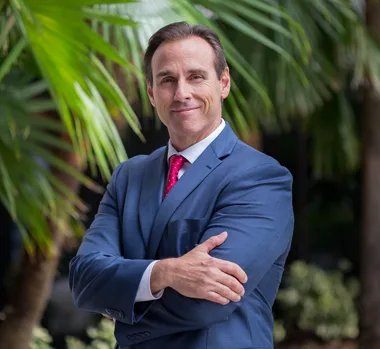 Richard P. Pravato Founding & Managing Attorney Board Certified in Civil Trial Law by The Florida Bar since 2004, and by the National Board of Trial Advocacy. Injury cases exclusively since 1996. Full profile →
 -
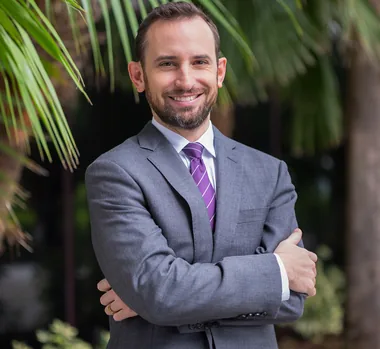 Brett J. Yonon Senior Trial Attorney Selected to Florida Super Lawyers in 2024 and 2025. Brett Yonon is who this firm puts on a catastrophic injury or a death in the family, and he has tried those cases to verdict. Full profile →
How insurance companies handle these claims
Every one of these files opens from the same position: that the rider was somewhere they should not have been. It is worth knowing that in advance, because almost everything an adjuster asks in the first weeks is aimed at it.
- You came out of nowhere
- Answered with physical evidence rather than with a counter-account. Where the impact landed on the vehicle and at what height, where the bicycle and the rider came to rest, sight line photographs taken from the driver’s actual position, and any footage from the corner all establish what was visible and for how long. A driver who did not see a bicycle in front of them is describing a failure to look.
- You were not in the bike lane
- Florida law expressly allows a rider to leave a bike lane to overtake, to turn, or to avoid a parked vehicle, debris, a surface hazard or a lane too narrow to share. The question is what was in the lane and whether moving was reasonable, which is why a photograph of the debris, the grate or the parked car taken on the day is worth more than any argument made later.
- You were not wearing a helmet
- Adults are not required to wear one in Florida and riding without one does not bar a claim. What an insurer may properly argue is that it affected the severity of a head injury specifically, which is an argument about dividing the damages rather than about who caused the collision. It is raised early because it makes riders feel they have already lost.
What a claim can include
Medical care, past and future
Everything already billed and what the treating physicians say is still ahead, including the second operation to remove hardware that nobody mentions in month one.
Lost income and lost earning capacity
Wages missed, and separately what somebody can no longer earn. A wrist or a shoulder that does not recover cleanly ends some trades entirely, which is a loss a pay stub does not show.
Pain, and what daily life has become
Sleep, mobility, work, and riding, which for a lot of people is not a hobby but how they get around and how they stay well. It is proved with the account of the people around the injured person as much as with records.
What we have recovered
Verified matters this firm has handled on bicycle accident claims. Figures are gross recoveries, before attorney fees, costs and medical liens come out of them.
A twenty-year-old was riding his bike through a Plantation crosswalk on an illuminated walk signal when a Broward County Transit bus turned right on red into him and killed him.
Broward County wrongful death settlementOur client, an experienced cyclist, was riding legally in the bike lane approaching the traffic circle at East Camino Real and Royal Palm Way in Boca Raton when an SUV owned by the Royal Palm Improvement Association struck him.
Settlement after suit was filedEvery verdict and settlement we publish, with the press coverage for the ones that were reported. No result predicts another case: every claim turns on its own facts, its own evidence and the insurance actually available.
Why Wolf & Pravato in Fort Lauderdale
A Broward bicycle case is filed in the Seventeenth Judicial Circuit at the Broward County Courthouse, and this office has worked in it since 1993. Insurers open these files assuming a rider was somewhere they should not have been, and the record of the firm holding the file is part of what moves that position.
Richard Pravato has been Board Certified in Civil Trial law by The Florida Bar since 2004. The Bar lists 861 lawyers in the state holding it against a membership over 109,000. What it means in practice is that the other side knows the file can go in front of a jury, and files that can go to trial are priced differently from files that cannot.
The first conversation is free. We are paid out of the recovery or not at all, and if we do not think there is a claim worth bringing we will tell you that rather than take it.
Fort Lauderdale bicycle accident questions
I was hit while cycling and I do not own a car. Who pays my medical bills?
If you own a car, your own PIP pays the first bills even though you were on a bicycle. If you do not, PIP may still be available through a resident relative’s policy. Failing both, the bills go to your health insurance while the claim proceeds against the driver, and the driver’s bodily injury coverage is what ultimately pays. It is worth checking every policy in the household before assuming there is no coverage.
My wheel went into a drain grate and I went over the bars. Is anyone responsible?
Possibly, and it is worth investigating rather than writing off. A grate with the bars running the wrong way is a known hazard, and the authority responsible for the road generally keeps maintenance and complaint records showing what had been reported. What has to be established is who owned and maintained that stretch, since a claim against a public body cannot be filed until written notice has been presented and answered, which takes months on its own.
The bike lane ended and I had to move into traffic.
That helps rather than hurts. Florida law allows a rider to leave or stay out of a bike lane where it is not reasonable to be in it, and a lane that simply stops is the clearest version of that. The striping record and a photograph of where it ends are what establish it. An insurer arguing that being in the traffic lane makes you at fault is stating a preference rather than the law.
I was not wearing a helmet. Does that end my claim?
No. Florida requires helmets for riders under 16; adults are not required to wear one, and choosing not to does not bar a claim. An insurer may argue it affected head injuries specifically, which is a narrower point than they usually suggest and says nothing about who caused the collision.
Does my car insurance cover me on a bike?
Very often yes, and it surprises people. Florida PIP follows the person rather than only the vehicle, so your own policy can pay your first medical bills after a bicycle crash. Uninsured motorist coverage may also apply, particularly in a hit and run.
The questions that come up on every kind of claim, deadlines, fees, recorded statements and fault, are answered on our Florida injury claim FAQ.
More in Fort Lauderdale
Fort Lauderdale Personal Injury Lawyer
Everything we handle in Broward County, and where our office is.
View →Fort Lauderdale Birth Injury Lawyer
Florida birth injury lawyers.
View →Fort Lauderdale Uber and Lyft Accident Lawyer
Florida Uber and Lyft accident lawyers.
View →Fort Lauderdale Traumatic Brain Injury Lawyer
Florida traumatic brain injury lawyers.
View →
Tell us what happened
A lawyer will listen, tell you what Florida law does with those facts, and be straight with you about whether it is worth bringing. We are at 2101 W Commercial Blvd, Suite 1500, Fort Lauderdale, FL 33309.