













Workers' Comp vs. Third-Party Injury Claims for Fort Myers Construction Workers
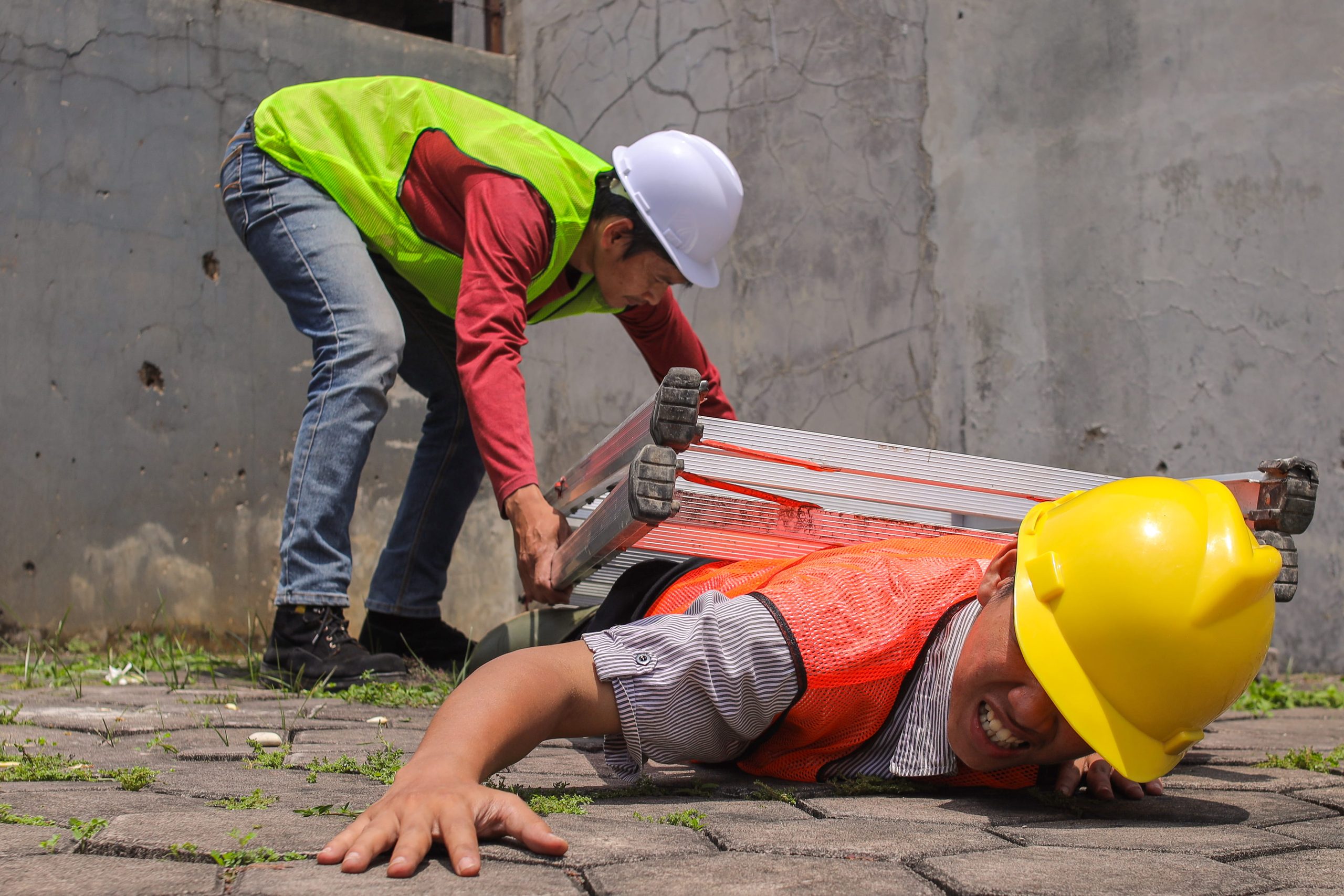
Fort Myers and Lee County have seen sustained construction growth — residential developments, commercial builds, infrastructure projects, and storm recovery work that keep job sites active year-round. That level of activity also means a steady rate of construction site injuries: falls from scaffolding, struck-by accidents involving equipment, electrocutions, trench collapses, and machinery-related trauma that can leave workers with permanent, life-altering injuries.
When a Fort Myers construction worker is hurt on the job, the instinct is to file a workers’ compensation claim and assume that it covers everything. It often does not. Depending on the structure of the job site, the identity of the party whose negligence caused the injury, and the specific circumstances of the accident, a separate third-party personal injury claim may also be available — one that can recover compensation workers’ comp never provides. A Fort Myers personal injury attorney at Wolf & Pravato can help evaluate both pathways. Call 844-643-7200 — pay nothing unless we win.
Why Construction Site Injuries Involve More Legal Options Than Most Workers Realize
Construction sites are uniquely complex legal environments. Unlike a single-employer workplace, a typical job site involves a general contractor, multiple subcontractors, equipment suppliers, material vendors, property owners, and delivery operators — often all working simultaneously in the same space. That complexity creates both the hazards that lead to injuries and the legal framework that may give an injured worker more than one avenue for compensation.
The two systems side by side:
| Factor | Workers’ Compensation | Third-Party Injury Claim |
| Who pays | Employer’s workers’ comp insurer | At-fault third party’s liability insurer |
| Fault required? | No — benefits apply regardless of fault | Yes — negligence of the third party must be established |
| Covers medical expenses? | Yes — authorized treatment | Yes — all documented medical costs |
| Covers full lost wages? | Partial — statutory formula applies | Yes — full past and future lost income if proven |
| Covers pain and suffering? | No | Yes |
| Covers permanent impairment? | Impairment rating benefits only | Full non-economic damages |
| Can you sue your employer? | Generally no — exclusivity applies | Only in narrow exceptions |
The critical insight for Fort Myers construction workers: workers’ compensation and a third-party claim are not mutually exclusive. Pursuing both simultaneously is not only permitted under Florida law — it is often the only way to recover everything the injury has actually cost.
How Florida Workers’ Comp Applies to Construction Sites
Florida’s construction industry operates under a stricter workers’ compensation coverage threshold than most other industries. Under Florida’s construction workers’ comp coverage requirement (§ 440.10), construction employers with one or more employees are required to carry workers’ compensation coverage. This is significantly lower than the four-employee threshold that applies to most non-construction businesses — reflecting the elevated injury risk that comes with construction work.
This means that on most Fort Myers construction sites, workers’ comp coverage should be in place for virtually every worker, regardless of how small the employer.
What Workers’ Comp Covers
For an eligible construction worker, Florida’s workers’ compensation system may provide:
- Medical treatment — Emergency care, hospitalization, specialist treatment, surgery, physical therapy, and rehabilitation for injuries arising out of and in the course of employment
- Temporary disability benefits — A portion of lost wages during the recovery period, subject to Florida’s statutory formula and weekly caps
- Permanent impairment benefits — If the injury results in a lasting physical impairment, benefits based on an assigned impairment rating
- Death benefits — Available to eligible dependents if a construction site injury proves fatal
What Workers’ Comp Does Not Cover
Florida’s workers’ compensation system was designed as a no-fault benefit structure — not a full compensation system. It deliberately excludes:
- Pain and suffering — There is no workers’ comp benefit for physical pain, emotional distress, or loss of enjoyment of life
- Full wage replacement — Disability benefits replace only a portion of pre-injury wages, not the full amount
- Future earning capacity losses — Beyond the impairment rating structure, workers’ comp does not fully account for a career cut short by a serious injury
- Non-economic damages — Disfigurement, psychological trauma, and the impact of permanent disability on daily life are not compensated through workers’ comp
These gaps represent real financial losses that a successful third-party claim may address directly.
Workers’ Comp Exclusivity: What It Means on a Construction Site
One of the most important — and most misunderstood — aspects of Florida workers’ compensation is the exclusivity rule. Under Florida’s workers’ comp exclusivity statute (§ 440.11), workers’ compensation is generally the exclusive legal remedy against an employer for a work-related injury. This means that even if your direct employer was negligent — failed to maintain safe conditions, failed to provide proper equipment, ignored known hazards — you typically cannot sue that employer in civil court.
The exclusivity rule does not extend beyond the direct employer. It does not protect:
- Subcontractors on the same job site who are not your employer
- General contractors who controlled site conditions but did not employ you directly
- Equipment manufacturers whose defective products caused your injury
- Property owners whose negligence contributed to the hazard
- Third-party delivery drivers whose conduct caused the crash or injury
This is where the third-party claim pathway opens. The worker’s own employer is shielded from a civil lawsuit by exclusivity — but every other negligent party on a construction site is not.
When a Third-Party Claim May Be Available
The structure of most Fort Myers construction sites creates multiple potential third-party defendants. Whether any of them are liable depends on the facts of the specific accident, but the following scenarios arise frequently.
A Subcontractor or Independent Contractor Caused the Injury
On a multi-contractor job site, a worker employed by one subcontractor may be injured by the negligence of a worker employed by a different subcontractor. Because those are separate employers, the exclusivity rule does not apply — the injured worker may pursue a third-party claim against the negligent subcontractor’s employer.
This is one of the most common third-party scenarios on Fort Myers construction sites. An electrician employed by one contractor who is struck by falling materials from a scaffolding crew employed by a different contractor has a potential third-party claim against the scaffolding subcontractor — independent of any workers’ comp claim against their own employer.
A Property Owner or General Contractor Created the Hazard
General contractors and property owners who exercise control over job site conditions may face direct negligence liability when their decisions — or failures — created the dangerous condition that caused the injury. A general contractor who ignored repeated safety complaints about an unsecured trench, or a property owner who failed to disclose site-specific hazards, may be liable to injured subcontractor workers even though those workers are not their direct employees.
Defective Equipment or Machinery
Construction sites rely on heavy equipment — cranes, forklifts, aerial lifts, power tools, scaffolding systems. When a piece of equipment fails due to a manufacturing defect, design flaw, or inadequate warning, the manufacturer or distributor of that equipment may bear products liability independent of the employer’s workers’ comp obligation. The worker who was operating or working near the defective equipment when it failed has a potential claim against the equipment’s maker or seller.
A Delivery or Commercial Vehicle on the Site
Construction sites receive regular deliveries — materials, equipment, fuel, concrete. Drivers operating commercial vehicles on or adjacent to the job site who cause injuries through negligent driving are third parties. A cement truck driver who strikes a worker, or a materials delivery driver who causes an equipment collision, is not the injured worker’s employer — their negligence supports a direct personal injury claim.
Common Third-Party Defendants on Fort Myers Construction Sites
Fort Myers’s active construction environment — spanning residential developments in areas like Cape Coral’s adjacent corridors, commercial projects along US-41, and infrastructure rebuilds throughout Lee County — means a broad range of parties regularly operate on or adjacent to job sites. Potential third-party defendants in Fort Myers construction injury cases may include:
- Other subcontractors whose workers created the hazardous condition
- General contractors with supervisory control over site safety
- Equipment manufacturers and rental companies
- Material suppliers whose products were defective
- Commercial drivers and trucking companies making site deliveries
When commercial vehicles are involved in a construction site injury, the liability analysis may extend to the carrier as well as the driver — a complexity familiar to our Fort Myers truck accident lawyers who regularly handle commercial vehicle injury cases in Lee County.
What a Third-Party Claim Can Recover That Workers’ Comp Cannot
The financial gap between workers’ comp benefits and full third-party compensation is often substantial for seriously injured construction workers. A third-party personal injury claim — when successfully pursued — may allow recovery of:
- Full past medical expenses — Every dollar of treatment cost, not just authorized workers’ comp treatment
- Full future medical costs — Projected ongoing care, surgeries, rehabilitation, and adaptive equipment over the injured worker’s lifetime
- Complete lost wages — All income lost during recovery, not the partial replacement workers’ comp provides
- Lost earning capacity — The reduction in lifetime earnings caused by a permanent injury that limits the worker’s ability to perform their trade
- Pain and suffering — Physical pain, emotional distress, and the lasting psychological impact of a serious construction site injury
- Loss of enjoyment of life — Compensation for how the injury has changed daily activities, relationships, and quality of life
- Permanent disfigurement — Scarring, limb loss, or other lasting physical changes that workers’ comp does not compensate
For Fort Myers construction workers in skilled trades — ironworkers, electricians, heavy equipment operators — the earning capacity component alone can represent a significant portion of the total claim value. The Florida personal injury attorneys at Wolf & Pravato work to document and quantify every category of loss that a third-party claim may reach.
Can You Pursue Both Claims at the Same Time?
Yes — Florida law expressly permits an injured construction worker to pursue workers’ compensation benefits from their employer and a third-party personal injury claim against a negligent non-employer simultaneously. There is no requirement to choose one or the other.
The coordination mechanism to understand: Florida’s workers’ compensation system gives the employer’s insurer a subrogation right — the right to seek reimbursement from any third-party recovery for workers’ comp benefits it has already paid. How that lien is calculated, negotiated, and resolved at the time of any third-party settlement is a critical strategic consideration.
Handling both claims simultaneously — and structuring their resolution in a way that maximizes the injured worker’s net recovery after subrogation — requires legal experience in both workers’ compensation and personal injury law. Pursuing one claim without accounting for the other can create unexpected financial obligations at settlement.
Deadlines: Two Systems, Two Timelines
Construction injury victims in Fort Myers face concurrent deadlines across both legal tracks.
For workers’ compensation, Florida law imposes prompt reporting requirements — an injured worker is generally required to notify their employer of the injury within 30 days of the accident or the date they knew or should have known the injury was work-related. Formal claim filing deadlines also apply under Florida’s workers’ comp statute. Delays in reporting can jeopardize benefit eligibility regardless of injury severity.
For the third-party personal injury claim, Florida’s negligence statute of limitations (§ 95.11) provides two years from the date of the injury to file a lawsuit. If a government entity — a municipality, the state, or a public agency — is among the potentially liable parties, pre-suit notice requirements with their own timelines apply before a lawsuit can be filed.
Beyond legal deadlines, evidence from construction site accidents is particularly time-sensitive:
- Site conditions change rapidly — Hazards are corrected, scaffolding is dismantled, and the physical conditions that caused the injury may disappear within days
- Equipment is repaired or removed — Defective machinery may be serviced or returned before it can be independently inspected
- Electronic records — On larger job sites, surveillance systems and digital equipment logs may overwrite on short cycles
Early legal involvement — including a formal evidence preservation demand to the general contractor and property owner — is one of the most important steps a seriously injured construction worker can take.
Common Mistakes Fort Myers Construction Workers Make After an Injury
- Assuming workers’ comp is the only available remedy — Accepting workers’ comp benefits without investigating whether a third-party claim exists can mean permanently forgoing pain and suffering recovery and full wage compensation
- Failing to report the injury to the employer promptly — Florida’s workers’ comp system imposes reporting deadlines; missing them can jeopardize benefit eligibility
- Not documenting the scene — Construction sites change fast; photographs of the hazard, the equipment involved, and the conditions at the time of injury are critical and may be impossible to recreate even days later
- Giving a recorded statement to a third-party insurer without an attorney — The general contractor’s insurer, a subcontractor’s insurer, or an equipment manufacturer’s insurer may contact the injured worker early; statements made without counsel present can be used to minimize or deny the claim
- Settling the workers’ comp claim too quickly — Early settlements of workers’ comp claims may close out future medical benefits before the full extent of the injury and treatment needs are known
- Ignoring the subrogation issue when settling the third-party claim — Resolving the third-party claim without addressing the workers’ comp insurer’s lien can create an obligation to repay a portion of the settlement
Talk to a Fort Myers Construction Injury Attorney
A serious construction site injury in Fort Myers can involve two separate legal systems, multiple potentially liable parties, competing insurance interests, and time-sensitive evidence that begins to disappear as soon as the site moves on. Workers’ compensation may provide an important financial bridge — but it was never designed to fully compensate a worker for what a serious construction injury actually costs.
Law Offices of Wolf & Pravato serves injured construction workers across Fort Myers, Lee County, and Southwest Florida, with over $200 million recovered for injury clients throughout the state. There are no upfront fees and no costs unless we win. Request a free case evaluation and get a clear picture of every claim available to you — before critical evidence and legal deadlines are lost.
Call 844-643-7200.
FAQs: Construction Injury Claims in Fort Myers
Can I sue the general contractor if I was employed by a subcontractor?
Potentially yes. The workers’ comp exclusivity rule protects your direct employer — the subcontractor who employs you — from a civil lawsuit. But a general contractor who controlled job site conditions and whose negligence contributed to the injury is a third party relative to you. A direct negligence claim against the general contractor may be available depending on the level of control they exercised over site safety.
What if I were injured by a co-worker’s negligence on the construction site?
Under Florida law, co-employees are generally also protected from civil suits by the workers’ comp exclusivity framework when they are acting within the scope of their employment. However, intentional acts by a co-worker that caused injury, or conduct outside the scope of employment, may fall outside that protection. An attorney can evaluate the specific circumstances.
What if the equipment that injured me was rented, not owned by my employer?
Equipment rental companies and manufacturers may face liability under product liability or negligence theories if the equipment was defective or improperly maintained. The rental company’s maintenance obligations and the equipment’s condition at the time of injury are relevant to that analysis. This is a common third-party scenario on Florida construction sites.
My employer does not seem to have workers’ comp insurance — what are my options?
Florida construction employers with one or more employees are required by law to carry workers’ compensation coverage. If your employer failed to obtain required coverage, additional legal options may be available — including the possibility of pursuing a direct negligence claim against the employer that would otherwise be barred by the exclusivity rule. Florida’s workers’ comp system also has mechanisms for uninsured employer situations.
Does Florida’s comparative fault rule apply to construction third-party claims?
Yes. Florida’s modified comparative fault framework applies to third-party personal injury claims, including those arising from construction site accidents. If the injured worker’s own conduct contributed to the accident, their recovery may be reduced proportionally — or barred entirely if their fault exceeds 50%. Documenting the site conditions and the negligence of the third party is critical to managing this analysis.
How long do I have to file a third-party claim after a Fort Myers construction injury?
Under Florida Statutes § 95.11, most negligence claims carry a two-year statute of limitations from the date of the injury. If a government entity may bear liability, pre-suit notice requirements apply with their own timelines. Workers’ comp reporting deadlines run on a separate, shorter track. Consulting an attorney promptly protects both claim pathways.
What if I were an independent contractor on the job site — does workers’ comp still apply?
Independent contractor status under Florida workers’ compensation law is a nuanced determination. Some workers classified as independent contractors are actually treated as employees for workers’ comp purposes depending on the nature of the work relationship. Conversely, a genuinely independent contractor may not be entitled to workers’ comp benefits but may have stronger direct negligence claim options. An attorney can evaluate your specific classification and its effect on your available remedies.
Recent Posts
- Wrong Burial Plot and Grave-Site Errors in Fort Lauderdale

- Rainwater Falls at Fort Lauderdale Store Entrances

- Parking-Lot Backing Crashes in Fort Lauderdale: Who Has the Right of Way?
- Elevator and Escalator Injuries at Fort Lauderdale Shopping Centers
- Delivery Driver Car Accidents in Lakeland: Who Pays?

- Injured as a Passenger in Fort Lauderdale: Whose Insurance Pays?





FLORIDA’S PERSONAL INJURY ATTORNEYS FOR + 20 YEARS