














Fort Myers Truck Accident Liability: Driver, Carrier, or Cargo Loader?
Fort Myers Truck Accident Liability: Driver, Carrier, or Cargo Loader?
A collision with a fully loaded semi-truck on I-75 or US-41 in the Fort Myers area can cause catastrophic injuries — and the legal question of who is responsible is rarely as simple as it is in a two-car crash. Commercial truc-k accidents often involve multiple parties, each of whom may bear some share of liability: the driver, the carrier that employs them, the company that loaded the cargo, or some combination of all three.
Identifying every potentially responsible party matters because it directly affects the compensation available to an injured person. The Fort Myers truck accident lawyers at Wolf & Pravato investigate these cases thoroughly to identify all potential sources of liability. Call 844-643-7200 — pay nothing unless we win.
Why Truck Accident Liability Is More Complex Than a Car Crash
In a typical car accident, liability analysis centers on the two drivers involved. In a commercial trucking crash, the web of potential responsibility expands significantly. The driver may have been fatigued, distracted, or untrained. The carrier may have pushed the driver past federally regulated hours-of-service limits or failed to maintain the vehicle. A third-party cargo company may have improperly loaded freight that shifted and caused the driver to lose control.
Parties that may bear liability in a Fort Myers truck accident:
- The truck driver — for negligent operation (speeding, distracted driving, fatigue, impairment)
- The motor carrier (trucking company) — for negligent hiring, supervision, training, or maintenance failures
- The cargo loader or shipper — for improper securement or overloading that contributed to the crash
- A maintenance contractor — if a third party serviced the vehicle and the failure was mechanical
- A parts manufacturer — if a defective component (brakes, tires, steering) caused or contributed to the crash
Identifying which parties may be responsible requires investigation — and that investigation needs to begin before critical evidence is lost.
Driver Liability: When the Person Behind the Wheel Is Responsible
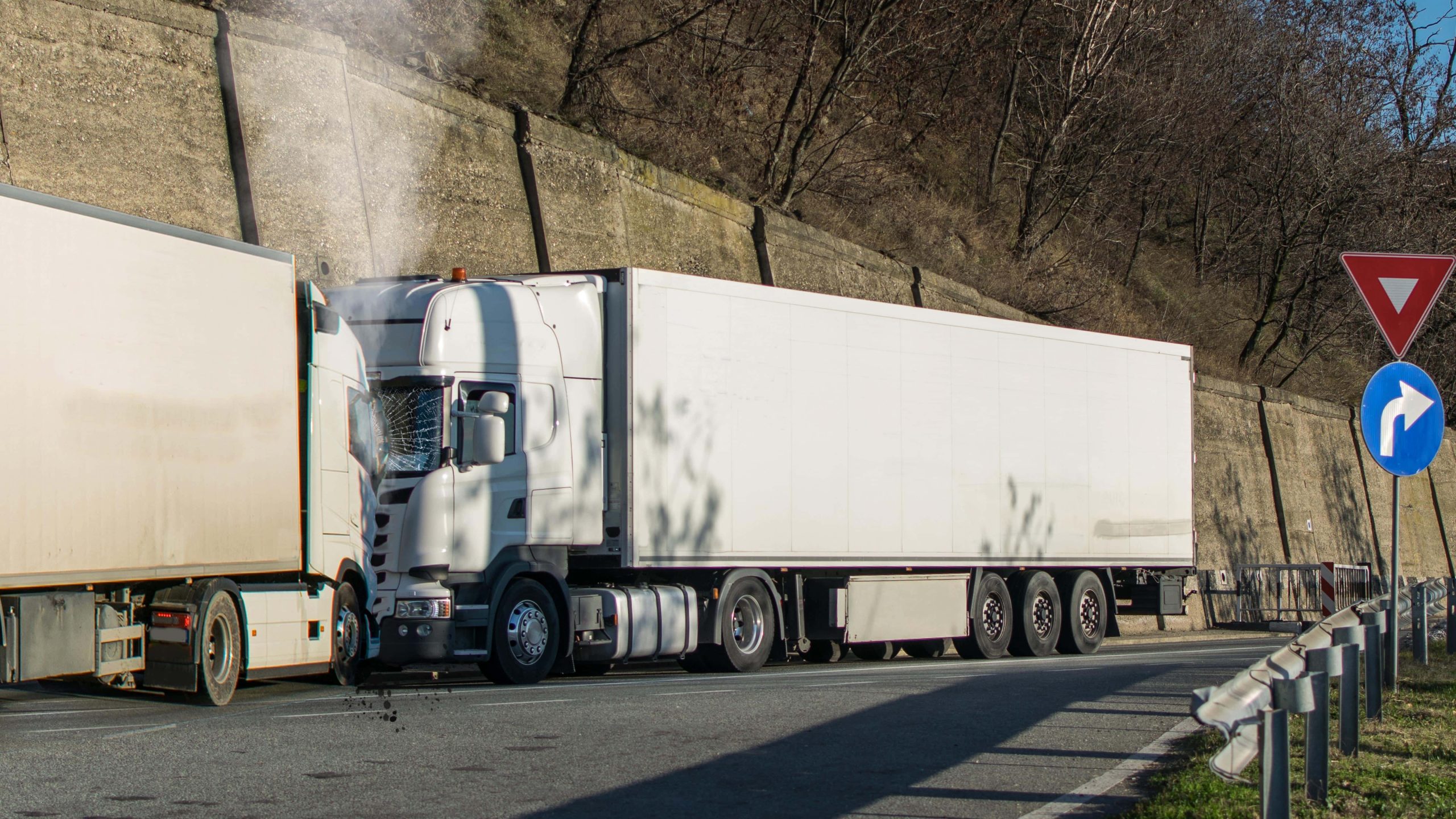
The truck driver is the most visible party in any crash, and their conduct is always part of the liability analysis. Common driver-level failures in commercial truck crashes include:
- Hours-of-service violations — Federal regulations limit how long a commercial driver may operate without rest. Driving beyond those limits significantly increases the risk of fatigue-related crashes.
- Distracted driving — Cell phone use, dispatching equipment, or navigation adjustments while driving
- Speeding or aggressive driving — A loaded semi can require significantly more stopping distance than a passenger vehicle
- Impaired driving — Alcohol, controlled substances, or prescription medications that affect judgment or reaction time
- Inadequate training — Particularly relevant for newer drivers handling large loads or unfamiliar routes
Driver logs, electronic logging device (ELD) data, and cell phone records can help establish whether the driver was operating within legal limits and exercising reasonable care.
Carrier Liability: When the Trucking Company Shares Responsibility
The motor carrier — the company that owns or operates the truck — can be held liable independently of the driver through several legal theories.
Negligent Hiring and Supervision
If a carrier hired a driver with a documented history of safety violations, suspended licenses, or failed drug tests, that hiring decision may itself constitute negligence. Carriers are expected to conduct background checks and maintain awareness of their drivers’ fitness to operate.
Hours-of-Service Violations
Carriers set schedules, assign routes, and create dispatch pressure that can push drivers to exceed hours-of-service limits. If the carrier’s scheduling practices foreseeably led the driver to operate while fatigued, the carrier may be liable for any resulting crash. Florida trucking claims involving carrier-level negligence often require a review of dispatch records, driver logs, and company scheduling data.
Vehicle Maintenance Failures
Federal regulations require carriers to maintain their fleets in safe operating condition. If brake failure, tire blowout, or steering defects contributed to a crash — and maintenance records show the vehicle had not been properly inspected or serviced — the carrier may bear liability for those failures.
Cargo Loader Liability: When the Load Itself Caused the Crash
Not every truck crash involves driver error or carrier negligence. Sometimes the load is the problem. Improperly secured cargo can shift during transit, causing a driver to lose control. Overloaded trailers can make a truck difficult to steer or stop. Unevenly distributed weight can cause a rollover on a curve.
Third-party cargo loaders — companies contracted to pack or secure freight — can be independently liable if their loading practices failed to meet federal cargo securement standards. This is a separate inquiry from driver or carrier negligence, and it requires its own evidence: weight tickets, loading records, and documentation of how freight was secured.
Federal Oversight: Why FMCSA Violations Matter in Fort Myers Truck Claims
Commercial trucks operating in Florida are subject to FMCSA safety regulations — federal rules that govern hours of service, vehicle maintenance, driver qualifications, and cargo securement. When a crash investigation reveals that the driver, carrier, or cargo handler violated FMCSA rules, those violations can serve as powerful evidence of negligence.
FMCSA requires carriers to maintain safety records, drug and alcohol testing results, driver qualification files, and inspection reports. Obtaining these records through the legal process — before they are altered, lost, or destroyed — is a critical early step in any truck accident claim.
Multiple Liable Parties — and Why That Matters for Your Claim
When more than one party shares liability for a crash, it can affect the total compensation available. A driver operating as an independent contractor, for example, may carry less insurance than a large national carrier. If the carrier is also liable, their insurance coverage — which federal regulations require to be substantially higher for commercial trucks than for personal vehicles — may be available to compensate the injured person.
Identifying every liable party and every applicable insurance policy is one of the most consequential parts of a commercial truck accident investigation. Missing a potentially liable party can mean leaving substantial compensation on the table.
Evidence in a Fort Myers Commercial Truck Accident Case
Building a liability case against one or more commercial trucking parties requires evidence that often does not surface in a standard car accident claim:
- Electronic logging device (ELD) data — Records actual driving hours and rest periods
- Black box / ECM data — Speed, braking, throttle activity before impact
- Driver qualification file — Hiring records, training history, license status, drug test results
- Maintenance and inspection records — Identifies whether known defects were unaddressed
- Cargo loading documents — Weight tickets, loading instructions, securement checklists
- Dispatch records and communications — Establishes the schedule pressure placed on the driver
- FMCSA compliance history — Prior violations and safety ratings for the carrier
Much of this evidence is in the exclusive possession of the trucking company or third parties. Preservation letters and formal legal demands are typically necessary to prevent data from being overwritten or records from being discarded.
Timeline and Urgency: Why Evidence Disappears Fast
Commercial trucks are often equipped with systems that overwrite data within days. Florida’s negligence statute of limitations (§ 95.11) provides two years to file a lawsuit — but waiting anywhere near that long to begin the investigation risks losing the electronic evidence that is most useful in these cases.
An attorney can issue a litigation hold letter to the carrier within days of the crash, demanding preservation of ELD data, black box recordings, driver logs, maintenance records, and communications. The sooner that step is taken, the stronger the investigative foundation.
FAQs: Truck Accident Liability in Fort Myers
Can I sue the trucking company even if the driver caused the crash?
Yes. Trucking companies can be held liable for their drivers’ actions under the legal doctrine of respondeat superior — employer responsibility for employee conduct within the scope of employment. Carriers may also face direct liability for their own hiring, training, and maintenance decisions.
What if the truck driver were an independent contractor?
Carrier liability in independent contractor situations is more complex but not necessarily eliminated. Courts and regulators look at the level of control the carrier exercised over the driver’s work. An attorney can analyze whether the carrier may still bear liability based on the specific relationship.
How is a commercial truck accident different from a car accident claim?
Commercial truck claims typically involve more serious damages, more complex liability (multiple parties), federal regulatory standards, higher insurance coverage requirements, and a broader scope of evidence — including ELD data, driver qualification files, and FMCSA compliance records.
What FMCSA violations are most commonly seen in truck crash cases?
Hours-of-service violations (fatigued driving), inadequate vehicle inspections, improper cargo securement, and driver qualification failures are among the most frequently cited federal regulatory violations in truck accident litigation.
How long do I have to file a truck accident claim in Florida?
Under Florida Statutes § 95.11, most negligence claims — including commercial truck accident injury claims — carry a two-year statute of limitations. Acting quickly is important both for the legal deadline and for preserving time-sensitive evidence.
What if multiple parties share fault for the crash?
Florida’s comparative fault framework applies. If multiple parties are found liable, damages may be apportioned among them. Having an attorney identify all liable parties — and all applicable insurance coverage — helps ensure the full scope of potential compensation is pursued.
Talk to the Fort Myers Truck Accident Lawyers at Wolf & Pravato
Commercial truck accident claims are among the most complex personal injury cases in Florida. Multiple parties, federal regulations, and time-sensitive evidence require a legal team with experience in commercial trucking litigation — not just general car accident claims.
The Fort Myers injury attorneys at Wolf & Pravato have recovered over $200 million for injury victims across Florida. We handle commercial truck accident claims on a contingency fee basis — you pay nothing unless we win.
Recent Posts
- Electric Scooter Accidents in Miami: Who’s Liable When You’re Hurt?

- Uber and Lyft in Lakeland: The 3 Insurance Periods That Determine Your Coverage After a Crash
- Florida’s 2-Year Statute of Limitations and Your Lakeland Car Accident Settlement Value
- The Evidence That Wins a Fort Lauderdale Slip & Fall Claim (And How to Preserve It Before It Disappears)
- Lakeland Car Accident Medical Documentation Checklist: The Records That Make or Break Your Claim

- How Miami Personal Injury Settlements Are Calculated Under Florida Law




FLORIDA’S PERSONAL INJURY ATTORNEYS FOR + 20 YEARS