
Florida Bicycle Accident Lawyer
You were riding legally and a driver came through you anyway. You were in an ambulance while he told the officer you came from nowhere. We can take it from here. Call 954-522-5800 for a free consultation. You pay us nothing unless we win. We have won these claims for Floridians from the Keys to the Panhandle, and we work them from five offices between Fort Lauderdale and Fort Myers.
Do not repair or throw away the bicycle, or the helmet if you were wearing one. The damage on both is physical evidence of the impact, and it is the part of a bicycle case people dispose of first because it is broken and in the way. Photograph the road markings and the sight lines too, before anything is resurfaced.
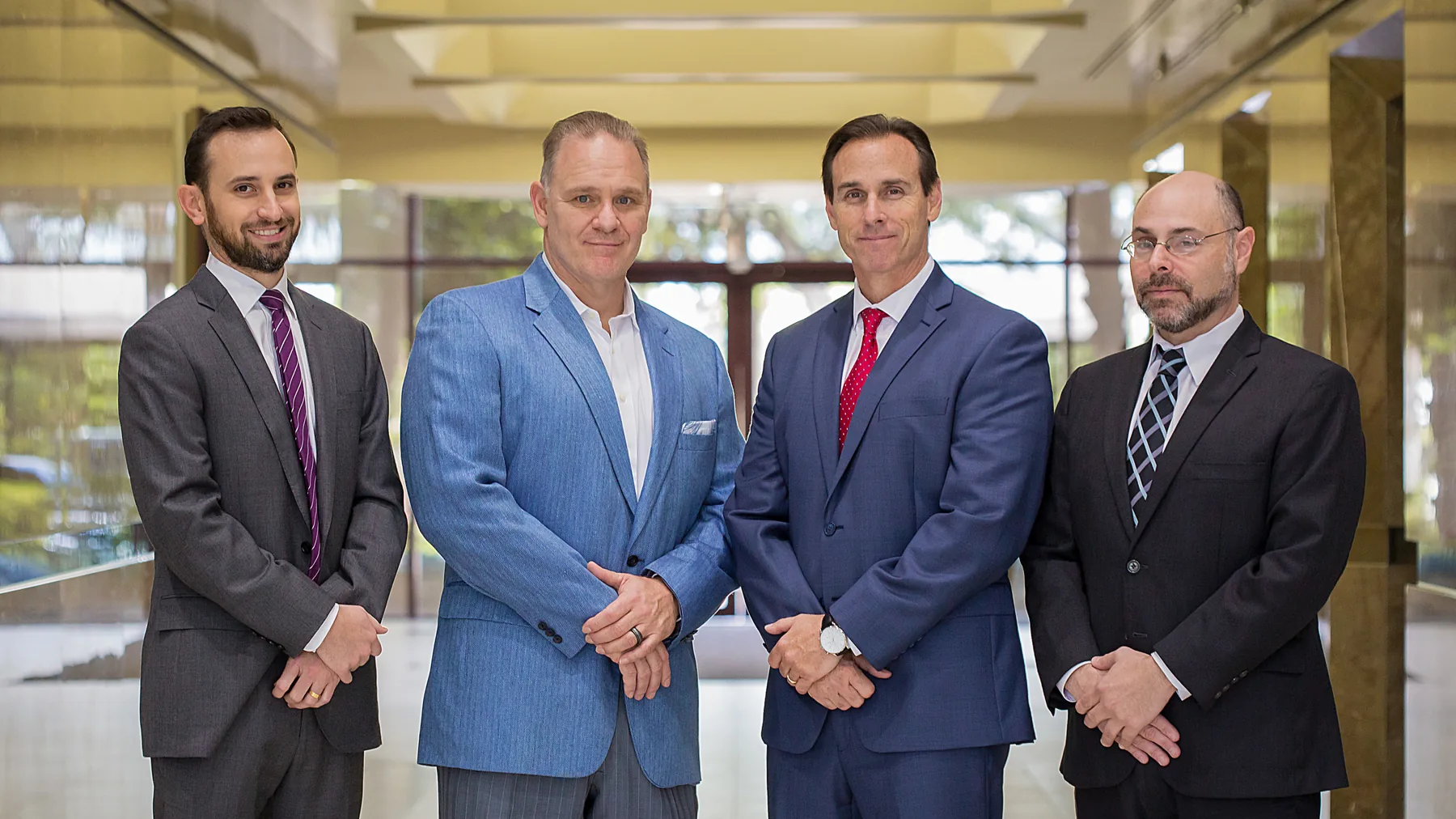
Our team will not let you go through a bicycle accident claim alone
Getting back on your feet after a driver hit your bike is hard enough without being blamed for riding at all. Nothing undoes the crash, and we will not pretend otherwise. What we can do is make the driver and their insurer answer for it, and we will take the case as far as it has to go.
Our trial attorneys have won bicycle accident cases across Florida since 1993, from the Keys to the Panhandle, and one of them will handle yours from the first call to the last check. Call 954-522-5800 for a free consult and a trial lawyer will tell you today whether you have a case. You pay us nothing unless we win, and we work from five offices between Fort Lauderdale and Fort Myers.
Meet the attorneys →What Florida law does with a bicycle accident claim
The driver will say you came out of nowhere, and their insurer will start from the idea that a bicycle did not belong on that road. Meanwhile you are paying for the emergency room, missing work, and finding out your own auto policy may be what covers you. Sorting out which policy pays is our job, and it starts the day you call.
Two arguments get made against injured cyclists in Florida, and the law answers both of them. The first is that the rider should not have been on the road. The second is that they were not wearing a helmet. Below is what the statutes actually say, who can be made to answer, and how these cases are proved.
A Florida cyclist has the same rights and duties on the road as a driver, and a motor vehicle passing a bicycle must leave at least three feet. Florida law also says that not wearing a helmet may not be treated as evidence of negligence. Most claims have to be filed within two years.
The deadline that ends a Florida bicycle accident claim
The filing deadline is two years. Everything that shows where the rider was and what the driver could see runs out far sooner.
Two years to file
Most claims from an accident on or after March 24, 2023 have to be filed within two years. An older accident keeps the four years that applied when it happened. The period is in Fla. Stat. § 95.11, and a death claim runs two years from the date of death.
Where a road defect or a path was part of it, the responsible party is a public body and Fla. Stat. § 768.28 applies instead: written notice to the agency and, in most cases, to the Department of Financial Services, a waiting period before suit, and caps of $200,000 per person and $300,000 per incident.
Days, for the footage and the road
Camera footage from the businesses along the road is overwritten within weeks. Where a surface defect, a drain grate or a debris spill contributed, it is swept, patched or resurfaced within days and there is nothing left to photograph.
Where anything about the road is in issue, somebody has to be out there with a camera and a measure immediately, and the maintenance and complaint records for that stretch have to be requested before they age out.
The bicycle is evidence, not scrap
Damage to the frame, the wheels and the components establishes the direction and force of the impact, and a bent rear wheel says something a bent front wheel does not. Keep it as it is, and keep the helmet and the clothing with it. It is far easier to throw them out later than to explain their absence.
Other riders, who scatter
Group rides are common in Florida and riders frequently run cameras. Those files get overwritten within days and the riders themselves are strangers who go home. Names and numbers taken at the scene are worth more here than in almost any other kind of crash.
Who can be held answerable
The driver is the obvious defendant. On a serious injury they are often not the only one and rarely the one with enough coverage.
- The driver who hit you. Fla. Stat. § 316.2065 gives a cyclist all the rights and all the duties of the driver of any other vehicle, so a driver who turned across a rider or pulled out in front of one has done the same thing they would have done to a car.
- The owner of the vehicle. Florida treats a motor vehicle as a dangerous instrumentality, so whoever owns it answers for how the person they lent it to drove it. A separate owner is frequently a separate policy.
- An employer, where the driver was working. A delivery van, a service truck, a company car on an errand. Employer coverage is far larger than personal coverage and establishing what the driver was doing takes asking.
- The public body responsible for the road or the path. A drain grate with slots that swallow a wheel, a pavement edge at a lane joint, a trail crossing with no sightline, a bike lane that ends without warning into traffic. These are design and maintenance decisions with records behind them, including prior complaints and prior crashes at the same point.
- The maker of the bicycle or a component. Forks, frames, wheels and brakes appear in these cases, and the claim is proved from the item itself. It is another reason nothing goes in a skip before somebody qualified has looked at it.
- A dog owner. Riders are brought down by loose dogs regularly, and Fla. Stat. § 767.04 makes an owner liable for a bite regardless of the dog's history. Where a dog caused a crash without biting, it is an ordinary negligence claim about control of the animal. Both are covered further on our Florida dog bite page.
How a Florida bicycle accident case actually runs
These cases are won on where the rider was and what the driver could see, which means they are won on physical evidence rather than on two accounts of the same second.
- Establish exactly where the rider was on the road. Fla. Stat. § 316.2065 requires somebody riding slower than the traffic to use the bicycle lane or to keep as close as practicable to the right-hand curb or edge, with exceptions for overtaking, turning left and avoiding hazards. Those exceptions matter, because the hazards a rider must avoid are precisely the debris, drains and parked-car doors that push riders left.
- Measure the passing distance where that is the issue. Fla. Stat. § 316.083 requires a driver overtaking a bicycle to pass at a safe distance of not less than three feet. Where a rider was clipped or forced off, that is a specific, measurable rule rather than a general argument about care, and it is proved with the damage, the road width and any footage.
- Answer the sidewalk question if it arises. Fla. Stat. § 316.2065 provides that somebody riding along a sidewalk, or across a roadway on a crosswalk, has the rights and duties of a pedestrian, while having to yield to pedestrians and to signal before passing them. So a rider hit at a driveway or a crossing is not automatically in the wrong for having been off the road.
- Preserve the footage, the bicycle and the vehicle. In writing, to the businesses along the road and to the insurer holding the car. Where the impact landed on the vehicle, and how high, establishes speed and whether the driver braked at all.
- Reconstruct it where speed or position is contested. Throw distance, damage patterns and the event data recorder inside the vehicle together answer what no witness can. On a serious injury it is worth doing properly and early.
- Treatment runs its course. Riders take head, shoulder, clavicle and pelvic injuries, frequently several at once. A claim valued before the treating physicians can say what is permanent is valued as the cheap version of itself.
- Demand, suit, discovery and mediation. Fla. Stat. § 627.4137 produces the policy limits in a sworn statement within 30 days of a written request. Fla. Stat. § 47.011 puts the case where it happened or where the defendant is, most Florida courts require mediation, and Fla. Stat. § 768.79 lets either side serve a formal offer with fees running from a refusal the judgment beats by at least 25 percent.
What the claim is worth, and how that number is built
A rider has nothing around them, so these injuries are severe. What moves the number most is an argument the law is more helpful on than most people realize.
The helmet argument, which the statute answers
Fla. Stat. § 316.2065 requires a helmet only for riders and passengers under 16, and then says plainly that a failure to wear one, or a parent's failure to prevent a child riding without one, may not be considered evidence of negligence or contributory negligence.
It gets raised anyway, by adjusters, in almost every one of these claims. The answer is the statute, in writing, early, and it usually ends that part of the discussion.
The medical care, past and future
Everything billed, and separately what the treating physicians say is still ahead. Shoulder and pelvic injuries are managed for a year before the surgical decision arrives, and the second figure is regularly the larger one.
Income, and the capacity to earn it
Wages missed, and separately the work that is no longer possible, proved with an economist and the treating physicians rather than asserted.
Pain, suffering, and riding
For most of the people we act for, cycling was not transport. Losing it is a real loss and it is worth describing rather than leaving to be assumed.
The fault split, and the line at 50 percent
Fault is divided under Fla. Stat. § 768.81 and, since March 2023, a person found more than 50 percent responsible for their own harm recovers nothing at all. The defense aims at that line with lane position, lighting, clothing and the helmet, and it is met with the statutes above and with physical evidence.
What is repaid out of the recovery
Health insurance, Medicare and Medicaid are repaid, and Fla. Stat. § 768.76 keeps those payments from being deducted from the award because the repayment right already exists.
What changes from one part of Florida to another
Florida rides all year, which is why the state has both a great deal of cycling and a great many of these crashes. What differs across it is the kind of riding.
Riding for transport, and riding for sport
Somebody riding to a shift before dawn on an unlit road and a club ride out at first light are different cases with different evidence, different witnesses and different jury reactions. The law is identical and almost nothing else is.
Trails, rail-trails and where they cross roads
Florida has an unusual amount of separated path, and the crashes on it happen where it meets a road: sightlines blocked by planting, crossings with no warning for drivers, paths that end at a curb. Those are design decisions belonging to a public body, with records and prior complaints behind them.
Visitors on rented bicycles
Beach and resort areas rent enormous numbers of bicycles to people with no local knowledge, on unfamiliar roads. Those cases add a rental agreement, an out-of-state rider and a claim that has to be built locally before they go home.
A proven record, anywhere in Florida
Our five offices run from Fort Lauderdale to Fort Myers, and a rider hurt anywhere in the state is somebody we act for.
The insurance behind a Florida bicycle accident claim
A cyclist has no policy on the bicycle, and the coverage that answers is almost always somebody's auto insurance, frequently the rider's own.
Your own auto policy pays first, even on a bicycle
Fla. Stat. § 627.736 follows the person rather than the vehicle. A cyclist struck by a car is covered by their own auto policy, and where they have none, by a policy in their household: $10,000 in benefits, being 80 percent of reasonable medical expenses and 60 percent of lost wages, regardless of fault.
The two conditions apply as they do to anybody else. A qualifying provider has to be seen within 14 days or none of it is payable, and the full amount is available only where a provider finds an emergency medical condition.
The driver may have nothing that pays you
Florida requires an ordinary private driver to carry the benefits above and $10,000 in property damage liability under Fla. Stat. § 324.022. Coverage for injuring somebody else is not required at all, so a driver can put a rider in the hospital, be entirely at fault and be fully legal with nothing that pays for it.
Uninsured motorist coverage, which is the answer
Fla. Stat. § 627.727 requires an insurer to offer it with every liability policy and allows it to be left off only where the customer signed a written rejection, with limits matching the bodily injury liability limits bought unless lower ones were chosen in writing. For a cyclist it is the single most valuable coverage there is, and it covers a hit and run as well as a driver with nothing.
A household policy you did not know covered you
Coverage frequently exists on a policy belonging to a relative in the same home, including for a rider who owns no car at all. It is found by asking for every policy in the household, which is not a question an adjuster raises.
The driver gives the only account at the scene
Why the report so often blames the cyclist
The cyclist is typically being treated or transported while the driver explains what happened to the officer. That version becomes the narrative, and it is very often that the cyclist swerved or came from nowhere.
A crash report is not a verdict. The damage pattern on the vehicle, the position of the bicycle, paint transfer, and any camera footage along the route regularly establish a different sequence. So does the geometry of a right hook or a dooring, which have recognizable physical signatures.
What we gather immediately
- The bicycle itself, unrepaired, and the helmet if one was worn
- Business, residential and dashcam footage along the route
- Any cycle computer or phone data recording speed and position
- Bike lane markings, condition and sight lines, before any resurfacing
- The driver’s account at the scene, which is often more helpful than they realize
The policy almost nobody thinks to check
If you own a car, your own auto policy may pay your medical bills after a bicycle crash even though no vehicle of yours was anywhere near it. Florida PIP follows the person rather than only the vehicle. Your uninsured motorist coverage may respond as well, which matters most in exactly the case where it looks like there is nothing to claim against: the driver who did not stop.
Almost nobody struck while cycling thinks to look at their auto policy, and it is the single cheapest thing to check. Send us the declarations page and we will read it for you at no charge.
What we have recovered on these claims
Matters this firm handled in this area of law. Figures are gross recoveries, before attorney fees, costs and medical liens come out of them.
Our client, an experienced cyclist, was riding legally in the bike lane approaching the traffic circle at East Camino Real and Royal Palm Way in Boca Raton when an SUV owned by the Royal Palm Improvement Association struck him.
Settlement after suit was filedA twenty-year-old was riding his bike through a Plantation crosswalk on an illuminated walk signal when a Broward County Transit bus turned right on red into him and killed him.
Broward County wrongful death settlementEvery verdict and settlement we publish, with the press coverage for the ones that were reported. No result predicts another case: every claim turns on its own facts, its own evidence and the insurance actually available.
Who would handle your case
Your case is handled by one of the trial lawyers below, and you will know which of them has it from the first conversation. They do bicycle accident work week in and week out, they will tell you what your case is worth and why, and they will be straight with you about the parts that are hard.
-
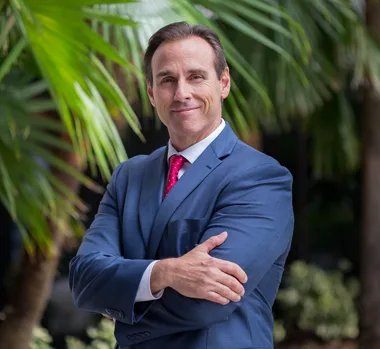 Richard P. Pravato Founding & Managing Attorney Board Certified in Civil Trial Law by The Florida Bar since 2004, and by the National Board of Trial Advocacy. Injury cases exclusively since 1996. Full profile →
 -
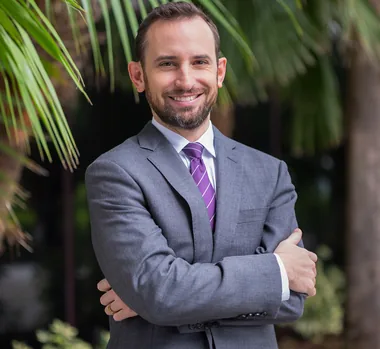 Brett J. Yonon Senior Trial Attorney Selected to Florida Super Lawyers in 2024 and 2025. Brett Yonon is who this firm puts on a catastrophic injury or a death in the family, and he has tried those cases to verdict. Full profile →
Bicycle Accident questions we are asked
I was not wearing a helmet. Does that end my claim?
No. Florida requires helmets for riders under 16; adults are not required to wear one, and choosing not to does not bar a claim. An insurer may argue it affected head injuries specifically, which is a narrower point than they usually suggest and says nothing about who caused the collision.
Does my car insurance cover me on a bike?
Very often yes, and it surprises people. Florida PIP follows the person rather than only the vehicle, so your own policy can pay your first medical bills after a bicycle crash. Uninsured motorist coverage may also apply, particularly in a hit and run.
The driver opened a door into me. Whose fault is that?
Generally the person who opened it. A motorist has a duty not to open a door into the path of traffic when it is unsafe to do so, and a cyclist lawfully proceeding alongside is traffic. The damage pattern in a dooring is quite distinctive and usually supports the account.
Questions that apply to any Florida injury claim, fees, deadlines, recorded statements and shared fault, are answered on our injury claim FAQ. What we have recovered is on recent case results.
Five Florida offices
We take bicycle accident claims statewide. Each market below has its own page on this claim, with that office's address, its direct number and the court a case there is filed in.
Fort Lauderdale bicycle accident claims
2101 W Commercial Blvd, Fort Lauderdale. Serving Broward County.
View →Miami bicycle accident claims
1111 Brickell Avenue, Miami. Serving Miami-Dade County.
View →West Palm Beach bicycle accident claims
2101 Vista Parkway, West Palm Beach. Serving Palm Beach County.
View →Boynton Beach bicycle accident claims
1375 E Gateway Blvd, Boynton Beach. Serving Palm Beach County.
View →Fort Myers bicycle accident claims
1825 Colonial Blvd, Fort Myers. Serving Lee County.
View →Other claims we handle
Three of the closest to this one. The full list is on our Florida practice areas page.
Tell us what happened
A lawyer will listen, tell you what Florida law does with those facts, and be straight with you about whether it is worth bringing. If it is not, we will say so.
We take cases anywhere in Florida.