













How Fault Is Proven with Phone Records, Video, and Witnesses in Lakeland Distracted Driving Cases
A driver glances down at their phone for five seconds at 55 mph. In that time, they’ve traveled the length of a football field without looking at the road. If they hit your car in those five seconds, proving it matters — because in Florida, fault determines compensation.
If you were hurt in a crash you believe was caused by a distracted driver in the Lakeland area, the central question in your claim will be: how do you prove the other driver wasn’t paying attention? The answer depends on evidence — and evidence has a short shelf life after a crash.
A Lakeland car accident lawyer can act quickly to preserve and develop the proof your claim depends on. This guide walks through the main evidence types used to establish distracted driving fault in Florida crash cases.
What Counts as Distracted Driving?
Distraction behind the wheel isn’t limited to texting. According to NHTSA’s distracted driving research, there are three categories of distraction — visual (eyes off the road), manual (hands off the wheel), and cognitive (mind off the task of driving). Phone use is particularly dangerous because it engages all three simultaneously.
In practice, distracted driving in a crash case can involve:
- Reading or sending a text message
- Scrolling social media or video apps
- Talking on a handheld phone
- Entering a destination into a navigation app
- Eating, adjusting the radio, or reaching for objects
- Interactions with passengers
Any of these behaviors can form the basis of a negligence claim if they contributed to a crash — but they have to be demonstrated with evidence, not assumption.
What Florida Law Says About Distracted Driving
Florida has a specific prohibition on texting while driving. Under Florida Statutes on wireless communications while driving, a driver may not operate a motor vehicle while manually typing or entering multiple letters, numbers, or characters into a wireless communications device for the purpose of sending a text or similar communication.
A traffic citation for this violation — if one was issued at the scene — can be a meaningful data point in a civil claim. It doesn’t automatically establish liability, but it reflects an official finding that the driver violated a traffic law at or near the time of the crash. That can support a broader negligence argument.
Even without a citation, a driver who was texting may still be found negligent under Florida’s general negligence framework if the evidence supports it.
How Fault Is Proven in a Distracted Driving Crash
Featured snippet block — Steps to Build a Distracted Driving Case
Proving a driver was distracted at the moment of a crash typically involves building a case from multiple overlapping sources of evidence:
- Obtain the crash report — Review the official report for any officer observations about phone use, erratic behavior, or driver admissions at the scene
- Preserve video — Identify dashcam footage, traffic camera footage, and nearby business surveillance before it is overwritten (often within 24–72 hours)
- Secure witness information — Get contact details for anyone who saw the crash or the driver’s behavior in the moments before impact
- Request phone records — A formal legal request (subpoena) can show whether the at-fault driver was calling or texting at the time of the crash
- Document physical evidence — Skid marks, point of impact, vehicle damage patterns, and final rest positions help reconstruct what happened
- Consult a crash reconstruction expert — In complex cases involving high-speed crashes, experts handling High-speed crash injury claims in Lakeland can calculate vehicle speeds, identify reaction time failures, and establish a timeline.
No single piece of evidence is required to prove a case. Attorneys typically build from multiple overlapping sources to present a coherent picture of what happened and why.
Phone Records: The Most Direct Form of Evidence
When a driver is suspected of texting or using a phone at the time of a crash, call and message logs can be among the most direct evidence available.
How Records Are Obtained
Phone records are not publicly available — they are held by the carrier. In civil litigation, an attorney can issue a subpoena to the carrier requesting records for the relevant time window. This legal process compels the carrier to produce logs showing outgoing calls, incoming calls, text message activity (send/receive timestamps), and data usage patterns.
This is one reason why Florida car accident lawyers move quickly after a crash: the sooner litigation or formal demand proceedings begin, the sooner a subpoena can be issued and records preserved before they are subject to routine deletion.
What They Can and Can’t Prove
Phone records show timestamps for calls and texts — they can place phone activity in the same window as a crash. What they generally cannot prove by themselves is that the driver had the phone in their hand (as opposed to using hands-free) or that the distraction caused the specific collision. That’s why records are most powerful when combined with witness accounts, video, and physical evidence that corroborate each other.
Video Evidence: Dashcams, Traffic Cameras, and Surveillance
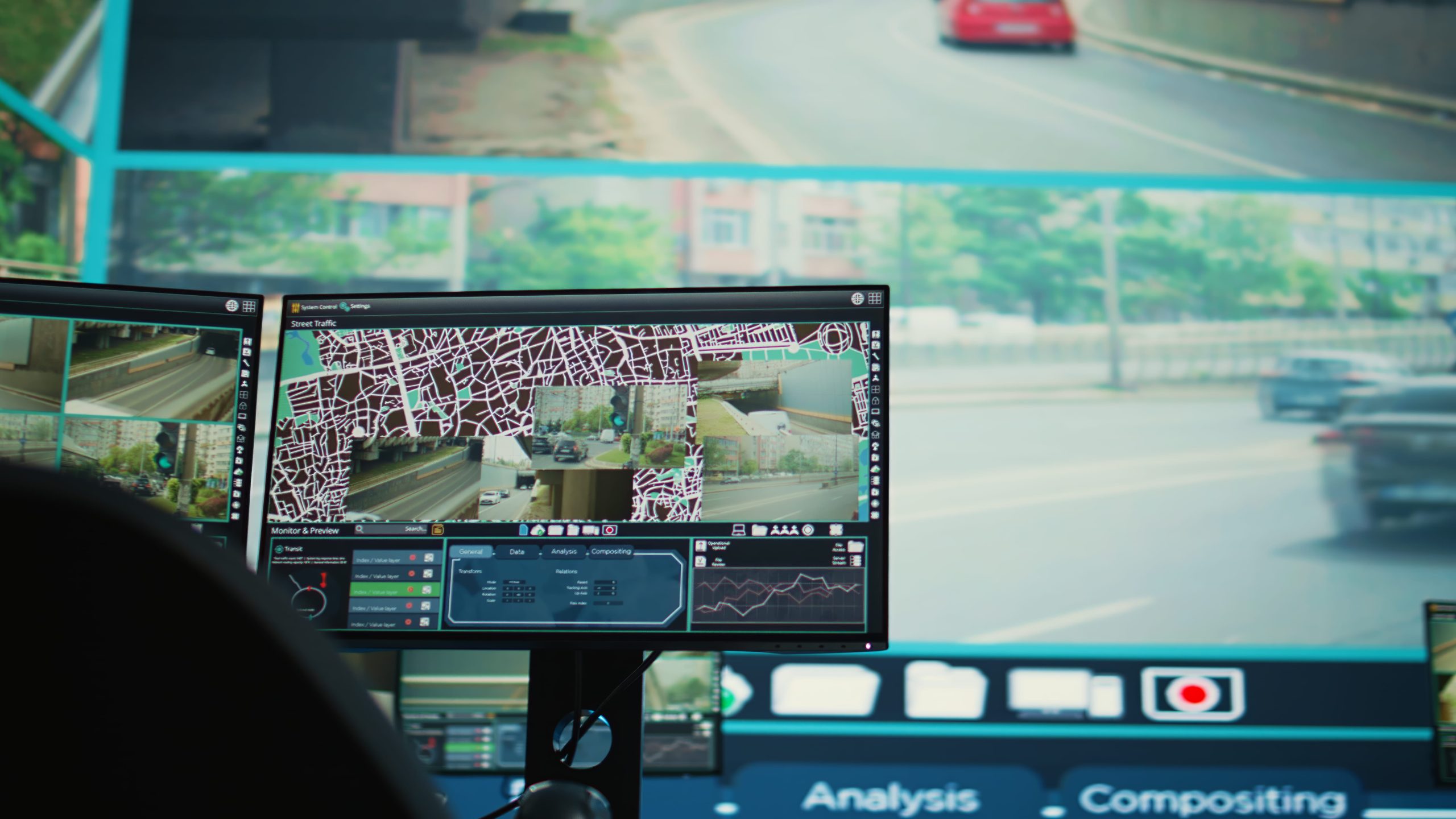
Video has become one of the most compelling forms of evidence in crash cases — when it’s available and secured in time.
Potential video sources in Lakeland-area crashes include:
- Dashcams on the victim’s vehicle, the at-fault driver’s vehicle, or other drivers nearby
- Traffic signal and intersection cameras operated by the City of Lakeland or Polk County
- Business surveillance cameras at gas stations, strip malls, parking lots, and drive-throughs near the crash site
- Rideshare or delivery vehicle cameras if either type of vehicle was in the area
Why Timing Matters
Most commercial and municipal camera systems overwrite footage on a cycle ranging from 24 hours to 30 days. Residential dashcams may overwrite even faster. A preservation letter — formally demanding that footage be retained — must go out quickly. Once overwritten, the footage is typically gone permanently.
An attorney can identify potential camera locations near the crash site and send legally binding preservation demands to the relevant parties within days of being retained.
Eyewitness Accounts
A witness who saw a driver looking down at their phone, swerving, or failing to brake before impact can provide powerful testimony — because it represents an independent, first-person account of what happened.
Useful witness observations often include:
- Seeing the driver’s face turned downward or their hand holding a device
- Noticing erratic lane behavior or failure to slow at a light or stop sign in the moments before the crash
- Hearing the impact before seeing the vehicles — which can help establish sudden, unexpected collision dynamics
Witness accounts are most credible when they are consistent with the physical evidence and recorded quickly, while details are still fresh. If you identified witnesses at the scene, share their names and contact information with your attorney as soon as possible.
Crash Reconstruction and Physical Evidence
Physical evidence from the crash scene can independently support a distracted driving theory even without direct evidence of phone use.
Key indicators reconstruction experts examine:
- Absence of skid marks or late braking — suggesting the driver made no evasive attempt, consistent with not seeing the hazard in time
- Point of impact and vehicle trajectory — where the vehicles were heading and where they collided helps identify who had the right of way and who failed to react
- Damage patterns — the location and severity of damage helps establish speed and angle of approach
In complex cases, accident reconstruction specialists can model the crash using physical data, helping establish what a reasonably attentive driver would have done differently.
How Fault Findings Affect Your Claim
Florida applies a modified comparative fault rule. Under Florida’s comparative fault statute, if you are found to be more than 50% at fault for your own harm, you may be barred from recovering damages in a negligence action. If you are found partially at fault but below that threshold, your damages may be reduced in proportion to your share of fault.
This is why the evidence gathered to establish the other driver’s distraction matters so much. The stronger and more layered your evidence, the more clearly the fault picture can be established — and the more defensible your claim becomes if the insurer attempts to shift responsibility.
Why Hiring a Lawyer Early Protects Distracted Driving Evidence
Distracted driving cases are highly time-sensitive. The evidence that proves fault — video footage, phone records, witness memories — degrades, gets overwritten, or becomes harder to obtain as time passes.
A Lakeland personal injury lawyer working your case early can:
- Send preservation letters to businesses, municipalities, and carriers before footage or records are deleted
- Issue subpoenas for phone records through the formal discovery process
- Interview witnesses while their accounts are fresh
- Retain a crash reconstruction expert if warranted
- Handle all communications with the at-fault driver’s insurer — so you’re not pressured into a recorded statement that could be used against you
Insurance adjusters know how to minimize claims. An attorney knows how to document, present, and negotiate them.
Call 844-643-7200 or request a free case evaluation — no fee unless we win.
Why Lakeland Injury Victims Work With Wolf & Pravato
The Law Offices of Wolf & Pravato has served injured clients across Florida — including the Lakeland area — with 75+ years of combined experience and over $200 million recovered on behalf of clients. (Past results do not guarantee future outcomes.)
Wolf & Pravato handles personal injury cases on a contingency fee basis: “Pay nothing unless we win.” From the first call, the team focuses on building the strongest possible evidentiary foundation for your claim through a Free Consultation With a Lakeland Car Accident lawsuit.
If you were hurt by a distracted driver and you’re not sure where to start, that first conversation costs nothing.
Frequently Asked Questions:
- Can phone records actually prove a driver was texting during a crash?
Phone records can show that a call or text message was sent or received within the same time window as the crash. They’re most powerful when combined with other evidence — witness accounts, video, or physical crash data — that corroborates the timeline. An attorney can pursue records through a formal subpoena once legal proceedings begin. - What if there were no witnesses to my crash?
Witness testimony is one tool, but it isn’t the only path to proving fault. Phone records, video footage, physical evidence, and crash reconstruction can establish a distracted driving case even without eyewitness accounts. The key is moving quickly to preserve what’s available. - How soon should I contact a lawyer after a distracted driving crash?
As soon as possible. Video footage, in particular, is often overwritten within 24–72 hours. The earlier your attorney can send preservation demands and begin building your case, the more evidence may be available to support your claim. - What if the police report doesn’t mention distracted driving?
The crash report reflects what the responding officer documented at the scene. It is not the final word on fault. Evidence developed after the report — phone records, surveillance footage, witness statements, reconstruction analysis — may establish facts the officer did not or could not observe. - Does a texting-and-driving citation automatically mean the driver is liable?
A citation indicates a traffic law violation, which can support a negligence argument. However, it doesn’t automatically establish civil liability — fault must still be developed through evidence. A citation is one supporting factor, not the complete case. - What damages may be recoverable if a distracted driver caused my crash?
Depending on the facts and severity of your injuries, recoverable damages may include medical expenses, lost wages, future care costs, and pain and suffering. Florida’s no-fault PIP system affects how auto injury claims begin, but serious injuries may allow claims against the at-fault driver beyond PIP. An attorney can evaluate what applies to your situation. - Can I request a free case evaluation if the crash just happened?
Yes — in fact, sooner is better. Early contact allows your attorney to take immediate steps to preserve evidence before it disappears. The consultation is free and there’s no obligation to proceed.
Recent Posts
- Wrong Burial Plot and Grave-Site Errors in Fort Lauderdale

- Rainwater Falls at Fort Lauderdale Store Entrances

- Parking-Lot Backing Crashes in Fort Lauderdale: Who Has the Right of Way?
- Elevator and Escalator Injuries at Fort Lauderdale Shopping Centers
- Delivery Driver Car Accidents in Lakeland: Who Pays?

- Injured as a Passenger in Fort Lauderdale: Whose Insurance Pays?





FLORIDA’S PERSONAL INJURY ATTORNEYS FOR + 20 YEARS