









Multi-Vehicle Collisions in Fort Lauderdale: How Fault Gets Assigned in Florida (Practical Scenarios)
A multi-vehicle collision can turn a normal day into a confusing chain of events: multiple impacts, conflicting stories, and several insurance companies calling at once. In Fort Lauderdale, these crashes often involve “chain reaction” rear-ends, sudden lane changes, or stop-and-go traffic where drivers disagree about who started it—and who made it worse.
This guide explains how fault gets assigned in Florida for multi-car crashes using practical, real-world scenarios (not guesswork). If you’re dealing with car accident injuries, disputed liability, or pressure from insurers, a Fort Lauderdale car accident lawyer can help you understand your options and protect your claim.
Quick answer: How fault is usually decided in chain-reaction crashes
In most multi-vehicle collisions, fault is determined by combining:
- The “first harmful event” (which triggered the chain)
- Each driver’s follow-up conduct (following distance, speed, braking, lane changes)
- Physical evidence (vehicle damage patterns, photos, debris, skid marks, vehicle data)
- Independent proof (witnesses, dashcam video, crash report)
- Comparative fault (how blame may be split among multiple parties)
In other words, it’s not always “the last car is automatically at fault” or “the first impact decides everything.” Multi-car liability is often shared, and evidence is what makes the difference.
How fault gets assigned in Florida (the big picture)
Florida uses a comparative fault system in many negligence cases. That means responsibility can be allocated across multiple drivers—and the percentage assigned can affect what an injured person can recover. For the legal framework, see Florida’s comparative fault statute.
Practically, in a Fort Lauderdale multi-vehicle crash, insurers (and sometimes courts) look for answers to questions like:
- Who violated a traffic rule or drove unreasonably under the conditions?
- Who failed to maintain a safe following distance?
- Was anyone distracted, speeding, or changing lanes unsafely?
- Did a mechanical issue, road hazard, or visibility problem play a role?
- Did one driver’s actions create a sudden emergency for others?
Because there may be several points of impact, it’s common for insurers to argue that later collisions were “separate” or that a driver’s injuries were caused by a different impact than the one they’re claiming. That’s why documenting the sequence matters.
If you want a deeper breakdown of how liability is evaluated, the Car accident liability FAQ is a helpful reference.
Practical scenarios: who may be at fault in a multi-car crash?
Below are common Fort Lauderdale-style scenarios and how fault is often analyzed. These examples are general and can change based on evidence.
Rear-end chain reaction at a red light
Scenario: Car A is stopped at a light. Car B stops behind. Car C rear-ends Car B, pushing B into A.
What insurers often argue:
- Car C caused the chain reaction by failing to stop in time.
- Car B may be “blameless” if it was fully stopped and pushed forward.
But fault can still be disputed if:
- Car B stopped suddenly for no reason, or
- Car B was following too closely and “tapped” Car A before being hit, or
- Car A rolled backward or changed lanes at the last moment.
Evidence that can clarify it: damage patterns (rear vs. front), dashcam footage, witness accounts, and vehicle data showing braking.
A sudden lane change triggers a pileup
Scenario: A driver abruptly cuts into a lane. A car brakes hard to avoid an impact. Multiple vehicles collide.
Who may share fault:
- The lane-changing driver (unsafe lane change/failure to yield)
- A following driver who was too close or not paying attention
- Potentially multiple drivers behind the “accordion effect” impacts
This is a classic example where insurers may argue: “Even if the lane change was bad, the rear driver should have maintained a safe distance.” Fault often becomes a percentage split depending on timing and stopping distance.
Multi-vehicle crash with a left-turn conflict
Scenario: A driver turns left across traffic; an oncoming driver brakes and is hit from behind; vehicles collide in multiple directions.
Fault analysis may include:
- Whether the left-turning driver had a safe gap and right-of-way
- Whether oncoming traffic was speeding
- Whether the following drivers were maintaining a safe distance
In this scenario, multiple drivers may each have some percentage of fault, and it can become heavily evidence-driven—especially if there are conflicting statements about speed and signals.
“Stop-and-go” highway traffic crash
Scenario: Traffic slows abruptly. Several cars collide in quick succession.
Common liability themes:
- Following too closely to the traffic conditions
- Distracted driving (looking down during stop-and-go)
- Speed not adjusted for congestion
Even when a lead vehicle “slams on brakes,” insurers often still examine whether the rear driver was maintaining an appropriate cushion for the conditions.
Commercial vehicle or rideshare involved
When a commercial vehicle is part of a multi-vehicle collision, liability analysis may expand:
- Was the driver working at the time (employment scope issues)?
- Was there inadequate maintenance?
- Were there logs, dispatch data, or onboard telematics?
Rideshare situations can add layers of insurance and reporting complexity, which can influence how quickly claims resolve. A Rideshare Accident Lawyer in Fort Lauderdale can help navigate these challenges and protect your right to compensation.
Evidence that matters most in multi-vehicle accidents
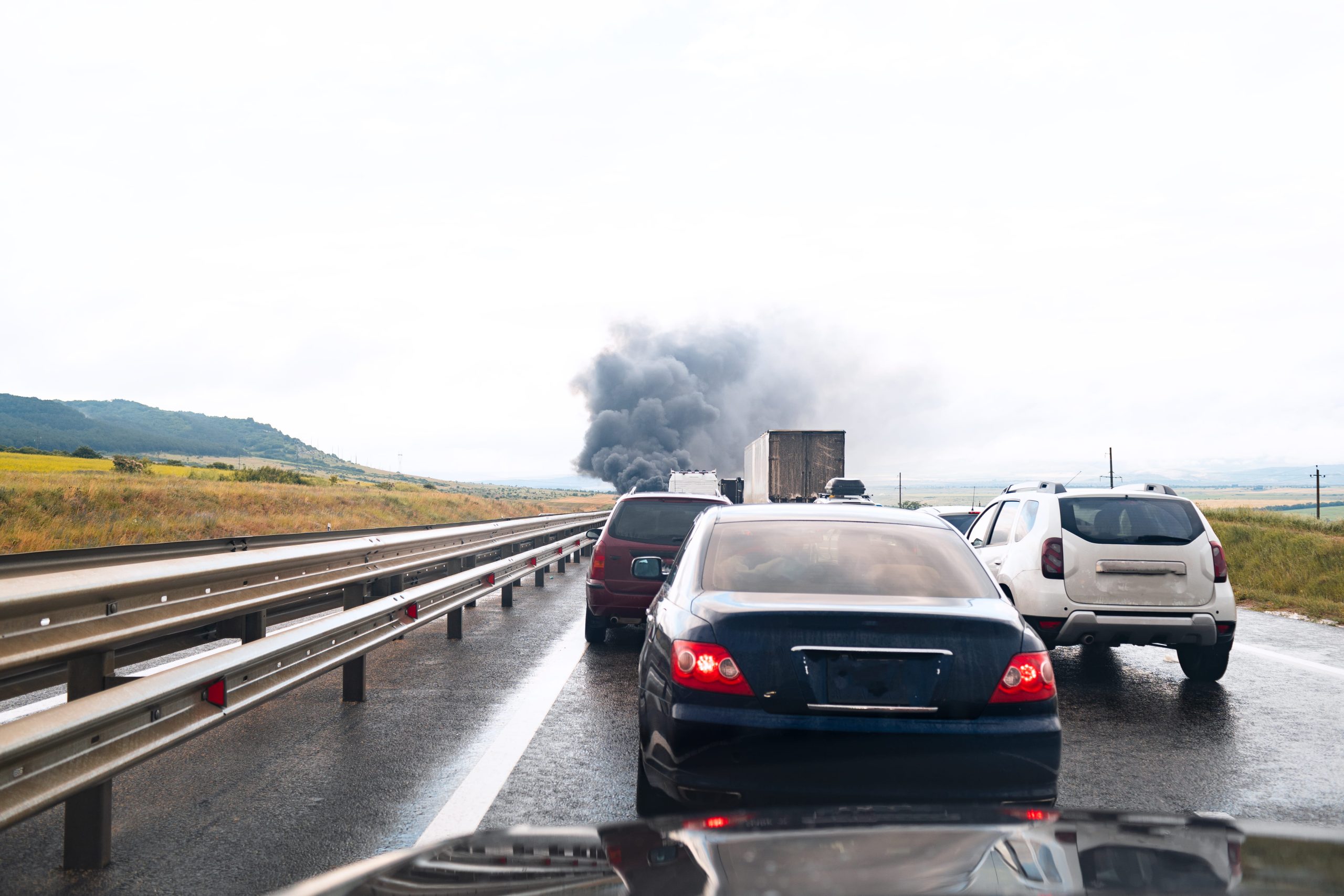 In multi-car crashes, evidence has two jobs:
- Prove sequence (who hit whom, and when)
- Prove behavior (speed, distance, lane position, attention)
Here’s what tends to hold up best:
1) Photos and scene documentation
- Wide shots of vehicle positions (if safe)
- Close-ups of damage on every vehicle side
- Skid marks, debris fields, gouges, fluid trails
- Lane markings and traffic control devices nearby
2) Witness information
Neutral witnesses can help identify the “trigger” event—especially for sudden lane changes or red-light disputes.
Tip: Get names and contact info quickly. People leave.
3) Dashcam and nearby video
Dashcam footage can be the fastest way to resolve “I had the right-of-way” conflicts. In multi-vehicle collisions, the few seconds before the first impact are often the most important.
4) Vehicle data
Some vehicles may have event data that helps confirm speed/braking around the crash. Even without a “black box” retrieval, modern vehicles and collision systems can sometimes provide time-stamped clues.
5) Consistent medical documentation
In a multi-impact crash, insurers may argue your injuries came from a different collision than the one you’re claiming. Prompt, consistent medical documentation helps connect symptoms to the crash timeline—without exaggeration.
How injury claims and property damage claims can diverge
Multi-vehicle crashes often create two different disputes:
- Property damage (who pays to repair/total vehicles)
- Injury damages (medical costs, lost income, pain impacts)
They don’t always follow the same path. For example:
- One insurer might accept property damage fault quickly to move vehicles and reduce storage costs.
- The same insurer might dispute injury severity or argue comparative fault later.
Also, Florida’s rules for pursuing certain non-economic damages in motor vehicle cases involve legal thresholds. For the statutory reference, see Florida’s serious injury threshold law. Whether that applies depends on the case facts and medical evidence.
The main takeaway: Don’t assume that a quick property-damage decision ends the liability debate—especially when multiple vehicles and injuries are involved.
Why talking to a Fort Lauderdale car accident lawyer can help
Multi-vehicle collisions are where small details become big turning points. A lawyer may help by:
- Preserving evidence before it disappears (dashcam, vehicle data, witness contacts)
- Coordinating multiple insurance communications (so your story stays consistent)
- Identifying all potentially responsible parties and coverages
- Addressing comparative fault arguments with documentation
- Building a clear timeline of impacts and injuries
If you’re facing confusion or pushback, start with a Persoan Injury lawyer in Fort Lauderdale at The Law Offices of Wolf & Pravato. We have 75+ years of combined experience, and you pay nothing unless we win.
Call 844-643-7200 or contact us for a case evaluation.
Informational purposes only; not legal advice.
Frequently Asked Questions:
- Who is at fault in a chain reaction rear-end crash in Florida?
Often, the driver who started the chain (usually the rear-most impact) may carry primary fault, but other drivers can share fault depending on following distance, sudden stops, or other contributing actions. - Is the last car always at fault in a multi-vehicle accident?
Not always. The last impact is common, but fault depends on what triggered the chain and whether other drivers contributed through unsafe driving or lane changes. - How does comparative negligence work in Florida car accidents?
Florida can assign percentages of fault among drivers. Your recovery may be reduced by your share of fault, and the rules can affect whether recovery is available depending on the circumstances. See Florida’s comparative fault statute for the framework. - What evidence is most important in a pileup claim?
Dashcam video, witness statements, photos showing vehicle positions/damage, crash report details, and vehicle data can be especially helpful in establishing sequence and driver conduct. - Can multiple insurance companies deny fault at the same time?
Yes. In multi-vehicle crashes, insurers may dispute liability or shift blame until evidence clarifies the sequence of events. - Should I talk to the other driver’s insurer after a multi-car crash?
You can report basic facts, but avoid guessing, speculating about fault, or minimizing injuries. If you feel pressured, consider speaking with counsel first. - When should I contact a Fort Lauderdale car accident lawyer?
Sooner is often better when liability is disputed, there are multiple vehicles/insurers, injuries are significant, or key evidence (like video) could be lost.
Recent Posts
- Wrong Burial Plot and Grave-Site Errors in Fort Lauderdale

- Rainwater Falls at Fort Lauderdale Store Entrances

- Parking-Lot Backing Crashes in Fort Lauderdale: Who Has the Right of Way?
- Elevator and Escalator Injuries at Fort Lauderdale Shopping Centers
- Delivery Driver Car Accidents in Lakeland: Who Pays?

- Injured as a Passenger in Fort Lauderdale: Whose Insurance Pays?




FLORIDA’S PERSONAL INJURY ATTORNEYS FOR + 20 YEARS