Slip & Fall vs. Premises Liability in Miami: What's the Difference (and Why It Matters for Your Claim)
 By Richard P. Pravato, Board Certified in Civil Trial Law Published May 29, 2026 Updated June 19, 2026
Why people use these terms interchangeably (and why that’s a problem)
“Slip and fall” and “premises liability” get used as if they mean the same thing — and for conversational purposes, the overlap is real. Both involve someone injured on someone else’s property. Both turn on what the property owner knew, should have known, or failed to do. But Florida law treats them differently in ways that affect what you have to prove, what evidence matters most, and how insurance carriers defend the case. Understanding the distinction matters because the wrong framing can cost a claim. A Miami slip and fall lawyer spends real time identifying which legal framework actually applies to a given injury, because the answer shapes the investigation from day one.
This article walks through what each term actually means under Florida law, how the burden of proof shifts between them, and why the category your injury falls into can change the outcome of your claim.
Featured snippet — Slip & fall vs. premises liability at a glance
| Dimension | Slip & Fall (§ 768.0755) | General Premises Liability |
| What it covers | Falls on transitory foreign substances in businesses | Broader property-condition injuries (structural, security, maintenance) |
| Core question | Did the business know or should have known about the substance? | Did the owner breach a duty owed to the injured person? |
| Burden of proof | Actual or constructive knowledge of the substance | Duty, breach, causation, damages (common-law framework) |
| Common examples | Spilled drink, wet floor, tracked-in rain | Broken stairs, inadequate lighting, negligent security |
| Governing law | Fla. Stat. § 768.0755 | Florida common law + related statutes |
What premises liability covers
Premises liability is the broad legal framework covering injuries caused by the condition of someone’s property. It applies to far more than falls. A Miami premises liability attorney sees claims involving inadequate security (assaults in parking garages or hotels), poorly lit stairwells, defective handrails, negligent building maintenance, swimming pool injuries, elevator malfunctions, and a wide range of other property-condition issues.
Under Florida’s common-law premises-liability framework, the duty a property owner owes depends largely on the injured person’s status: invitee (customer, guest on business premises), licensee (social guest), or trespasser. Invitees receive the highest duty — the property owner must maintain the property in reasonably safe condition and warn of known dangers that aren’t open and obvious. That baseline duty is what many premises claims turn on.
Slip and fall: a specific statute applies
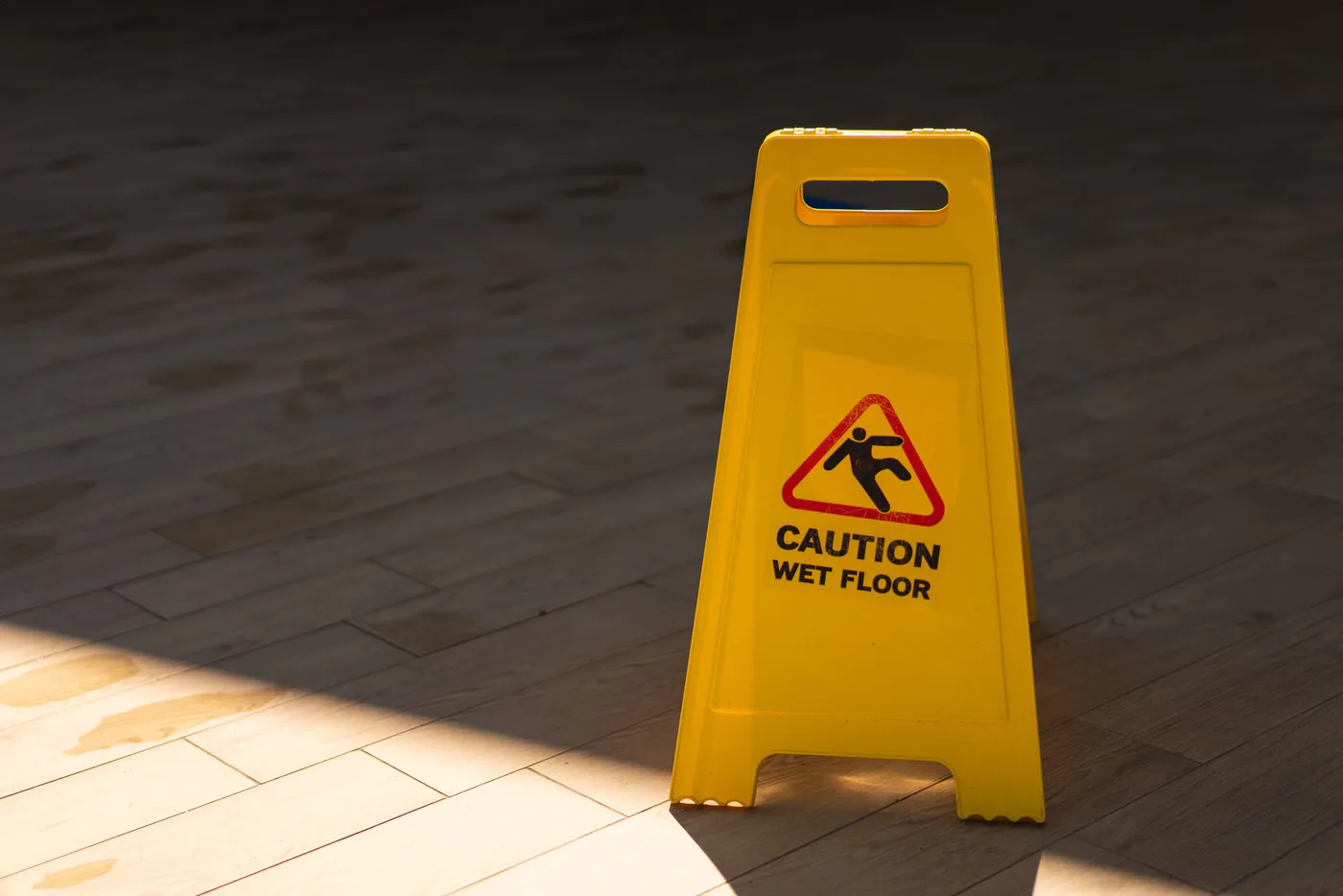
Slip-and-fall claims in Florida businesses are governed by a specific statute — Florida Statute § 768.0755. The statute applies when someone slips on a “transitory foreign substance” in a business establishment — the wet floor, spilled liquid, tracked-in rain, loose produce, dropped ice, and similar conditions that typify store and restaurant falls.
Under § 768.0755, the injured person must prove that the business had actual or constructive knowledge of the dangerous condition and should have taken action to remedy it. Constructive knowledge can be shown by circumstantial evidence demonstrating (a) the condition existed long enough for reasonable inspection to discover it, or (b) the condition occurred with regularity and was therefore foreseeable.
This is a meaningfully higher burden than in many other states. It’s not enough that you fell, were hurt, and the substance was there — you have to prove the knowledge element, which is why surveillance footage, inspection logs, and witness evidence are so central to these cases.
Proof requirements: where the two tracks diverge
The legal frameworks converge on the goal — showing a property owner failed to meet a duty — but they diverge on what you actually have to prove:
- Slip and fall under § 768.0755: the knowledge element (actual or constructive) is the center of gravity. Surveillance footage showing how long the substance existed, inspection logs showing when the area was last cleaned, and evidence of recurring conditions carry the case.
- General premises liability: the case often turns on the property owner’s policies, maintenance history, awareness of prior similar incidents, and whether warning or correction was reasonable given the hazard. Expert testimony — building codes, security standards, industry practice — often plays a larger role.
For a broader context on how Florida treats property-condition injuries statewide, see our Florida slip and fall claim guidance.
How your own conduct affects both types of claims

Both claim types run through Florida’s comparative fault statute. A claimant more than 50% at fault for their own harm generally cannot recover damages in a negligence action to which the statute applies. Below that bar, damages are reduced in proportion to the claimant’s fault percentage.
Comparative-fault arguments look different depending on the claim type. In a slip-and-fall case, defense counsel may argue you were distracted, ignored warning signs, or wore inappropriate footwear. In a general premises case — say, a fall on a poorly lit stairwell — the argument might focus on whether you used the handrail or walked carefully given visible conditions. The underlying legal rule is the same; the facts that move the needle are different.
Both claim types run on the same clock
Regardless of which framework applies, Florida’s two-year filing deadline under § 95.11 (as amended by HB 837 effective March 24, 2023) controls. Claims that arose before the effective date may be governed by prior rules. The date your injury occurred determines which regime applies.
What changed in 2023
The Florida Senate’s HB 837 text shortened the negligence SOL to two years and converted Florida from pure comparative negligence to a modified 50%-bar system effective March 24, 2023. Both changes apply to slip-and-fall and general premises cases that arose after that date. Neither change modified the § 768.0755 burden for business slip-and-fall claims, but both affect case positioning and evidence timing.
When to call a lawyer
The difference between these two frameworks matters most when evidence is being preserved and the case strategy is being built. Misidentifying the framework — treating a security-failure case like a slip-and-fall, or vice versa — often means missing the evidence that actually moves the claim. Our Miami personal injury team handles both categories, and early engagement lets the investigation target the right evidence.
Wolf & Pravato has recovered over $200 million for injury clients across Florida, with more than 75 years of combined experience. We work on a contingency basis — you pay nothing unless we win. To discuss whether your Miami injury is a slip-and-fall or a broader premises case, call 844-643-7200 or request a free case evaluation.
Frequently Asked Questions:
- What’s the difference between slip-and-fall and premises liability?
Slip-and-fall is a specific category of premises injury governed by Florida Statute § 768.0755, usually involving transitory foreign substances in businesses. General premises liability is the broader common-law framework covering all property-condition injuries, including structural defects, inadequate security, and maintenance failures. - Are slip-and-fall cases always premises liability cases?
In a broad sense, yes — slip-and-fall falls within the premises liability category. But Florida treats business slip-and-fall claims under a specific statute with its own burden of proof, so the framework is narrower and the evidence requirements are different from general premises claims. - What do I have to prove in a Florida slip-and-fall claim?
You must prove a dangerous condition existed, the business had actual or constructive knowledge of it, and the business failed to take reasonable steps to fix it or warn you. Constructive knowledge can be shown by evidence of duration or regularity. - What do I have to prove in a premises liability claim?
The common-law framework requires duty, breach, causation, and damages. The duty owed depends on the injured person’s status (invitee, licensee, trespasser), with invitees receiving the highest duty. - Which statute of limitations applies to my case?
Both categories run on Florida’s two-year negligence statute of limitations under § 95.11, as amended by HB 837 effective March 24, 2023. Claims that arose before the effective date may be governed by prior rules. - Can I file a claim if I fell on private property (not a business)?
Generally, yes, under the common-law premises liability framework — but the duty the property owner owed you depends on whether you were an invitee, licensee, or trespasser. Social guests and customers have different legal statuses. - What if a building defect caused my fall, not a substance?
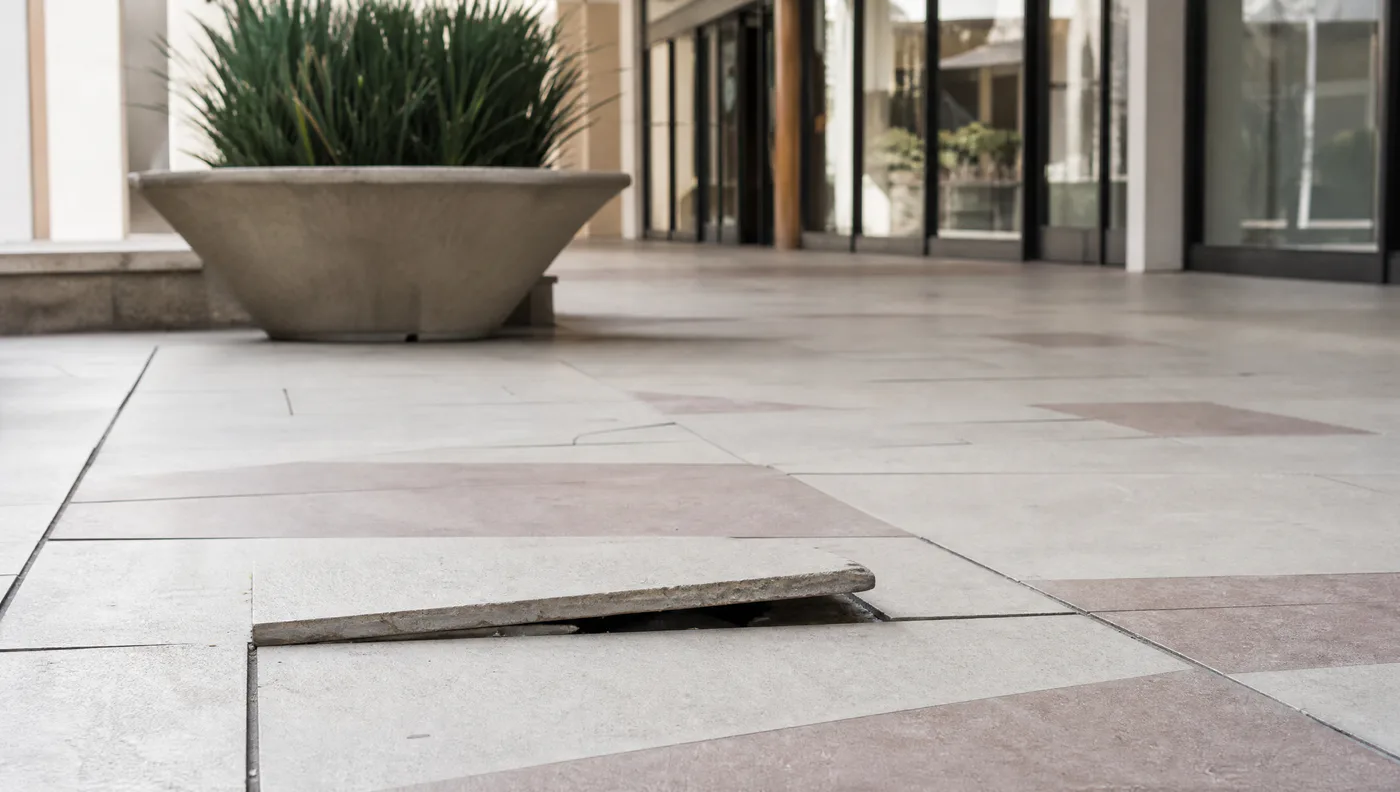
That typically falls under general premises liability rather than § 768.0755. Structural issues — broken stairs, loose handrails, uneven surfaces — are analyzed under the common-law framework, with different evidence priorities than a transitory-substance case.
Related reading
 Road Accidents
Parking Lot Accidents in Lakeland: Who Pays for the Damage?
Richard P. Pravato Premises and Hotels Florida’s §768.0755 Constructive Knowledge Standard for Grocery Store Slip and Falls
Richard P. Pravato  Premises and Hotels
 Hotel and Resort Injuries in Miami: Pools, Elevators, and Negligent Security
Richard P. Pravato