















Right-Turn and 'Right Hook' Bicycle Crashes at Miami Intersections
Right-Turn and ‘Right Hook’ Bicycle Crashes at Miami
By the Law Offices of Wolf & Pravato · Published July 17, 2026
A right hook is one of the most common ways a driver injures a cyclist, and one of the least understood. The cyclist is doing everything correctly, riding straight, in a marked lane, with the light, and a car that passed them seconds earlier turns directly across their path. From the saddle there is no warning and nowhere to go. Establishing how it happened is where Florida bicycle accident lawyers begin.
How a right hook actually unfolds
The maneuver has a consistent three-part structure, and naming the parts is what makes the driver’s error visible.
Step one: the overtake
A driver comes up behind a cyclist travelling in a bike lane or at the right edge of the road. The cyclist is moving at perhaps fifteen miles an hour; the driver wants to be past them. Under Florida’s safe-passing law, the driver must give the cyclist adequate clearance when overtaking, and often does not. Critically, the moment the driver’s vehicle is alongside and then ahead, the cyclist disappears into the area behind the driver’s right shoulder, the worst blind spot in the car.
Step two: the misjudged gap
Now ahead of the cyclist, the driver sees their turn approaching and makes a judgment based on a snapshot that is already stale. They remember passing a bicycle somewhere back there and assume it is far behind. It is not. A cyclist at fifteen miles an hour closes distance far faster than drivers intuit, and the gap the driver believes exists closed while they were checking the intersection. This is the error at the heart of the crash: the driver acts on where the cyclist was, not where they are.
Step three: the turn across the lane
The driver turns right, sweeping across the bike lane they just passed. The cyclist, travelling straight with the right of way, meets the passenger side of a turning car with no time to brake and no room to swerve. The rider is often thrown over the hood or pulled under the rear wheels. The whole sequence takes about two seconds, and the cyclist has no part in it beyond continuing straight, exactly as the law contemplates.
Why the driver is almost always at fault
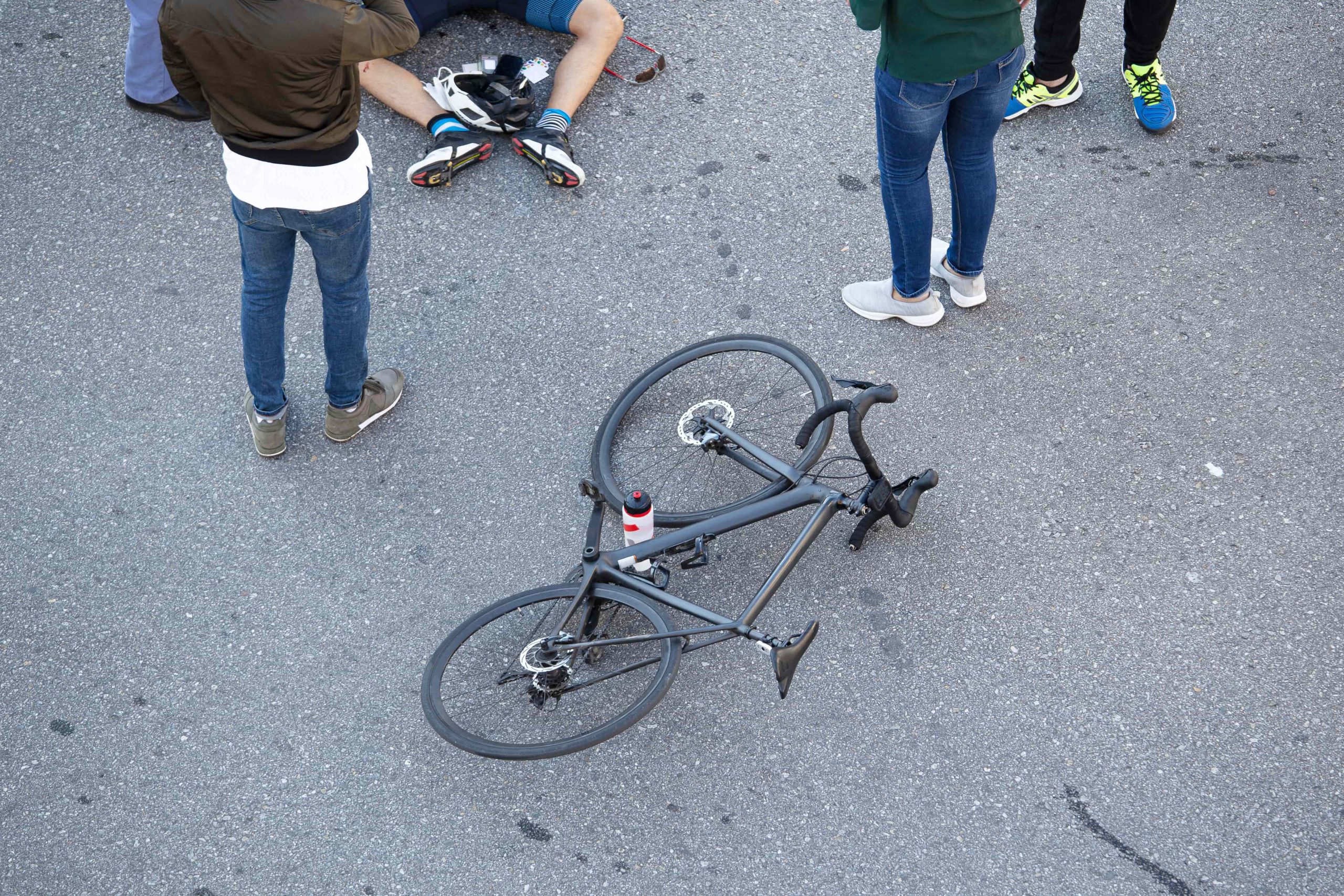
The duty here is not ambiguous. A driver turning across a lane of travel must yield to traffic already lawfully proceeding in that lane, and under Florida’s bicycle regulations a cyclist in a bike lane is lawful traffic entitled to that lane. Overtaking a cyclist does not transfer the right of way; a driver who passes someone acquires no licence to then cut across them. And a driver who cannot see whether the lane they are crossing is clear has an obligation to check, with a mirror and a shoulder check, before turning, not to assume. The failure is a failure to look, and it is the driver’s alone.
The variant: turning right from the wrong lane
A related version happens when a driver makes a right turn from the through lane rather than merging into the bike lane first, where that is permitted, or from too far left. Turning across a bike lane from an adjacent lane, rather than entering it and turning from the rightmost position, sweeps the entire width of the cyclist’s lane at once. The result is the same collision, and the same failure to yield to lawful traffic already in that space.
The injuries a right hook produces
The geometry of this collision dictates the harm, and it is worse than the modest speeds suggest. Because the cyclist strikes the side of a turning vehicle rather than being struck from behind, the rider is stopped almost instantly while still upright and clipped in, which sends them over the handlebars into the car’s flank, the window, or the pavement beyond it. There is no time to tuck or roll. Clavicle fractures are close to signature injuries here, along with wrist and shoulder trauma from the outstretched arm, facial and dental injuries from contact with the vehicle body, and head injury even in helmeted riders, because a helmet manages a fall onto pavement rather than a body thrown into sheet metal.
The worse version is when the car keeps turning. A rider who goes down alongside a vehicle that has not stopped can be drawn under the rear wheels as the turn completes, which produces crush injuries to the legs and pelvis that are life-altering rather than merely serious. This is why a driver’s failure to look before turning is not a minor lapse in this context: the maneuver puts the cyclist in the one place where a completed turn runs them over. Valuing these claims on the vehicle’s low turning speed, as insurers often try to, ignores what the physics of being struck side-on actually does to a person.
What proves a right hook
These crashes leave a distinctive and readable signature:
- Point of impact on the vehicle’s right side or right-front quarter, not the front bumper, which shows the car was turning across rather than striking head-on.
- The cyclist’s position and the bike’s damage, establishing they were travelling straight in the lane.
- The vehicle’s data on speed, steering, and signal use in the seconds before the turn.
- Whether the turn signal was used at all, and if so, how late.
- Intersection and business cameras, which Miami’s commercial corridors have in abundance.
- The cyclist’s own camera, increasingly common, which often captures the entire sequence.
- Reconstruction of the closing speed, which demonstrates the gap the driver relied on had already closed.
Reviewing proving driver fault in an intersection bicycle crash shows how this evidence is assembled.
Why Miami’s bike lanes make this worse
One recurring dispute deserves a direct answer: the driver claims they signaled. Often they did, and it changes less than they think. A signal announces an intention to a driver behind who can see the rear of the car; it does not help a cyclist who is beside or slightly behind the vehicle’s right rear, where the signal is barely visible and where the overtake itself put them. More to the point, signaling communicates an intention but does not create a right of way. A driver who signals and then turns across occupied lawful traffic has announced their negligence rather than excused it, because the duty is to yield until the lane is actually clear, not to notify and proceed. The turn signal question is a distraction from the only one that matters, which is whether the driver looked.
Miami’s cycling infrastructure was largely painted onto roads built for cars, which produces the exact conditions a right hook needs. Bike lanes run to the right of through lanes straight up to intersections where drivers must cross them to turn, with no protection and often no marking through the conflict zone. Lanes disappear at intersections precisely where guidance matters most. Add heavy turning volume into commercial driveways and garages, delivery and rideshare vehicles pulling right constantly, and visitors unfamiliar with the lane layout, and the geometry practically manufactures this collision. Injured riders can also reach Miami bicycle accident lawyers.
Did a car turn right across your bike lane?
A right hook is a failure to look, and the impact pattern proves it. The Law Offices of Wolf & Pravato reconstruct the turn and hold the driver accountable. Call 954-522-5800 for a free case review.
Sources: Fla. Stat. §316.2065; Fla. Stat. §316.083
FAQs
Q1. What is a right hook?
It is when a driver overtakes a cyclist and then turns right across the cyclist’s path. The cyclist is travelling straight in a bike lane with the right of way, and the car that just passed them cuts across, leaving no time to brake and no room to swerve.
Q2. Why does the driver misjudge it?
Because they act on where the cyclist was, not where they are. After passing, the cyclist sits in the driver’s right blind spot, and drivers badly underestimate how fast a bicycle closes distance. The gap the driver believes exists has already closed while they checked the intersection.
Q3. Is the driver at fault?
Almost always. A driver turning across a lane must yield to traffic already lawfully in it, and a cyclist in a bike lane is lawful traffic. Overtaking someone does not transfer the right of way, and a driver who cannot see the lane they are crossing must check before turning.
Q4. What evidence proves a right hook?
The impact pattern is distinctive: damage to the vehicle’s right side or right-front quarter rather than the front bumper shows the car was turning across. Add the vehicle’s speed and steering data, signal use, intersection cameras, and the cyclist’s own camera footage.
Q5. Why are Miami’s bike lanes especially prone to this?
Because they were painted onto roads built for cars. Lanes run to the right of through lanes straight into intersections where drivers must cross them, often unmarked through the conflict zone, with heavy turning traffic into driveways and garages and many unfamiliar visitors.
About the Firm
Published by the Law Offices of Wolf & Pravato
For nearly three decades, the Law Offices of Wolf & Pravato have represented injured Floridians and their families across South and Southwest Florida, exclusively on the plaintiff’s side. The firm is led by managing partner Richard P. Pravato, a Board-Certified Civil Trial Attorney (Florida Bar No. 86150). To reach the lawyer who handles cases in your area, visit our attorneys page, explore our practice areas, or learn more about our firm.
Law Offices of Wolf & Pravato · 2101 W. Commercial Blvd., Suite 1500, Fort Lauderdale, FL 33309 · 954-522-5800 · Free case evaluation: 844-643-7200
Disclaimer: This blog post is provided for general informational purposes only and does not constitute legal advice. Reading this content does not create an attorney-client relationship between you and the Law Offices of Wolf & Pravato. Laws change and every case is different, so you should not act or rely on any information here without consulting a licensed Florida attorney about your specific situation. For advice regarding your circumstances, please contact our office for a free consultation.
Recent Posts
- Wrong Burial Plot and Grave-Site Errors in Fort Lauderdale

- Rainwater Falls at Fort Lauderdale Store Entrances

- Parking-Lot Backing Crashes in Fort Lauderdale: Who Has the Right of Way?
- Elevator and Escalator Injuries at Fort Lauderdale Shopping Centers
- Delivery Driver Car Accidents in Lakeland: Who Pays?

- Injured as a Passenger in Fort Lauderdale: Whose Insurance Pays?





FLORIDA’S PERSONAL INJURY ATTORNEYS FOR + 20 YEARS