















Proving Driver Fault in a Fort Myers Intersection Bicycle Crash
Proving Driver Fault in a Fort Myers Intersection Bicycle Crash
Published by the Law Offices of Wolf & Pravato on July 2, 2026.
Quick answer: A Fort Myers intersection bicycle accident lawyer helps a cyclist prove a driver caused the crash. Most intersection bike collisions come down to who had the right of way, and physical evidence, camera footage, and witness accounts, more than the drivers’ accounts, establish the driver’s fault.
When a car and a bicycle collide at a Fort Myers intersection, the injured cyclist almost always faces the same challenge: proving the driver, not the rider, caused the crash. Drivers and their insurers are quick to blame the cyclist, so the case comes down to evidence. The Fort Myers bicycle accident lawyers help injured riders build the proof that establishes a driver’s fault. These principles run through our statewide Florida bike accident process overview too.
Why intersection bike crashes turn on fault
Intersections are where the paths of cars and bicycles cross, and where most serious bike crashes happen, at left turns, right turns across a bike lane, and failures to yield. Unlike a rear-end collision, an intersection crash rarely has an obvious at-fault party from the vehicles’ final positions alone. Because liability is genuinely contested, the outcome depends on proving who had the right of way and who violated it.
The right-of-way rules that decide it
Fault is measured against the rules of the road. Under the intersection right-of-way rules (§316.123), drivers must obey signals and yield when required, and under Florida’s bicycle regulations (§316.2065) a cyclist has the same rights as a driver, including the right of way in the situations where a vehicle would have it. A driver who ran a signal, turned across the rider’s path, or failed to yield has typically violated these rules and is at fault.
The evidence that proves who caused the crash
Because the drivers’ accounts usually conflict, objective evidence decides the case, and it comes from two directions.
What the physical scene reveals
The point and angle of impact on the vehicle and the bicycle, the final resting positions, skid marks, and debris can reconstruct how the collision unfolded, showing whether the car turned into the rider or crossed against the signal. This physical evidence often speaks more reliably than either party’s memory of a fast, chaotic event.
Cameras, data, and witnesses
Traffic-signal cameras, nearby business surveillance, dashcams from other vehicles, and independent witnesses can capture who entered the intersection lawfully. In some cases the vehicle’s own data records speed and braking. Securing this evidence quickly, before footage is overwritten, is often what confirms the cyclist had the right of way.
The excuses drivers give, and how they fail
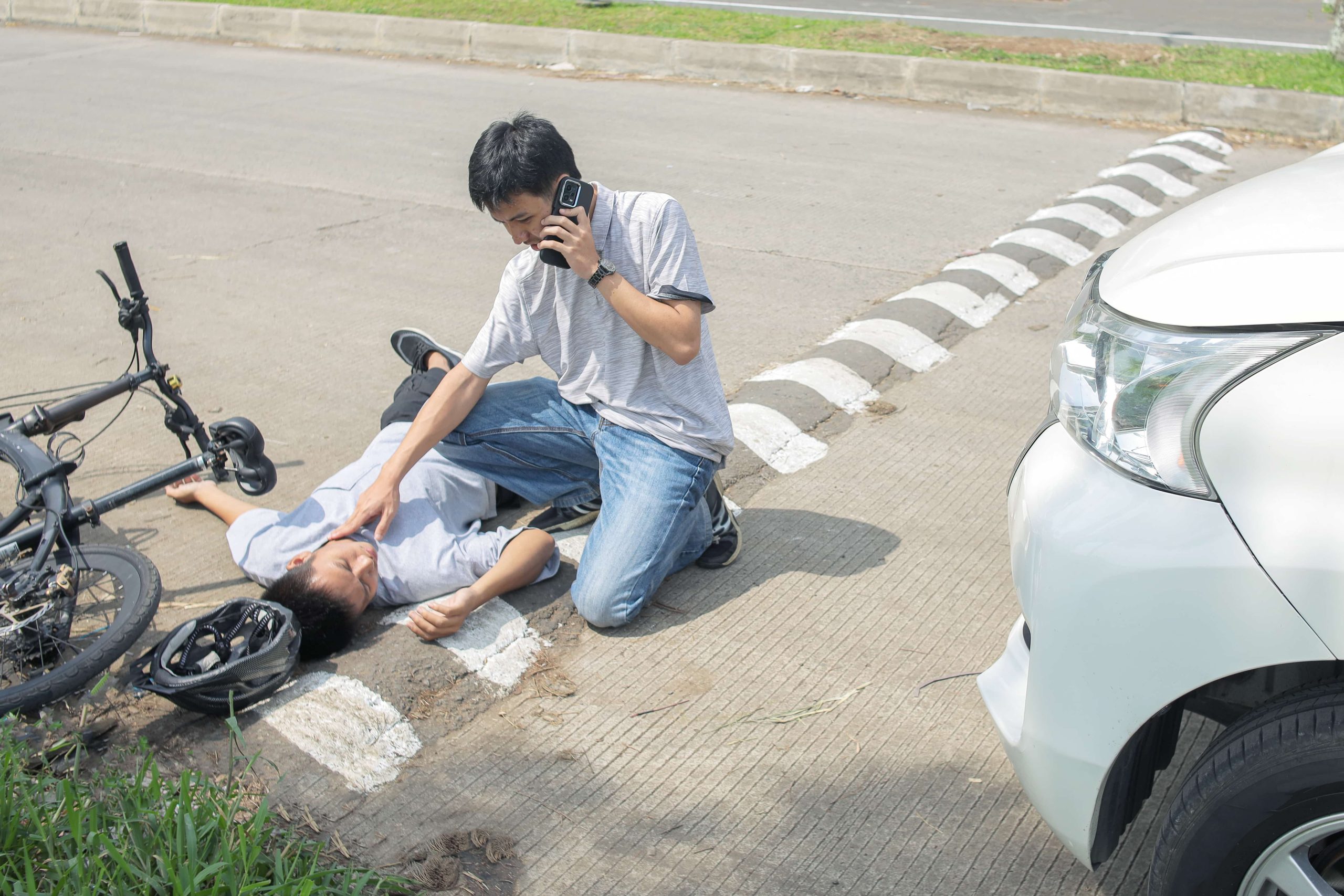
Drivers offer predictable defenses: ‘the cyclist came out of nowhere,’ ‘the light was green for me,’ or ‘the rider wasn’t supposed to be there.’ Each can be tested against the evidence. Signal-timing data can contradict a claim about the light, camera footage can show a cyclist who was plainly visible, and the right-of-way rules can confirm the rider was lawfully in the intersection. A driver’s excuse rarely survives objective proof.
How insurers try to blame the cyclist
Even with strong evidence, an insurer will look for a way to shift blame, arguing the cyclist ran a light, rode against traffic, or wore dark clothing. Under comparative negligence (§768.81), any fault assigned to the rider reduces the recovery, and a rider found mostly at fault recovers nothing. Rebutting these arguments with proof that the cyclist rode lawfully is a central part of the case.
What an injured cyclist can recover
A cyclist who establishes the driver’s fault may recover medical bills and future treatment, lost income and diminished earning capacity, the value of the damaged bicycle, and pain and suffering. Because intersection crashes at vehicle speed often cause severe injuries, valuing the future cost of care, not just the emergency treatment, is essential to a fair outcome.
The clock running on a bicycle claim
Time works against an injured cyclist twice. The camera footage and physical evidence that prove fault vanish within days, and under the two-year deadline (§95.11), the claim itself must be filed within two years. Acting quickly preserves the proof of who had the right of way and protects the right to bring the claim before either clock runs out.
How reconstruction rebuilds an intersection crash
When fault is genuinely disputed, accident reconstruction can settle it. Using the damage to the vehicle and bicycle, the point and angle of impact, the resting positions, and any available signal-timing or vehicle data, a reconstruction expert can rebuild the sequence and show which party entered the intersection lawfully. This objective analysis is especially valuable when a driver insists the light was green or the rider ‘came out of nowhere,’ because the physics of the collision often contradict an account that memory alone would leave unchallenged.
What a cyclist should do to protect the evidence
Because the proof of fault fades fast, quick action preserves it. If able, the injured rider or a companion should photograph the intersection, the signals, the vehicle, and the bicycle, note nearby businesses and traffic cameras that may have recorded the crash, and get the names of witnesses before they disperse. Seeking prompt medical care also documents the injuries. When the rider is too hurt to act, having someone move quickly on their behalf, or contacting a lawyer to send preservation demands, is often what secures the footage before it is overwritten.
Why a cyclist’s account needs corroboration
An injured cyclist usually knows exactly what happened, but knowing is not the same as proving, especially against a driver who remembers the crash differently and an insurer inclined to doubt the rider. That is why corroboration matters so much in these cases. Independent witnesses, camera footage, signal-timing data, and the physical evidence transform the cyclist’s account from one contested version into a documented fact. Building that corroboration, rather than relying on the rider’s word alone, is what overcomes the built-in skepticism cyclists face and secures a recovery based on what the evidence shows actually happened.
Ultimately, an intersection bicycle case is won not by arguing louder than the driver, but by assembling the objective proof, footage, data, physical evidence, and witnesses, that leaves little room for dispute. That evidence-first approach, started before the proof disappears, is what turns a contested crash into a recoverable claim for an injured rider, even against a driver and an insurer determined to place the blame elsewhere.
Wrongly Blamed for an Intersection Bike Crash?
Drivers and insurers blame cyclists, but the evidence often tells a different story. The team behind our Fort Myers bicycle accident lawyers page can build the proof of fault. Reach the firm at 954-522-5800 or 844-643-7200 for a free review of the crash.
Sources: Florida Statutes §316.123 (intersections and right of way); Florida Statutes §316.2065 (bicycle regulations); Florida Statutes §95.11 (statute of limitations)
FAQs
Q1. Why do intersection bike crashes come down to fault?
Because intersections are where cars and bicycles cross paths and where liability is genuinely contested. Unlike a rear-end crash, the vehicles’ final positions rarely reveal an obvious at-fault party, so the case depends on proving who had the right of way and who violated it, which is decided by the evidence.
Q2. What right-of-way rules apply to a cyclist?
Drivers must obey signals and yield when required under Florida’s intersection rules, and a cyclist has the same rights as a driver, including the right of way where a vehicle would have it. A driver who ran a signal, turned across the rider’s path, or failed to yield has typically violated these rules and is at fault.
Q3. What evidence proves the driver caused the crash?
Physical evidence, the point and angle of impact, final positions, skid marks, and debris, reconstructs how the collision happened, while traffic-signal cameras, business surveillance, dashcams, and witnesses capture who entered lawfully. This objective proof usually decides the case, since the drivers’ accounts conflict.
Q4. How do drivers try to avoid blame?
With predictable excuses: ‘the cyclist came out of nowhere,’ ‘my light was green,’ or ‘the rider wasn’t supposed to be there.’ Each can be tested against signal-timing data, camera footage, and the right-of-way rules, which often contradict the excuse. A driver’s account rarely survives strong objective evidence.
Q5. Can the insurer blame the cyclist?
It will try, arguing the rider ran a light, rode against traffic, or was hard to see. Under Florida’s comparative-negligence rule, any fault assigned to the cyclist reduces the recovery, and a rider found mostly at fault recovers nothing. Proof that the cyclist rode lawfully is central to rebutting these arguments.
Q6. How long does a cyclist have to file a claim?
Under Florida’s statute of limitations, most claims must be filed within two years. Because the camera footage and physical evidence that prove fault also vanish within days, acting quickly protects both the proof of who had the right of way and the right to bring the claim before either deadline passes.
About the Firm
Published by the Law Offices of Wolf & Pravato
For nearly three decades, the Law Offices of Wolf & Pravato have represented injured Floridians and their families across South and Southwest Florida, exclusively on the plaintiff’s side. The firm is led by managing partner Richard P. Pravato, a Board-Certified Civil Trial Attorney (Florida Bar No. 86150). To reach the lawyer who handles cases in your area, visit our attorneys page, explore our practice areas, or learn more about our firm.
Law Offices of Wolf & Pravato · Fort Myers, FL (serving Lee County) · 954-522-5800 · Free case evaluation: 844-643-7200
Recent Posts
- Wrong Burial Plot and Grave-Site Errors in Fort Lauderdale

- Rainwater Falls at Fort Lauderdale Store Entrances

- Parking-Lot Backing Crashes in Fort Lauderdale: Who Has the Right of Way?
- Elevator and Escalator Injuries at Fort Lauderdale Shopping Centers
- Delivery Driver Car Accidents in Lakeland: Who Pays?

- Injured as a Passenger in Fort Lauderdale: Whose Insurance Pays?





FLORIDA’S PERSONAL INJURY ATTORNEYS FOR + 20 YEARS