














Who Decides Fault in a Florida Pedestrian Accident Claim?
A common myth keeps injured pedestrians from pursuing valid claims: the belief that any fault on their part ends the case. In Florida, that is not true. A pedestrian who was partly at fault can usually still recover, just on a reduced basis. Understanding how that works protects an injured pedestrian’s rights. A Florida pedestrian accident lawyer can explain it.
Can a pedestrian recover if they were partly at fault?
Yes, in most cases. Florida does not require a pedestrian to be blameless to recover. As long as the pedestrian was not more than 50 percent at fault, they can pursue a claim, with the recovery reduced by their share. Being partly at fault lowers a claim; it does not erase it.
How comparative negligence works for pedestrians
Florida’s comparative negligence law (§768.81) applies to pedestrians just as it does to drivers.
How fault reduces the recovery
If a pedestrian is assigned a percentage of fault, their recovery is reduced by that percentage. A pedestrian found 20 percent at fault for a $100,000 claim would recover $80,000. The reduction is proportional to the share of blame.
The 50 percent bar
There is a ceiling. A pedestrian found more than 50 percent at fault cannot recover at all. That single line, 50 versus 51 percent, can decide whether there is any recovery, which is why how fault is divided matters so much.
Common ways a pedestrian may share fault
Insurers point to several behaviors to assign fault to a pedestrian.
Crossing outside a crosswalk
Crossing midblock or outside a crosswalk where one should be used can shift some fault to the pedestrian. Under the pedestrian right-of-way law (§316.130), pedestrians have duties too, though drivers must still avoid hitting people they can see.
Crossing against a signal
Stepping into the street against a ‘Don’t Walk’ signal can assign a pedestrian some blame. Even then, a driver who had time to stop and failed to may bear most of the fault.
Distraction or impairment
A pedestrian distracted by a phone, or impaired, may be assigned a share of fault. But this rarely excuses a driver who was speeding, distracted, or failed to yield to a visible pedestrian.
Why a driver is usually still mostly at fault
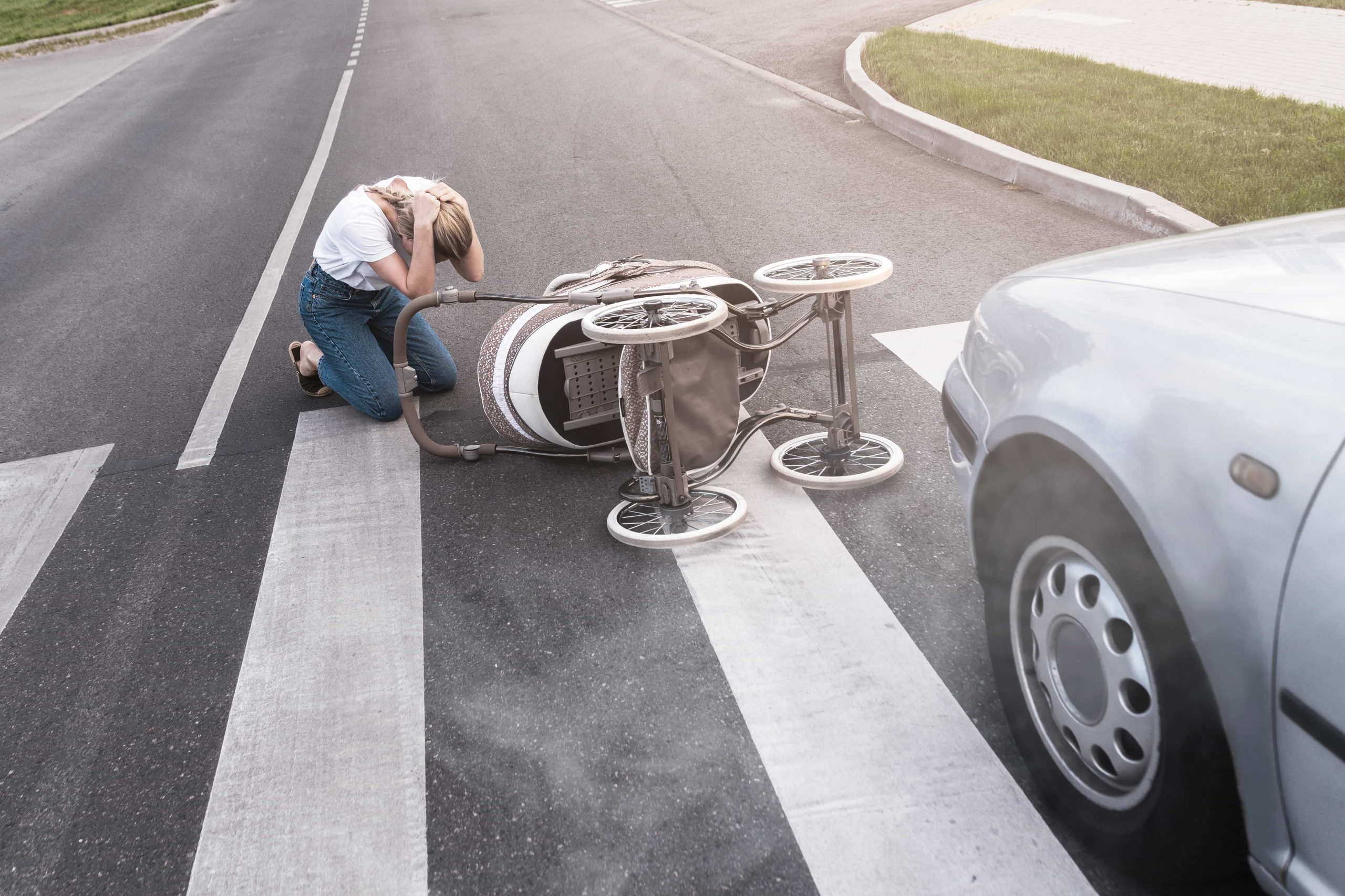
Even when a pedestrian shares some blame, drivers carry a heavy duty to watch for and avoid people on foot. A driver who could have seen and avoided a pedestrian, but did not, is usually assigned the larger share of fault. The vulnerability of pedestrians is one reason the law places so much responsibility on drivers.
How insurers exaggerate a pedestrian’s fault
Because pushing a pedestrian past 50 percent fault erases the claim, insurers have a strong incentive to overstate it. They may argue the pedestrian ‘darted out’ or was careless, hoping to cross that line. Countering these exaggerations with evidence is central to protecting the claim.
What evidence protects a pedestrian’s claim
The crash report, surveillance and traffic-camera footage, witness accounts, the point of impact, and the driver’s speed all help establish what really happened and limit the fault assigned to the pedestrian. Because this evidence, especially video, fades quickly, gathering it early is essential. Our overview of how crosswalk accidents are handled explains more.
How long do you have to file in Florida?
There is a deadline. Under the two-year deadline (§95.11), most pedestrian injury claims must be filed within two years, and the evidence that limits a pedestrian’s fault disappears far sooner. Acting early protects both the deadline and the claim.
Why pedestrians are so vulnerable
A pedestrian has no protection against a vehicle that may weigh thousands of pounds, so even a low-speed crash can cause serious harm. This vulnerability is one reason the law places a heavy duty on drivers to watch for and avoid people on foot, and why, even when a pedestrian shares some blame, a driver who could have avoided the crash usually carries the larger share of fault.
How an attorney limits a pedestrian’s share of fault
Because the recovery shrinks with every percentage point of fault, and vanishes past 50 percent, limiting the blame assigned to a pedestrian is central to these cases. An attorney gathers the crash report, secures camera footage before it is overwritten, locates witnesses, and uses the point of impact and the driver’s speed to show what really happened, countering the insurer’s attempt to overstate the pedestrian’s fault.
Can a child pedestrian be blamed?
Children are held to a far lower standard than adults, and the youngest may be incapable of negligence at all. An argument that a child ‘darted out’ carries little weight, especially near schools or in residential areas where drivers must expect children. When the injured pedestrian is a child, the focus stays squarely on the driver’s duty to watch for and avoid them.
What an injured pedestrian should do
After being struck, a pedestrian should get medical care right away, even if the injuries seem minor, since some surface only later. If able, the pedestrian or a companion should call 911, photograph the scene and the point of impact, note the signals and crossing, and gather the names of the driver and any witnesses. Avoiding any admission of fault at the scene is important, because the question of shared fault can decide the whole claim, and an offhand statement may be used to overstate the pedestrian’s blame.
Why the point of impact matters
In a pedestrian case, where on the vehicle and where in the roadway the impact occurred can reveal a great deal, whether the pedestrian was already well into a crossing, and whether the driver had time to react. This physical evidence often counters an insurer’s claim that the pedestrian darted out, which is why documenting the point of impact early is so valuable.
Told You Were at Fault as a Pedestrian?
Sharing some blame does not end a pedestrian’s claim in Florida, and insurers often overstate it. The team behind our Florida pedestrian accident lawyer page can protect your recovery. Call 954-522-5800 or 844-643-7200 for a free case evaluation, any time.
Sources: Florida Statutes §768.81 (comparative negligence); Florida Statutes §316.130 (pedestrian right-of-way)
FAQs
Q1. Will an insurer use my partial fault to deny everything?
An insurer may try, because pushing a pedestrian past 50 percent fault erases the claim entirely. But partial fault that stays at or below that line only reduces a recovery, it does not end it. The insurer’s incentive to overstate your fault is exactly why clear evidence of the driver’s responsibility, and an attorney to present it, matter so much.
Q2. How much does my own fault reduce my claim?
Proportionally. If you are assigned a percentage of fault, your recovery is reduced by that percentage, so a pedestrian found 20 percent at fault for a $100,000 claim would recover $80,000. The reduction tracks your share of the blame, up to the point where the 50 percent bar would prevent any recovery.
Q3. What is the 50 percent bar?
It is the ceiling on recovery. A pedestrian found more than 50 percent at fault cannot recover at all, while one who is 50 percent or less can recover a reduced amount. That single line can decide whether there is any recovery, which is why how fault is divided is so important in these cases.
Q4. Does crossing outside a crosswalk end my claim?
No. Crossing midblock or outside a crosswalk can shift some fault to you, but it does not automatically bar a claim. Drivers still have a duty to avoid hitting people they can see, so a driver who had time to react may bear most of the fault even when the pedestrian crossed improperly.
Q5. Can I recover if I was looking at my phone?
Possibly. Distraction may assign a pedestrian some share of fault, but it rarely excuses a driver who was speeding, distracted, or failed to yield to a visible pedestrian. As long as your share does not exceed 50 percent, you can still recover a reduced amount based on the facts.
Q6. Why do insurers exaggerate a pedestrian’s fault?
Because pushing a pedestrian past 50 percent fault erases the claim entirely, giving insurers a strong incentive to overstate it. They may argue you ‘darted out’ or were careless, hoping to cross that line. Countering these exaggerations with clear evidence is central to protecting your recovery.
Q7. What evidence helps limit my share of fault?
The crash report, surveillance and traffic-camera footage, witness accounts, the point of impact, and the driver’s speed all help show what really happened and limit the fault assigned to you. Because video and other evidence fade quickly, gathering it early is essential to keeping your share of fault low.
Q8. What does a Florida pedestrian accident lawyer cost?
The firm works on a contingency fee, so there is no up-front cost and a fee is owed only from a recovery. The consultation is free, so a pedestrian can learn whether partial fault affects their claim without any financial risk.
About the Firm
Published by the Law Offices of Wolf & Pravato
For nearly three decades, the Law Offices of Wolf & Pravato have represented injured Floridians and their families across South and Southwest Florida, exclusively on the plaintiff’s side. The firm is led by managing partner Richard P. Pravato, a Board-Certified Civil Trial Attorney (Florida Bar No. 86150). To reach the attorney who handles cases in your area, visit our attorneys page, explore our practice areas, or learn more about our firm.
Law Offices of Wolf & Pravato · 2101 W. Commercial Blvd., Suite 1500, Fort Lauderdale, FL 33309 · 954-522-5800 · Free case evaluation: 844-643-7200
Disclaimer: This blog post is provided for general informational purposes only and does not constitute legal advice. Reading this content does not create an attorney-client relationship between you and the Law Offices of Wolf & Pravato. Laws change and every case is different, so you should not act or rely on any information here without consulting a licensed Florida attorney about your specific situation. For advice regarding your circumstances, please contact our office for a free consultation.
Recent Posts
- Wrong Burial Plot and Grave-Site Errors in Fort Lauderdale

- Rainwater Falls at Fort Lauderdale Store Entrances

- Parking-Lot Backing Crashes in Fort Lauderdale: Who Has the Right of Way?
- Elevator and Escalator Injuries at Fort Lauderdale Shopping Centers
- Delivery Driver Car Accidents in Lakeland: Who Pays?

- Injured as a Passenger in Fort Lauderdale: Whose Insurance Pays?





FLORIDA’S PERSONAL INJURY ATTORNEYS FOR + 20 YEARS