















Tanker and Hazmat Truck Accidents in Miami-Dade: Special Dangers
Miami-Dade’s busy highways, the Palmetto, the Dolphin, I-95, and the routes serving PortMiami, carry tankers and trucks hauling fuel, chemicals, and other hazardous materials. When one of these trucks crashes, the danger goes far beyond the impact itself: fire, explosion, and toxic exposure can harm not only the people in the crash but bystanders nearby. These cases are complex, and our Miami truck accident lawyer understands what they require.
What Makes Tanker and Hazmat Crashes So Dangerous
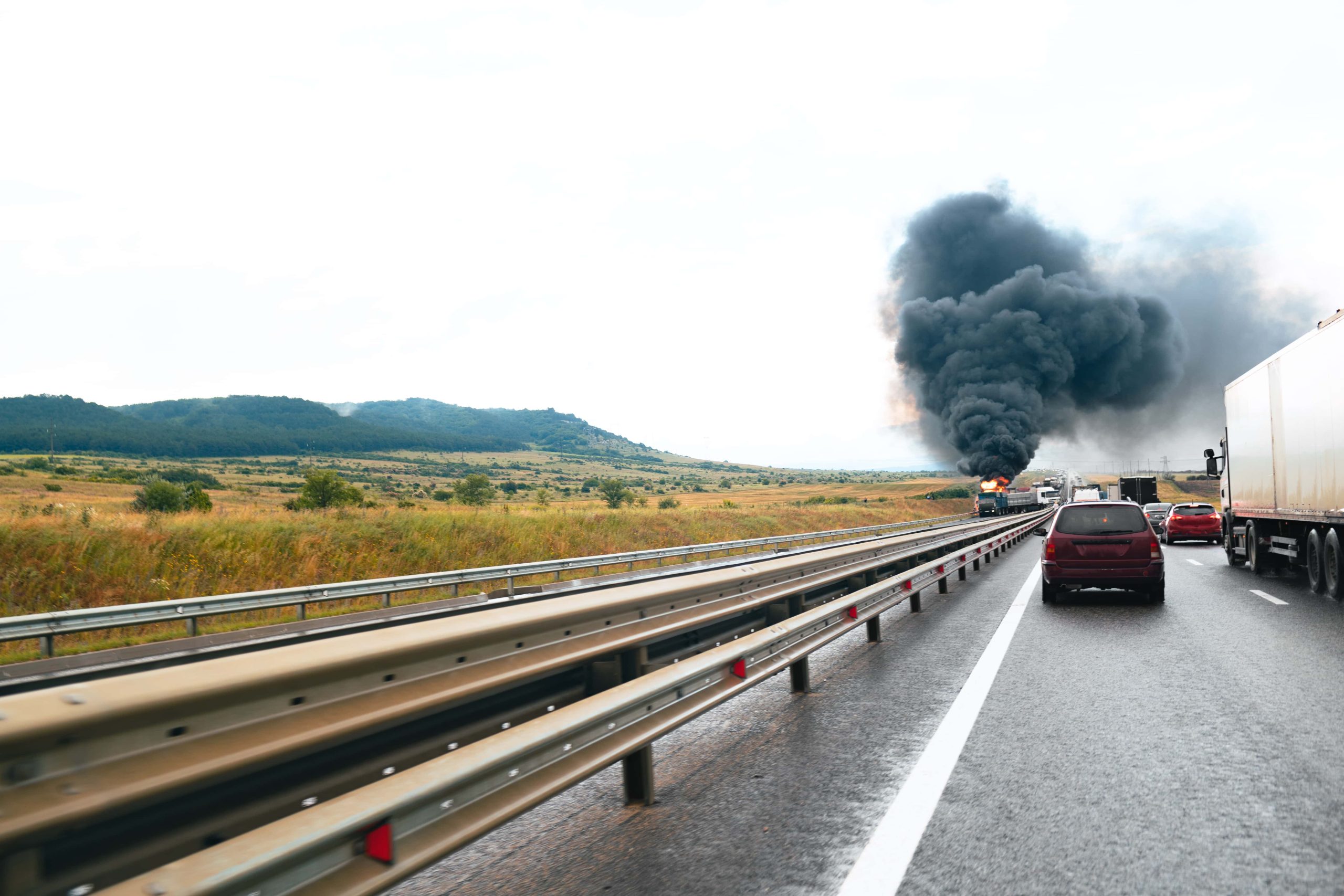
A tanker or hazmat truck is essentially a moving container of something flammable, corrosive, or toxic. A crash can rupture the tank or breach the cargo, releasing fuel, chemicals, or gas. The result can be a fire, an explosion, a hazardous spill, or a toxic cloud — hazards that ordinary truck crashes do not present. The danger can spread well beyond the vehicles involved, affecting other drivers, pedestrians, and even nearby homes and businesses.
Fire, Explosion, and Burn Injuries
When a fuel tanker ignites, the fire can be intense and fast-moving, causing severe burns, smoke inhalation, and fatal injuries. Burn injuries are among the most painful and costly of all injuries, often requiring skin grafts, multiple surgeries, and long rehabilitation, and leaving permanent scarring. The catastrophic nature of these injuries is part of what sets tanker and hazmat cases apart.
Spills and Toxic Exposure
Not every hazmat crash involves fire. A chemical spill or gas release can cause chemical burns, respiratory injuries, poisoning, and long-term health effects, sometimes appearing only after exposure. People near the crash, not just those in it, can be harmed. Identifying what substance was released, and documenting the exposure, is critical to these claims and to the victims’ medical care.
Why Tankers Handle Differently
Tanker trucks are uniquely difficult to drive. Liquid cargo shifts and sloshes inside the tank, a phenomenon called ‘surge,’ which can affect braking and stability and make rollovers more likely, especially on curves and ramps. A driver who is fatigued, speeding, or improperly trained for this kind of load can lose control more easily than with a standard trailer. These handling characteristics often factor into how a tanker crash happens.
A Quick Look at Florida Truck Crashes
Large trucks are involved in thousands of serious crashes in Florida each year. According to FMCSA crash statistics, large-truck crashes in the state caused hundreds of deaths and thousands of injuries in a recent year. Miami-Dade’s dense traffic and heavy commercial and port-related trucking put it squarely within that risk, and tanker and hazmat loads add a layer of danger on top.
PortMiami and the Region’s Hazmat Traffic
Miami-Dade’s role as a major trade hub means a steady flow of trucks moving fuel, chemicals, and other hazardous cargo to and from PortMiami, fuel depots, and industrial areas, along corridors that also carry dense passenger traffic. That mix concentrates the risk of a tanker or hazmat crash in exactly the places where many people are nearby. Understanding the routes and the kind of cargo they carry is part of investigating how a particular crash happened and who bears responsibility.
Federal Hazmat Rules and Liability
Hazardous-materials transport is heavily regulated. The federal hazardous-materials regulations govern how dangerous cargo must be packaged, labeled, loaded, and transported, and who may carry it. A violation — improper loading, a mislabeled tank, an unqualified driver, or inadequate maintenance — can be powerful evidence of negligence. These rules add an extra layer of duties beyond the general trucking regulations.
Who May Be Responsible
Liability in a tanker or hazmat crash may extend to the driver, the trucking company, the company that loaded or packaged the cargo, the shipper of the hazardous material, and a maintenance provider. Each may carry its own insurance, and given the catastrophic potential of these crashes, the policies can be substantial. Our Florida truck accident lawyers work to identify every responsible party.
How Shared Fault Applies
Under comparative negligence (§768.81), any fault assigned to the injured person reduces the recovery, and being more than 50 percent at fault bars it. Trucking and hazmat companies often try to shift blame, so the physical evidence, the regulatory records, and expert analysis are key to protecting your claim.
The Evidence These Cases Require
Beyond the usual truck-crash evidence, hazmat cases require documenting the substance involved, the loading and shipping papers, the hazmat manifest, and the response of emergency and environmental agencies. The tank, the cargo records, and the truck’s electronic data are all critical, and so is evidence of any toxic exposure. Much of this can be lost quickly, which is why prompt, thorough investigation matters.
What Our Attorneys Preserve First
In the tanker and hazmat cases the firm handles, the priority is securing the hazmat manifest, the loading and inspection records, and the truck and tank before they are repaired or cleared, along with documentation of the substance and any exposure. We see companies and their insurers move quickly after a hazmat crash, so a prompt preservation demand is essential to keeping the case provable.
Environmental Agencies and Your Case
A hazmat crash often triggers a response from environmental and emergency agencies that test for contamination, document the spill, and oversee the cleanup. The records these agencies create, identifying the substance, the extent of the release, and the response, can be valuable evidence in an injury claim. Coordinating with this official documentation, and preserving it, is part of building a hazmat case that ordinary truck crashes do not require.
Why Trucking Companies Respond So Fast
After a serious tanker or hazmat crash, the trucking and shipping companies often dispatch their own investigators and lawyers within hours to protect themselves. That early, well-resourced response is exactly why an injured person needs prompt, knowledgeable help of their own, to preserve the evidence and to keep the playing field level from the start. Acting quickly, rather than waiting, is often what makes the difference in a complex hazmat case.
Injuries, Costs, and Long-Term Health
The harm from a tanker or hazmat crash can be severe and lasting, and a full claim must account for all of it.
Catastrophic Injuries and Their Cost
Because these crashes involve fire, explosion, or toxic exposure, the injuries are frequently catastrophic — severe burns, respiratory damage, and long-term illness — with costs that span a lifetime. A full claim must account for future surgeries, rehabilitation, long-term care, and lost earning capacity, often with the help of medical and economic experts. In fatal cases, surviving family members may bring a wrongful death claim.
The Need for Long-Term Health Monitoring
Some injuries from a chemical or toxic exposure do not appear right away. Respiratory conditions, organ damage, and other illnesses can develop over months or years, which is why medical monitoring after a hazmat exposure is so important, both for the victim’s health and for the claim. A full recovery must account not only for the immediate injuries but for the cost of ongoing monitoring and any conditions that emerge later.
After a Tanker or Hazmat Crash
If you were hurt in a crash involving a tanker or hazmat truck, getting medical care, including evaluation for any toxic exposure, and acting quickly to preserve the evidence can shape the case. You can contact our team for a free consultation.
Hurt in a Tanker or Hazmat Truck Crash?
These crashes involve fire, spills, and special federal rules, and the evidence disappears fast. The team behind our Miami truck accident lawyer page knows how to investigate them. Call 954-522-5800 or 844-643-7200 for a free case evaluation, available around the clock.
Sources: FMCSA — Crash Statistics; FMCSA — Hazardous Materials Regulations
FAQs
Q1. What makes tanker and hazmat truck crashes more dangerous?
A crash can rupture the tank or breach the cargo, releasing fuel, chemicals, or gas, leading to fire, explosion, spills, or toxic exposure that can harm people well beyond the vehicles involved.
Q2. Can bystanders be harmed in a hazmat crash?
Yes. A fire, explosion, or toxic release can injure other drivers, pedestrians, and even nearby residents, not just those in the crash.
Q3. Who can be liable in a tanker or hazmat crash?
The driver, the trucking company, the company that loaded or packaged the cargo, the shipper, and a maintenance provider, each possibly with substantial insurance.
Q4. How do federal hazmat rules affect my case?
Federal rules govern how hazardous cargo must be packaged, labeled, loaded, and transported. A violation can be powerful evidence of negligence.
Q5. Why do tankers handle differently?
Liquid cargo shifts inside the tank, a phenomenon called surge, which affects braking and stability and makes rollovers more likely, especially on curves and ramps.
Q6. What injuries result from these crashes?
Severe burns, smoke inhalation, respiratory damage, chemical injuries, and long-term illness, frequently catastrophic and costly over a lifetime.
Q7. What evidence is unique to a hazmat case?
The hazmat manifest, loading and shipping papers, documentation of the substance and any exposure, and the tank and cargo records, much of which can be lost quickly.
Q8. What does a Miami truck accident lawyer cost?
We take truck and hazmat cases on contingency, so there are no up-front charges and a fee only from a successful result.
About the Firm
Published by the Law Offices of Wolf & Pravato
For nearly three decades, the Law Offices of Wolf & Pravato have represented injured Floridians and their families across South and Southwest Florida, exclusively on the plaintiff’s side. The firm is led by managing partner Richard P. Pravato, a Board-Certified Civil Trial Attorney (Florida Bar No. 86150). To reach the attorney who handles cases in your area, visit our attorneys page, review our recent results, or learn more about our firm.
Law Offices of Wolf & Pravato · Miami, FL (serving Miami-Dade County) · 954-522-5800 · Free case evaluation: 844-643-7200
Disclaimer: This blog post is provided for general informational purposes only and does not constitute legal advice. Reading this content does not create an attorney-client relationship between you and the Law Offices of Wolf & Pravato. Laws change and every case is different, so you should not act or rely on any information here without consulting a licensed Florida attorney about your specific situation. For advice regarding your circumstances, please contact our office for a free consultation.
Recent Posts
- Wrong Burial Plot and Grave-Site Errors in Fort Lauderdale

- Rainwater Falls at Fort Lauderdale Store Entrances

- Parking-Lot Backing Crashes in Fort Lauderdale: Who Has the Right of Way?
- Elevator and Escalator Injuries at Fort Lauderdale Shopping Centers
- Delivery Driver Car Accidents in Lakeland: Who Pays?

- Injured as a Passenger in Fort Lauderdale: Whose Insurance Pays?





FLORIDA’S PERSONAL INJURY ATTORNEYS FOR + 20 YEARS