










On-the-Job and Company-Vehicle Crash Claims in Florida
Florida’s On-the-Job and Company-Vehicle Crash Claims
By the Law Offices of Wolf & Pravato · Published July 8, 2026
Quick answer: When a driver crashes while working or driving a company vehicle, the employer can be liable along with the driver. That usually means a larger insurance policy and additional legal theories, which can change what an injured person can recover.
A crash with a delivery van, a service truck, a sales rep’s car, or any vehicle being driven for work is not just a claim against the person behind the wheel. The business that owns the vehicle or employs the driver is often responsible too, and that changes the case in ways that matter to an injured person’s recovery. Sorting out the company’s role is where Florida car accident lawyers begin.
Why a company vehicle changes everything
When a vehicle is being used for business, the crash reaches beyond the individual driver to the enterprise behind them. That matters for two practical reasons. First, businesses typically carry far larger insurance policies than individuals, so a serious injury has a realistic source of full compensation. Second, the company’s own conduct, in hiring, training, and directing the driver, can create additional liability. Recognizing when a crash is really a company case is the difference between pursuing a modest personal policy and reaching the resources that can actually make an injured person whole.
When the employer answers for the driver
Florida law provides more than one route for holding a company responsible for a crash involving its vehicle or its employee.
Acting within the course of employment
Under the principle of vicarious liability, an employer is generally responsible for the negligence of an employee acting within the scope of their job. A driver making deliveries, traveling between job sites, or running a work errand is usually acting for the employer’s benefit, which places responsibility on the company. The key question is whether the driver was doing the employer’s business at the time, not simply whether they happened to be on the clock.
The dangerous instrumentality doctrine and vehicle owners
Florida also follows a long-standing dangerous instrumentality doctrine, which treats a motor vehicle as an inherently dangerous tool and holds its owner responsible when someone the owner permitted to drive causes harm. A company that owns a vehicle and lets an employee operate it can therefore be liable for that employee’s negligence, and Florida’s financial responsibility law reinforces the expectation that vehicle owners answer for their vehicles on the road. This owner-based liability can apply even where the employment questions are disputed.
Direct claims against the company itself
Beyond being responsible for the driver, a company can be independently negligent in how it puts that driver on the road.
Negligent hiring, training, and supervision
An employer that hires a driver with a dangerous record, fails to train them, or ignores warning signs can be directly liable for its own negligence. When a company entrusts a vehicle to someone it should have known was unfit, that decision, not just the driver’s mistake, contributed to the crash. These direct claims target the business’s own choices and can be significant where a driver’s history should have raised alarms.
Unsafe policies and pressure to cut corners
Some crashes trace back to how a company runs its operation. Unrealistic delivery quotas, incentives that reward speed over safety, or a practice of ignoring maintenance can push drivers into dangerous conduct. When a company’s own policies set the stage for a crash, that systemic failure supports a claim against the business and often explains why the crash happened in the first place.
Why does larger insurance matter to an injured person
The practical value of a company case often comes down to coverage. A commercial auto policy usually carries far higher limits than a personal one, and a badly injured person whose losses exceed an individual’s minimal coverage may find that the company’s policy is the only realistic path to full compensation. Where more than one party shares fault, Florida’s comparative fault statute apportions responsibility among them, but identifying the company and its coverage is what makes a serious recovery possible rather than theoretical.
The evidence that ties the crash to the business
Connecting a crash to a company takes proof. Vehicle registration and insurance records show ownership. Employment records, dispatch logs, delivery schedules, and GPS or telematics data can establish that the driver was working at the time. Company policies, training files, and the driver’s history support the direct negligence claims. Because businesses can be reluctant to hand over these materials, gathering them promptly, before records are lost or routines change, is central to building the case. Injured people can also reach Fort Lauderdale car accident lawyers or Miami car accident lawyers for a local review.
Steps that protect a company vehicle claim
Because a company’s case depends on tying the crash to a business, what an injured person captures early can shape the entire claim.
Capturing the business at the scene
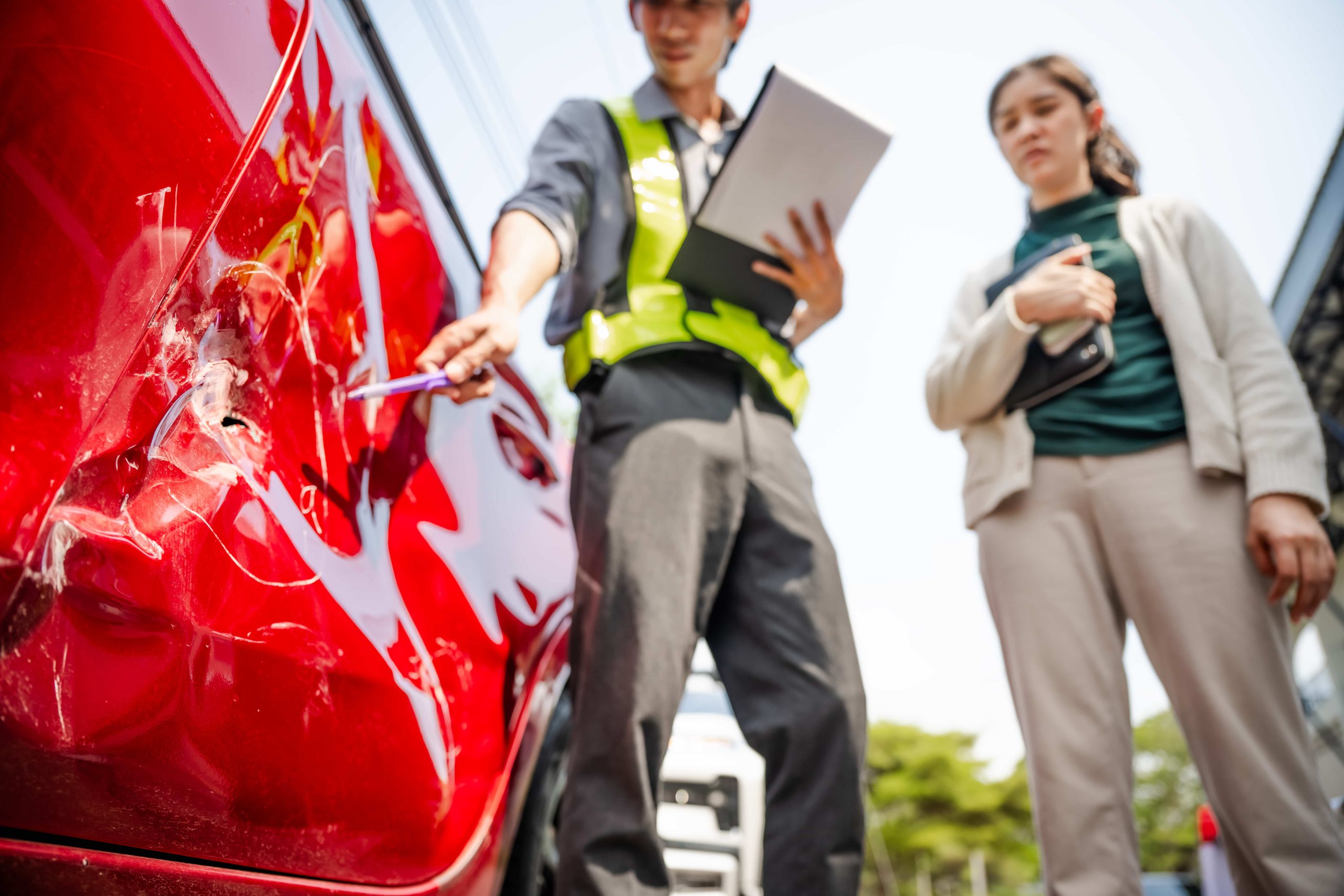
Photographs of company logos, lettering, or numbers on the vehicle, the driver’s identification and employer, and any visible signs of commercial use help establish the business connection from the outset. Noting what the driver said about where they were headed or what they were doing and obtaining the contact information of witnesses preserves details that can otherwise be disputed later. These simple observations often become important evidence of employment and ownership.
Why early action preserves the records
Much of the proof in a company case, such as dispatch logs, GPS data, employment files, and maintenance records, is held by the business and can be difficult to obtain later. A prompt legal effort to request and preserve those materials, before routines change or records are purged, protects the evidence that connects the crash to the employer and supports the direct-negligence claims. Acting early is often what keeps a company’s case from collapsing into a limited claim against the driver alone.
Hit by a company vehicle or a driver on the job?
A crash involving a business often opens the door to larger insurance claims and additional claims against the employer. The Law Offices of Wolf & Pravato identify every responsible party and pursue full compensation. Call 954-522-5800 for a free case review.
Sources: Fla. Stat. §768.81; Fla. Stat. §324.021
About the Firm
Published by the Law Offices of Wolf & Pravato
For nearly three decades, the Law Offices of Wolf & Pravato have represented injured Floridians and their families across South and Southwest Florida, exclusively on the plaintiff’s side. The firm is led by managing partner Richard P. Pravato, a Board-Certified Civil Trial Attorney (Florida Bar No. 86150). To reach the lawyer who handles cases in your area, visit our attorneys page, explore our practice areas, or learn more about our firm.
Law Offices of Wolf & Pravato · 2101 W. Commercial Blvd., Suite 1500, Fort Lauderdale, FL 33309 · 954-522-5800 · Free case evaluation: 844-643-7200
FAQs
Q1. Can an employer be sued when its driver causes a crash in Florida?
Often, yes. Under vicarious liability, an employer is generally responsible for an employee’s negligence within the scope of their job, and under Florida’s dangerous-instrumentality doctrine a vehicle owner can be liable for a permitted driver’s negligence. Both routes can reach the company.
Q2. What does ‘course of employment’ mean?
It refers to a driver doing the employer’s business at the time of the crash, such as making deliveries, traveling between job sites, or running a work errand. The question is whether the driver was acting for the employer’s benefit, not just whether they were technically on the clock.
Q3. What is the dangerous-instrumentality doctrine?
It is a Florida rule treating a motor vehicle as an inherently dangerous tool, so that the owner is responsible when someone the owner allowed to drive causes harm. A company that owns a vehicle and lets an employee use it can be liable for that employee’s negligence.
Q4. Can the company be directly at fault, not just responsible for the driver?
Yes. A business can be independently negligent for hiring a driver with a dangerous record, failing to train or supervise them, or setting unsafe policies that pressure drivers to cut corners. These direct claims target the company’s own decisions.
Q5. Why does it matter if a company was involved?
Businesses usually carry much larger insurance policies than individuals, so a serious injury has a realistic source of full compensation. A victim whose losses exceed an individual’s minimal coverage may find the company’s policy is the only path to being made whole.
Q6. What evidence shows the driver was working?
Employment records, dispatch logs, delivery schedules, GPS or telematics data, and vehicle registration and insurance records can establish that the driver was on the job and that the company owned the vehicle. Gathering these promptly is important.
Q7. What if the driver was using a personal car for work?
The company may still be liable if the driver was acting within the scope of employment, such as running a work errand, even in a personal vehicle. The employment relationship and the purpose of the trip, not just the vehicle’s title, drive the analysis.
Q8. What should I do at the scene of a company-vehicle crash?
Photograph any company logos, lettering, or numbers on the vehicle, note the driver’s identification and employer and what they said they were doing, and gather witness contact information. These details help establish the business connection that a company claim depends on.
Disclaimer: This blog post is provided for general informational purposes only and does not constitute legal advice. Reading this content does not create an attorney-client relationship between you and the Law Offices of Wolf & Pravato. Laws change and every case is different, so you should not act or rely on any information here without consulting a licensed Florida attorney about your specific situation. For advice regarding your circumstances, please contact our office for a free consultation.
Recent Posts
- Wrong Burial Plot and Grave-Site Errors in Fort Lauderdale

- Rainwater Falls at Fort Lauderdale Store Entrances

- Parking-Lot Backing Crashes in Fort Lauderdale: Who Has the Right of Way?
- Elevator and Escalator Injuries at Fort Lauderdale Shopping Centers
- Delivery Driver Car Accidents in Lakeland: Who Pays?

- Injured as a Passenger in Fort Lauderdale: Whose Insurance Pays?





FLORIDA’S PERSONAL INJURY ATTORNEYS FOR + 20 YEARS