














Fog and Low-Visibility Crashes on I-75 and Alligator Alley
By the Law Offices of Wolf & Pravato · Published July 8, 2026
Quick answer: Fog does not excuse a crash. Florida drivers must adjust to conditions by slowing down and increasing following distance, so a driver who barrels into fog at highway speed and causes a pileup is usually at fault despite the poor visibility.
On I-75 and the long run of Alligator Alley, fog and smoke can drop visibility from clear to near-zero within moments, and the result is often a violent chain-reaction crash. Drivers frequently assume the fog itself is to blame, but Florida law tells a different story about a driver’s duty in poor conditions. A Fort Myers car accident lawyer builds these cases around that duty.
Why Southwest Florida fog is so dangerous
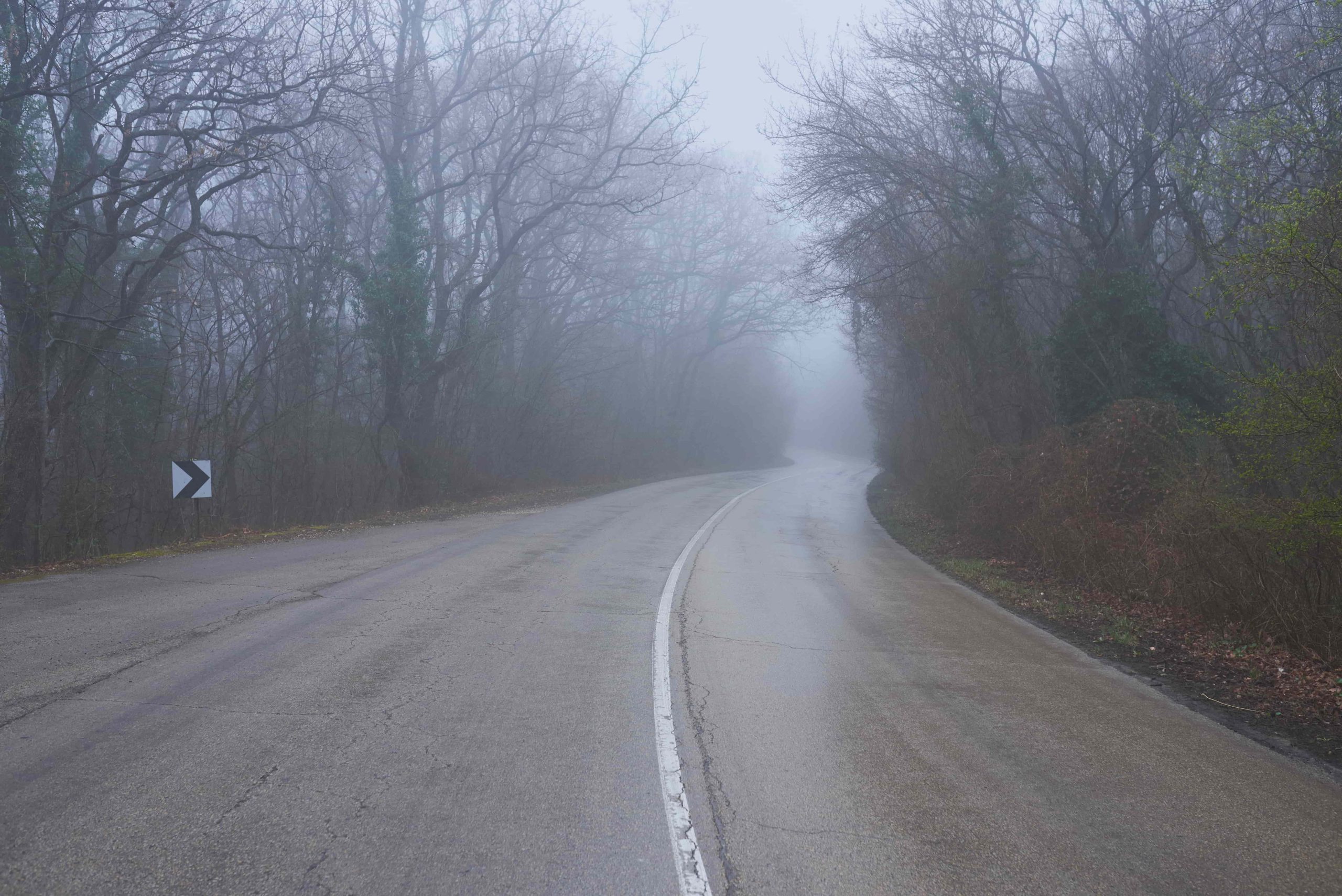
The interstate corridor across Southwest Florida runs through low-lying, humid terrain where dense fog forms quickly, sometimes mixed with smoke from nearby brush fires. On a road built for high speeds, a wall of fog gives drivers almost no warning, and vehicles moving at seventy miles per hour can close on stopped or slowed traffic before anyone can react. The combination of high speed and sudden blindness is exactly what turns a single slowdown into a multi-vehicle pileup.
A driver’s duty does not vanish in fog
The central legal point in these cases is that reduced visibility does not reduce a driver’s responsibility; if anything, it heightens it.
Adjusting speed and distance to conditions
Florida drivers have a duty to operate at a speed that is reasonable and prudent for the conditions, not just the posted limit. In fog, that means slowing down and increasing following distance so the vehicle can stop within the distance the driver can actually see. A driver who maintains highway speed into a fog bank is driving too fast for the conditions, and that choice, not the weather, is what causes the crash.
When to slow, pull off, or use hazards
Reasonable drivers respond to dense fog by dramatically reducing speed, using low-beam headlights, and, when visibility is truly gone, exiting the highway or pulling completely off the road with hazard lights on rather than stopping in a travel lane. A driver who ignores those measures and either speeds ahead or stops unpredictably in a lane contributes to the danger. The law expects drivers to adapt, and failing to adapt is a form of negligence.
How low-visibility pileups unfold
Fog pileups tend to follow a recognizable pattern, and understanding it is the key to assigning fault.
The first driver who overdrove the conditions
Many chain-reaction fog crashes trace back to one or more drivers who entered the fog too fast to stop for whatever was ahead, whether slowed traffic, a disabled vehicle, or an earlier collision. That initial failure to slow can set the entire pileup in motion, making the overdriving driver a primary cause of the crashes that follow.
Following too closely to stop in time
Tailgating is dangerous in clear weather and deadly in fog. A driver following too closely has no room to stop when the vehicle ahead brakes for a hazard hidden in the mist, and the rear-end impact that follows can push cars into one another. In a fog pileup, the drivers who left too little space frequently share responsibility for the collisions they could not avoid because of the gap they failed to keep.
Sorting fault among several drivers
Because a fog pileup involves many vehicles, fault is rarely all-or-nothing. Florida’s comparative fault statute apportions responsibility by percentage among the drivers whose conduct caused the harm, and an injured person’s recovery is reduced by any share assigned to them. A driver who was struck from behind and pushed into the car ahead may bear no fault for that forward impact, while a driver who overdrove the fog may bear a large share. Untangling those percentages is central to a fog-crash claim, because a victim may have claims against several drivers at once.
The evidence that reconstructs a fog crash
Reconstructing a low-visibility pileup takes prompt work, because the fog lifts and the scene clears quickly. Damage patterns reveal the direction and order of impacts, and vehicle event-data recorders can show each car’s speed and braking as it entered the fog. Weather and visibility records, traffic-camera footage, and witness accounts help establish what drivers could see and how fast they were going. Because a car struck on both ends tells the story of being caught in the middle, careful analysis protects innocent drivers from being blamed for a crash they could not avoid. Victims can review how uninsured motorist coverage protects a driver or reach out to Florida car accident lawyers.
Injuries and recovery after a highway pileup
A fog pileup is not just complex to sort out; it tends to cause serious harm, and the recovery has to reflect the full scope of that harm.
Serious injuries at highway speed
Impacts at interstate speeds, sometimes from multiple directions, can cause spinal injuries, fractures, and traumatic brain injuries, and a vehicle caught in the middle may absorb more than one collision. A claim must account for the full course of treatment, including surgery, rehabilitation, and future care, rather than the emergency bill alone, so an injured person is not left short as the true cost of the injuries emerges over time.
Pursuing several insurers at once
Because a pileup can involve several at-fault drivers, an injured person may hold claims against multiple policies at the same time. Each insurer tends to blame the others and minimize its own exposure, which can stall a claim. Coordinating the claims and pressing each insurer for its share, guided by the reconstruction of the crash sequence, is what keeps the process moving toward a full recovery.
Caught in a fog pileup on I-75 or Alligator Alley?
Fog does not excuse a driver who barreled ahead too fast to stop, and an innocent driver should not absorb the blame. The Law Offices of Wolf & Pravato reconstruct the crash and pursue every at-fault driver. Call 954-522-5800 for a free case review.
Sources: Fla. Stat. §768.81
Frequently Asked Questions:
Q1. Is fog a valid excuse for causing a crash in Florida?
No. Reduced visibility does not reduce a driver’s duty; it heightens it. Drivers must slow down and increase following distance to match the conditions, so a driver who maintains highway speed into fog and causes a crash is generally at fault despite the weather.
Q2. How fast should a driver go in dense fog?
Only as fast as the driver can stop within the distance actually visible, which in dense fog may be far below the posted limit. Reasonable drivers slow dramatically, use low-beam headlights, and, when visibility is gone, exit the highway or pull fully off the road with hazards on.
Q3. Who is at fault in a fog pileup?
Often a driver who overdrove the conditions and could not stop for hidden traffic, along with drivers who followed too closely to stop in time. Fault is usually shared, and a driver pushed forward by an impact from behind may bear no fault for that forward collision.
Q4. Can several drivers share fault for a fog crash?
Yes. Florida’s comparative fault law apportions responsibility by percentage among the drivers whose conduct caused the harm. A victim may have claims against several drivers at once, each with a separate insurance policy, and recovery is reduced by any fault assigned to the victim.
Q5. What if a driver was rear-ended and pushed into the car ahead?
That driver may bear no fault for the forward impact. A vehicle shoved into the car ahead by a following car did not cause the forward collision, and reconstructing the order of impacts, using damage patterns and data, protects such a driver from being blamed.
Q6. What evidence helps prove a fog crash?
Damage patterns, vehicle event-data recorders showing speed and braking, weather and visibility records, traffic-camera footage, and witness accounts all help reconstruct what drivers could see and how fast they were going. Prompt investigation preserves this before the scene clears.
Q7. Is there a deadline to file a Florida crash claim?
Yes. Florida sets a limited time period to bring an injury claim, and waiting can also cost fragile evidence such as vehicle data and footage. Speaking with a lawyer early protects both the deadline and the proof.
Q8. Can an injured person have claims against more than one driver in a fog pileup?
Yes. A pileup can involve several at-fault drivers, and Florida’s comparative fault law allows an injured person to pursue each one’s insurer for its share. A driver pushed into the car ahead may bear no fault for that forward impact, so reconstructing the sequence protects innocent drivers.
About the Firm
Published by the Law Offices of Wolf & Pravato
For nearly three decades, the Law Offices of Wolf & Pravato have represented injured Floridians and their families across South and Southwest Florida, exclusively on the plaintiff’s side. The firm is led by managing partner Richard P. Pravato, a Board-Certified Civil Trial Attorney (Florida Bar No. 86150). To reach the lawyer who handles cases in your area, visit our attorneys page, explore our practice areas, or learn more about our firm.
Disclaimer: This blog post is provided for general informational purposes only and does not constitute legal advice. Reading this content does not create an attorney-client relationship between you and the Law Offices of Wolf & Pravato. Laws change, and every case is different, so you should not act or rely on any information here without consulting a licensed Florida attorney about your specific situation. For advice regarding your circumstances, please contact our office for a free consultation.
Recent Posts
- Wrong Burial Plot and Grave-Site Errors in Fort Lauderdale

- Rainwater Falls at Fort Lauderdale Store Entrances

- Parking-Lot Backing Crashes in Fort Lauderdale: Who Has the Right of Way?
- Elevator and Escalator Injuries at Fort Lauderdale Shopping Centers
- Delivery Driver Car Accidents in Lakeland: Who Pays?

- Injured as a Passenger in Fort Lauderdale: Whose Insurance Pays?




FLORIDA’S PERSONAL INJURY ATTORNEYS FOR + 20 YEARS