












Miami Motorcycle Accidents: Lane Splitting Myths and Florida Law
Few topics cause more confusion among Miami riders than lane splitting. Myths about what is and is not allowed can affect how fault is assigned after a crash. Knowing the real law protects an injured rider’s claim. A Miami motorcycle accident lawyer can explain how it applies to a specific case.
Is lane splitting legal in Florida?
No. Lane splitting, riding a motorcycle between lanes of slower or stopped traffic, is not legal in Florida. State law requires a motorcycle to use a full lane, and it bars passing in the same lane or riding between lines of traffic. A rider who was lane splitting at the time of a crash may be assigned some fault, but that does not automatically end a claim.
Lane splitting, lane filtering, and lane sharing explained
The terms are easy to confuse. Lane splitting means moving between lanes of traffic. Lane filtering is a slower version, usually at stoplights, and it is also not permitted in Florida. Lane sharing, where two motorcycles ride side by side in one lane, is generally allowed. Knowing the difference matters because an insurer may wrongly accuse a rider of illegal lane splitting when something else occurred.
How lane splitting affects fault in a crash
Even when a rider was doing something not allowed, fault is rarely all-or-nothing. Florida uses comparative negligence, so a rider’s share of fault reduces a recovery rather than always erasing it. A driver who was also negligent, by changing lanes without looking or following too closely, may still bear much of the blame. The facts of the crash, not assumptions about riders, should decide fault.
Common causes of Miami motorcycle crashes
Many Miami crashes are caused by other drivers, not riders. Common causes include drivers turning left across a motorcycle’s path, merging into a rider in a blind spot, following too closely, and failing to yield. Heavy traffic, distracted tourists, and busy corridors add to the danger. ‘I never saw the motorcycle’ is a frequent excuse, but failing to see a rider with the right of way is usually negligence.
How Florida’s helmet law affects a claim
Florida’s helmet rule is often misunderstood. Under Florida’s motorcycle equipment law (§316.211), riders 21 and older may ride without a helmet if they carry at least $10,000 in medical insurance benefits. Riders under 21 must wear one. Not wearing a helmet does not bar a claim, though it may affect damages for a head injury. A negligent driver remains responsible for the crash.
What an injured rider can recover
A rider hurt by a negligent driver can pursue a full range of damages. Florida law groups them into two categories.
Economic damages
These repay financial losses, including medical bills, future care, lost wages, reduced earning capacity, and motorcycle repair or replacement. Records and bills support these amounts. Because motorcycle injuries are often severe, future care can be a large part of the claim.
Non-economic damages
These address harm with no receipt, such as pain and suffering, emotional distress, scarring, and the loss of enjoyment of life. There is no fixed formula. The value depends on how serious and lasting the injuries are.
Does PIP cover a motorcycle crash in Florida?
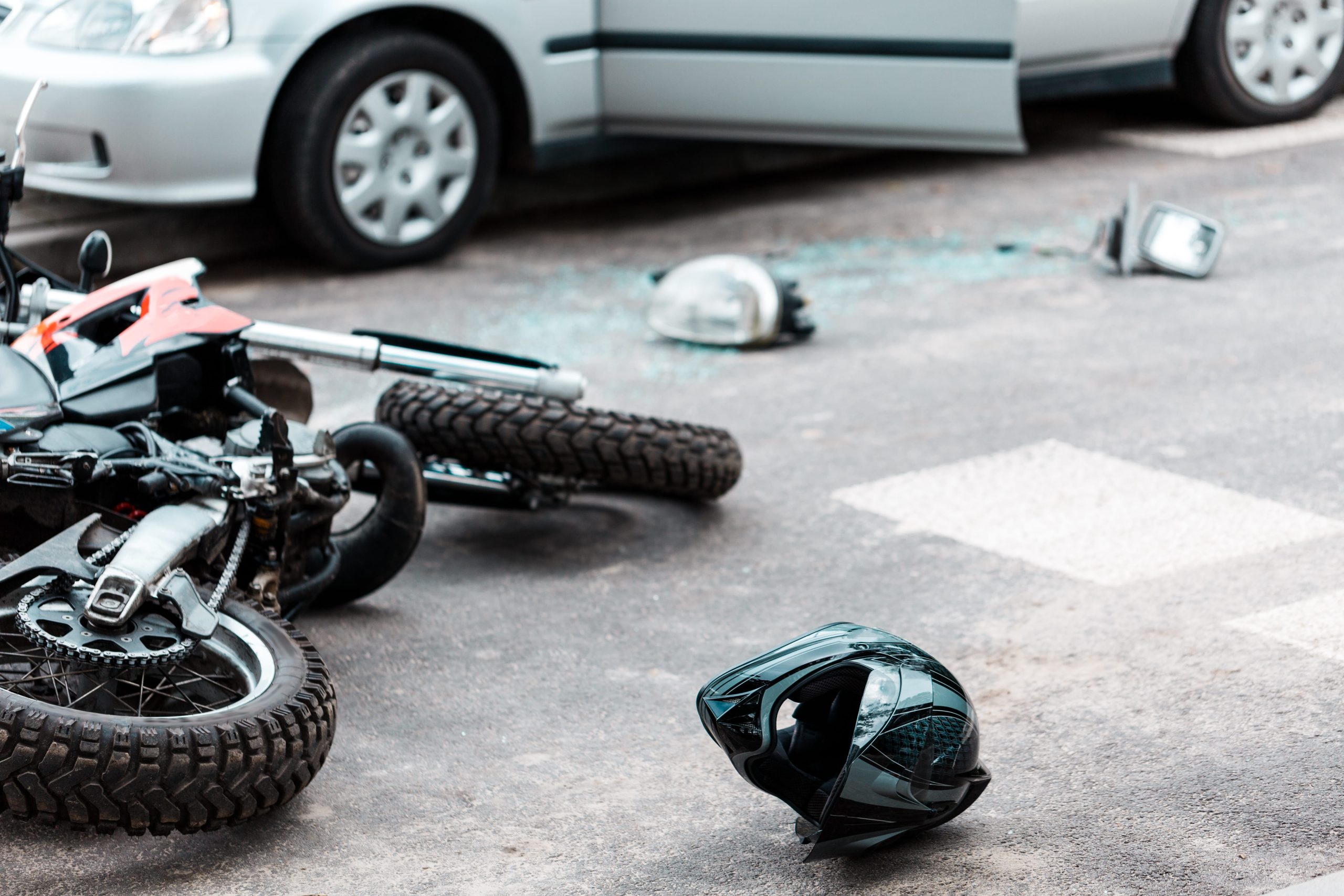 This surprises many riders. Florida’s no-fault PIP system covers cars, but it does not extend to motorcycles. A rider generally cannot rely on PIP for medical bills after a crash. Instead, riders look to the at-fault driver’s liability coverage and their own uninsured motorist or medical-payments coverage. Carrying the right insurance is especially important for riders for this reason.
How comparative negligence applies to riders
Florida uses a modified comparative negligence rule. Under comparative negligence (§768.81), a rider’s share of fault reduces the recovery, and being more than 50 percent at fault bars it. Because insurers often try to pin extra blame on riders, including by claiming illegal lane splitting, strong evidence is key to keeping a rider’s share of fault low.
Overcoming bias against motorcyclists
Riders face an unfair stereotype that they are reckless, and insurers sometimes use that bias to shift blame. Countering it takes solid evidence: the crash report, witness accounts, scene photos, and any video. Building that record is one of the most important things an attorney does to protect a rider’s claim against assumptions rather than facts.
Steps to protect a claim after a crash
A few steps help protect both health and a claim after a motorcycle crash.
- Call 911 so the police can create an official crash report.
- Get medical care right away, even if injuries seem minor.
- Photograph the scene, the vehicles, and any injuries.
- Collect the names and contact details of drivers and witnesses.
- Preserve the motorcycle and gear without repairs for now.
- Decline a recorded statement to the other insurer until after getting advice.
How long does a rider have to file in Florida?
There is a deadline. Under the two-year deadline (§95.11), most motorcycle injury claims must be filed within two years of the crash. Scene photos and witness memories also fade quickly. Acting early protects both the deadline and the evidence a claim depends on.
When a road hazard causes a motorcycle crash
Not every crash is caused by another driver. A pothole, loose gravel, debris, or a poorly designed road can throw a rider with little warning, because a motorcycle is far less forgiving of surface hazards than a car. When a dangerous road condition contributes to a crash, a government entity or a contractor responsible for the road may share liability. These claims follow special rules and shorter deadlines, so it is important to have the cause investigated promptly before the condition is repaired and the evidence is gone.
Hurt in a Miami Motorcycle Crash?
Riders deserve a claim decided on facts, not myths about lane splitting. The team behind our Miami motorcycle accident lawyer page can build the evidence and pursue a fair recovery. Call 954-522-5800 or 844-643-7200 for a free case evaluation, any time.
Sources: Florida Statutes §316.211 (motorcycle equipment/helmet law); Florida Statutes §95.11 (statute of limitations)
About the Firm
Published by the Law Offices of Wolf & Pravato
For nearly three decades, the Law Offices of Wolf & Pravato have represented injured Floridians and their families across South and Southwest Florida, exclusively on the plaintiff’s side. The firm is led by managing partner Richard P. Pravato, a Board-Certified Civil Trial Attorney (Florida Bar No. 86150). To reach the attorney who handles cases in your area, visit our attorneys page, explore our practice areas, or learn more about our firm.
Frequently Asked Questions:
- Is lane sharing between two motorcycles legal in Florida?
Yes. Lane sharing, where two motorcycles ride side by side in a single lane, is generally allowed in Florida, unlike lane splitting and lane filtering, which are not. Riders should still leave room and ride defensively, but two motorcycles sharing a lane are operating lawfully, and an insurer cannot fairly treat lane sharing as if it were the illegal practice of splitting between lanes of traffic. - If I were lane splitting, could I still recover?
Possibly. Being assigned some fault reduces the recovery rather than always eliminating it. Under Florida’s comparative negligence rule, a rider can still recover as long as they are not more than 50 percent at fault, with the award reduced by their share. If the other driver was also negligent, they may still bear much of the blame for the crash. - Does Florida require motorcyclists to wear a helmet?
Riders 21 and older may ride without a helmet if they carry at least $10,000 in medical insurance benefits, while riders under 21 must wear one. Importantly, not wearing a helmet does not bar a claim against a negligent driver. It may affect the damages available for a head injury, but the at-fault driver remains responsible for causing the crash. - What if I were a passenger on the motorcycle?
A passenger injured through someone’s negligence has the same right to pursue a claim as anyone else hurt in a crash. A passenger may have claims against the at-fault driver of another vehicle, the motorcycle operator if they rode negligently, or both. Because passengers are not responsible for how the bike was ridden, their claims are often straightforward, though identifying the right insurance is still important. - Who is usually at fault in a Miami motorcycle crash?
In many crashes, the other driver is at fault, for turning left across a rider’s path, merging into a blind spot, following too closely, or failing to yield. ‘I never saw the motorcycle’ is a common excuse, but failing to see a rider who had the right of way is generally evidence of negligence rather than a valid defense. - How do insurers use bias against riders?
Insurers sometimes rely on the stereotype that motorcyclists are reckless to shift blame and reduce what they pay, including by wrongly claiming a rider was lane splitting. Countering this takes solid evidence, such as the crash report, witness accounts, photos, and any video, so the claim is decided on the facts of the crash rather than on assumptions about riders. - How long do I have to file a motorcycle accident claim?
For most crashes after the 2023 reform, the deadline is two years from the date of the crash. Evidence such as scene photos and witness memories fades quickly, so acting early protects both the filing deadline and the proof a claim depends on. Waiting can make a strong claim much harder to prove. - What does a Miami motorcycle accident lawyer cost?
Our firm works on a contingency fee, so there is no up-front cost. A fee is owed only if we recover compensation, taken as an agreed percentage of the recovery. The consultation is free, which lets an injured rider understand their rights and options without any financial risk.
Disclaimer: This blog post is provided for general informational purposes only and does not constitute legal advice. Reading this content does not create an attorney-client relationship between you and the Law Offices of Wolf & Pravato. Laws change, and every case is different, so you should not act or rely on any information here without consulting a licensed Florida attorney about your specific situation. For advice regarding your circumstances, please contact our office for a free consultation.
Recent Posts
- Wrong Burial Plot and Grave-Site Errors in Fort Lauderdale

- Rainwater Falls at Fort Lauderdale Store Entrances

- Parking-Lot Backing Crashes in Fort Lauderdale: Who Has the Right of Way?
- Elevator and Escalator Injuries at Fort Lauderdale Shopping Centers
- Delivery Driver Car Accidents in Lakeland: Who Pays?

- Injured as a Passenger in Fort Lauderdale: Whose Insurance Pays?





FLORIDA’S PERSONAL INJURY ATTORNEYS FOR + 20 YEARS