











How Speed Limits and Signage Factor Into Fort Myers Motorcycle Crashes
Motorcyclists in Fort Myers enjoy great riding weather but face serious risks on Southwest Florida’s busy roads. When a crash happens, two factors come up again and again: speed and signage. How fast vehicles were traveling, and whether traffic signs and signals were clear and obeyed, often determine fault. A Fort Myers motorcycle accident lawyer can help injured riders protect their rights.
Why Speed Is So Dangerous for Motorcyclists
Riders have none of the protection that surrounds occupants of a car. At higher speeds, crash energy rises sharply, and so does injury severity. A collision that might cause minor damage between two cars can throw a rider from the bike and cause traumatic brain injuries, spinal damage, and road rash. As our overview of the role of speed limits in preventing motorcycle accidents explains, even a rider obeying the limit can be devastated by a speeding driver.
Common Speed-Related Motorcycle Crashes in Fort Myers
- Drivers exceeding the limit who cannot stop for a slowing or turning motorcycle.
- Left-turn collisions where a driver misjudges an oncoming rider’s speed.
- Rear-end impacts at intersections when traffic stops suddenly.
- Loss of control on curves and exit ramps taken too fast.
How Roadway Signage Affects Liability
Traffic signs exist to keep everyone moving safely. When a driver runs a stop sign, ignores a yield sign, or proceeds through a red light, that violation is strong evidence of negligence. Florida’s §316.123 intersection rules govern how drivers must approach intersections and yield. Missing, obscured, or poorly maintained signage can also play a role, and when it does, responsibility may extend to the government entity charged with maintaining the road.
Florida’s Right-of-Way Rules and Motorcycles
Many crashes happen because a driver did not see the rider or failed to yield. Florida law gives motorcycles the same rights and responsibilities as other vehicles, while Florida’s motorcycle equipment law (§316.211) sets the safety standards riders must meet. When a driver violates a rider’s right of way, by turning left across their path or pulling out from a side street, that driver is typically at fault. Establishing the speed of each vehicle and the applicable signage is central to proving what happened.
Proving Speed and Signage After a Crash
Reconstructing a motorcycle crash relies on physical evidence and technology. Skid marks, vehicle damage patterns, and final resting positions help experts estimate speed. Traffic-camera and business surveillance footage and electronic vehicle data can confirm what happened, and photographs of the intersection capture the condition and visibility of signs. This evidence fades fast, so documenting the scene early matters.
How Comparative Negligence Applies to Riders
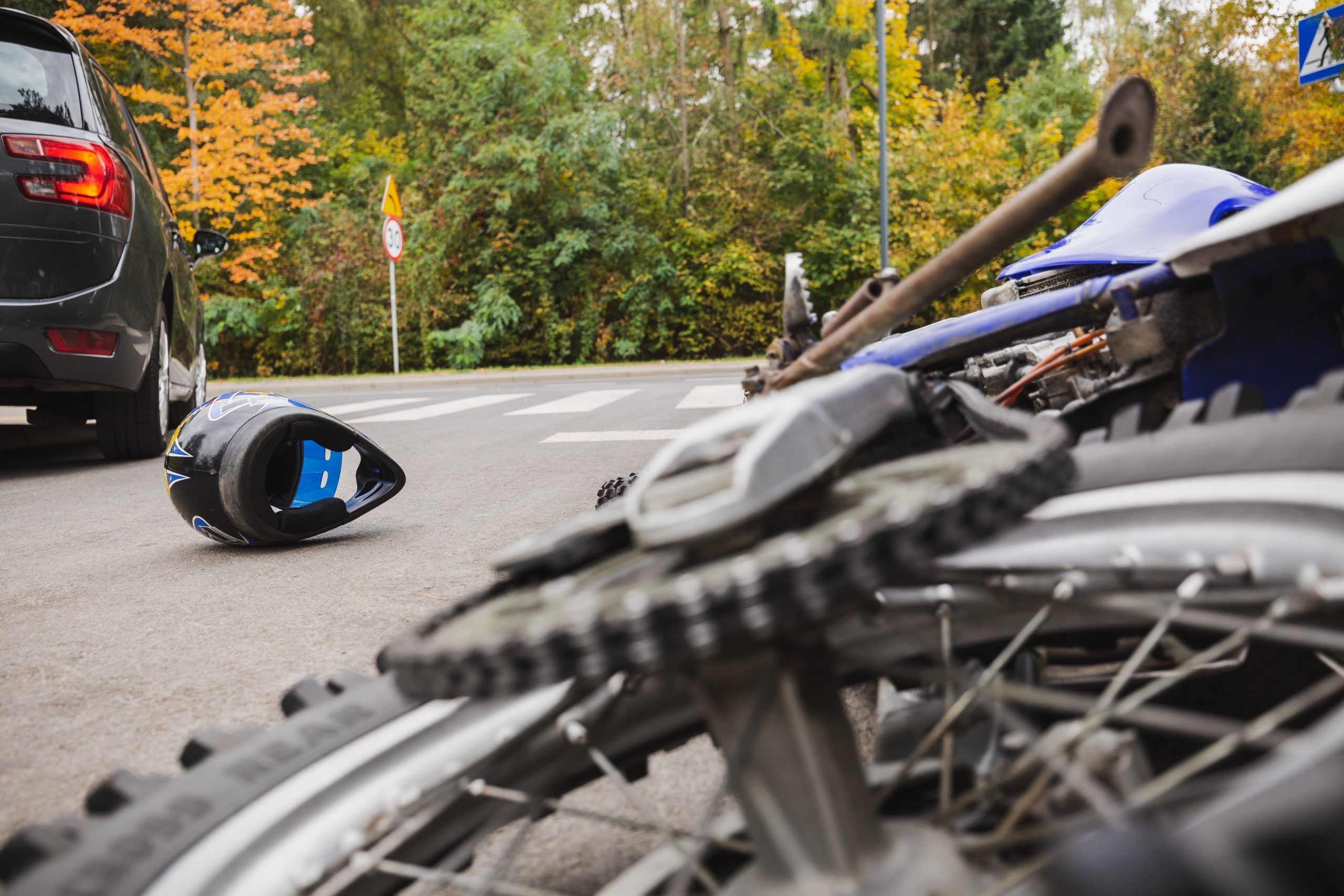 Insurers frequently blame the motorcyclist, claiming the rider was speeding or lane-splitting. Under comparative negligence (§768.81), a rider’s compensation is reduced by their share of fault, and a rider more than 50 percent at fault recovers nothing. Because of this bias against riders, strong, objective evidence is especially important.
When Poorly Maintained Roads Share the Blame
Sometimes the road itself contributes to a crash, a stop sign hidden by vegetation, a malfunctioning signal, faded markings, or a dangerous pothole. When a government entity fails to keep a road reasonably safe, it may share liability. These claims carry shorter deadlines and special notice requirements, so it is important to act quickly. To find out whether a public entity shares responsibility, you can contact our team for a free consultation.
Overcoming Bias Against Motorcyclists
Riders face a unique challenge after a crash: the assumption that they must have been reckless. Jurors and adjusters sometimes carry a stereotype that motorcyclists speed and weave through traffic, and the other driver’s insurer will exploit that bias whenever it can. The reality is that most motorcycle crashes are caused by drivers who fail to see or yield to a rider. Countering the bias takes solid, objective evidence: vehicle data, independent witnesses, traffic-camera footage, and a professional reconstruction that establishes the true speeds and movements of each vehicle. Presenting that evidence clearly is often what separates a denied claim from a fair recovery.
Injuries and Their Long-Term Impact
Because riders are so exposed, motorcycle crashes frequently cause severe and lasting injuries: traumatic brain injuries, spinal cord damage, complex fractures, and the deep wounds and scarring known as road rash. Recovery can require multiple surgeries, extended rehabilitation, and time away from work, and some riders are left with permanent limitations that change how they earn a living. A complete claim accounts not just for the bills already incurred, but for future medical needs, lost earning capacity, and the physical and emotional toll of the injury. Undervaluing these long-term costs is one of the most common and costly mistakes injured riders make.
Insurance Coverage Riders Should Understand
Motorcyclists in Florida face a unique insurance landscape. Florida’s no-fault PIP requirement applies to cars, but motorcycles are treated differently, which means a rider’s own auto PIP may not automatically cover a motorcycle crash the way it would a car accident. As a result, after a serious wreck the primary sources of compensation are usually the at-fault driver’s bodily injury liability coverage and the rider’s own uninsured or underinsured motorist coverage. Carrying robust UM coverage is one of the smartest steps a Florida rider can take, because so many drivers carry little or no liability insurance. After a crash, identifying every applicable policy and understanding how each one applies is essential to a full recovery.
What to Do at the Scene of a Motorcycle Crash
What you do in the minutes and days after a crash can shape your claim. If you are physically able, document the scene thoroughly: photograph the position of the vehicles, the damage, the roadway, and especially the condition and visibility of any nearby signs and signals. Get the names and contact information of witnesses before they leave, since independent accounts are powerful in overcoming the bias riders face. Seek medical care immediately, both for your health and to create a record that ties your injuries to the crash, and be careful not to discuss fault or give a recorded statement to the other driver’s insurer before you have legal advice. These early steps preserve the evidence and the credibility your case will rely on.
Common Injuries in Fort Myers Motorcycle Crashes
Because riders are so exposed, even a crash at moderate speed can cause devastating harm. Among the most common and serious injuries are traumatic brain injuries, particularly when speed increases the force of impact, along with spinal cord injuries, broken bones, internal injuries, and severe road rash that can require skin grafts. Many of these injuries demand surgery, lengthy rehabilitation, and time away from work, and some leave riders with permanent limitations. Because the long-term medical and financial consequences are often significant, it is important that any claim account for future care and lost earning capacity, not just the immediate bills, so that a rider is not left covering costs that should have been part of the recovery.
How Wolf & Pravato Can Help
For decades, Law Offices of Wolf & Pravato has fought for injured Floridians and grieving families across South and Southwest Florida. Our attorneys investigate the facts, identify every responsible party, and pursue the full compensation our clients deserve, and you pay nothing unless we win your case. If you need a Fort Myers motorcycle crash liability, call us today at 1-800-THE-WOLF (1-800-843-9653) for a free, no-obligation consultation, or reach out through our contact page to discuss your situation with our team.
Frequently Asked Questions:
- Does not wearing a helmet hurt my motorcycle claim in Florida?
Florida’s §316.211 allows certain adult riders to ride without a helmet under specific conditions, but the absence of a helmet can become an issue in a head-injury claim. An attorney can address how it affects your case. - What if a faulty or missing traffic sign caused my crash?
If a malfunctioning or missing sign or signal contributed, a government entity may share responsibility. These claims have special notice requirements and short deadlines, so act quickly. - How can I prove the other driver was speeding?
Through physical evidence, witness statements, surveillance footage, and accident reconstruction. An attorney can work with experts to establish the vehicles’ speeds. - The insurer says I was lane-splitting. Can I still recover?
Possibly. Even if you are assigned some fault, you can recover as long as you are 50 percent or less at fault, though your award is reduced accordingly. - Who is at fault in a left-turn motorcycle crash?
Usually the driver who turned left across the rider’s path, because they failed to yield the right of way. Evidence of speed and signage helps confirm fault. - What does a Fort Myers motorcycle accident lawyer charge?
Our firm works on contingency, so there is no up-front cost and no attorney’s fee unless we recover compensation for you. - What injuries are most common in motorcycle crashes?
Because riders are so exposed, common injuries include traumatic brain injuries, spinal cord damage, broken bones, internal injuries, and severe road rash. Many require surgery and long rehabilitation, so claims should account for future care and lost earning capacity. - What should I do at the scene of a motorcycle crash?
If you are able, photograph the vehicles, the roadway, and the condition of nearby signs and signals, collect witness contact information, and seek medical care right away. Avoid admitting fault or giving the other driver’s insurer a recorded statement before getting legal advice.
Recent Posts
- Wrong Burial Plot and Grave-Site Errors in Fort Lauderdale

- Rainwater Falls at Fort Lauderdale Store Entrances

- Parking-Lot Backing Crashes in Fort Lauderdale: Who Has the Right of Way?
- Elevator and Escalator Injuries at Fort Lauderdale Shopping Centers
- Delivery Driver Car Accidents in Lakeland: Who Pays?

- Injured as a Passenger in Fort Lauderdale: Whose Insurance Pays?





FLORIDA’S PERSONAL INJURY ATTORNEYS FOR + 20 YEARS