






Delivery-App Driver Crashes in Fort Myers: Uber Eats, DoorDash, and More
By the Law Offices of Wolf & Pravato · Published July 7, 2026
Quick answer: When an Uber Eats, DoorDash, or similar delivery driver causes a Fort Myers crash, which insurance applies depends on what the driver was doing at the time. These gig-economy cases often involve coverage gaps that require careful investigation.
Food and package delivery has exploded across Fort Myers, and with it the number of crashes involving drivers working for apps like Uber Eats, DoorDash, Grubhub, and Instacart. These drivers are often rushing to meet delivery times while juggling a phone, and when they cause a crash, the injured person faces a confusing question that an ordinary crash does not raise: whose insurance pays? A Fort Myers rideshare accident lawyer works through that tangle from the start.
The rise of delivery-app crashes in Fort Myers
Gig-economy delivery puts more drivers on the road who are working under time pressure in their own personal vehicles. A driver checking an app for the next order, searching for an address, or hurrying to keep a rating up is a distracted and rushed driver, and the crashes that follow can be as serious as any other. What sets these cases apart is not usually how the crash happened, but the layers of insurance and responsibility behind the driver, which can make recovery more complicated than it should be.
Why the coverage question is so complicated
The heart of a delivery-app case is insurance, and the analysis is rarely simple.
The driver’s personal auto policy and its limits
Delivery drivers use their own personal vehicles, but a standard personal auto policy typically excludes coverage for commercial or delivery use. That means when a driver causes a crash while making deliveries, the driver’s own insurer may deny the claim on the ground that the vehicle was being used for business. That potential denial is exactly the gap that makes these cases difficult and makes the delivery company’s coverage so important.
Where the delivery company’s coverage fits
Delivery platforms often provide some liability coverage for their drivers, but that coverage tends to depend heavily on what the driver was doing at the moment of the crash. It may be substantial while the driver is actively carrying an order, more limited while they are waiting for a request, and absent when the app is off. Pinning down which layer applied at the time of the crash is essential to identifying the coverage that responds.
How the phase of the delivery changes coverage
Like rideshare, delivery coverage is usually structured in phases. When the app is off and the driver is using the car for personal reasons, only the personal policy applies. When the app is on but the driver has not accepted an order, a limited layer of company coverage may apply. When the driver has accepted and is picking up or delivering an order, the fullest company coverage is typically in effect. Because the applicable coverage can change from one moment to the next, establishing exactly what the driver was doing when the crash occurred often determines what compensation is available.
Whether the delivery statute even applies
Florida’s transportation network company rules were written primarily around rideshare, meaning the transport of passengers, and their application to food and package delivery is not always straightforward. A delivery driver carrying burritos rather than a rider may fall outside parts of that framework, which can leave gaps the passenger-focused rules do not clearly fill. That uncertainty is one more reason these cases benefit from careful analysis of the specific platform’s policies and the facts of the trip, rather than assuming the rideshare rules apply cleanly.
Every party who may share responsibility
The at-fault delivery driver is the primary responsible party, but the analysis does not necessarily end there. Depending on the facts and the platform’s arrangements, the delivery company’s coverage may respond, and in some situations other parties connected to the delivery could be involved. Where more than one party shares fault in a crash, Florida’s comparative fault statute apportions responsibility. Identifying every potential source of coverage is what protects an injured person from falling into the gap between a driver’s denied personal policy and a company’s limited one.
Proving the driver was working and building the claim
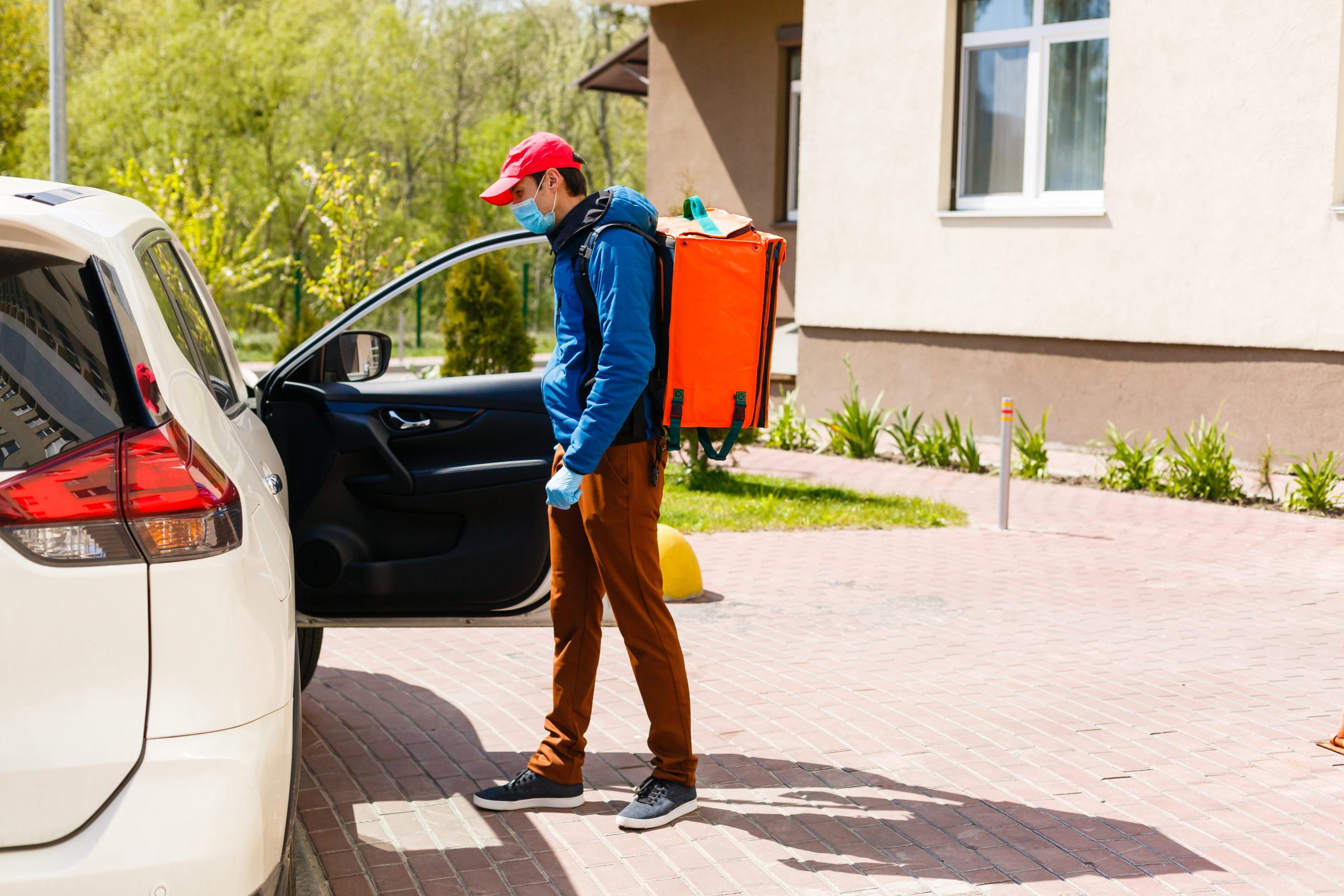
Because coverage turns on what the driver was doing, proving the driver’s status at the time of the crash is central. App records showing whether the driver was logged on and had an active order, delivery receipts and timestamps, the driver’s own statements, and the presence of delivery bags or orders in the vehicle all help establish the phase of the delivery. That evidence, gathered promptly before it is lost, unlocks the right coverage. Injured people can review statewide guidance from Florida accident lawyers or reach our Fort Myers injury team.
Injuries and why the coverage fight matters
Behind the insurance puzzle in a delivery-app case is an injured person with real harm, and the coverage question is precisely what determines whether that harm is paid for.
Serious harm from a rushed driver
A delivery driver hurrying between orders while distracted by an app can cause a crash as serious as any other, with injuries that require surgery, rehabilitation, and time away from work. The claim must account for the full course of treatment and the lasting effects, not just the emergency visit, so the recovery reflects what the crash actually cost.
Closing the gap between policies
The danger in these cases is that an injured person falls into the gap between a driver’s denied personal policy and a company’s limited coverage, and is left undercompensated for a crash that was not their fault. Establishing the driver’s status at the time and identifying every policy that could respond is what closes that gap. Doing so is often the difference between a frustrating dead end and a recovery that covers the harm.
Hit by a delivery driver in Fort Myers?
Crashes with app-based delivery drivers hide tricky coverage questions that can leave victims caught between policies. The Law Offices of Wolf & Pravato find the coverage that applies and pursue it. Call 954-522-5800 for a free consultation.
Sources: Fla. Stat. §627.748; Fla. Stat. §768.81
Frequently Asked Questions:
Q1. Who pays after a crash with an Uber Eats or DoorDash driver in Florida?
It depends on what the driver was doing at the time. The driver’s personal auto insurer may deny a claim because the car was used for delivery, while the delivery company’s coverage may apply depending on the phase of the delivery. Identifying which coverage responds is central to the case.
Q2. Why might the delivery driver’s own insurance deny the claim?
A standard personal auto policy typically excludes commercial or delivery use. When a driver causes a crash while delivering, the personal insurer may deny coverage on that basis, which creates the gap that makes the delivery company’s coverage important.
Q3. How does the phase of the delivery affect coverage?
Coverage is usually structured in phases. Only the personal policy applies when the app is off; a limited company layer may apply when the app is on but no order is accepted; and the fullest company coverage typically applies once the driver has accepted and is handling an order.
Q4. Does Florida’s rideshare law cover food delivery?
Not always clearly. Florida’s transportation network company rules were written mainly around rideshare, meaning transporting passengers, so their application to food and package delivery is not always straightforward and can leave gaps. These cases benefit from careful analysis of the platform’s policies.
Q5. Can the delivery company be held responsible?
The at-fault driver is the primary responsible party, and depending on the facts and the platform’s arrangements, the company’s coverage may respond and other parties could be involved. Identifying every source of coverage protects a victim from falling between policies.
Q6. How do I prove the driver was working at the time?
App records showing whether the driver was logged on with an active order, delivery receipts and timestamps, the driver’s statements, and delivery bags or orders in the vehicle all help establish the phase of the delivery. Gathering this evidence promptly is important.
Q7. What should I do after a crash with a delivery driver?
Get medical care, document the scene and the driver’s information, note any delivery bags or app activity, and preserve evidence of what the driver was doing. Because coverage depends on the driver’s status, that information can be decisive for the claim.
Q8. What if the delivery driver says the app was off?
Whether the app was on and an order was active is a key fact that determines coverage, so it should be verified rather than accepted. App records, delivery receipts and timestamps, and orders or bags in the vehicle can establish the driver’s true status at the time of the crash.
About the Firm
Published by the Law Offices of Wolf & Pravato
For nearly three decades, the Law Offices of Wolf & Pravato have represented injured Floridians and their families across South and Southwest Florida, exclusively on the plaintiff’s side. The firm is led by managing partner Richard P. Pravato, a Board-Certified Civil Trial Attorney (Florida Bar No. 86150). To reach the lawyer who handles cases in your area, visit our attorneys page, explore our practice areas, or learn more about our firm.
Disclaimer: This blog post is provided for general informational purposes only and does not constitute legal advice. Reading this content does not create an attorney-client relationship between you and the Law Offices of Wolf & Pravato. Laws change and every case is different, so you should not act or rely on any information here without consulting a licensed Florida attorney about your specific situation. For advice regarding your circumstances, please contact our office for a free consultation.
Recent Posts
- Wrong Burial Plot and Grave-Site Errors in Fort Lauderdale

- Rainwater Falls at Fort Lauderdale Store Entrances

- Parking-Lot Backing Crashes in Fort Lauderdale: Who Has the Right of Way?
- Elevator and Escalator Injuries at Fort Lauderdale Shopping Centers
- Delivery Driver Car Accidents in Lakeland: Who Pays?

- Injured as a Passenger in Fort Lauderdale: Whose Insurance Pays?





FLORIDA’S PERSONAL INJURY ATTORNEYS FOR + 20 YEARS