








Fort Lauderdale Motorcycle Crashes at Traffic Circles and Roundabouts
Fort Lauderdale Motorcycle Crashes at Traffic Circles and Roundabouts
Published by the Law Offices of Wolf & Pravato on July 6, 2026.
Quick answer: A Fort Lauderdale roundabout motorcycle accident lawyer helps riders hurt in traffic circles, where a driver who fails to yield on entry can strike a rider already in the circle. Because a motorcyclist in the roundabout generally has the right of way, that failure to yield usually establishes the driver’s fault.
Roundabouts are appearing at more and more Fort Lauderdale intersections, promoted as safer and smoother than signalized crossings. For drivers in cars that may be true, but for motorcyclists, a traffic circle presents its own set of dangers. The Fort Lauderdale motorcycle accident lawyers help riders injured in roundabout crashes establish fault and recover. Statewide, our Florida motorcycle accident lawyers handle these cases, and our Fort Lauderdale injury team serves riders throughout the area.
Why are roundabouts spreading across Fort Lauderdale
Traffic engineers favor roundabouts because they keep traffic moving and eliminate the high-speed, right-angle collisions common at signalized intersections. As Broward County rebuilds intersections, circles are replacing lights in many locations. The design does reduce some crash types, but it also introduces continuous merging and lane-changing in a tight, curving space, conditions that create new risks for the most vulnerable road users, motorcyclists.
Why a traffic circle is uniquely hazardous for riders
A roundabout asks drivers to judge gaps, merge, and change lanes while curving, and a small motorcycle is easy to overlook in that busy visual field. Many drivers are still unsure how to navigate circles, and hesitation or misjudgment at the entry is common. A rider who is lawfully circulating can be struck by a driver who simply did not see them or did not understand who had the right of way, which is where most roundabout motorcycle crashes begin.
The one rule that governs a roundabout
The core mechanism of any roundabout relies on a fundamental directive: vehicles navigating within the circle possess the right of way, requiring entering traffic to defer to them. According to Florida’s right-of-way rules (§316.123), motorists nearing a traffic circle are legally obligated to yield to any vehicles, such as motorcycles, that are already inside. Consequently, most roundabout accidents hinge on this single guideline, as the motorist who enters without yielding is generally deemed responsible for the crash.
How roundabout crashes happen
Roundabout crashes involving riders follow a few recurring patterns.
Failing to yield on entry
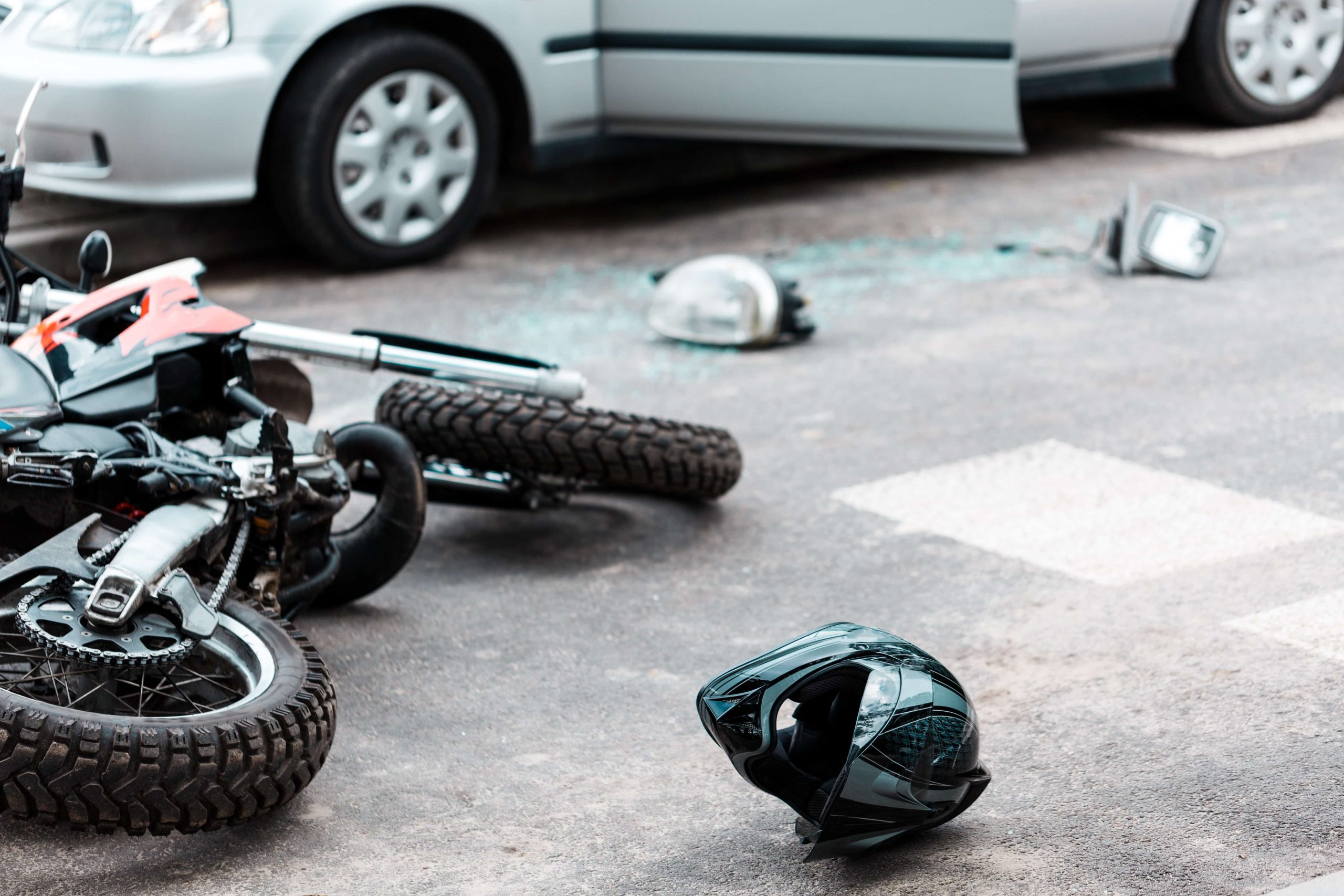
The classic roundabout crash occurs when a driver entering the circle fails to yield to a motorcyclist already going around, pulling directly into the rider’s path. Because the entering driver owed the duty to yield, this failure squarely places fault on the driver, though proving the rider was already circulating is still essential.
Unsafe lane changes inside the circle
In multi-lane roundabouts, crashes also happen when a driver changes lanes within the circle or cuts across to an exit without checking for a motorcycle beside them. A rider in the adjacent lane, hard to see and close by, is especially vulnerable to this kind of sideswipe or cut-off, which the driver’s motorcycle causes.
Who is at fault in a roundabout crash?
Fault usually rests with the driver who violated the right-of-way rule, entering without yielding, changing lanes unsafely, or cutting off a rider on the way out. Occasionally, a poorly designed or badly marked circle contributes, and rarely more than one driver is to blame. Because a roundabout fault can be contested, establishing that the rider was lawfully in the circle and had the right of way is central to the claim.
The coverage gap riders face
As in any motorcycle, no-fault offers riders no cushion. Under Florida’s PIP / no-fault law (§627.736), the personal injury protection that pays a car occupant’s initial bills does not apply to a motorcyclist, so an injured rider depends on the at-fault driver’s liability coverage and, when it is insufficient, their own uninsured motorist coverage (§627.727). This makes proving the entering driver’s failure to yield all the more important.
What an injured rider can recover
A rider hurt in a roundabout crash may recover medical bills and care, lost wages and diminished earning capacity, and pain and suffering. Even at the moderate speeds of a traffic circle, a motorcyclist thrown from the bike can suffer serious head, spinal, and orthopedic injuries, so the claim should reflect the full, long-term cost of the harm rather than the initial treatment alone.
Why the evidence and the deadline both matter
Two things run on a clock after a roundabout crash. The evidence, dashcam and any traffic-camera footage, the vehicles’ damage, and witness accounts, fade within days and is what prove the rider had the right of way. And under the two-year deadline (§95.11), the claim must be filed within two years. Because comparative negligence (§768.81) allows an insurer to shift blame to the rider, preserving the proof early is what protects the recovery.
What a rider should do after a roundabout crash
Because a roundabout fault can be contested, the evidence a rider gathers early is valuable. After seeking medical care, the rider or a companion should ensure the crash is reported and documented, photograph the circle, the entry point, the vehicles, and the yield signs and markings, and note exactly where in the circle the crash occurred. Identifying witnesses, often other drivers navigating the roundabout, preserves accounts of who entered without yielding, which is the heart of establishing that the rider lawfully had the right of way.
Why a driver’s confusion about roundabouts is no excuse
Drivers sometimes defend a roundabout crash by claiming they were unfamiliar with how the circle worked or unsure who had the right of way. That confusion is not a legal excuse. Every driver is responsible for knowing and following the rules of the road, including the simple duty to yield to traffic already in a roundabout. A driver who enters a circle without understanding that duty and strikes a rider as a result remains responsible for the harm their failure to yield caused.
As roundabouts continue to replace signalized intersections across Broward County, riders will encounter them more often, and understanding the right-of-way rule that governs them and the evidence that proves it is the surest protection when a driver’s failure to yield causes a crash. For an injured rider, that knowledge, put to work quickly while the evidence is fresh, can be the difference between a contested claim and a clear recovery.
See also: proving a driver was distracted in a motorcycle crash.
Hurt in a Fort Lauderdale Roundabout Crash?
A driver who failed to yield while entering the circle is usually at fault, and a rider already circulating has the right of way. The team behind our Fort Lauderdale motorcycle accident lawyers page can help. Reach the firm at 954-522-5800 or 844-643-7200 for a free review of the crash.
Sources: Florida Statutes §316.123 (intersections and right of way); Florida Statutes §627.727 (uninsured motorist coverage); Florida Statutes §95.11 (statute of limitations)
About the Firm
Published by the Law Offices of Wolf & Pravato
For nearly three decades, the Law Offices of Wolf & Pravato have represented injured Floridians and their families across South and Southwest Florida, exclusively on the plaintiff’s side. The firm is led by managing partner Richard P. Pravato, a Board-Certified Civil Trial Attorney (Florida Bar No. 86150). To reach the lawyer who handles cases in your area, visit our attorneys page, explore our practice areas, or learn more about our firm.
Law Offices of Wolf & Pravato · Fort Lauderdale, FL (serving Broward County) · 954-522-5800 · Free case evaluation: 844-643-7200
FAQs
Q1. Who has the right of way in a roundabout?
Traffic already in the circle. Under Florida’s right-of-way rules, a driver approaching a roundabout must yield to vehicles, including motorcycles, already circulating. That principle governs nearly every roundabout crash, because the driver who enters without yielding is typically the one at fault.
Q2. Why are roundabouts dangerous for motorcyclists?
Because a circle requires drivers to judge gaps, merge, and change lanes while curving, and a small motorcycle is easy to overlook. Many drivers are still unsure how to navigate roundabouts, so a rider lawfully circulating can be struck by a driver who did not see them or misjudged who had the right of way.
Q3. How do motorcycle crashes happen in a traffic circle?
Most commonly when an entering driver fails to yield to a rider already going around, pulling into the rider’s path. In multi-lane circles, crashes also happen when a driver changes lanes or cuts across to an exit without checking for a motorcycle alongside, causing a sideswipe or cut-off.
Q4. Who is at fault in a roundabout crash?
Usually the driver who violated the right-of-way rule, entering without yielding, changing lanes unsafely, or cutting off a rider on the way out. Occasionally a poorly designed circle contributes. Because fault can be contested, establishing that the rider was lawfully circulating and had the right of way is central.
Q5. Does no-fault insurance cover a motorcyclist?
No. Florida’s PIP coverage that pays a car occupant’s initial bills does not extend to motorcyclists. An injured rider depends on the at-fault driver’s liability coverage and, when it is insufficient, their own uninsured-motorist coverage, which makes proving the driver’s failure to yield especially important.
Q6. What can an injured rider recover?
Medical bills and future care, lost wages and diminished earning capacity, and pain and suffering. Even at a circle’s moderate speeds, a rider thrown from the bike can suffer serious head, spinal, and orthopedic injuries, so the claim should reflect the full, long-term cost rather than the initial treatment alone.
Disclaimer: This blog post is provided for general informational purposes only and does not constitute legal advice. Reading this content does not create an attorney-client relationship between you and the Law Offices of Wolf & Pravato. Laws change and every case is different, so you should not act or rely on any information here without consulting a licensed Florida attorney about your specific situation. For advice regarding your circumstances, please contact our office for a free consultation.
Recent Posts
- Wrong Burial Plot and Grave-Site Errors in Fort Lauderdale

- Rainwater Falls at Fort Lauderdale Store Entrances

- Parking-Lot Backing Crashes in Fort Lauderdale: Who Has the Right of Way?
- Elevator and Escalator Injuries at Fort Lauderdale Shopping Centers
- Delivery Driver Car Accidents in Lakeland: Who Pays?

- Injured as a Passenger in Fort Lauderdale: Whose Insurance Pays?





FLORIDA’S PERSONAL INJURY ATTORNEYS FOR + 20 YEARS