



Rated top 10 best law firms in Florida


Over $200 million in settlements!

Best Personal Injury Settlements
WINNING IS NO ACCIDENT! 75 years of experience
FREE CASE EVALUATION
"*" indicates required fields
Fort Lauderdale Construction Lane Closure Accident Lawyer
A lane closure should be a controlled, predictable thing: clear signs well in advance, a gradual taper, and enough room to merge safely. When it is not — when a lane simply ends with little warning, the cones start too late, or traffic stacks up around a blind curve — drivers are forced into sudden, high-risk maneuvers, and rear-end and sideswipe crashes follow. If a poorly designed or poorly maintained lane closure left you injured, the Fort Lauderdale construction lane closure accident lawyers at the Law Offices of Wolf & Pravato can find out what went wrong and hold the responsible parties accountable.
This page looks specifically at crashes caused by lane closures and lane shifts in construction work zones — how they happen, which traffic-control rules apply, and who answers for them. If you are dealing with a different kind of job-site claim, our Fort Lauderdale construction accident and Florida construction accident pages give the broader picture.
Most of the people we help here were simply driving home or to work when a work zone caught them off guard. You don’t have to untangle the contracts and traffic-control plans yourself; that’s our job. The consultation is free.
Local Help for Drivers Hurt in Broward County Work Zones
We have practiced personal injury law in South Florida for decades, and we handle these cases from our Fort Lauderdale office. Our clients come from across Broward County — Oakland Park, Lauderhill, Tamarac, Coral Springs, Hollywood, Fort Lauderdale itself, and the communities in between. Lane-closure crashes are intensely local: the right speed limit, the layout of the road, and the way a particular interchange backs up all matter, and we know these roads.
When these cases go to court, they are usually filed in the Broward County Circuit Court. Having a Fort Lauderdale personal injury attorney who can drive out to the scene, photograph the signage and taper while it still exists, and talk to local witnesses is often what separates a provable claim from a he-said-she-said dispute.
Why Lane Closures Turn Dangerous in a Growing Fort Lauderdale
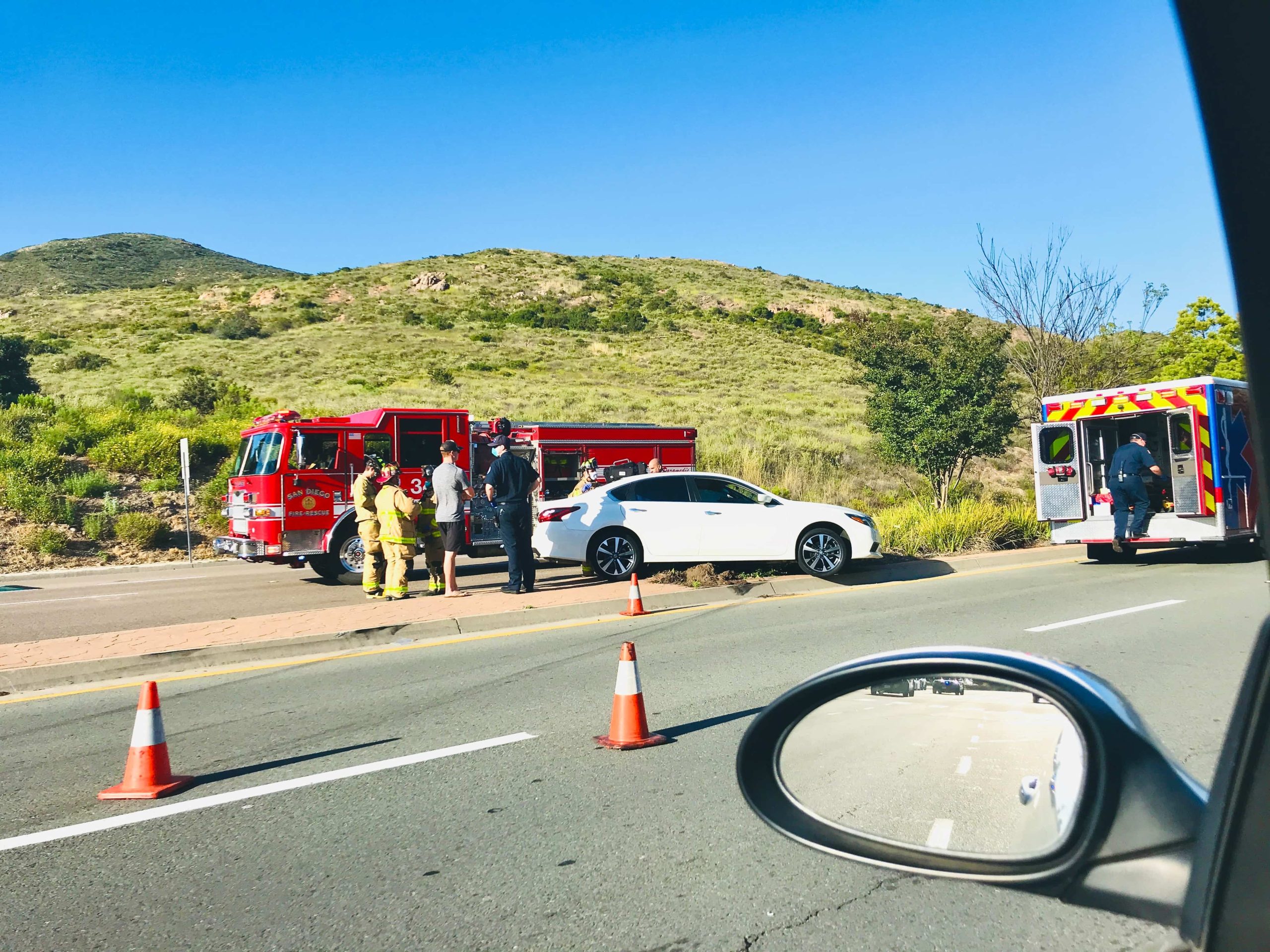
Fort Lauderdale’s building boom means more roadwork, utility work, and lane restrictions than ever. Federal figures from the Federal Reserve Bank of St. Louis show Broward County authorized 1,655 new private housing units in 2024 and 2,690 in 2025, with each project tending to bring its own road closures and detours. The Federal Motor Carrier Safety Administration counted more than 490 active roadway work zones in Florida during a single 2023 campaign. Major corridors like I-95, I-595, and U.S. 1 see frequent lane restrictions, and a closure on a high-speed interstate leaves drivers little room for error.
The problem is that a lane closure compresses traffic into less space, often at speed. When the advance warning is too short or the merge area is too abrupt, drivers brake hard and bunch together, which is exactly the recipe for a chain-reaction collision. Nighttime and rush-hour closures raise the stakes further, because reduced visibility and heavier volumes give drivers even less margin to react. State and federal safety agencies have long treated rear-end crashes as one of the signature dangers of the work zone.
Lane-Closure Crashes by the Numbers
The data tells a consistent story. According to the Federal Highway Administration, citing the National Highway Traffic Safety Administration’s Fatality Analysis Reporting System (FARS), 899 people died in work-zone crashes nationwide in 2023. Roughly 21 percent of fatal work-zone crashes that year were rear-end collisions — the crash type most associated with sudden slowdowns at lane closures — and about 29 percent involved speeding, a factor that becomes far more dangerous when lanes narrow.
Florida’s Work-Zone Toll
Closer to home, the Florida Department of Highway Safety and Motor Vehicles recorded more than 16,012 work-zone crashes in 2023, with 74 people killed and 294 seriously injured. The Florida Department of Transportation identifies speeding and distraction as the leading contributors — both of which a well-designed lane closure is supposed to account for with adequate warning and spacing.
Work-zone crash data relevant to lane closures
| Figure | Number | Source (year) |
|---|---|---|
| U.S. work-zone fatalities | 899 | FHWA / NHTSA FARS (2023) |
| Fatal work-zone crashes that were rear-end collisions | ~21% | FHWA / NHTSA FARS (2023) |
| Fatal work-zone crashes involving speeding | ~29% | FHWA / NHTSA FARS (2023) |
| Florida work-zone crashes | 16,012+ | FLHSMV (2023) |
| Florida work-zone fatalities | 74 | FLHSMV (2023) |
| Florida work-zone serious injuries | 294 | FLHSMV (2023) |
How an Improper Lane Closure Causes a Crash
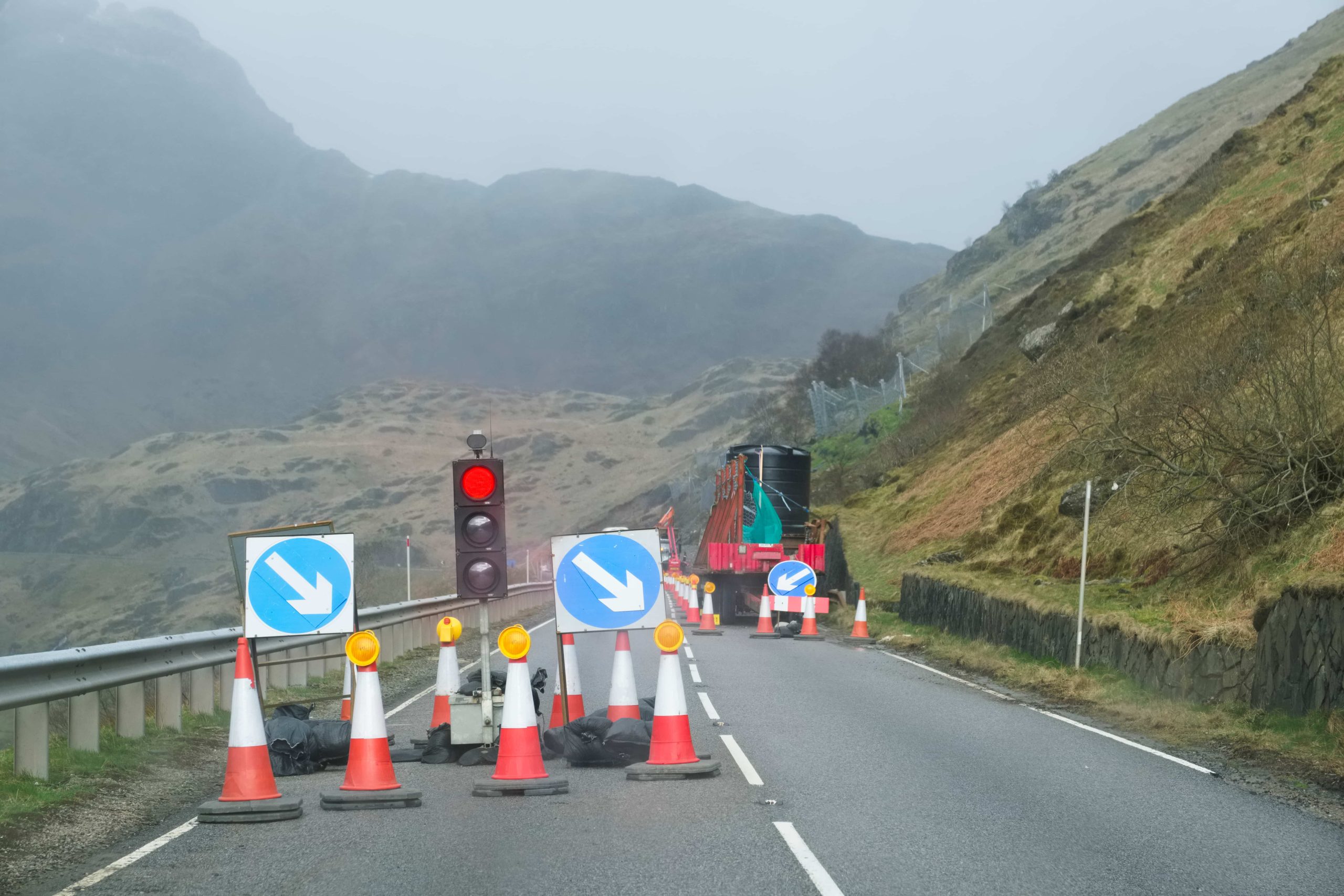
A safe closure is engineered in stages. When any stage is skipped or done wrong, the risk lands on drivers. The most common failures we see include:
- Advance-warning signs placed too close to the closure, leaving no time to slow down or merge
- A merge taper that is too short, too abrupt, or missing entirely, forcing last-second lane changes
- Missing, knocked-over, or non-reflective cones, drums, or barrels that fail to channel traffic
- No buffer space between live traffic and the work area, so a small error becomes a serious crash
- Unmarked nighttime closures with inadequate lighting or reflectivity
- Traffic queues that extend past the warning area onto a highway, hidden around a curve or crest
- Conflicting or outdated signage left up after the lane configuration has changed
The Injuries These Crashes Leave Behind
Because lane-closure crashes often happen at highway speed and involve multiple vehicles, the injuries can be life-altering. We represent people with traumatic brain injuries, neck and back injuries, spinal cord damage, broken bones, and the lasting effects of whiplash and soft-tissue trauma that insurers too often dismiss. Because these crashes frequently turn into multi-vehicle pile-ups, a single collision can involve several at-fault drivers and several insurance policies to sort through. When a crash claims a life, surviving relatives may bring a Fort Lauderdale wrongful death claim.
The MUTCD Rules a Safe Lane Closure Must Follow
Temporary traffic control is not improvised. The federal Manual on Uniform Traffic Control Devices (MUTCD), which Florida follows, sets out exactly how a lane closure should be built. Falling short of these standards can be powerful evidence of negligence:
| Standard / authority | What it requires |
|---|---|
| MUTCD Part 6 advance-warning area | Signs placed far enough ahead to give drivers time to perceive the closure, slow down, and merge before the lane ends. |
| MUTCD Part 6 merging taper and channelizing devices | A taper of appropriate length with retroreflective devices at roughly 20-foot spacing (at least 28 inches tall on roads 45 mph and higher) to guide traffic smoothly out of the closed lane. |
| MUTCD Part 6 buffer space | A longitudinal and lateral buffer separating moving traffic from the work space so a minor error does not reach workers or cause a pile-up. |
| OSHA flagger requirements (29 CFR 1926.201) | Trained flaggers and approved signaling to direct vehicles through transitions where a closure changes the normal flow. |
Florida also backs these rules with enforcement: under Florida Statute Section 316.1893, the state can designate enhanced penalty zones on high-crash highway segments, where speeding violations carry heightened penalties — a reflection of how seriously Florida treats work-zone safety.
Who Is Responsible When a Lane Closure Goes Wrong
Rarely is just one company involved. Responsibility can rest with the general contractor, the maintenance-of-traffic (MOT) subcontractor that designed and set up the closure, the traffic-control company that placed and maintained the devices, and sometimes the public entity that approved the traffic-control plan. Florida divides fault among everyone responsible under Florida Statute Section 768.81. Under the comparative-fault rule reshaped by the 2023 tort-reform law, anyone found more than half at fault is barred from recovering, while a smaller share trims the award proportionally. Claims that involve a state or local agency are subject to the limits and notice requirements of Florida’s sovereign-immunity law, Section 768.28, which makes early legal advice especially important.
If You Were Working: Comp and Third-Party Claims
Injured road-crew members usually receive workers’ compensation from their employer under Chapter 440, regardless of who was at fault. That benefit, however, does not bar a separate lawsuit against a different company that caused the crash. Florida Statute Section 440.39 lets an injured worker pursue that third-party claim — against, say, a separate MOT contractor or a careless motorist — while still drawing comp benefits, and a third-party case can reach damages comp never pays, such as pain and suffering and the full value of lost earnings.
What Your Claim May Be Worth
 Two broad categories of damages are available under Florida law. Economic damages cover the measurable costs — emergency and ongoing medical care, rehabilitation, lost income, reduced earning capacity, and the repair or replacement of your vehicle. Noneconomic damages, recognized in Section 768.81, address the human side: physical pain, emotional distress, and the loss of the life you had before the crash. Where a lane-closure crash is fatal, Florida’s wrongful-death statute, Section 768.21, lets close family members recover for their own losses, including companionship and support. Because every crash is different, the value of a claim turns on the severity of the injuries, the available insurance coverage, and how clearly fault can be proven.
Don’t Wait: Florida’s Two-Year Deadline
Timing is critical for two reasons. Legally, Florida Statute Section 95.11 generally requires negligence claims that accrued on or after March 24, 2023 to be filed within two years, with the same window for wrongful death. Practically, the evidence that proves a lane-closure case — the position of the signs and cones, the taper length, the traffic-control plan, and any maintenance logs — can be packed up and gone within days of the work finishing. The sooner a lawyer can document the scene, the stronger your case will be.
How Our Firm Builds a Lane-Closure Case
Proving that a closure was set up wrong takes fast, specific work. Here is where we focus:
- Getting to the scene quickly to record signage, taper, spacing, and lighting before the work zone is removed
- Obtaining the traffic-control plan, permits, and the contractor’s and MOT firm’s maintenance records
- Comparing what was actually on the road against what the MUTCD and the approved plan required
- Pinpointing every responsible company and any government entity involved
- Working with traffic-engineering and reconstruction experts to show how the layout caused the crash
- Documenting the full extent of your injuries and losses, then negotiating hard or trying the case
Hurt Because of a Botched Lane Closure?
A confusing or unsafe lane closure is not your fault, and you should not pay for someone else’s shortcut. Our Fort Lauderdale construction lane closure accident lawyers move fast to preserve the evidence and pursue full compensation. There’s no fee to get started; we take these cases on contingency and the consultation costs nothing. Call 954-522-5800 or 844-643-7200 any time for a free, confidential case review.
Sources: Federal Highway Administration — Work Zone Facts and Statistics (NHTSA FARS, 2023); MUTCD Part 6 — Temporary Traffic Control (11th Edition); FMCSA — Florida Work Zones (2023); FLHSMV — Florida Traffic Crash Facts Annual Report (2023); FDOT — Work Zone Safety; OSHA 29 CFR 1926.201; Florida Statutes Sections 316.1893, 95.11, 768.81, 768.28, 768.21, and 440.39; Federal Reserve (FRED) — Broward County building permits. (Each citation is hyperlinked where it first appears in the body.)
About the Firm
Published by the Law Offices of Wolf & Pravato
For nearly three decades, the Law Offices of Wolf & Pravato have represented injured Floridians and their families across South and Southwest Florida, exclusively on the plaintiff’s side. The firm is led by managing partner Richard P. Pravato, a Board-Certified Civil Trial Attorney (Florida Bar No. 86150). To reach the attorney who handles cases in your area, visit our attorneys page, explore our practice areas, or learn more about our firm.
Disclaimer: This page is provided for general informational purposes only and does not constitute legal advice. Reading this content does not create an attorney-client relationship between you and the Law Offices of Wolf & Pravato. Laws change, and every case is different, so you should not act or rely on any information here without consulting a licensed Florida attorney about your specific situation. For advice regarding your circumstances, please contact our office for a free consultation.
Frequently Asked Questions
What is a construction lane closure accident?
It’s a crash that happens because of how a travel lane was closed or shifted for road or construction work. Typical causes include warning signs set up too late, a merge taper that is too short, missing or knocked-down cones, or traffic backing up unexpectedly around a closure. These conditions push drivers into sudden braking and lane changes that lead to rear-end and sideswipe collisions.
The work zone had almost no warning before the lane ended. Is that negligence?
It may be. The MUTCD requires an advance-warning area long enough for drivers to perceive the closure and merge safely, plus a proper taper to guide them out of the closing lane. When the warning distance or taper falls short of those standards, that gap can be strong evidence that the closure was set up negligently. A lawyer can compare what was on the road to what the rules and the approved plan required.
Can I bring a claim if a government agency was involved in the road project?
Sometimes, but these claims are different. When a state or local entity helped design or approve the work zone, Florida’s sovereign-immunity statute, Section 768.28, limits damages and imposes strict pre-suit notice requirements and deadlines. Because those rules are unforgiving, it is important to speak with a lawyer early so the required notices are filed correctly and on time.
I was a road-crew worker hurt in the closure. Do I only get workers’ comp?
Not necessarily. Workers’ compensation is usually your exclusive remedy against your own employer, but Section 440.39 lets you also pursue a third-party claim against another at-fault company, such as a separate traffic-control contractor or a careless driver, while still receiving comp. A third-party claim can recover pain and suffering and full lost wages that comp does not pay.
What evidence helps prove a lane-closure crash?
The position and timing of the signs, the length of the taper, the spacing and reflectivity of the cones or drums, the traffic-control plan and permits, and the contractor’s maintenance logs all matter. Much of it is temporary, so prompt photographs, witness statements, and preservation requests are key. Traffic-engineering experts can then show how the setup deviated from the standard.
How long do I have to file in Florida?
Under Section 95.11, most negligence claims that accrued on or after March 24, 2023 must be filed within two years, and wrongful-death claims follow the same two-year window. Claims involving a government entity have separate, shorter notice deadlines, which is another reason to act quickly.
What can I recover after a lane-closure crash?
You may recover economic damages such as medical bills, future care, lost income, lost earning capacity, and vehicle damage, along with noneconomic damages for pain, suffering, and loss of enjoyment of life. If the crash was fatal, surviving family members may bring a wrongful-death claim under Section 768.21.
What does it cost to hire your firm?
Nothing up front. The Law Offices of Wolf & Pravato take these cases on a contingency-fee basis, so a fee is owed only if we recover money for you, and the first consultation is always free.
Recent Posts
- Wrong Burial Plot and Grave-Site Errors in Fort Lauderdale

- Rainwater Falls at Fort Lauderdale Store Entrances

- Parking-Lot Backing Crashes in Fort Lauderdale: Who Has the Right of Way?
- Elevator and Escalator Injuries at Fort Lauderdale Shopping Centers
- Delivery Driver Car Accidents in Lakeland: Who Pays?

- Injured as a Passenger in Fort Lauderdale: Whose Insurance Pays?




FLORIDA’S PERSONAL INJURY ATTORNEYS FOR + 20 YEARS