
Florida Construction Accident Lawyer
You were doing your job on somebody else’s site, and their safety plan existed mostly on paper. We can take it from here. Call 954-522-5800 for a free consultation. You pay us nothing unless we win. We have won these claims for Floridians from the Keys to the Panhandle, and we work them from five offices between Fort Lauderdale and Fort Myers.
File the workers compensation claim and report the injury in writing within 30 days, because that protects your medical care and wage benefits. Then have someone look at who else was on that site. The comp claim and the third party claim run in parallel, and only the second one pays for what the injury actually cost you.
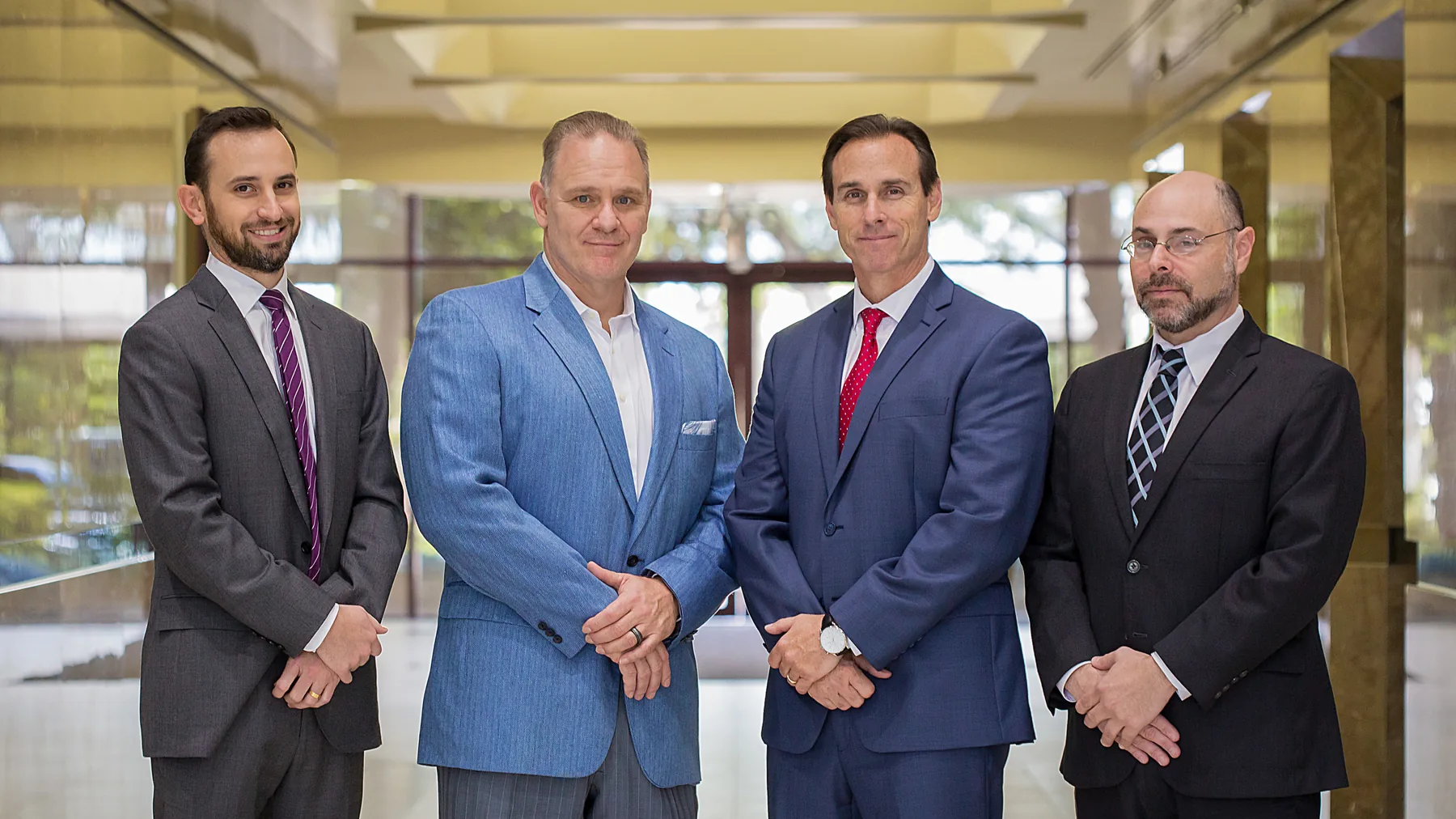
Our team will not let you go through a construction accident claim alone
Coming off a job site in an ambulance is hard enough without workers compensation covering only part of what it costs you. Nothing undoes the injury, and we will not pretend otherwise. What we can do is go after everybody else on that site who answers for it, and we will take the case as far as it has to go.
Our trial attorneys have won construction accident cases across Florida since 1993, from the Keys to the Panhandle, and one of them will handle yours from the first call to the last check. Call 954-522-5800 for a free consult and a trial lawyer will tell you today whether you have a case. You pay us nothing unless we win, and we work from five offices between Fort Lauderdale and Fort Myers.
Meet the attorneys →What Florida law does with a construction accident claim
The general contractor, the sub and the equipment owner will each say it was one of the others, and the site will look different tomorrow. Meanwhile you are on a check that does not cover the rent, with surgery ahead and no idea when you work again. Finding who else owes you beyond compensation is our job, and it starts the day you call.
A construction site is the one place where several companies work within feet of each other, which is exactly why an injured worker so often has a claim beyond workers compensation and so rarely hears about it. Below is who can be made to answer, what the compensation system covers, and why the two cases have to be run together.
Somebody hurt on a Florida construction site usually has two separate claims: a workers compensation claim against their own employer, and an ordinary injury claim against any other company on the site that contributed. The second pays for pain and suffering and the full wage loss. The first does not.
The deadline that ends a Florida construction accident claim
Four separate clocks run on a site injury, and they do not run together. The one that ends the valuable claim is the one nobody mentions at the time.
Thirty days to report it to your employer
Fla. Stat. § 440.185 requires an injury to be reported to the employer within 30 days of it happening, or of the date a physician says it is work-related. Missing it is the most common reason a good compensation claim is denied, and it happens because people carry on working and only report it when the pain does not settle.
Report it in writing, to a supervisor, and keep a copy.
Two years on the claim that is actually worth something
A claim against another company on the site is an ordinary negligence action under Fla. Stat. § 95.11, and Most claims from an accident on or after March 24, 2023 have to be filed within two years. An older accident keeps the four years that applied when it happened. The compensation case does nothing to protect it. Workers lose it entirely while their compensation file is still open, because nobody told them there was a second claim.
Two years, then one, inside the compensation system
Fla. Stat. § 440.19 gives two years from the date the employee knew or should have known the injury arose out of work, and then tolls the period for one year from the last indemnity payment or the last authorized treatment. Benefits are rarely denied outright; they simply stop, and the claim closes a year later without anybody saying so.
Hours and days, for what the site records
A serious injury is reportable to federal safety regulators quickly: under 29 C.F.R. § 1904.39 an employer must report a fatality within 8 hours, and an inpatient hospitalization, amputation or loss of an eye within 24 hours. That fixes a date and generates a file, and the investigation that follows produces statements taken while everybody still remembers.
The site itself does not wait. A scaffold comes down, an excavation is filled, a hole is covered, a machine goes back to the rental company. Photographs and a preservation letter in the first week are what keep any of it available.
Who can be held answerable
Your own employer is normally out of reach, and that is the point. Everybody else on the site is not, and a busy site has a great many of them.
- Your employer, who is protected. Fla. Stat. § 440.11 makes workers compensation the exclusive remedy against the employer, in place of all other liability. The exception for an intentional tort requires clear and convincing evidence that the employer knew its conduct was virtually certain to cause injury or death and deliberately concealed the danger, which is a bar very few cases clear.
- The general contractor, and why immunity may reach it. Fla. Stat. § 440.10 requires a contractor to secure compensation for the employees of any subcontractor that has not secured it themselves, and a contractor that does so is generally treated as their statutory employer, taking the immunity in Fla. Stat. § 440.11 along with the obligation. So whether a general contractor can be sued turns on the insurance arrangements on that specific job, which is established from the contracts rather than assumed.
- Another subcontractor, which is the usual answer. The electrician whose panel was live, the crew that removed a guardrail, the operator who swung a load over people. Fla. Stat. § 440.10 gives a subcontractor immunity from an action at law only where it has secured compensation for its own employees and its own gross negligence was not the major contributing cause of the injury. That second condition is worth reading twice.
- The owner of the property, or the developer. Where the party that controlled the site created the hazard, retained control over safety, or directed the work, it answers for it. On public projects that party is a government body and the claim runs a different route entirely.
- The company that owned or rented out the equipment. Lifts, scaffolding, cranes, trenching equipment and power tools are frequently rented, and the rental company has duties about condition, inspection and instruction. Its maintenance records exist and are dated.
- The manufacturer of a machine, tool or material. A guard that was never fitted, a control that failed, a component that let go. These are proved from the item itself, which means it must not be repaired, returned or scrapped, and that has to be said in writing immediately.
- The engineer or architect, where the design was the problem. Shoring that could not hold, a sequence that put people under a load, a temporary structure that was never checked. These are documented decisions with drawings, calculations and revisions behind them.
How a Florida construction accident case actually runs
Two cases run at once in two different forums, and the order matters because what happens in the compensation case affects what the other one is worth.
- Report the injury and get treatment authorized. In writing, within 30 days. The employer or carrier chooses the treating physician under Fla. Stat. § 440.13, and treatment obtained elsewhere without authorization frequently goes unpaid and sits outside the record the case is decided on.
- Preserve the site, the equipment and the paperwork. Photographs of the condition before it changes, a written demand that the machine or the material not be released, and requests for the daily reports, toolbox talk records, inspection logs and the safety plan. All of it exists on a live job and much of it disappears when the job finishes.
- Work out who was on the site and under what contract. The general contract, the subcontracts, the certificates of insurance and the site sign-in records. This is what tells you which companies can be sued, which are protected and where the coverage is, and it is the single most valuable piece of work in the first month.
- Get the safety investigation file. Where regulators investigated, their file contains statements, measurements and photographs taken within days. A citation is not a verdict and a violation does not by itself create a right to sue, but 29 C.F.R. § 1926.501 and the rest of the construction standards give a documented benchmark of what should have been done, and the file records what was.
- Let the treatment declare itself. Crush injuries, falls and spinal injuries take a year or more to reach the point where the physicians can say what is permanent. A third-party case settled before then is settled cheap.
- Identify every liability policy on the job. Fla. Stat. § 627.4137 requires the limits of each known policy, including excess and umbrella layers, to be disclosed in a sworn statement within 30 days of a written request. Large projects frequently run a single insurance program covering everybody on the site, which changes the whole shape of the case and is found by asking.
- The third-party suit, discovery and mediation. Fla. Stat. § 47.011 puts the case where the injury happened or where the defendant is. Discovery reaches the contracts, the safety records and the corporate witnesses who have to explain them. Most Florida courts require mediation, and Fla. Stat. § 768.79 lets either side serve a formal offer with fees running from a refusal the judgment beats by at least 25 percent.
- Resolving the compensation lien. The compensation carrier is repaid out of any third-party recovery. How much it actually gets is negotiable and is affected by how the settlement is structured, which is a reason for one firm to be running both cases rather than two firms running one each.
What the claim is worth, and how that number is built
The gap between the two claims is the whole subject. Knowing the size of it is what stops somebody accepting the smaller one and closing the door on the larger.
What compensation pays
Medical treatment through authorized physicians under Fla. Stat. § 440.13, and wage benefits under Fla. Stat. § 440.15 at 66 and two-thirds percent of the average weekly wage for temporary total disability, capped at 104 weeks of temporary benefits, followed by impairment benefits once the treating physician says you are as good as you will get.
What compensation does not pay, at all
Pain and suffering. Not a reduced amount, none. Nor the third of your income the system does not replace, nor what an injury costs a person outside work. That is the trade for not having to prove fault, and it is why the third-party claim matters so much on a serious injury.
What the third-party claim adds
All the medical care past and future, the whole wage loss rather than two thirds of it, lost earning capacity, and pain and suffering. Where somebody in physical work loses the ability to do it, lost earning capacity is usually the largest number in the case and it is proved with an economist and the treating physicians.
The fault split, and the line at 50 percent
Fault is divided in the third-party case under Fla. Stat. § 768.81, and since March 2023 a person found more than 50 percent responsible for their own harm recovers nothing. None of that applies inside the compensation system, which is one reason the two cases are argued so differently.
The defense in a site case is nearly always that the worker did not follow a procedure. The answer is usually the same as it was at the time: what the site actually made possible, what the schedule demanded, and what everybody else was doing.
Punitive damages, in the rare case
Fla. Stat. § 768.72 requires a court to see evidence before punitive damages may be pleaded, and then intentional misconduct or gross negligence proved by clear and convincing evidence. A company that removed fall protection to save time on a job it knew people were working above can reach it. Most site cases do not.
What is repaid out of the recovery
The compensation carrier's lien, and health insurance, Medicare or Medicaid where they paid. Fla. Stat. § 768.76 keeps those payments from being deducted from the award, since the right to be repaid already exists. All of it is negotiable and reducing it is a real part of what a worker keeps.
What changes from one part of Florida to another
Florida builds constantly, and what is being built decides which body of law the case runs under.
Public projects change everything
A road, a school, a courthouse or a public building puts a government body in the claim, which brings Fla. Stat. § 768.28 with it: written notice to the agency and, in most cases, to the Department of Financial Services, a waiting period before suit, and caps of $200,000 per person and $300,000 per incident. The private contractors on the same job remain fully exposed, so establishing which defendant is which is a first-week question.
Residential work and misclassification
Smaller residential jobs carry more workers treated as independent contractors, more cash arrangements and more employers with no coverage at all. What decides employment status is control over the work rather than the paperwork or what somebody signed, and getting it wrong costs a worker the whole claim.
Storm rebuilding
After a hurricane the volume of roofing, tree and structural work rises sharply and so does the share of it done by crews brought in for the season, working long hours on unfamiliar sites. Those cases carry the same law and much thinner paperwork, which makes the first weeks matter more rather than less.
A proven record, anywhere in Florida
Our five offices run from Fort Lauderdale to Fort Myers, and we act statewide on site injuries and on the claims that sit alongside them.
The insurance behind a Florida construction accident claim
Several kinds of insurance sit over one construction site, and which one answers depends on who you worked for and who hurt you.
The compensation carrier, which is not on your side
It pays what the statute requires and disputes the rest, and it decides which physician you see and what treatment is authorized. Nothing about that is improper and all of it is worth understanding before relying on its account of your rights.
Where your employer had no coverage
Fla. Stat. § 440.11 then lets the employee elect to claim compensation or to bring an action at law instead, which removes the immunity that would otherwise protect the company. Whether an employer was insured is a matter of public record and it gets checked at the start.
Liability policies down the contract chain
Each company on the site carries its own general liability coverage, and the contracts frequently require subcontractors to name others as additional insureds. Fla. Stat. § 627.4137 forces disclosure of the limits of each known policy including excess and umbrella layers, in a sworn statement, within 30 days of a written request.
A single program covering the whole job
Large projects sometimes run one insurance program purchased by the owner or the general contractor covering everybody working on the site. Where one exists it changes who is insured by whom, and it is found by asking for the project insurance manual rather than by asking each company separately.
Why your health insurance refuses
Health plans exclude work injuries, so somebody whose compensation claim is denied is frequently refused by their health plan as well and ends up with neither paying. Getting the compensability question decided is what unlocks treatment, and it is a reason to involve a lawyer at the denial rather than months later.
Two claims, not one
Who else was on the site
A general contractor controlling site safety, a subcontractor whose crew created the hazard, a property owner, a scaffolding or crane supplier, an equipment manufacturer: none of these is your employer, and none of them is protected by workers compensation exclusivity.
Establishing the contractual structure of the site is therefore not paperwork, it is the case. The answer sits in the contracts, the site safety plans, the toolbox talk records and the daily logs, which show who was responsible for what.
What we look for
- OSHA citations arising from the incident, and prior violations at the same company
- Site safety plans and who was contractually responsible for enforcing them
- Equipment inspection and maintenance records
- Whether required fall protection, guarding or shoring was in place
- Subcontractor agreements and indemnity provisions between the parties
Who would handle your case
Your case is handled by one of the trial lawyers below, and you will know which of them has it from the first conversation. They do construction accident work week in and week out, they will tell you what your case is worth and why, and they will be straight with you about the parts that are hard.
-
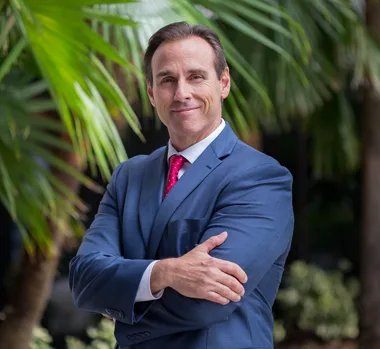 Richard P. Pravato Founding & Managing Attorney Board Certified in Civil Trial Law by The Florida Bar since 2004, and by the National Board of Trial Advocacy. Injury cases exclusively since 1996. Full profile →
 -
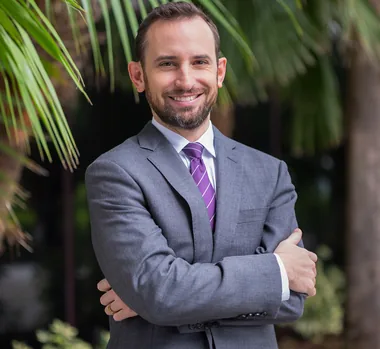 Brett J. Yonon Senior Trial Attorney Selected to Florida Super Lawyers in 2024 and 2025. Brett Yonon is who this firm puts on a catastrophic injury or a death in the family, and he has tried those cases to verdict. Full profile →
Construction Accident questions we are asked
I am getting workers comp. Can I still bring a claim?
Against your employer, generally not. Against anyone else who contributed to the injury, yes, and that claim is not barred by the comp system. On a multi-contractor site there is very often such a party. It also pays for pain and suffering, which comp never does.
I am undocumented. Can I still make a claim?
Immigration status does not remove the right to bring an injury claim in Florida. It can raise practical questions worth discussing candidly and privately, which is exactly the sort of conversation the free consultation is for.
Does an OSHA citation prove my case?
It helps and it we can get, but a citation is not the same as civil liability and its use is subject to rules of evidence. Its greater value is often in what the underlying investigation documents, and in establishing a pattern where the same company has been cited before.
Questions that apply to any Florida injury claim, fees, deadlines, recorded statements and shared fault, are answered on our injury claim FAQ. What we have recovered is on recent case results.
Five Florida offices
We take construction accident claims statewide. Each market below has its own page on this claim, with that office's address, its direct number and the court a case there is filed in.
Fort Lauderdale construction accident claims
2101 W Commercial Blvd, Fort Lauderdale. Serving Broward County.
View →Miami construction accident claims
1111 Brickell Avenue, Miami. Serving Miami-Dade County.
View →West Palm Beach construction accident claims
2101 Vista Parkway, West Palm Beach. Serving Palm Beach County.
View →Boynton Beach construction accident claims
1375 E Gateway Blvd, Boynton Beach. Serving Palm Beach County.
View →Fort Myers construction accident claims
1825 Colonial Blvd, Fort Myers. Serving Lee County.
View →Other claims we handle
Three of the closest to this one. The full list is on our Florida practice areas page.
Tell us what happened
A lawyer will listen, tell you what Florida law does with those facts, and be straight with you about whether it is worth bringing. If it is not, we will say so.
We take cases anywhere in Florida.