

Miami Construction Accident Lawyer
You went to work on a site and came home in an ambulance, and workers compensation is not going to cover what this actually costs. We can take it from here. Call 844-643-7200 for a free consultation. You pay us nothing unless we win. Our Miami personal injury lawyers have taken these cases across Miami-Dade County since 1993.
Construction Accident claims in Miami
The general contractor, the sub and the equipment owner will each say it was one of the others, and the site will look different tomorrow. Meanwhile you are on a check that does not cover the rent, with surgery ahead and no idea when you work again. Finding who else owes you beyond compensation is our job, and it starts the day you call.
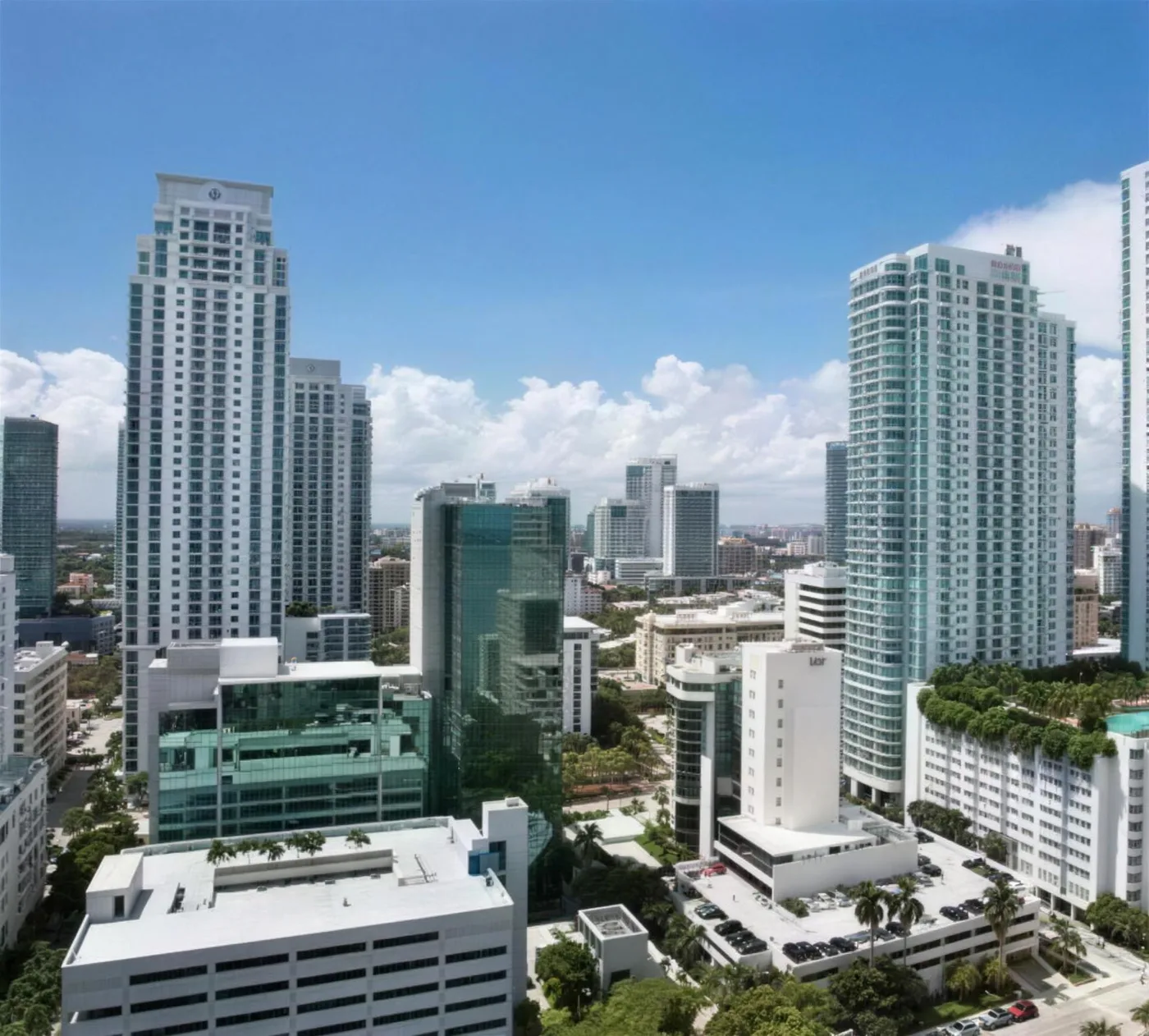
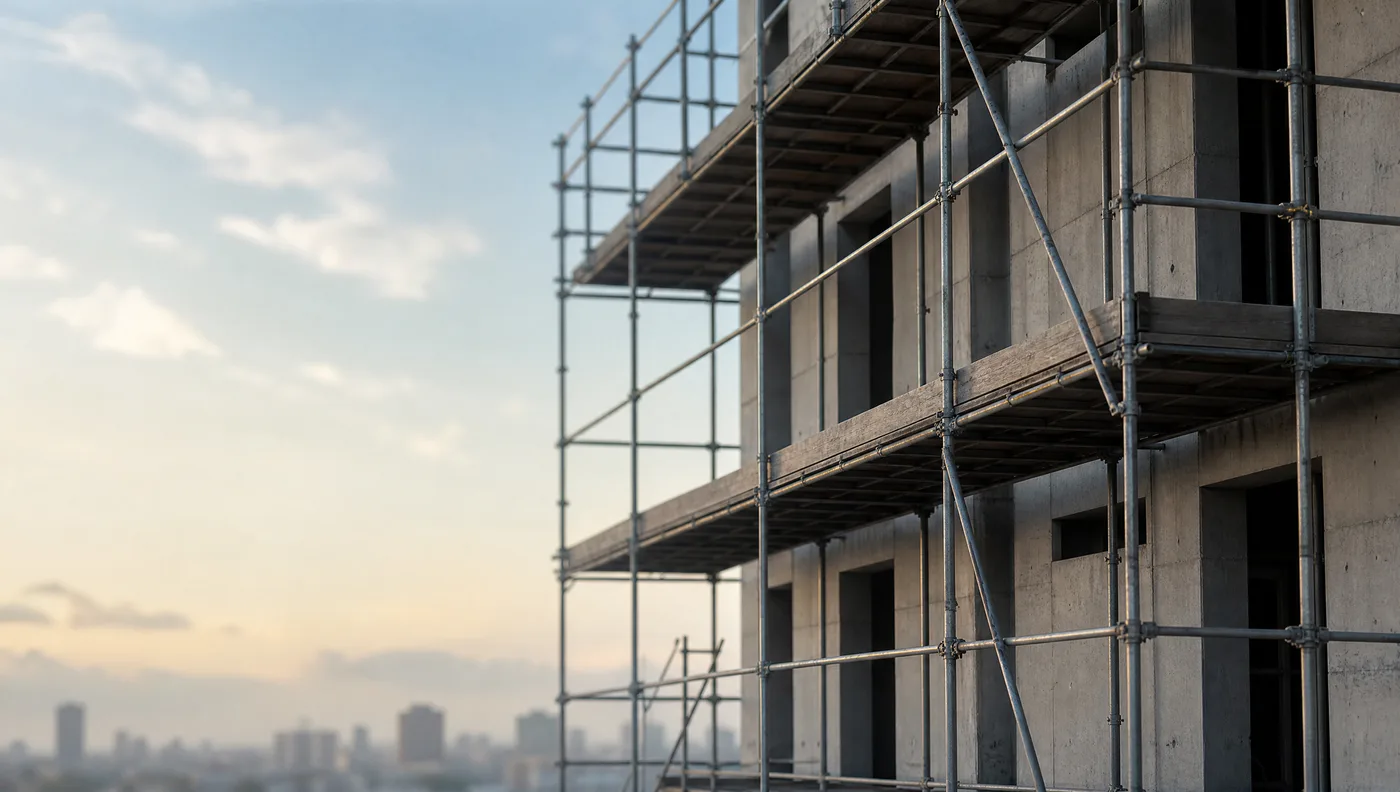
Brickell and the downtown corridor carry a sustained volume of tower construction, and a tower is not one employer but a chain of them: a developer, a general contractor, structural and mechanical subs, a crane company, a hoist operator, an elevator installer. A worker who falls, or a pedestrian struck by something that falls, is dealing with a set of entities who will each point at the next. Since the 2022 changes to Florida's milestone inspection requirements, structural condition reports on older buildings have also become discoverable material in a way they were not before, which matters in a repair or renovation injury.
A Miami-Dade construction injury produces two claims: workers’ compensation through your own employer regardless of fault, and a negligence claim against any other company on the site, which pays for pain and lost earning capacity. On a tower there are frequently a dozen companies, so the first work is establishing who controlled the condition and who employed whom.
What to do after a construction accident in Miami
- Report the injury to your employer, and note the date you did it. Florida requires an injured worker to report a workplace injury to the employer, and the period for doing it is short. Say it to a supervisor, and follow it with a text or a message so there is a record of the date. Injuries reported late are disputed on that ground alone, and a message sent the same afternoon closes the argument before it starts.
- Write down every company that was on the site. Not only who employs you. The general contractor, the other trades working that day, whoever owned or operated the equipment, the delivery driver, the crane or hoist company, the property owner. Photograph the signage at the gate and the logos on the trucks. Your employer is generally the one party you cannot sue in negligence, so the names that matter most are the other ones.
- Photograph the scene and the equipment before it changes. A site is different by the next morning. The ladder gets put away, the opening gets covered, the scaffold moves up a level and the trench gets backfilled. Photograph the thing itself, the guardrails or the ones that were missing, the tags and inspection stickers on any equipment, and the wider area so it is clear what a person could actually see.
- Get treated, and understand who is directing the care. Go to the hospital if you need to. After that, workers’ compensation generally directs treatment to physicians the carrier authorizes, which is a real constraint and not a suggestion. It is worth having somebody explain how that works before you are unhappy with it, because the process for changing an authorized physician has its own rules and its own timing.
- Immigration status does not decide whether you have a claim. Florida’s workers’ compensation statute defines an employee to include workers whether they are lawfully employed or not, and a negligence claim against another company on the site does not turn on status either. Workers are told the opposite constantly. One thing genuinely is worth care: anything to do with documents given to an employer should be discussed with a lawyer before it is discussed with anybody else.
Where these happen in Miami
Miami-Dade builds vertically and continuously, and a tower is not one employer but a chain of them working on top of each other. Where an injury happens in that sequence usually explains who is answerable for it.
-
Cranes, hoists and lifting operations
The equipment that makes tower work possible, operated by companies that are separate from everybody else on the job.
- Lift plans and load charts, which either covered what was picked or did not
- Rigging, slings and their inspection records, which are documented and dated
- Personnel and material hoists, and the enclosure and interlocks that protect the shaft
- A crane company, a rigging contractor and an equipment owner who are frequently three separate defendants
-
Concrete, formwork and shoring
The part of a tower that goes up fastest, and where a failure affects everybody working under it.
- Shoring and reshoring, and whether a floor was loaded before it was ready to take it
- Post-tension work, where the hazard is understood by the crew doing it and not by the trades nearby
- Engineering drawings and any field changes made to them, which are documented
- Floor openings and edges created during the pour and left after it
-
Staffing agencies and day labor
A large share of the workforce on these sites is employed by a leasing company rather than by the contractor giving the instructions.
- The employer of record, which decides which company the exclusive remedy actually protects
- The company directing the work, which may be answerable in negligence even though it does not pay you
- Assignment records and time sheets, which document who sent whom where
- Training that the agency says it provided and the site says it relied on
-
The street below
Downtown and Brickell build inches from walkways the public is still using, and the person hurt is frequently not a worker.
- Falling material and tools, where overhead protection was required and either absent or inadequate
- Sidewalk sheds, plating and temporary routes that change from week to week
- An ordinary negligence claim rather than compensation, because the injured person is nobody’s employee
- Daily reports and site photographs, which exist for every day of a job and are worth requesting by date
What causes them
- Falls through unguarded floor openings, skylights and shafts
- Material and tools falling on people working below, and on people passing on the street
- Being struck by vehicles, equipment and swinging loads on an active site
- Trench and excavation collapse, where the protective system was absent or was the wrong one for the soil
- Contact with overhead power lines and with temporary power that was not properly grounded
The injuries we see, and what each one turns on
Brain injury
A struck-by injury or a fall does not have to knock somebody out to injure the brain, and a normal CT scan does not rule one out. What follows shows up in memory, concentration, sleep and temper, and on a job site it shows up first as somebody being unable to do work they have done for twenty years. It is proved with neuropsychological testing and treating records rather than with the scan taken on the day.
Crush and orthopedic injuries
Pelvis, femur, tibia and complex joint fractures that need hardware and then a second operation to remove or revise it. In a trade that is paid for physical work, the question is rarely whether somebody recovers but whether they recover enough to go back to the same job, which is a different and much larger loss.
Amputation and hand injuries
Saws, nail guns, presses and caught-in injuries. Losing fingers or a hand ends a career in most of the trades, and the claim has to be built around what somebody can earn afterward rather than around what the surgery cost.
What Florida law requires you to prove
Compensation against your employer, and what it does not pay
Workers’ compensation under Chapter 440 pays medical care and a portion of lost wages regardless of who was at fault, and in exchange it is generally the exclusive remedy against your own employer under Fla. Stat. § 440.11. What it does not pay is anything for pain, for what daily life has become, or for the full value of a career that has ended. It also has its own deadlines, starting with the requirement in Fla. Stat. § 440.185 that the injury be reported to the employer promptly.
The claim beside it, against everybody else
A construction site is a set of separate companies, and the exclusive remedy protects only your employer. Another subcontractor, an equipment owner or manufacturer, a crane or hoist operator, a delivery company or the property owner all remain answerable in ordinary negligence, and that claim does pay for pain and for lost earning capacity. Florida does extend the employer’s immunity to a general contractor in defined circumstances under Fla. Stat. § 440.10, which is precisely why the contractual structure of the site has to be established rather than assumed. Most Florida negligence claims arising on or after March 24, 2023 carry a two-year deadline under Fla. Stat. § 95.11.
What the federal safety rules do and do not do
Construction work runs under the federal standards in 29 CFR Part 1926, including the fall protection requirements in 29 CFR § 1926.501, which generally require protection at six feet in construction. A violation does not by itself create a right to sue, and a citation is not a verdict. What it does provide is a documented standard against which conduct is measured, and a federal investigation file that would not otherwise exist. Employers also have to report a workplace fatality within eight hours and an amputation or in-patient hospitalization within twenty-four under 29 CFR § 1904.39, which fixes a date and generates records.
The full statutory detail, and the parts that differ by claim type, sit on our statewide construction accident page rather than being restated in every market.
How we prove it in Miami-Dade County
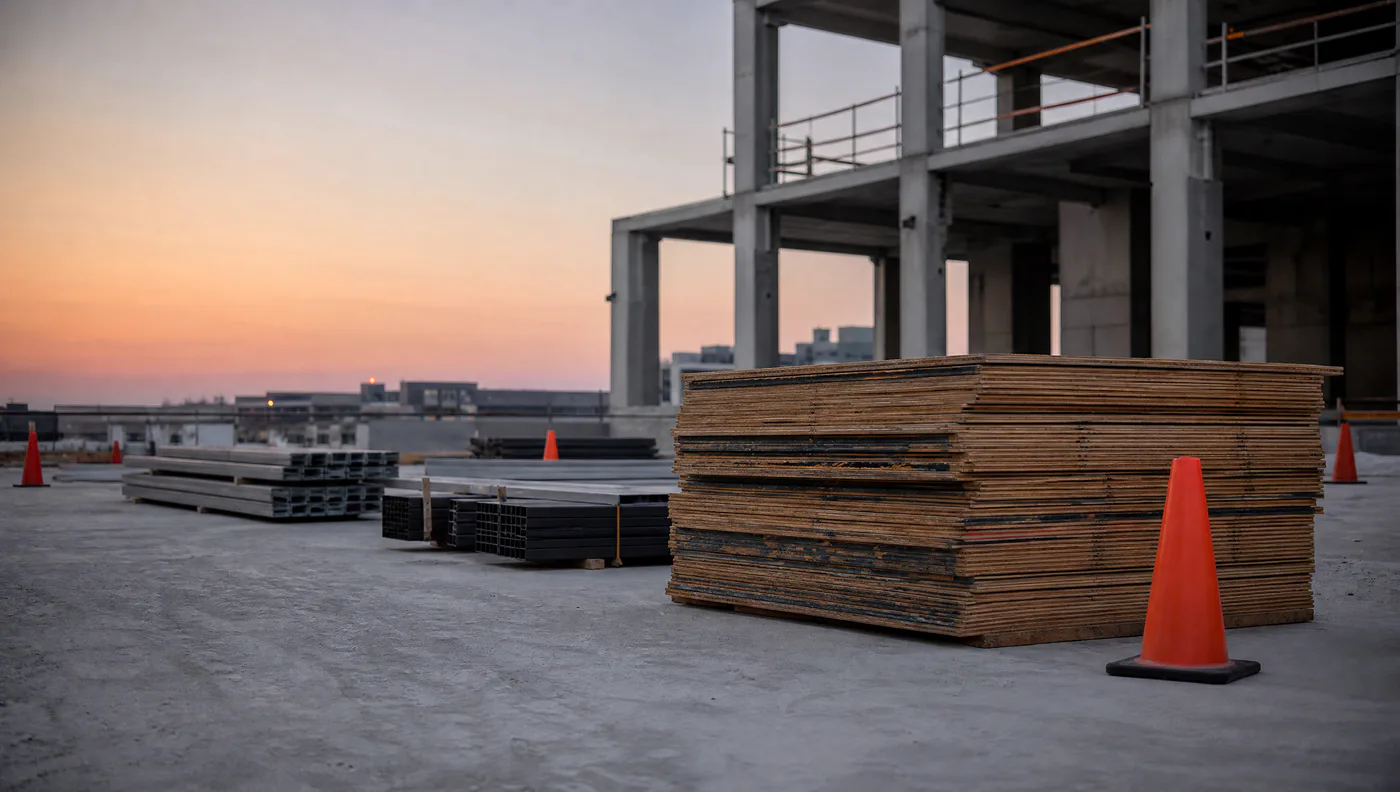
The paper on a Miami-Dade tower is extensive and it is created daily, which is an advantage. The difficulty is that it is held by a dozen companies and none of them volunteers it.
- The contract chain from developer to general contractor to every subcontractor and supplier
- Daily reports, superintendent logs and site photographs for the date in question
- Lift plans, load charts, rigging inspection records and equipment maintenance history
- Shoring and formwork drawings, and any engineering changes made in the field
- The staffing agency’s assignment records and time sheets, and the employer of record for every worker present
- The safety program, toolbox talk sign-in sheets and any job hazard analysis for that task
- Any federal safety investigation file, and the employer’s reporting of the injury to the agency
- The equipment itself, preserved before it is repaired, dismantled or returned
On a tower the sequence matters as much as the fault. A crew that removed a guardrail on Tuesday is frequently not the crew that fell through the opening on Thursday, and only the daily records show that.
Who would handle your case
Being hurt in Miami is hard enough without working out the legal side on your own. The trial lawyers below have handled construction accident claims across Florida since 1993, and one of them will take yours from the first call to the last check. They will tell you what your case is worth and why, and they will be straight with you about the parts that are hard.
-
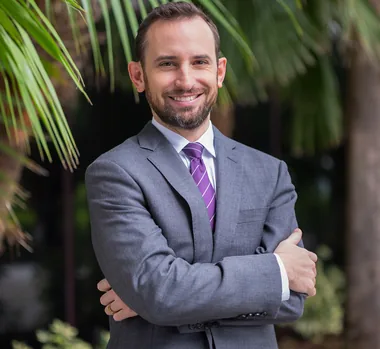 Brett J. Yonon Senior Trial Attorney Selected to Florida Super Lawyers in 2024 and 2025. Brett Yonon is who this firm puts on a catastrophic injury or a death in the family, and he has tried those cases to verdict. Full profile →
 -
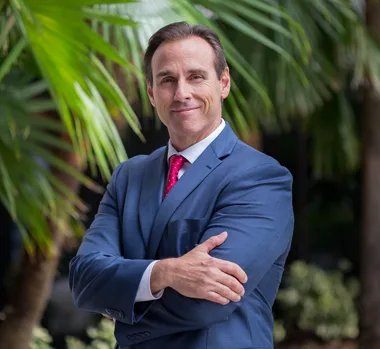 Richard P. Pravato Founding & Managing Attorney Board Certified in Civil Trial Law by The Florida Bar since 2004, and by the National Board of Trial Advocacy. Injury cases exclusively since 1996. Full profile →
How insurance companies handle these claims
Two carriers are usually involved from the start and they want different things. The compensation carrier is managing a claim it has to pay whatever happened, and the liability carrier for another company on the site is deciding whether it has any exposure at all.
- You were given the equipment and chose not to use it
- The harness was in the truck, the guardrail was available, the ladder was tied off yesterday. It is answered from the site records rather than from argument: the safety program in force, the toolbox talk sign-in sheets, the inspection logs, and what the other trades on the site were actually doing that week. Where none of those documents exist, that absence is itself the answer.
- You are an independent contractor, so there is no coverage
- What decides it is the actual working relationship rather than what the paperwork calls it: who controlled the work, who supplied the tools and materials, whether you worked for anybody else. Florida treats the question more strictly in construction than in other industries. Where the classification was wrong there may be coverage after all, and where there genuinely is none, a straight negligence claim against the employer becomes possible instead.
- The equipment is repaired, returned or put back in service
- A ladder, a scaffold component, a hoist or a piece of plant can be repaired or sent back to a rental company within days, and once it is gone nobody can examine it. A written request that it be preserved costs nothing and can go out in the first week. Sent late it becomes an argument about what was destroyed rather than a finding about what failed.
What a claim can include
What the claim against everybody else pays
Medical care past and future, the full wage loss rather than a portion, lost earning capacity, and pain and suffering. This is the claim that is not mentioned to an injured worker, and on a serious injury it is usually the larger of the two.
Lost earning capacity in a trade
The real loss in construction is rarely the weeks off. It is a person who can no longer carry, climb or kneel doing work that requires all three, and who has to earn a living somewhere else. That is quantified by a vocational assessment rather than by a pay stub.
Life care costs after a catastrophic injury
Equipment, home modification, attendant care and the replacement schedule for all of it, set out by a professional so that it is a number rather than an argument.
Why Wolf & Pravato in Miami
A Miami-Dade construction case is filed in the Eleventh Judicial Circuit, and the firm has an office on Brickell Avenue rather than a mailing address in the county. We work with clients in Spanish and English, which on these sites is not a courtesy: what somebody was instructed to do, and in which language, is frequently part of the claim.
The firm is led by a Board Certified Civil Trial lawyer, a certification held by 861 attorneys in Florida against a membership over 109,000. Insurance companies keep their own records of which firms in a county actually try cases, and that record moves an offer further than anything a firm can say about itself.
There is no charge to ask. Our fee comes out of what we recover and nowhere else, and if the answer is that you do not have a case, that is the answer you will get.
Miami construction accident questions
Something fell from a construction site and hit me on the street. Who is liable?
Whichever contractor controlled the work and the area below it, and often the general contractor as well through its duty to keep the site safe for people passing. That is an ordinary negligence claim rather than a workers’ compensation matter, because you are not their employee. Site logs, the permit record and any daily safety reports are what identify who was working overhead at the time.
I work for a staffing company but I take my orders from the contractor.
That is a common arrangement here and it matters more than it sounds. The exclusive remedy protects your employer of record, which is the leasing company, and the arrangement between it and the contractor decides how far that protection extends. The company actually directing the work may still be answerable in negligence. Assignment records and the agreement between the two are what settle it, and they we can get.
My employer says I cannot bring a claim because of my status.
That is not the law. Florida’s workers’ compensation statute defines an employee to include workers whether lawfully employed or not, and a negligence claim against another company on the site does not turn on immigration status either. It is said to workers constantly and it is wrong. What is worth genuine care is anything concerning documents given to an employer, which should be raised with a lawyer first.
I am undocumented. Can I still make a claim?
Immigration status does not remove the right to bring an injury claim in Florida. It can raise practical questions worth discussing candidly and privately, which is exactly the sort of conversation the free consultation is for.
Does an OSHA citation prove my case?
It helps and it we can get, but a citation is not the same as civil liability and its use is subject to rules of evidence. Its greater value is often in what the underlying investigation documents, and in establishing a pattern where the same company has been cited before.
The questions that come up on every kind of claim, deadlines, fees, recorded statements and fault, are answered on our Florida injury claim FAQ.
More in Miami
Miami Personal Injury Lawyer
Everything we handle in Miami-Dade County, and where our office is.
View →Miami Bicycle Accident Lawyer
Florida bicycle accident lawyers.
View →Miami Bus Accident Lawyer
Florida bus accident lawyers.
View →Miami Birth Injury Lawyer
Florida birth injury lawyers.
View →
Tell us what happened
A lawyer will listen, tell you what Florida law does with those facts, and be straight with you about whether it is worth bringing. We are at 1111 Brickell Avenue, 11th Floor, Miami, FL 33131.