













Florida Helmet Law and How It Affects Your Motorcycle Injury Claim
Few areas of Florida law cause riders more confusion than the helmet rule, and that confusion can affect a motorcycle injury claim. The truth is more favorable to riders than many believe: going without a helmet does not bar a claim. Understanding exactly what the law requires, and how a helmet choice affects damages, matters. A Florida motorcycle accident lawyer can explain it.
What Florida’s helmet law actually says
Florida’s rule is more flexible than the all-ages helmet laws in some states.
Who must wear a helmet
Under Florida’s motorcycle equipment law (§316.211), riders under 21 must always wear a helmet that meets federal safety standards. For them, there is no exception. Riders 21 and older may qualify to ride without one.
The $10,000 insurance exemption
A rider 21 or older may legally ride without a helmet if they carry at least $10,000 in medical insurance benefits covering crash injuries. This insurance requirement is the key condition that allows the exemption, and it exists to ensure coverage for the very injuries a helmet helps prevent.
Eye protection requirements
Separate from the helmet rule, Florida law requires motorcyclists to wear proper eye protection, regardless of age or the helmet exemption. This is sometimes overlooked, but it is its own legal requirement for operating a motorcycle.
Does going without a helmet bar a claim?
No. A rider legally riding without a helmet still has the full right to pursue a claim against a driver who caused a crash. The driver’s negligence, not the rider’s helmet choice, is what creates liability. Not wearing a helmet does not erase the at-fault driver’s responsibility for the crash.
How a helmet choice can affect damages
While it does not bar a claim, going without a helmet can affect the damages for a head injury. Under comparative negligence (§768.81), an insurer may argue that the lack of a helmet contributed to the severity of a head injury, potentially reducing the recovery for that specific harm. The argument applies to head injuries, not to the claim as a whole.
Why the injury type matters
The helmet argument only reaches injuries a helmet could have affected. For a broken leg, a spinal injury, or internal injuries, whether the rider wore a helmet is irrelevant, and the insurer cannot use it to reduce that part of the claim. Separating helmet-related from unrelated injuries is an important part of these cases.
Common myths about the helmet law
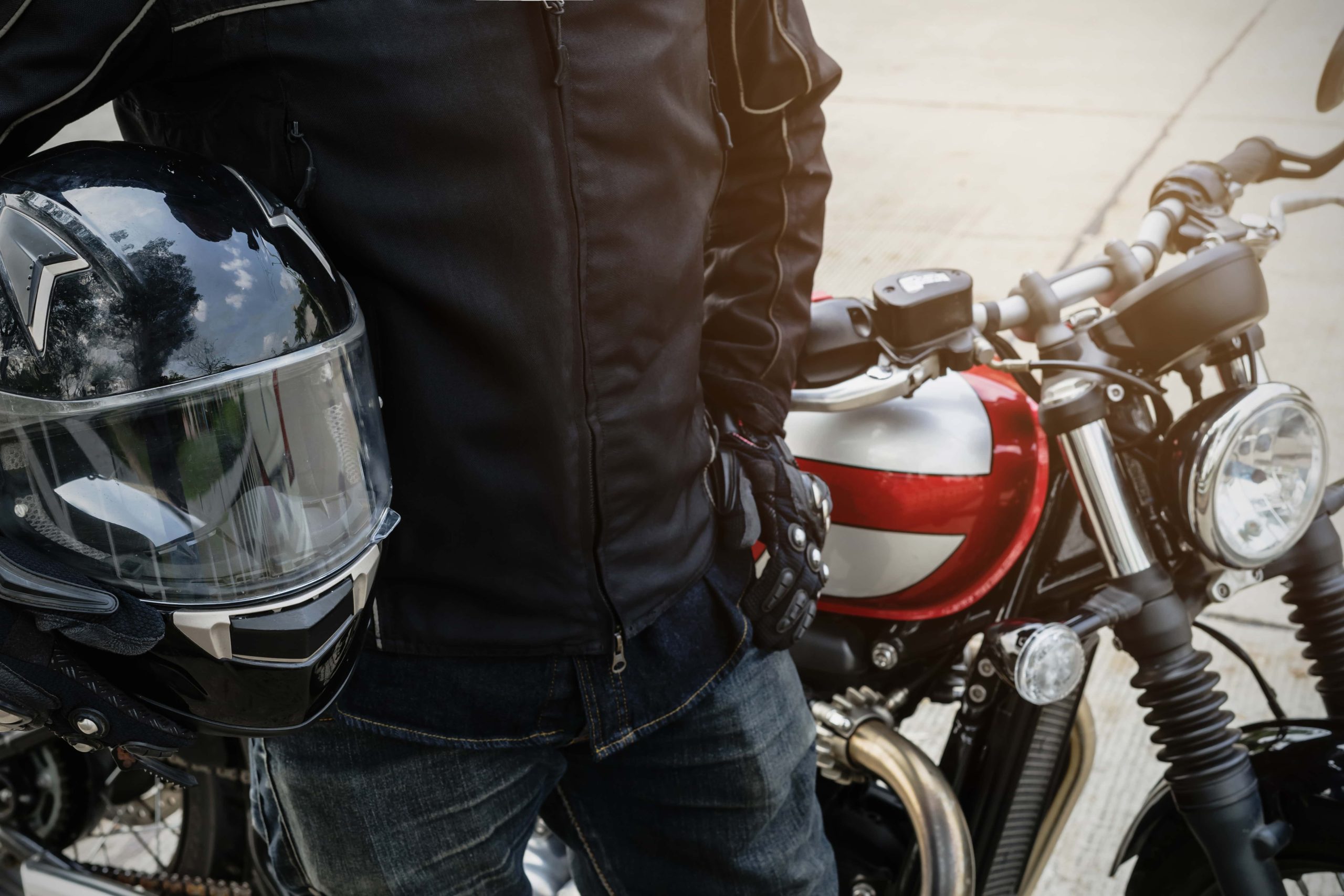
Two myths cause the most harm. The first is that riding without a helmet bars any claim; it does not. The second is that all riders may skip a helmet; only those 21 and older with the required insurance may. Clearing up these myths helps a rider understand their real rights after a crash.
How fault is still decided by the crash
Whatever the helmet question, liability turns on who caused the crash. A driver who turned across a rider’s path, merged into a blind spot, or failed to yield is at fault regardless of the rider’s helmet. The crash report, witnesses, and physical evidence establish that fault, just as in any motorcycle case.
Local motorcycle accident help across Florida
The helmet law applies statewide, but where a crash happened matters for the courts and the investigation. The firm helps injured riders across Florida, including:
- Fort Lauderdale motorcycle accident lawyer — Broward County
- Fort Myers motorcycle accident lawyer — Lee County
- Miami motorcycle accident lawyer — Miami-Dade County
- Lakeland motorcycle accident lawyer — Polk County
Steps to protect a rider’s claim
A few steps help protect both health and a claim after a motorcycle crash.
- Call 911 so police create an official crash report.
- Get medical care right away, even if injuries seem minor.
- Photograph the scene, the vehicles, and any injuries.
- Collect the names and contact details of drivers and witnesses.
- Preserve the helmet and gear, which can be evidence.
- Decline a recorded statement to the other insurer until after getting advice.
How long does a rider have to file in Florida?
There is a deadline. Under the two-year deadline (§95.11), most motorcycle injury claims must be filed within two years of the crash. Evidence fades quickly, too. Acting early protects both the deadline and the proof a claim depends on.
Why the $10,000 coverage requirement exists
The insurance condition behind the helmet exemption is not arbitrary. Lawmakers tied the freedom to ride without a helmet to carrying at least $10,000 in medical coverage precisely because head injuries are so costly and so common in motorcycle crashes. For a rider, that coverage can be an important early source of payment, separate from any claim against an at-fault driver, which is one reason understanding a policy matters.
How an insurer raises the helmet argument
When a rider was not wearing a helmet, an insurer will often try to argue that the choice made a head injury worse, in order to reduce what it pays for that injury. Countering this takes medical evidence about the actual cause and extent of the injury, and a clear separation of helmet-related harm from injuries a helmet could not have affected. Handled correctly, the argument reaches only part of a claim, not the whole.
Common injuries in a motorcycle crash
With little between the rider and the road, motorcycle crashes tend to cause serious harm: road rash, broken bones, wrist and shoulder injuries, knee damage, spinal injuries, and head or brain trauma. Many require surgery and long rehabilitation, and some leave lasting limits. Because the injuries are so often serious, and the helmet question can affect only part of the claim, a rider’s case must be valued carefully and not settled before the full extent of the harm is understood.
Why riders benefit from knowing the law
Much of the harm the helmet myths cause is avoidable. A rider who understands that going without a helmet does not bar a claim, that only those 21 and older with the required coverage may do so, and that eye protection is always required is in a far better position to protect their rights after a crash, and less likely to be discouraged from pursuing a valid claim.
Hurt in a Florida Motorcycle Crash?
Going without a helmet does not bar a claim, and a driver’s negligence is still the driver’s responsibility. The team behind our Florida motorcycle accident lawyer page can protect a rider’s rights. Call 954-522-5800 or 844-643-7200 for a free case evaluation, any time.
Sources: Florida Statutes §316.211 (motorcycle equipment / helmet law); Florida Statutes §95.11 (statute of limitations)
FAQs
Q1. Who has to wear a helmet in Florida?
Riders under 21 must always wear a federally approved helmet, with no exception. Riders 21 and older may legally ride without one if they carry at least $10,000 in medical insurance benefits covering crash injuries. Separately, all motorcyclists must wear proper eye protection regardless of age or the helmet exemption.
Q2. Does riding without a helmet bar my injury claim?
No. A rider legally riding without a helmet still has the full right to pursue a claim against a driver who caused the crash. The driver’s negligence, not the rider’s helmet choice, creates liability, so going without a helmet does not erase the at-fault driver’s responsibility for the collision.
Q3. Can not wearing a helmet reduce my compensation?
It can affect the damages for a head injury specifically. An insurer may argue that the lack of a helmet contributed to the severity of a head injury, potentially reducing the recovery for that harm under comparative negligence. The argument applies only to head injuries, not to the claim as a whole.
Q4. What if my injuries weren’t to my head?
Then the helmet question is irrelevant. The argument that a helmet would have helped only reaches injuries a helmet could have affected. For a broken leg, a spinal injury, or internal injuries, whether you wore a helmet does not matter, and an insurer cannot use it to reduce that part of your claim.
Q5. What is the $10,000 insurance requirement?
It is the condition that lets a rider 21 or older legally ride without a helmet: carrying at least $10,000 in medical insurance benefits for crash injuries. The requirement exists to ensure there is coverage for the kind of injuries a helmet helps prevent, which is why it is tied to the exemption.
Q6. Does Florida require eye protection?
Yes. Separate from the helmet rule, Florida law requires all motorcyclists to wear proper eye protection regardless of age or whether they qualify for the helmet exemption. It is its own legal requirement for operating a motorcycle and is sometimes overlooked by riders.
Q7. Who is at fault if a driver hits my motorcycle?
Liability turns on who caused the crash, not the helmet question. A driver who turned across your path, merged into a blind spot, or failed to yield is at fault regardless of your helmet, established by the crash report, witnesses, and physical evidence, just as in any motorcycle case.
Q8. What does a Florida motorcycle accident lawyer cost?
The firm works on a contingency fee, so there is no up-front cost and a fee is owed only from a recovery. The consultation is free, so an injured rider can understand how the helmet law affects their specific claim without any financial risk.
About the Firm
Published by the Law Offices of Wolf & Pravato
For nearly three decades, the Law Offices of Wolf & Pravato have represented injured Floridians and their families across South and Southwest Florida, exclusively on the plaintiff’s side. The firm is led by managing partner Richard P. Pravato, a Board-Certified Civil Trial Attorney (Florida Bar No. 86150). To reach the attorney who handles cases in your area, visit our attorneys page, explore our practice areas, or learn more about our firm.
Law Offices of Wolf & Pravato · 2101 W. Commercial Blvd., Suite 1500, Fort Lauderdale, FL 33309 · 954-522-5800 · Free case evaluation: 844-643-7200
Disclaimer: This blog post is provided for general informational purposes only and does not constitute legal advice. Reading this content does not create an attorney-client relationship between you and the Law Offices of Wolf & Pravato. Laws change and every case is different, so you should not act or rely on any information here without consulting a licensed Florida attorney about your specific situation. For advice regarding your circumstances, please contact our office for a free consultation.
Recent Posts
- Wrong Burial Plot and Grave-Site Errors in Fort Lauderdale

- Rainwater Falls at Fort Lauderdale Store Entrances

- Parking-Lot Backing Crashes in Fort Lauderdale: Who Has the Right of Way?
- Elevator and Escalator Injuries at Fort Lauderdale Shopping Centers
- Delivery Driver Car Accidents in Lakeland: Who Pays?

- Injured as a Passenger in Fort Lauderdale: Whose Insurance Pays?





FLORIDA’S PERSONAL INJURY ATTORNEYS FOR + 20 YEARS