












Bicycle Crashes on the Legacy Trail and Lee County Bike Routes
By the Law Offices of Wolf & Pravato · Published July 16, 2026
Quick answer: Southwest Florida’s trails and bike routes separate riders from traffic for miles at a time, which makes the points where they do not, the road crossings, disproportionately dangerous. Trail crashes also involve defendants a road crash does not: the entity that maintains the path, and sometimes another trail user.
Southwest Florida’s trail network is one of the reasons people ride here. The Legacy Trail and the paths and marked routes threaded through Lee County let a rider cover long distances away from traffic, which is exactly what makes them feel safe. The danger is concentrated in the places that interrupt that separation, and those crashes involve parties a road collision never does, which is where Florida bicycle accident lawyers come in.
Where trail crashes actually happen
Serious trail crashes are not evenly distributed along the miles. They cluster in a handful of predictable places:
- At-grade road crossings, where the trail meets a street, and the separation ends.
- Trailheads and parking areas, where cars, pedestrians, and riders converge in a small space.
- Driveway and side-street crossings that most riders barely register as intersections.
- Points where a marked route transitions from a protected path onto a shared roadway.
- Blind curves and vegetation-obscured corners where riders meet each other at speed.
- Rough or damaged pavement, root heave, and debris that a rider cannot avoid at speed.
The pattern is consistent: risk concentrates wherever the trail’s separation from other traffic breaks down, or wherever the path’s own condition fails.
The road crossing problem
The road crossing is the heart of it, and the reason is psychological as much as physical. A rider who has covered several uninterrupted miles is in a rhythm, moving at speed, and every previous crossing was clear. Drivers on the intersecting road, meanwhile, are approaching what looks to them like a footpath and frequently do not expect anything moving at twenty miles an hour to emerge from it. Both parties are operating on assumptions the other does not share. Sight lines at these crossings are often poor, obscured by landscaping or a curve, and the signage warning drivers of a trail crossing ranges from prominent to nonexistent. Under Florida’s bicycle regulations, both riders and drivers carry duties at these points, and the fault analysis turns on who had the right of way at that specific crossing, a detail that varies from one crossing to the next along the same trail.
When the trail itself is the hazard
Some trail crashes involve no other person at all. A rider hits a pothole, a heaved root, a broken edge, a bollard, or a patch of debris and goes down at speed. On a bicycle these are not minor: a defect a car would never register can end a ride in a fractured collarbone or a head injury. The relevant question is who was responsible for maintaining that stretch and whether they knew about the defect. Trails are typically maintained by a county, a municipality, or a park authority, which means a trail-defect claim is a claim against a public entity, with everything that implies.
Rider-on-rider and path-user collisions
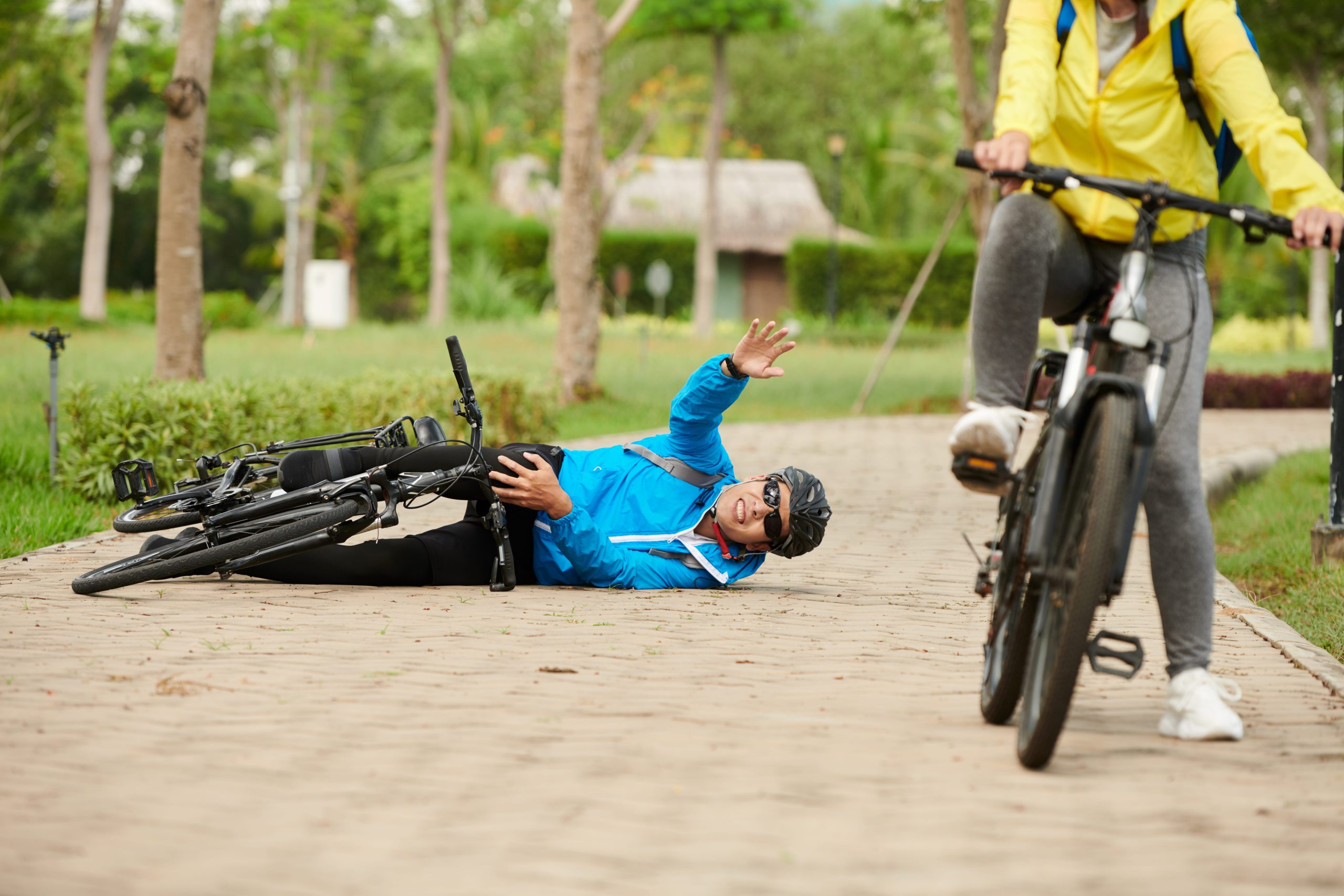
Shared-use paths are shared, and that is the problem. A single ten-foot ribbon of asphalt carries road cyclists at twenty-five miles an hour, families riding abreast, runners, dog walkers with leads across the path, skaters, and people wearing headphones. Speed differentials on a shared path can exceed twenty miles an hour, in both directions, with no lane markings and no enforcement. When a fast rider meets a slow one emerging from a blind curve, or a walker steps left without looking, the resulting collision is a straightforward negligence question between two path users, each of whom owed the other reasonable care. These claims are awkward, because the parties are usually strangers who were both out enjoying the same trail, but an injured rider’s medical bills do not care about the setting.
Suing a government over a trail
Where the trail’s condition or design caused the crash, the claim runs against the public entity that maintained it, and those claims are different in ways that matter. Florida’s limited waiver of sovereign immunity permits the suit but requires a written notice of claim presented to the right entity within a set period before filing, followed by a waiting period, and it caps the damages recoverable absent further legislative action. Miss the notice and the claim is gone regardless of its merit. There is also a practical trap: trail defects get repaired. A county that learns of a crash on a broken stretch of path may patch it within days, erasing the evidence, which makes photographing and measuring the defect immediately more important here than in almost any other kind of case.
What to do after a trail crash
There is one structural problem with trail crashes worth understanding before anything else: nobody investigates them. A collision on a road brings police, a crash report, an assignment of fault, and insurance adjusters who open a file that day. A rider who goes down at a trail crossing, or is knocked off by another path user, or hits a defect, is often helped up by strangers and driven home, and no official record of any kind is ever created. There is no report to point to, no measured scene, and no independent account. Whatever the injured rider and any witnesses captured in the first hour is frequently the entire evidentiary universe of the case, which puts a weight on those first steps that a road crash never does.
Photograph everything before it changes: the defect, the crossing, the sight lines, the signage or its absence, and the bike. Identify witnesses, because trails are busy and someone saw it. Report the crash to the entity that manages the trail, which creates a record and, importantly, establishes notice for any future defect. Get medical attention even if the fall seemed survivable, since head injuries on a trail are common and often minimized by riders who got up and rode home. And note the exact location, by mile marker or nearest crossing, because determining which entity maintains that specific segment is often the first real question in the case. Riders can also reach Fort Myers bicycle accident lawyers, and reviewing how lighting and visibility affect a bicycle crash helps where a crash happened at dawn or dusk.
Hurt on the Legacy Trail or a Lee County bike route?
Trail claims can involve a driver, another path user, or the government that maintains the path, and that last one has a short deadline. The Law Offices of Wolf & Pravato sort it out fast. Call 954-522-5800 for a free case review.
Sources: Fla. Stat. §316.2065; Fla. Stat. §768.28
About the Firm
Published by the Law Offices of Wolf & Pravato
For nearly three decades, the Law Offices of Wolf & Pravato have represented injured Floridians and their families across South and Southwest Florida, exclusively on the plaintiff’s side. The firm is led by managing partner Richard P. Pravato, a Board-Certified Civil Trial Attorney (Florida Bar No. 86150). To reach the lawyer who handles cases in your area, visit our attorneys page, explore our practice areas, or learn more about our firm.
Law Offices of Wolf & Pravato · 2101 W. Commercial Blvd., Suite 1500, Fort Lauderdale, FL 33309 · 954-522-5800 · Free case evaluation: 844-643-7200
Frequently Asked Questions:
Q1. Where do most serious trail crashes happen?
At the points where the trail’s separation from traffic breaks down: at-grade road crossings, trailheads and parking areas, driveway and side-street crossings, and transitions from a protected path onto a shared roadway. Blind curves and damaged pavement account for most of the rest.
Q2. Why are road crossings so dangerous?
Both parties operate on assumptions the other does not share. A rider several miles into a rhythm is moving at speed, while a driver sees what looks like a footpath and does not expect anything travelling at twenty miles an hour to emerge. Sight lines and signage are often poor.
Q3. What if a pothole or root on the trail caused my crash?
Then the question is who maintained that stretch and whether they knew of the defect. Trails are typically maintained by a county, municipality, or park authority, which makes it a claim against a public entity, subject to a short written-notice requirement and damage caps.
Q4. Can I make a claim against another trail user?
Yes. A shared path carries fast cyclists, families, runners, and walkers with speed differentials over twenty miles an hour and no lane markings. When one user’s carelessness injures another, it is an ordinary negligence question, however awkward the setting.
Q5. What is different about suing a government over a trial?
Florida’s limited waiver of sovereign immunity allows the suit but requires a written notice of claim to the correct entity within a set period before filing, adds a waiting period, and caps damages. Missing the notice can bar the claim regardless of merit.
Q6. Why does documenting the defect matter so much?
Because trail defects get repaired fast. A county that learns of a crash on a broken stretch may patch it within days, erasing the evidence. Photographing and measuring the defect immediately, and noting the exact location by mile marker or crossing, preserves the claim.
Disclaimer: This blog post is provided for general informational purposes only and does not constitute legal advice. Reading this content does not create an attorney-client relationship between you and the Law Offices of Wolf & Pravato. Laws change, and every case is different, so you should not act or rely on any information here without consulting a licensed Florida attorney about your specific situation. For advice regarding your circumstances, please contact our office for a free consultation.
Recent Posts
- Wrong Burial Plot and Grave-Site Errors in Fort Lauderdale

- Rainwater Falls at Fort Lauderdale Store Entrances

- Parking-Lot Backing Crashes in Fort Lauderdale: Who Has the Right of Way?
- Elevator and Escalator Injuries at Fort Lauderdale Shopping Centers
- Delivery Driver Car Accidents in Lakeland: Who Pays?

- Injured as a Passenger in Fort Lauderdale: Whose Insurance Pays?





FLORIDA’S PERSONAL INJURY ATTORNEYS FOR + 20 YEARS