










Bicycle Crashes on Lakeland's Lake-Loop and City Streets
Bicycle Crashes on Lakeland’s Lake-Loop and City Streets
By the Law Offices of Wolf & Pravato · Published July 8, 2026
Quick answer: Lakeland’s popular lake loops and connecting city streets mix cyclists with vehicle traffic, and most crashes result from a driver failing to yield, passing unsafely, or turning across a rider’s path. Florida law usually places fault on the driver.
Lakeland’s lakes and the roads that loop around them draw cyclists for recreation and commuting, and the connecting city streets carry riders into everyday traffic. Where bikes and cars share the road, crashes follow, and they are often serious for the unprotected rider. Most result from driver error, and a Lakeland bicycle accident lawyer builds the case around the rider’s rights and the driver’s duties.
Where Lakeland’s cyclists ride
From the scenic loops around the city’s lakes to the arterials and neighborhood streets that connect them, cyclists in Lakeland ride a mix of routes that put them alongside moving traffic, turning vehicles, and cars entering from driveways and side streets. Popular lake loops attract groups of riders, while commuters share busier corridors with limited or no bike infrastructure. Each setting has its own hazards, but all of them depend on drivers recognizing and respecting a cyclist’s place on the road.
A cyclist’s rights on the road
The foundation of any bike-crash case is the rider’s legal status, which many drivers underestimate.
The rights and duties of a vehicle operator
Under Florida’s bicycle regulations, a person riding a bicycle has the rights and duties of any other vehicle driver. A cyclist is a legitimate user of the road, entitled to ride in a lane or bike lane and to expect other drivers to yield and pass safely, not an obstacle to be brushed aside. That status is the starting point for showing a driver, not the rider, caused a crash.
Sharing lake loops and city streets
On the lake loops and city streets Lakeland cyclists use, drivers must share the road, yield where required, and give riders room. A rider lawfully occupying a lane, taking a turn, or proceeding through an intersection has the same right to safe passage as any vehicle. Drivers who treat cyclists as if they do not belong, or who fail to anticipate them on popular routes, cause many of the crashes that occur.
The crashes that keep happening
A few collision types recur on these routes, and each usually reflects a driver’s failure rather than the rider’s.
Failure to yield at intersections and driveways
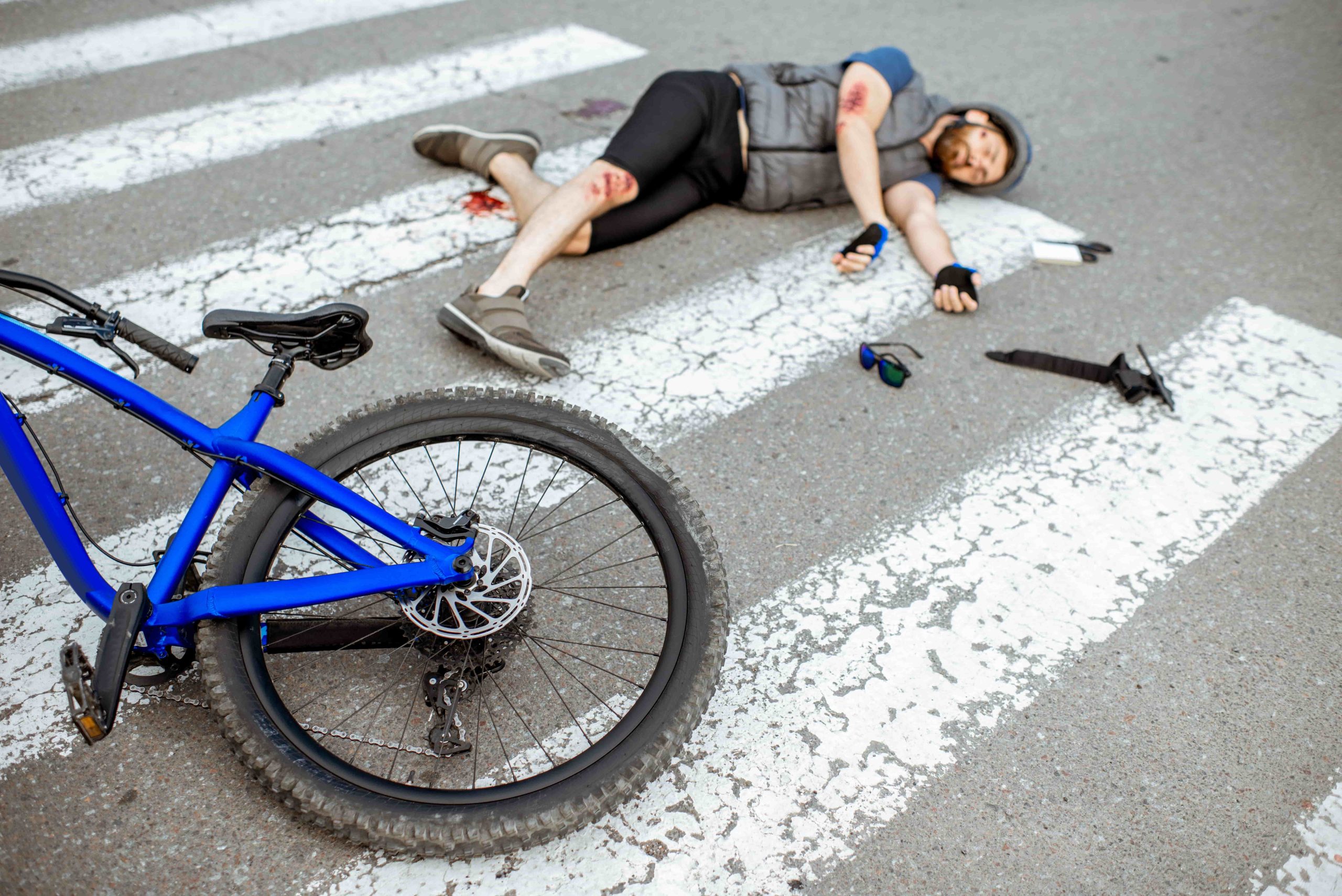
Many crashes happen when a driver fails to yield to a cyclist at an intersection, pulls out of a driveway or side street into a rider’s path, or turns across a cyclist proceeding straight. A rider with the right of way who is struck by a driver who did not yield is rarely at fault, and these failure-to-yield crashes are among the most common on shared streets.
Unsafe passing and the three-foot rule
On lake loops and open roads, drivers passing cyclists sometimes give too little room, clipping a rider or forcing them off the road. Florida’s three-foot passing rule requires a driver overtaking a bicycle to leave at least three feet of clearance, and a driver who passes closer and causes a crash has usually violated a safety rule written to prevent exactly that harm. The unsafe pass, not the rider’s presence, is the cause.
Comparative fault and the driver’s defenses
Drivers commonly argue the cyclist swerved, ran a light, rode outside the lane, or lacked lights at night. Even where a rider bears some fault, Florida’s comparative-fault system reduces recovery by that share rather than barring it, and it does not excuse a driver’s failure to yield or unsafe pass. Careful evidence of the rider’s lawful position keeps an unfair share of blame from being placed on the injured cyclist, who is often the one least able to tell their side after a serious crash.
Proving fault after a Lakeland bike crash
These cases turn on reconstructing where the rider and vehicle were and what the driver should have seen. The point of impact on the car and bicycle, paint and scrape transfer, the rider’s line of travel, and the vehicle’s path all help. Dashcam, traffic, and business camera footage, along with a rider’s own helmet-camera video where it exists, can be decisive, and witness accounts on popular loops are often available. Because this evidence fades quickly, prompt collection matters. Riders can review how Fort Myers bicycle cases are handled or the Florida bike accident claim process.
Injuries and steps after a Lakeland bike crash
A rider thrown from a bicycle at road speed is exposed to serious injury, and the steps taken afterward protect both health and any claim.
Road rash, fractures, and head injury
Hitting the pavement can cause deep abrasions, broken bones, and, despite a helmet, concussion or more serious brain injury. Some harm is not obvious at the scene, so prompt medical evaluation protects health and creates a record tying the injuries to the crash, closing off an argument that the harm came from something else.
Preserving the scene and the evidence
Where a rider is able, photographs of the vehicle’s position, the point of contact, and the roadway preserve facts that fade fast, and the names of witnesses, often available on popular loops, can settle a disputed account. Reporting the crash to law enforcement creates an official record, and keeping the damaged bicycle and helmet preserves physical evidence for later inspection.
Taken together, prompt medical care and careful preservation of the scene keep a bicycle case grounded in facts rather than the driver’s version of events. A rider who documents the crash, follows through on treatment, and holds onto the damaged bicycle and helmet gives any later claim a solid foundation. Those steps cost little in the moment and can make a decisive difference when an insurer questions how the crash happened or how serious the injuries really were.
Hurt cycling on a Lakeland lake loop or city street?
A driver who fails to yield or passes too close is usually at fault, whatever they claim afterward. The Law Offices of Wolf & Pravato gather the evidence that shows what really happened. Call 954-522-5800 for a free consultation.
Sources: Fla. Stat. §316.2065; Fla. Stat. §316.083
FAQs
Q1. Do cyclists have the right to ride on Lakeland’s roads?
Yes. Florida law gives a cyclist the rights and duties of any other vehicle operator, including on lake loops and city streets. A rider is a legitimate road user entitled to a lane or bike lane and to safe passing, not an obstacle.
Q2. What causes most Lakeland bicycle crashes?
Driver error, most often a failure to yield at intersections or driveways, an unsafe pass that violates the three-foot rule, or a turn across a rider proceeding straight. In these situations the driver, not the cyclist, is usually at fault.
Q3. What is Florida’s three-foot passing law?
It requires a driver overtaking a bicycle to leave at least three feet of clearance. Passing closer than that and causing a crash usually violates a safety rule written to prevent exactly that harm, making the unsafe pass the cause rather than the rider’s presence.
Q4. Who is at fault if a driver pulled out of a driveway into my path?
Typically the driver. A cyclist with the right of way who is struck by a driver failing to yield from a driveway or side street is rarely at fault. Failure-to-yield crashes are among the most common on shared streets.
Q5. Can I recover if I was partly at fault?
Yes. Florida uses comparative fault, so a rider who bears some responsibility can still recover, with the award reduced by that share. A partial fault finding does not eliminate a driver’s liability for failing to yield or passing unsafely.
Q6. What evidence helps prove a bike crash?
The point of impact on the car and bicycle, paint or scrape transfer, the rider’s line of travel, dashcam, traffic, and helmet-camera footage, and witness accounts all help reconstruct the crash. Prompt collection preserves this proof before it fades.
Q7. What should a rider do after a bicycle crash in Lakeland?
Seek medical care even if the rider feels able to continue, report the crash to law enforcement, photograph the scene and the vehicles, gather witness information, and preserve the damaged bicycle and helmet. These steps protect both health and the claim.
Q8. Am I required to wear a helmet cycling in Florida?
Florida does not require adult cyclists to wear a helmet, and not wearing one does not bar a claim. A defense might raise it regarding certain head injuries, but it does not excuse a driver’s failure to yield or unsafe pass.
About the Firm
Published by the Law Offices of Wolf & Pravato
For nearly three decades, the Law Offices of Wolf & Pravato have represented injured Floridians and their families across South and Southwest Florida, exclusively on the plaintiff’s side. The firm is led by managing partner Richard P. Pravato, a Board-Certified Civil Trial Attorney (Florida Bar No. 86150). To reach the lawyer who handles cases in your area, visit our attorneys page, explore our practice areas, or learn more about our firm.
Law Offices of Wolf & Pravato · 2101 W. Commercial Blvd., Suite 1500, Fort Lauderdale, FL 33309 · 954-522-5800 · Free case evaluation: 844-643-7200
Disclaimer: This blog post is provided for general informational purposes only and does not constitute legal advice. Reading this content does not create an attorney-client relationship between you and the Law Offices of Wolf & Pravato. Laws change and every case is different, so you should not act or rely on any information here without consulting a licensed Florida attorney about your specific situation. For advice regarding your circumstances, please contact our office for a free consultation.
Recent Posts
- Wrong Burial Plot and Grave-Site Errors in Fort Lauderdale

- Rainwater Falls at Fort Lauderdale Store Entrances

- Parking-Lot Backing Crashes in Fort Lauderdale: Who Has the Right of Way?
- Elevator and Escalator Injuries at Fort Lauderdale Shopping Centers
- Delivery Driver Car Accidents in Lakeland: Who Pays?

- Injured as a Passenger in Fort Lauderdale: Whose Insurance Pays?





FLORIDA’S PERSONAL INJURY ATTORNEYS FOR + 20 YEARS