













Cyber truck and Heavy-EV Crashes in Florida: Unusual Injury Patterns
Cyber truck and Heavy-EV Crashes in Florida
By the Law Offices of Wolf & Pravato · Published July 17, 2026
Quick answer: Battery packs make electric trucks and SUVs dramatically heavier than comparable gas vehicles, and some pair that mass with unusually rigid structures and tall front ends. In a collision with a lighter car, a cyclist, or a pedestrian, that mismatch drives more severe injuries, which changes how a Florida claim must be valued and proven.
A battery pack weighs what a battery pack weighs. Electrifying a pickup or a large SUV can add well over a thousand pounds to a vehicle that was already heavy, and some designs pair that with rigid structures and tall, blunt front ends. On a Florida road shared with compact cars, cyclists, and people on foot, that mismatch is not a specification; it is an injury mechanism, and understanding it is where Florida car accident lawyers start.
Three things that changed at once
It is tempting to treat a heavy EV as just another big truck, but three factors compound here in a way they do not in a conventional vehicle. Mass rose sharply because the pack is enormous and sits low. Structural stiffness rose in some designs, where rigid construction and the need to armor the battery reduce the crumpling that normally absorbs crash energy. And front-end geometry shifted upward, so the initial contact with a person lands higher on the body. Any one of these worsens a crash; together, they change what a collision does to whoever is on the other side.
Heavy EV vs. conventional vehicle: what differs in a crash
| Crash factor | Conventional car/truck | Heavy EV | Consequence for the other party |
| Vehicle mass | Lighter; closer parity with other cars | Battery adds substantial weight | More energy transferred to the lighter vehicle |
| Energy absorption | Crumple zones deform and absorb | Stiffer structures can deform less | Energy passes through to occupants instead |
| Front-end height | Lower hood, contact at leg level | Taller, blunter front | Contact at torso/head; higher fatality risk |
| Braking distance | Standard for its class | Greater mass, longer stop | Less margin to avoid the collision |
| Post-crash risk | Fuel fire risk, familiar to responders | Battery thermal runaway, reignition | Hazard continues after impact |
Read across any row and the pattern is the same: the heavier, stiffer vehicle exports the consequences of the crash to whoever it hits.
The injury patterns that follow
For occupants of the lighter car, the harm concentrates where the energy arrives: intrusion injuries as the smaller vehicle’s structure is overwhelmed, spinal and internal trauma from a violent change in velocity, and more severe outcomes in side impacts, where there is little between the occupant and the striking vehicle. For pedestrians and cyclists, the geometry matters more than the mass. A low hood tends to strike the legs and rotate a body onto the hood, which is survivable more often than people assume. A tall, blunt front strikes the torso or head first, driving the person down and forward rather than up, which is associated with markedly worse outcomes. The same impact speed yields different results depending on the vehicle’s front end.
Why this matters to fault, not just damages
There is a defense instinct to treat all this as bad luck, physics rather than negligence. That misses two things. First, a driver’s duty is measured by the vehicle they chose to operate: a heavier vehicle that needs more distance to stop demands more following distance and more caution, and a taller front end that hides a child or a cyclist demands more vigilance, not less. Failing to account for the machine being driven is itself a failure of reasonable care. Second, Florida’s apportionment statute divides fault among everyone who contributed, and where a design choice made a survivable crash fatal, the manufacturer’s role can enter the analysis alongside the driver’s.
The Florida context that makes this worse
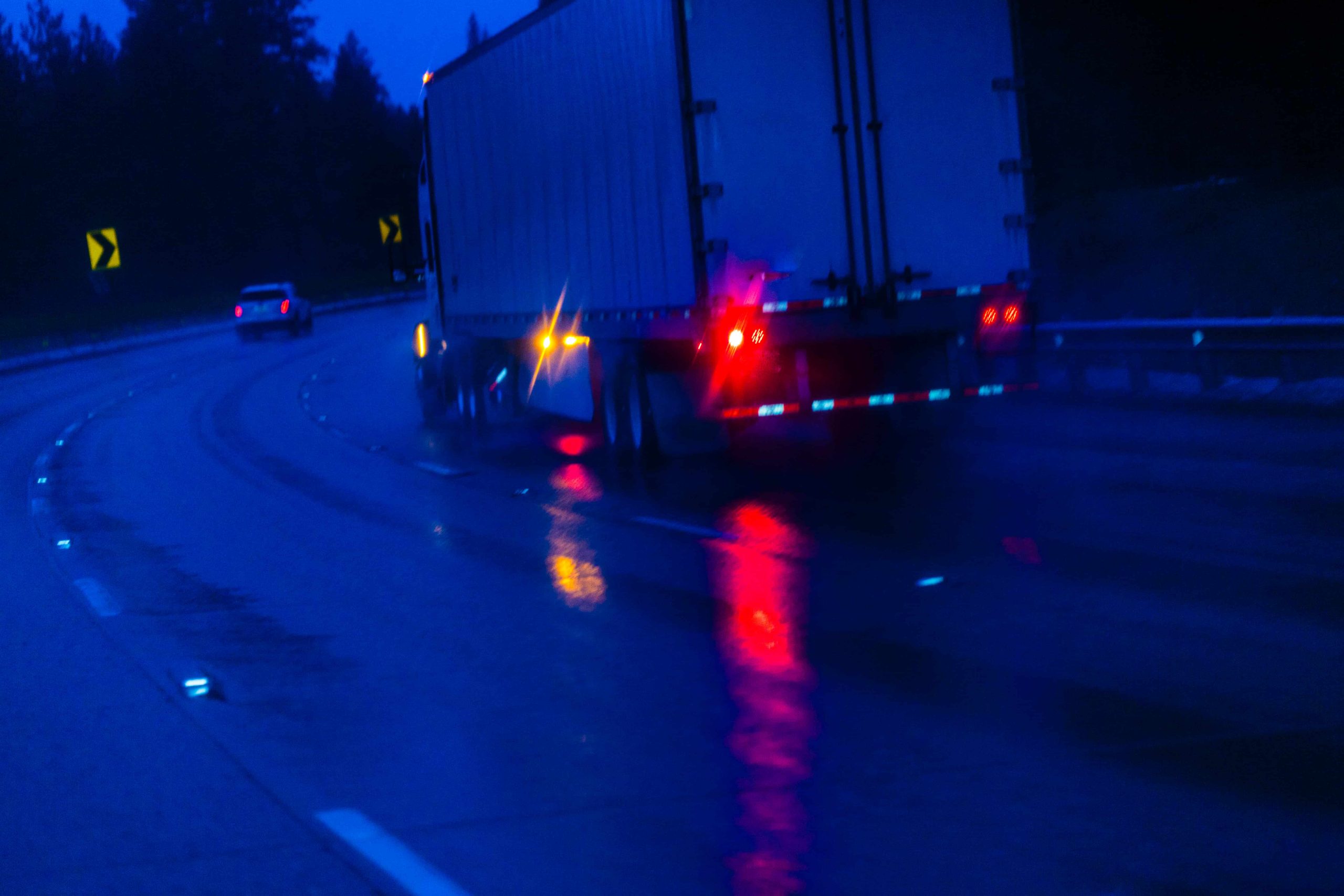
Florida concentrates every one of these risk factors. The state has among the highest pedestrian and cyclist fatality rates in the country, so the road users most vulnerable to a tall front end are already overrepresented here. Its metropolitan areas mix that vulnerability with dense traffic and a vehicle fleet trending steadily toward larger trucks and SUVs, now increasingly electrified and heavier still. Retirement communities put older pedestrians, whose bodies tolerate impact poorly, on the same streets. Year-round warm weather keeps people walking and cycling in numbers that colder states see only seasonally.
The result is that the mismatch this article describes is not a rare edge case in Florida; it is a routine encounter repeated thousands of times a day. That context matters to a claim in a practical way, because it forecloses the argument that a driver could not have anticipated a cyclist or a pedestrian. In a state where they are everywhere, on every kind of road, at every hour, operating a vehicle whose geometry hides them and whose mass makes stopping harder carries a correspondingly higher duty of care, not a lower one.
Valuing a heavy-EV crash claim
Because these collisions produce disproportionate harm, the claim has to be built for the injuries that actually occurred rather than the ones a typical crash of that description would produce. An insurer looking only at speed and impact angle will undervalue what happened because the severity came from the mismatch. The valuation should carry the full arc of treatment, surgery, rehabilitation, and long-term care, along with lost earning capacity, and it should account for the post-crash battery risks that can add burn or inhalation injuries on top of the impact itself. Victims can also reach Fort Lauderdale car accident lawyers.
Proving what the mismatch did
There is one more thing worth naming, because it decides how an insurer treats the file. Adjusters value crashes by pattern: a given speed and impact angle imply a given range of injuries, and anything beyond that range reads as exaggeration. A heavy-EV collision breaks that heuristic. The speeds look moderate, the striking vehicle is often barely damaged, and the photographs suggest a routine wreck, while the person on the other side has injuries the pattern says should not be there. Left unexplained, that mismatch works against the victim, because it looks like an inflated claim rather than what it is, which is a lighter body absorbing energy a heavier one exported. Naming the mechanism early, and proving it, is what converts an apparent exaggeration into the obvious consequence of physics.
Establishing this takes more than photographs of two damaged vehicles. Reconstruction quantifies the mass difference and the energy transferred, and biomechanical analysis connects the vehicle’s geometry to the specific injuries a victim suffered, which is what separates a claim built on evidence from one built on an impression. The vehicles’ recorded data fixes speeds and braking, and NHTSA’s safety research on crash compatibility supplies the framework for why the outcome was so lopsided. Reviewing what makes EV crashes different shows how these vehicles are examined after a crash.
Hit by a heavy electric truck or SUV?
When mass and geometry turn a survivable crash into a catastrophic one, the claim has to prove it. The Law Offices of Wolf & Pravato reconstruct the mismatch and pursue full value. Call 954-522-5800 for a free case review.
Sources: NHTSA; Fla. Stat. §768.81
FAQs
Q1. Why are heavy EVs more dangerous to other road users?
Three factors compound: the battery adds substantial mass, some designs are structurally stiffer and deform less, and front ends are taller and blunter. Together they transfer more energy to the lighter vehicle or person and change where the impact lands on a body.
Q2. Does the extra weight really change the outcome?
Yes. In a collision between vehicles of unequal mass, the lighter one absorbs a disproportionate share of the energy. Greater mass also lengthens braking distance, reducing the margin to avoid the crash in the first place.
Q3. Why does hood height matter for pedestrians?
Geometry can matter more than mass. A low hood tends to strike the legs and rotate a person onto the hood, which is more survivable. A tall, blunt front strikes the torso or head first and drives the person down and forward, which is associated with much worse outcomes at the same speed.
Q4. Isn’t a heavy vehicle crash just physics, not negligence?
No. A driver’s duty is measured by the vehicle they chose to operate. A heavier vehicle that needs more distance to stop demands more following distance, and a taller front end that hides a child or cyclist demands more vigilance. Failing to account for that is a failure of reasonable care.
Q5. Can the manufacturer be involved?
Potentially. Florida divides fault among everyone who contributed, so where a design choice turned a survivable crash into a fatal one, the manufacturer’s role can be analyzed alongside the driver’s conduct, depending on the facts.
Q6. How is this proven?
Through reconstruction that quantifies the mass difference and energy transfer, biomechanical analysis linking the vehicle’s geometry to the specific injuries, the vehicles’ recorded data on speed and braking, and safety research on crash compatibility that explains the lopsided outcome.
About the Firm
Published by the Law Offices of Wolf & Pravato
For nearly three decades, the Law Offices of Wolf & Pravato have represented injured Floridians and their families across South and Southwest Florida, exclusively on the plaintiff’s side. The firm is led by managing partner Richard P. Pravato, a Board-Certified Civil Trial Attorney (Florida Bar No. 86150). To reach the lawyer who handles cases in your area, visit our attorneys page, explore our practice areas, or learn more about our firm.
Law Offices of Wolf & Pravato · 2101 W. Commercial Blvd., Suite 1500, Fort Lauderdale, FL 33309 · 954-522-5800 · Free case evaluation: 844-643-7200
Disclaimer: This blog post is provided for general informational purposes only and does not constitute legal advice. Reading this content does not create an attorney-client relationship between you and the Law Offices of Wolf & Pravato. Laws change and every case is different, so you should not act or rely on any information here without consulting a licensed Florida attorney about your specific situation. For advice regarding your circumstances, please contact our office for a free consultation.
Recent Posts
- Wrong Burial Plot and Grave-Site Errors in Fort Lauderdale

- Rainwater Falls at Fort Lauderdale Store Entrances

- Parking-Lot Backing Crashes in Fort Lauderdale: Who Has the Right of Way?
- Elevator and Escalator Injuries at Fort Lauderdale Shopping Centers
- Delivery Driver Car Accidents in Lakeland: Who Pays?

- Injured as a Passenger in Fort Lauderdale: Whose Insurance Pays?




FLORIDA’S PERSONAL INJURY ATTORNEYS FOR + 20 YEARS