











Elderly Pedestrian Injuries in Florida: Higher Stakes, Bigger Damages
By the Law Offices of Wolf & Pravato · Published July 15, 2026
Quick answer: Florida’s large senior population means older pedestrians are frequently struck, and they tend to suffer graver injuries and slower recoveries than younger victims. The law’s ‘eggshell plaintiff’ principle means a driver takes the victim as they find them, so a pre-existing frailty does not reduce the driver’s responsibility.
Florida’s roads and its large senior population intersect in a painful way: older pedestrians are struck at high rates, and when they are, the consequences are often severe. An impact a younger person might survive with fractures can be life-altering or fatal for an older adult. These cases carry higher stakes and, properly valued, larger damages, and handling them well is where Florida pedestrian accident lawyers focus.
When the victim is a senior
Florida is home to one of the largest older populations in the country, and its warm climate keeps seniors walking, to shops, to appointments, and through their communities, year round. That means a significant share of the state’s pedestrian victims are older adults. When a driver fails to yield or strikes a person in a crosswalk, the victim is disproportionately likely to be a senior, and the injury that results tends to be graver than it would be for a younger pedestrian.
Why older pedestrians are hit so often
Several factors converge. Seniors walk more in many Florida communities, and some move more slowly across intersections, needing more time than a signal allows. Drivers who misjudge an older pedestrian’s pace, or who simply fail to look, strike people who were lawfully and carefully crossing. The problem is rarely the pedestrian’s care and usually the driver’s inattention, speed, or failure to yield the right of way the law guarantees a person in a crosswalk.
Graver injuries and harder recoveries
The heart of these cases is that the same impact does more damage to an older body.
Fragile bones and slower healing
With age, bones lose density and tissues lose resilience, so a fall or impact that might bruise a younger person can shatter a hip, break multiple bones, or cause serious head trauma in an older one. Recovery is slower and less complete; a senior may never regain the mobility or independence they had before the crash. A broken hip alone can trigger a cascade of complications that permanently changes an older person’s life.
Pre-existing conditions and the eggshell rule
Older victims often have pre-existing conditions, and insurers try to blame those rather than the crash. The law answers this with the ‘eggshell plaintiff’ principle: a driver takes the victim as they find them. If a negligent driver injures a frail person, the driver is responsible for the full extent of the harm, even if a healthier person would have been hurt less. A pre-existing frailty does not discount the driver’s responsibility for the injuries the crash actually caused.
Valuing an elderly pedestrian’s claim
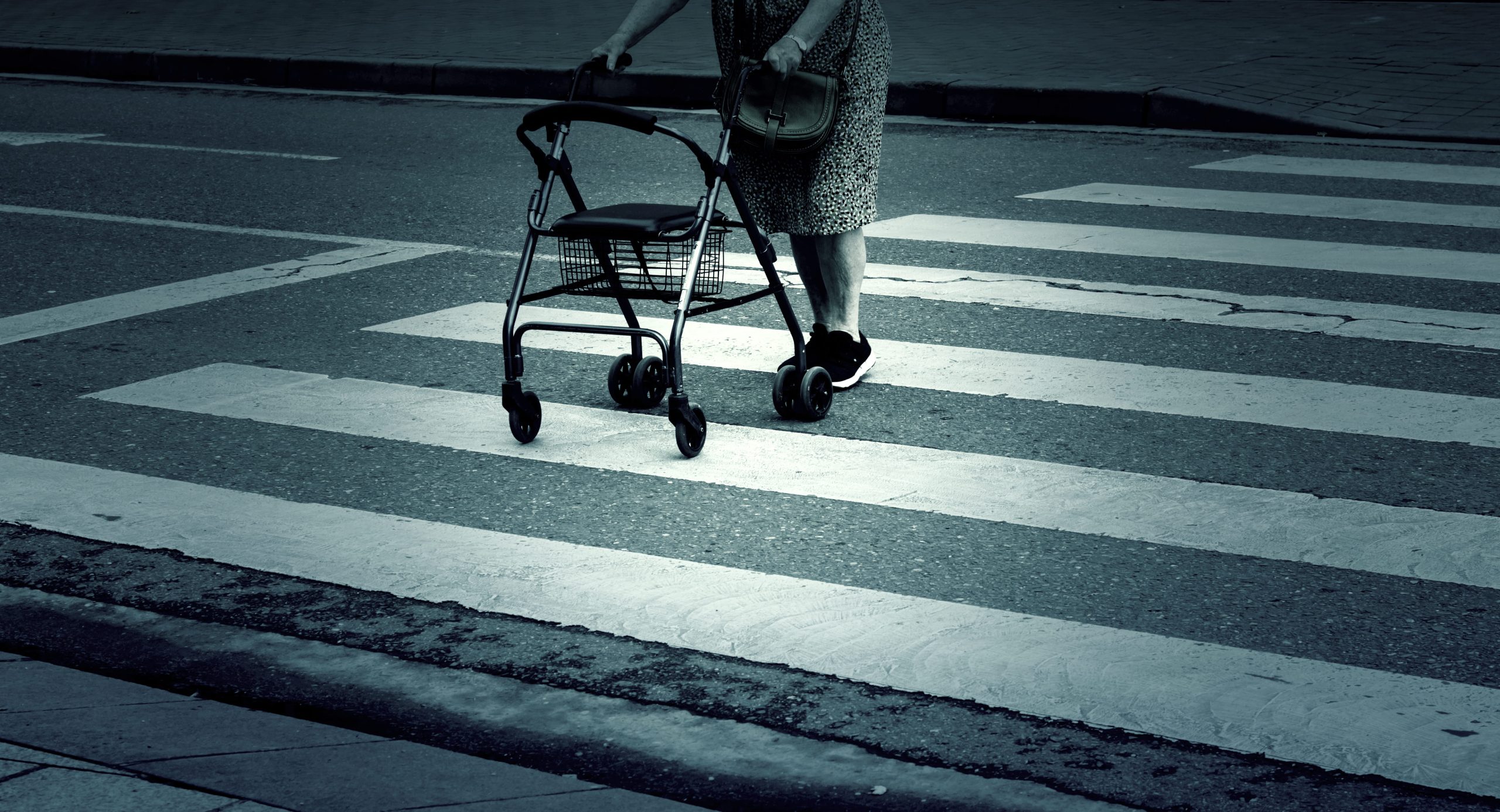
Because the harm is greater, the claim must reflect more than an emergency bill. It should account for the full course of treatment, surgery, rehabilitation, and often long-term or assisted care, along with the loss of independence and quality of life that a serious injury inflicts on an older person. Pain, diminished mobility, and the emotional toll of losing autonomy are real, compensable harms. Undervaluing these losses because the victim is retired or elderly shortchanges the very people the injury hurts most.
Countering the age-based defense
Insurers frequently argue that an older victim’s problems stem from age or prior conditions rather than the crash, or that a modest life expectancy limits damages. These arguments are met with medical evidence distinguishing the crash injuries from any prior condition and documenting how the crash changed the person’s life. Florida’s comparative-fault statute also lets a defense argue the pedestrian was partly at fault, so establishing that the senior crossed lawfully, with the right of way, is central to protecting the recovery.
Proving fault and protecting the recovery
These cases still turn on the basic proof of fault. The point of impact, the driver’s speed and attention, the crosswalk and signal, and any camera footage establish that the driver, not the pedestrian, caused the crash. Under Florida’s pedestrian right-of-way law, a person crossing with the signal or in a crosswalk generally has the right of way, and proving that forecloses the blame-the-victim defense. Families can also reach Miami pedestrian accident lawyers.
Why these claims demand careful, prompt handling
Documenting the true scope of harm
Fully valuing an older victim’s claim requires medical documentation of the injuries, the treatment, and the lasting effect on independence and daily life. Because the recovery is often incomplete, the claim must project future care rather than settle on the early bills. Reviewing who decides fault in a Florida pedestrian claim helps a family understand how responsibility is established.
Acting before evidence fades
The evidence that proves fault- camera footage, the scene, and witness accounts- fades quickly, and an older victim’s health may be fragile in the aftermath. Acting promptly to preserve the proof and to build a full picture of the harm protects both the fault case and the valuation, ensuring an elderly pedestrian’s serious injuries are not quietly discounted by an insurer.
In the end, an elderly pedestrian’s claim is about refusing to let an insurer discount a life. The same crash that would bruise a younger person can steal an older adult’s independence for good, and the law’s eggshell principle means the driver answers for that full harm. Documenting the true scope of the injury and meeting the age-based defenses with medical evidence is what ensures a senior’s serious injuries are valued for what they are rather than quietly written down.
Was an older loved one struck while walking in Florida?
An elderly pedestrian’s injuries are often severe, and a driver is responsible for the full harm regardless of the victim’s age or frailty. The Law Offices of Wolf & Pravato pursue the full value of these claims. Call 954-522-5800 for a free case review.
Sources: Fla. Stat. §316.130; Fla. Stat. §768.81
Frequently Asked Questions:
Q1. Why are elderly pedestrians hurt more seriously?
With age, bones lose density and tissues lose resilience, so the same impact causes graver harm: a shattered hip, multiple fractures, or serious head trauma, and recovery is slower and often incomplete. An older victim may never regain the mobility or independence they had before the crash.
Q2. Can an insurer blame my age or prior conditions?
Insurers often try, but the ‘eggshell plaintiff’ principle means a driver takes the victim as they find them. If a negligent driver injures a frail person, the driver is responsible for the full harm caused, even if a healthier person would have been hurt less.
Q3. Does a pre-existing condition reduce the claim?
Not the way insurers suggest. A driver is liable for the injuries the crash actually caused, including the aggravation of a prior condition. Medical evidence distinguishing the crash injuries from any pre-existing issue protects the claim from being discounted.
Q4. How is an elderly pedestrian’s claim valued?
By the full harm: all past and future medical care, surgery, rehabilitation, any long-term or assisted care, and the loss of independence, mobility, and quality of life. Pain and the emotional toll of losing autonomy are compensable and should not be discounted because the victim is older.
Q5. What if the senior was crossing slowly?
Crossing slowly is not fault. Under Florida law, a pedestrian in a crosswalk or crossing with the signal generally has the right of way, and drivers must yield. A driver who failed to allow for an older pedestrian’s pace, or failed to look, is the party at fault.
Q6. Who is usually at fault in these crashes?
Most often the driver, through inattention, speed, or a failure to yield the right of way. Proving the driver’s fault, through the point of impact, the driver’s conduct, and any footage, forecloses attempts to blame an older pedestrian who was lawfully crossing.
Q7. What damages can a family recover if a senior dies?
If an elderly pedestrian dies, the family may bring a wrongful death claim for the losses recognized under Florida law, including the family’s loss of the person’s companionship and support and certain expenses. These claims are separate from the injury claim and have their own rules.
Q8. How soon should we act after the crash?
Promptly. The footage, scene evidence, and witness accounts that prove fault fade quickly, and fully documenting a serious injury takes time. Acting early preserves the proof of fault and supports an accurate valuation of a claim that insurers often try to minimize.
About the Firm
Published by the Law Offices of Wolf & Pravato
For nearly three decades, the Law Offices of Wolf & Pravato have represented injured Floridians and their families across South and Southwest Florida, exclusively on the plaintiff’s side. The firm is led by managing partner Richard P. Pravato, a Board-Certified Civil Trial Attorney (Florida Bar No. 86150). To reach the lawyer who handles cases in your area, visit our attorneys page, explore our practice areas, or learn more about our firm.
Law Offices of Wolf & Pravato · 2101 W. Commercial Blvd., Suite 1500, Fort Lauderdale, FL 33309 · 954-522-5800 · Free case evaluation: 844-643-7200
Disclaimer: This blog post is provided for general informational purposes only and does not constitute legal advice. Reading this content does not create an attorney-client relationship between you and the Law Offices of Wolf & Pravato. Laws change, and every case is different, so you should not act or rely on any information here without consulting a licensed Florida attorney about your specific situation. For advice regarding your circumstances, please contact our office for a free consultation.
Recent Posts
- Wrong Burial Plot and Grave-Site Errors in Fort Lauderdale

- Rainwater Falls at Fort Lauderdale Store Entrances

- Parking-Lot Backing Crashes in Fort Lauderdale: Who Has the Right of Way?
- Elevator and Escalator Injuries at Fort Lauderdale Shopping Centers
- Delivery Driver Car Accidents in Lakeland: Who Pays?

- Injured as a Passenger in Fort Lauderdale: Whose Insurance Pays?





FLORIDA’S PERSONAL INJURY ATTORNEYS FOR + 20 YEARS