










Who Pays After a Lane-Change Crash in Fort Lauderdale?
Who Pays After a Fort Lauderdale Lane-Change Crash?
By the Law Offices of Wolf & Pravato · Reviewed for Florida legal accuracy and updated July 22, 2026
A lane-change collision can look straightforward until insurers compare photographs, policy language, and competing accounts. In Fort Lauderdale, these crashes often arise around I-95, US-1, and multilane urban corridors. The immediate issue is not simply who received a citation. It is whether the available evidence shows that a driver moved across a marked lane without enough clearance and whether that conduct legally caused the injuries and losses claimed.
People injured in this situation can review their options with a Fort Lauderdale car accident lawyer. A focused investigation should identify every potentially responsible person, preserve time-sensitive evidence, and map each available insurance policy before a recorded statement or broad release changes the position of the claim.
Who Is Usually at Fault in a Fort Lauderdale Lane-Change Crash?
Responsibility usually turns on control, reasonable driving, causation, and insurance—not on a single label. The driver who made an unsafe movement may carry most of the fault, but another driver’s speed, distraction, following distance, or evasive maneuver may also be examined. When a vehicle belongs to someone else or the driver was working, ownership and business relationships can add coverage and legal issues.
The central factual question here is whether the moving vehicle had established itself in the lane before impact. That question should be answered with records, not assumptions. Useful proof includes side-panel damage, lane markings, mirror position, dashcam footage, nearby traffic video, and witness descriptions. When several accounts are possible, the physical location of damage and the timing recorded by video or electronic systems may resolve inconsistencies.
Seven Steps to Protect the Claim
- Move to safety if doing so is possible, call for emergency help when needed, and report the collision.
- Photograph every vehicle, the full road layout, lane lines, debris, water, signs, signals, and visible injuries.
- Obtain names and contact information for witnesses before traffic disperses.
- Seek an appropriate medical evaluation promptly and describe symptoms accurately, including symptoms that developed after the initial shock.
- Save the crash-report number, towing documents, repair estimates, rental receipts, pay records, and every insurer communication.
- Do not guess about speed, distance, or fault in a recorded statement; say when you do not know.
- Send preservation requests quickly when business video, app data, vehicle data, or phone records may exist.
Florida PIP rules make early medical attention especially important. Section 627.736 generally conditions PIP medical benefits on initial services and care within 14 days, subject to the statute’s detailed requirements. PIP may pay specified portions of qualifying medical expenses and lost income, but it does not decide who negligently caused the crash.
What Evidence Shows Which Driver Crossed the Lane Line?
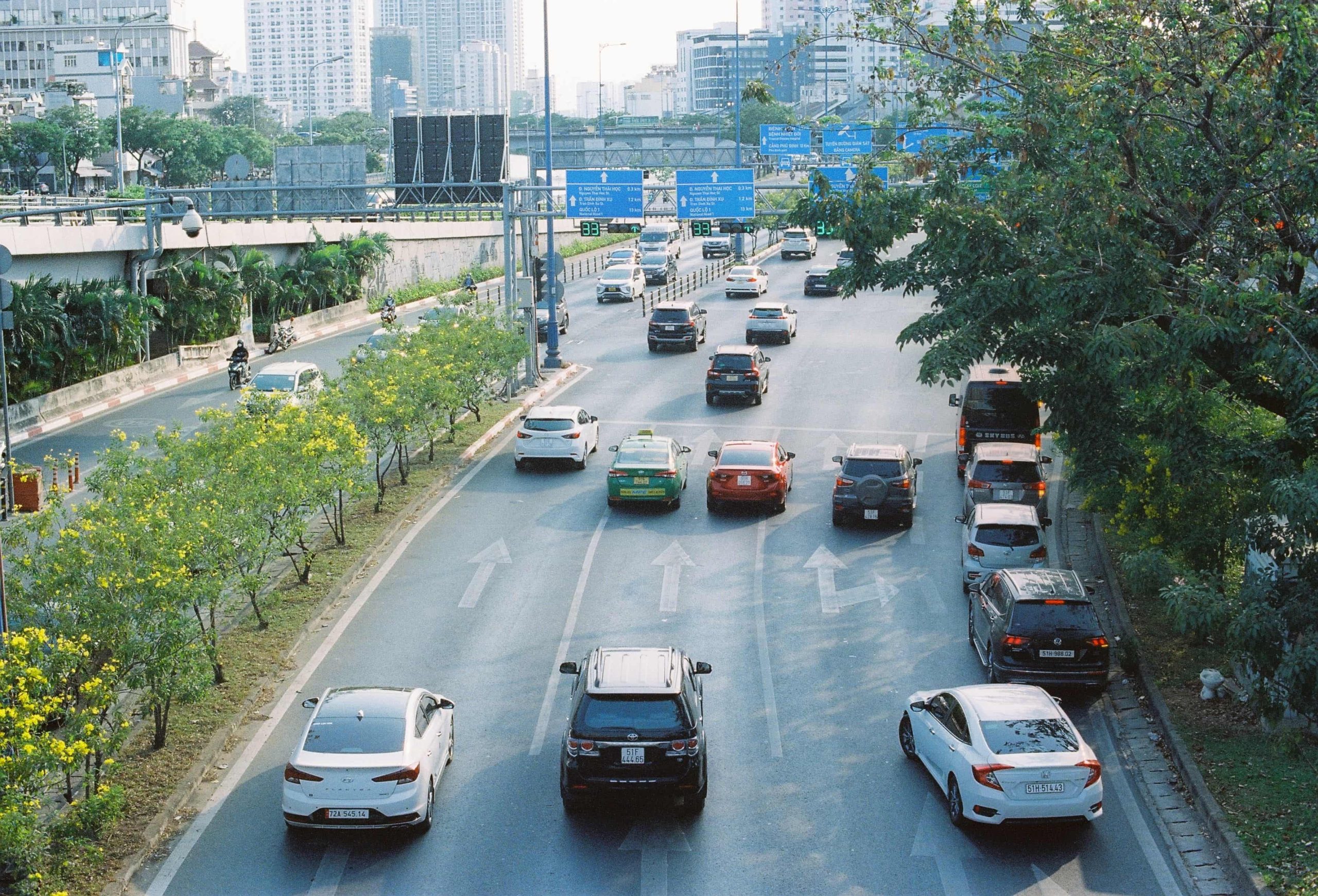
Investigators start with sequence. They ask where each vehicle was several seconds before contact, what each driver could see, which maneuver began first, and whether a reasonable driver had time to react. They then compare those accounts with damage patterns, roadway geometry, video, and electronic information. A diagram drawn from memory is useful, but it should be labeled as an estimate rather than presented as a precise measurement.
For this accident type, side-panel damage, lane markings, mirror position, dashcam footage, nearby traffic video, and witness descriptions deserve particular attention. A wide scene photograph can show the available lane space or water pattern, while a close photograph may show tire marks, scrape direction, or material transfer. Dashcam video may establish timing, but the original file and metadata should be preserved instead of relying only on a compressed social-media copy.
The related guide to preserving Fort Lauderdale crash evidence guide explains why evidence controlled by others can disappear quickly. Counsel may send targeted preservation notices to drivers, vehicle owners, employers, platforms, property owners, or government entities without demanding irrelevant private information.
How Does Florida Insurance Apply After a Sideswipe?
A liability decision and a coverage decision answer different questions. One asks who caused the collision; the other asks which contract or statute may fund covered losses. The injured person’s PIP coverage generally comes first for qualifying benefits regardless of fault. Bodily-injury liability, uninsured or underinsured motorist coverage, collision coverage, health insurance, and other sources may then matter depending on the policies and injuries.
Florida allocates damages under a modified comparative-fault framework. Under section 768.81, a claimant’s share of fault may reduce damages, and a person found more than 50 percent responsible generally cannot recover in an ordinary negligence action covered by the statute.
Policy limits are not the same as case value. A careful evaluation considers medical causation, the nature and duration of injury, past and expected care, lost earnings, other documented losses, comparative fault, available coverage, liens, and collectability. Florida’s serious-injury threshold in section 627.737 may affect whether noneconomic damages are recoverable in a motor-vehicle tort claim.
Which Evidence Can Resolve Conflicting Driver Accounts?
Vehicle and scene proof
Photographs should establish context as well as damage. Capture the approach, traffic controls, sight lines, shoulders, lane widths, weather, lighting, and resting positions when safe. Obtain repair and total-loss materials because an insurer’s photographs may omit the angle needed to explain the collision. Do not authorize destruction of a severely damaged vehicle before considering whether an inspection is necessary.
Independent and electronic proof
Witnesses with no relationship to either driver can be important, particularly when both drivers claim the other moved first. Nearby businesses, residential cameras, toll systems, apps, and onboard systems may hold relevant information. Availability and access vary, so requests should be specific and legally appropriate.
Medical and wage proof
Consistency matters more than dramatic language. Medical records should accurately document onset, symptoms, limitations, diagnoses, treatment, and improvement or setbacks. A simple daily log can record missed activities without exaggeration. Employers can confirm missed time, reduced duties, and earnings, while tax or payroll records can support longer-term loss claims.
How Should a Lane-Change Crash Be Reconstructed?
For this lane change event, create a chronology that separates what happened before, during, and after the incident. Match each entry to side-panel damage, lane markings, mirror position, dashcam footage, nearby traffic video, and witness descriptions. This disciplined approach exposes missing records, prevents memory from being presented as measurement, and helps counsel request only the materials tied to whether the moving vehicle had established itself in the lane before impact. It also gives medical and insurance reviewers a coherent sequence without overstating facts that remain under investigation.
How Do Insurers Dispute Lane-Change Claims?
An insurer may argue that the impact was too minor to cause injury, symptoms came from a prior condition, treatment was delayed, the claimant could have avoided the crash, or another policy should pay first. These are not automatically valid or invalid. Each must be tested against medical records, images, testimony, policy language, and the accident sequence.
Avoid repairing evidentiary gaps with speculation. If a witness cannot estimate speed, a confident guess can undermine credibility. If pain changed over time, the record should explain that progression. If a prior injury affected the same body part, withholding it is usually more damaging than addressing the distinction honestly with medical evidence.
The discussion of multi-vehicle collision liability in Fort Lauderdale provides additional context without replacing an individualized review of this collision.
What a Lawyer Can Do Early
Early legal work may include obtaining available reports and recordings, locating witnesses, identifying vehicles and entities, sending preservation letters, reviewing all potentially applicable policies, coordinating vehicle inspection, organizing medical documentation, and calculating losses. It can also reduce the risk that a broad medical authorization, recorded statement, or premature release gives an insurer more than it reasonably needs.
Deadlines should never be calculated from a blog. Florida’s limitations rules have changed and exceptions can apply. Prompt review protects time for investigation even when a filing deadline appears distant.
If you were injured in this type of Fort Lauderdale-area collision, request a free case evaluation or call 844-643-7200. The consultation can focus on evidence, insurance, and realistic next steps; no outcome can be promised.
Speak With Wolf & Pravato
The Law Offices of Wolf & Pravato serves injured people in Fort Lauderdale and throughout Florida. The firm can assess the collision, available coverage, evidence-preservation needs, and the practical choices ahead. Contact the legal team or call 844-643-7200. Pay nothing unless we win.
FAQs
Who is usually at fault in a lane-change accident in Florida?
The driver entering the lane is often the primary focus because a lane change must be made safely, but fault is not automatic. Damage patterns, video, lane position, signaling, speed, and whether the other driver had time to react can support shared or sole fault.
How do you prove which driver changed lanes?
Side-swipe damage direction, the location of impact on each vehicle, dashcam or business video, independent witnesses, lane markings, and vehicle data can establish movement. Preserve original media quickly because nearby camera footage may be overwritten.
Does using a turn signal give a driver the right of way?
No. A signal communicates intent; it does not make an unsafe lane change lawful or require another vehicle to surrender an occupied lane. The driver must still determine that the movement can be completed with reasonable safety.
Can both drivers be at fault for a sideswipe crash?
Yes. One driver may have entered an occupied lane while the other was speeding, distracted, or attempting to pass unsafely. Florida comparative-fault rules can reduce or bar recovery depending on the percentage assigned.
What if the other driver says I drifted into the lane?
Do not rely only on competing statements. Photograph both vehicles before repairs, retain the event data and original video, identify witnesses, and document the final positions. Physical evidence may show the direction of movement more reliably than memory.
Does a traffic ticket prove who owes damages?
No. A citation may be relevant, but an injury claim depends on the complete admissible evidence, causation, and damages. Insurers and courts conduct a civil-liability analysis that is separate from the roadside enforcement decision.
About the Firm
Published by the Law Offices of Wolf & Pravato. The firm represents injured Floridians and families in personal injury and funeral home negligence matters. Richard P. Pravato is Board Certified as a Civil Trial Lawyer by The Florida Bar. The firm’s Fort Lauderdale office is located at 2101 W. Commercial Blvd., Suite 1500, Fort Lauderdale, FL 33309. Free case evaluation: 954-522-5800.
Disclaimer: This blog post is provided for general informational purposes only and does not constitute legal advice. Reading this content does not create an attorney-client relationship between you and the Law Offices of Wolf & Pravato. Laws change and every case is different, so you should not act or rely on this information without consulting a licensed Florida attorney about your specific situation. Past results do not guarantee a similar outcome.
Recent Posts
- Wrong Burial Plot and Grave-Site Errors in Fort Lauderdale

- Rainwater Falls at Fort Lauderdale Store Entrances

- Parking-Lot Backing Crashes in Fort Lauderdale: Who Has the Right of Way?
- Elevator and Escalator Injuries at Fort Lauderdale Shopping Centers
- Delivery Driver Car Accidents in Lakeland: Who Pays?

- Injured as a Passenger in Fort Lauderdale: Whose Insurance Pays?




FLORIDA’S PERSONAL INJURY ATTORNEYS FOR + 20 YEARS